Wild Animals & Dinosaurs

13 Extraordinary Species of Octopus Worth Knowing About

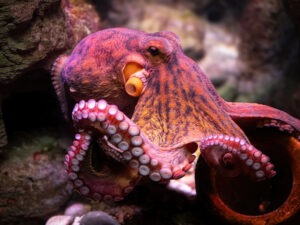
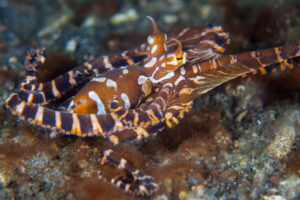
You’ve probably seen enough nature documentaries to know that octopuses are basically the closest thing we have to aliens on Earth, but the sheer variety across the species is still a bit of a mind-bender. We’re talking about creatures that can change their skin texture to mimic a jagged rock, squeeze through a hole the size of a 50p coin, and even outsmart humans in laboratory tests. From the giant ones lurking in the freezing depths of the Pacific to the tiny, neon-ringed hunters that could end a person with a single bite, they’ve evolved some of the most bizarre survival tactics in the animal kingdom. It’s not just having eight arms and three hearts that makes them so spectacular; it’s the level of intelligence and adaptability that makes most other sea life look like they’re running on basic software. The mimic octopus Found in the tropical waters of the Indo-Pacific, the mimic octopus does something no other known species can do with quite the same range or accuracy. It deliberately impersonates other animals, not just in colour and texture but in shape and movement, to avoid predators or sneak up on prey. It’s been observed copying lionfish, flatfish, and sea snakes, adjusting its performance depending on the threat it’s facing. The fact that it seems to choose which animal to impersonate based on context suggests a level of decision-making that researchers are still trying to fully understand. It was only formally identified in 1998, which makes you wonder what else is out there going undiscovered. The blue-ringed octopus Small enough to sit in the palm of your hand, and genuinely one of the most venomous animals on earth. The blue-ringed octopus carries enough tetrodotoxin to kill a human, and there’s no antivenom. Most of the time, it looks fairly unremarkable, a mottled brownish creature moving quietly around shallow rock pools across the Pacific and Indian Oceans. That being said, when it feels threatened, those vivid iridescent blue rings appear almost instantly as a warning. The bite itself is often painless, which makes it particularly dangerous because people don’t always realise what’s happened until the paralysis begins. It’s a reminder that extraordinary things sometimes come in very small, understated packages. The dumbo octopus Named after the elephant with oversized ears, the dumbo octopus uses two ear-like fins on either side of its mantle to move through the water, which gives it a genuinely endearing, almost cartoon-like appearance. It lives deeper than almost any other octopus species, some found at depths of over 7,000 metres, which puts it among the deepest-dwelling octopuses ever recorded. Because it lives in such extreme environments, relatively little is known about its behaviour or lifespan. What has been observed suggests it swallows prey whole rather than using the drilling and venom approach common in shallower-water species, which makes sense given how much energy deep-sea life needs to conserve. The glass octopus Almost entirely transparent, the glass octopus is one of the stranger-looking creatures in the ocean. Its internal organs are visible through its body, and aside from its opaque eyes and digestive tract, it’s remarkably see-through. It lives in the open ocean at mid-water depths, and because of where it lives, it’s rarely observed and even more rarely filmed in any detail. A research expedition in 2021 captured some of the clearest footage ever recorded of one, and the images drew a lot of attention simply because it looks so extraordinary. Scientists believe the transparency is an adaptation to avoid predators in open water, where there’s nowhere to hide. The coconut octopus What makes the coconut octopus notable isn’t just its appearance but its behaviour. It collects discarded coconut shells and large bivalve shells from the sea floor, carries them around, and assembles them into a portable shelter when it needs protection. This is considered tool use, which is relatively rare in the animal kingdom and genuinely uncommon in invertebrates. It’s been filmed walking across the sea floor on two arms while holding a shell in the others, moving with a slightly awkward but deliberate gait. The fact that it plans ahead enough to carry something it’s not immediately using suggests a kind of forward-thinking behaviour that researchers find particularly interesting. The star-sucker pygmy octopus One of the smallest octopus species in the world, the star-sucker pygmy octopus grows to around 2.5 centimetres and weighs less than a gram. It lives in the Western Pacific and is most active at night, spending daylight hours hidden in crevices or under debris on the sea floor. Despite its tiny size, it’s a capable hunter, feeding on small crustaceans and other invertebrates. Most people have never heard of it, which is partly because it’s so small and partly because small species tend to attract less research attention than their more dramatic relatives. But it’s a good example of how remarkable things in the natural world don’t always announce themselves loudly. The wunderpus octopus The wunderpus has a striking white-and-brown striped pattern that makes it one of the more visually distinctive octopus species. It’s found in sandy shallow-water habitats across the Indo-Pacific and, unusually for octopuses, seems to have a stable individual pattern, meaning you can potentially identify individual animals by their markings in the way you might identify a zebra. This is uncommon in octopuses, which generally change their appearance so frequently and dramatically that individual identification is difficult. It’s also been observed doing a threat display involving spreading its arms flat against the substrate and pulsing its pattern, which looks dramatic enough that it’s been mistaken for the mimic octopus by divers who weren’t looking closely. The larger Pacific striped octopus Most octopus species are solitary and tend to eat their prey by immobilising or overpowering it. The larger Pacific striped octopus does things differently on both counts. It’s been observed living in groups of up to 40 individuals, which is highly unusual for a species typically considered to be a lone hunter. It also has a

13 Extraordinary Species of Octopus Worth Knowing About Read More »
The World’s Tiniest Deer Needs Your Help

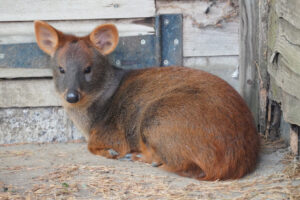
The world’s tiniest deer looks almost unreal when you first see it. It stands barely higher than a large house cat, with short legs, rounded ears, and a soft, shy expression that makes it look more like a woodland creature from a storybook than a wild mammal. But this tiny deer is very real, and it’s under real pressure. Known as the pudu, it lives in the forests of South America, and its survival is tied directly to the fate of those forests. If its habitat continues to shrink, this miniature deer could quietly disappear before most people even learn its name. It really is the smallest deer on Earth. The pudu holds the title of the world’s smallest deer species. Adults stand only around 30 to 45 centimetres tall at the shoulder and weigh roughly 9 to 13 kilograms. That makes them noticably smaller than the red deer, elk, or even roe deer most people picture when they hear the word deer. There are two species. The northern pudu lives in the Andean regions of Colombia, Ecuador, and Peru. The southern pudu inhabits temperate rainforests in Chile and western Argentina. Both are elusive, forest-dwelling animals that rely on dense vegetation to stay hidden. They depend on thick forest cover to survive. Pudus are not open-field grazers. They thrive in dense understory, where tangled shrubs, ferns, and low branches give them cover from predators. Their small size works in their favour when the forest is intact, allowing them to slip quietly through tight spaces. When forests are cleared or fragmented, that advantage disappears. Open areas leave them exposed to predators and human activity. Because they are shy and secretive, habitat loss hits them especially hard. @sandiegozoo If you’re having a bad day just remember baby pudus ✨exist✨ #boop #pudu #deardeer #sdzsafaripark ♬ original sound – San Diego Zoo Deforestation is shrinking their world. Logging, agriculture, and cattle farming have reduced large areas of South American forest over decades. Even when patches of woodland remain, roads and farmland often split them into isolated fragments. Fragmentation makes it harder for pudus to find mates and maintain healthy populations. Small, cut-off groups are more vulnerable to disease, accidents, and genetic decline. What looks like “some forest left” on a map might not actually be enough. Free-roaming dogs are a serious threat. In parts of Chile and Argentina, free-roaming domestic dogs pose one of the biggest dangers to pudus. Even well-fed dogs retain hunting instincts, and a tiny deer stands little chance if chased. Conservation workers in some regions regularly treat injured pudus that have survived dog attacks. Many do not survive. This is one of those human-linked threats that could be reduced with better awareness and responsible pet control. Roads are becoming deadlier. As rural areas develop, more roads cut through forest habitat. Pudus are small, low to the ground, and often active at dawn or dusk. That makes them hard for drivers to spot. Vehicle collisions are increasingly reported in certain regions. A small deer crossing a narrow forest road might seem like a minor risk, but over time, repeated losses can take a toll on already vulnerable populations. Disease risk is rising. Contact between wildlife and livestock brings disease risks that scientists are still trying to understand fully. Parasites and infections can move between domestic animals and wild species. Because pudus live close to the ground and browse low vegetation, they can encounter contaminated areas more easily. Disease outbreaks in small populations can have a disproportionate impact. @animalogic This is the smallest deer in the world! The Pudu #Pudu ♬ original sound – Animalogic Their biology makes recovery slow. Pudus typically give birth to just one fawn at a time. That means population growth is gradual, even in ideal conditions. If adult survival drops due to habitat loss or predation, recovery can be slow. The animal’s slow reproductive rate means conservation needs to be proactive rather than reactive. Waiting until numbers are critically low makes recovery much harder. They play a quiet role in forest ecosystems. Though small, pudus are part of a broader ecological system. As browsers, they influence plant growth and seed dispersal. Healthy forests rely on balanced relationships between plants and animals. When species like the pudu decline, it signals that something in the ecosystem is out of balance. Protecting them helps maintain the health of the forest as a whole. Captive breeding offers a safety net. Some zoos and wildlife institutions participate in breeding programmes designed to maintain healthy pudu populations in human care. These programmes help preserve genetic diversity and provide opportunities to study their behaviour and health more closely. However, captive breeding alone cannot solve habitat loss. A species cannot thrive long-term without secure, connected wild environments. Forest protection is the real long-term solution. The future of the world’s tiniest deer depends largely on protecting and reconnecting forest habitats. Larger, continuous stretches of woodland give pudus space to move, breed, and hide safely. Conservation efforts that limit deforestation, manage road development, and reduce human-wildlife conflict offer the strongest hope. Supporting sustainable forestry practices and wildlife protection initiatives makes a real difference. The pudu may be small, but its story is part of a much bigger one. When forests shrink, quiet species like this are often the first to suffer. Protecting them means protecting the wider web of life they belong to. The world’s tiniest deer does not need fame. It needs healthy forests, responsible human behaviour, and attention before it is too late.

The World’s Tiniest Deer Needs Your Help Read More »

Why Do Bees Like Purple?

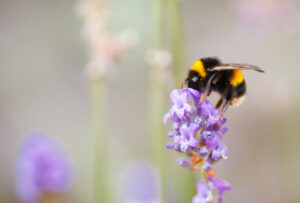
If you’ve ever watched a garden on a warm day and noticed that bees seem to spend a disproportionate amount of time on lavender, catmint, and other purple flowers while ignoring things that seem equally abundant, it’s not coincidence and it’s not random. There are real biological and evolutionary reasons behind the preference, and they tell you something interesting about how bees experience the world. Bees see colour differently from humans. The human eye detects red, green, and blue light and combines those signals to produce the full range of colour we perceive. Bees also have three types of colour receptors, but they’re shifted relative to ours, detecting green, blue, and ultraviolet light rather than extending into the red part of the spectrum. That means bees are essentially red-blind, seeing red flowers as a dull, indistinct colour similar to how we might see something in very low light, while the blue and violet end of the spectrum is where their colour vision is sharpest and most detailed. Purple, violet, and blue flowers sit right in the sweet spot of bee colour perception. Purple flowers often reflect ultraviolet light in ways that are invisible to us. Many flowers that appear simply purple or violet to human eyes have ultraviolet patterning on their petals that’s completely invisible to us, but highly visible to bees. These UV patterns often form lines, spots, or rings that guide bees directly toward the nectar and pollen at the centre of the flower, functioning as a kind of landing guide that makes foraging faster and more efficient. When researchers photograph flowers under ultraviolet light, the patterns that emerge are often strikingly different from what we see, and bees navigating toward these flowers are responding to a level of visual information that we’re not even aware exists. @kerbysnursery Those who love purple are visionaries, wise, and mysterious 🐝💜 #bees #bee #beesoftiktok #savethebees #pollination #pollinator #pollinators #pollinatorsareimportant #pollinatetheplanet #purpleflowers #purpleflower #pollinatorfriendly #salvia #pollinatorgarden ♬ Golden Hour: Piano Version (Cover) – Andy Morris Bees have been shown in experiments to prefer blue and violet over other colours. Controlled studies where bees are offered identical rewards in differently coloured containers consistently show a preference for blue and violet options over red, orange, and yellow ones. The preference isn’t absolute and bees will learn to visit other colours if that’s where the reward is reliably found, but given a free choice with no prior learning, the blue-violet range wins consistently. This isn’t a cultural or learned preference within bee populations. It’s wired into their visual system and consistent across different bee species that have been tested. The preference evolved alongside flowering plants over millions of years. Bees and flowering plants have been co-evolving for around 130 million years, and the relationship between bee vision and flower colour is not accidental. Plants that attracted bee pollinators more effectively left more offspring, which over millions of generations produced selection pressure toward the colours bees find most attractive. Bees that were better at finding those flowers left more offspring, too, reinforcing the visual sensitivity at the blue-violet end of the spectrum. The result is a relationship shaped by mutual evolutionary pressure, in which purple flowers and bee colour vision have influenced each other into their current forms. Purple flowers tend to be excellent nectar and pollen producers. The correlation between purple colouring and good nectar production isn’t purely about colour. Many of the plants that have evolved to attract bee pollinators have also evolved to reward them well, because a bee that gets a good return from a visit is more likely to return and more likely to carry pollen to another flower of the same species. Lavender, borage, catmint, alliums, and phacelia are all strong nectar producers as well as being purple or violet, which reinforces the association in bee memory. The colour and the reward become linked through experience as well as through the underlying visual preference. @fourseasons.naturePrime Pollentior Bait – What Is That? Ever wondered why bees seem to love purple flowers more than red ones? It’s all about how they see the world. Bees can’t see red, but they can see ultraviolet – and purple flowers often reflect UV light in a way that’s super attractive to them. That makes purple blooms prime pollinator bait in your garden. Boost biodiversity, help the bees, and plant with purpose.♬ original sound – fourseasons.nature Bees learn and remember which flowers have been rewarding. Beyond their innate preference for blue and violet, bees are also sophisticated learners that associate colours, shapes, and scents with previous foraging success. A bee that visits a purple flower and finds good nectar is more likely to seek out similar flowers on subsequent foraging trips, which reinforces the purple preference through experience even in cases where the innate preference might not have been as strong. This associative learning is fast and accurate, and bees can distinguish between subtly different shades and patterns with a reliability that researchers find consistently impressive. The scent of purple flowers plays a role alongside colour. Bee attraction to purple flowers isn’t purely visual. Many strongly scented plants that bees favour happen to be purple or violet, including lavender, catmint, and thyme, and scent operates alongside colour as a navigation cue at different distances. Colour tends to guide bees in when they’re close enough to see the flower clearly, while scent can attract them from considerably further away. The combination of a highly visible colour in bee terms and a strong attractive scent makes purple aromatic flowers particularly effective at drawing bee attention, which is why a lavender hedge in flower can be humming with activity from a considerable distance. Not all bees have identical colour preferences. While the general preference for blue and violet holds across bee species, there are differences between species in how strongly the preference is expressed and which colours within that range are most attractive. Bumblebees and honeybees have been the most studied and show clear blue-violet preferences, but solitary

Why Do Bees Like Purple? Read More »

Red Squirrel vs Grey Squirrel: Think You Know the Difference?

Most people can tell them apart by colour, but the differences between Britain’s native red squirrel and the introduced grey go considerably deeper than appearance, touching on behaviour, biology, diet, and a conservation story that’s still unfolding. They’re not actually that closely related, despite looking similar. Red and grey squirrels are both members of the squirrel family, but they’re distinct species that evolved separately on different continents. The red squirrel, Sciurus vulgaris, is native to Britain and spread across Eurasia, while the grey squirrel, Sciurus carolinensis, comes from the eastern forests of North America. They share a broadly similar body plan because they occupy similar ecological niches, not because of any particularly close evolutionary relationship. The resemblance is more about convergent adaptation to tree-dwelling life than shared ancestry. Grey squirrels are noticeably larger and heavier. A grey squirrel typically weighs between 400 and 600 grams and has a noticeably more robust build than the red, which comes in at around 270 to 360 grams. That size difference matters in a competition for resources because a larger animal can cache more food, access a wider range of food sources, and see off competitors at feeding sites more effectively. The grey’s physical advantage isn’t anything major when you look at individual animals side by side, but across an entire landscape and over years of competition it translates into a consistent edge that the smaller red simply can’t overcome. Red squirrels have distinctive ear tufts that greys lack. The long tufted ears of the red squirrel are one of its most recognisable features, particularly prominent in winter when the tufts are at their fullest. Grey squirrels have rounded, unadorned ears that give them a noticeably different facial appearance. Red squirrels also have a longer, bushier tail relative to their body size, and their colouring varies more than most people realise, ranging from pale ginger through rich chestnut to almost dark brown depending on the individual and the season. Some grey squirrels also carry patches of reddish fur, which occasionally causes confusion in areas where both species are present. Greys can digest acorns that reds cannot. This is one of the most important biological differences between the two species and has had enormous consequences for the red squirrel’s survival in Britain. Grey squirrels can eat acorns before they’re fully ripe, when the tannin levels are still high enough to be toxic to red squirrels. That means that in an oak woodland, greys can strip the food supply before reds are able to use it, effectively outcompeting them from the food source without any direct confrontation. Reds do better in conifer woodlands, where their ability to extract seeds from pine cones gives them a relative advantage that greys can’t as easily replicate. Grey squirrels carry a disease that kills red squirrels. Squirrelpox virus is carried by grey squirrels, which are largely immune to its effects, but it’s fatal to red squirrels in the majority of cases. The virus causes skin lesions, lethargy, and discharge around the eyes and mouth, and infected red squirrels typically die within two weeks of showing symptoms. The disease spreads through indirect contact at shared feeding sites and doesn’t require direct interaction between the species to transfer. In areas where greys carry the virus, its presence effectively accelerates the disappearance of reds beyond what competition alone would produce, turning a difficult situation into an almost impossible one. They have different approaches to food storage. Both species cache food to survive winter, but they go about it differently. Grey squirrels tend to scatter the hoard, burying individual items across a wide area and relying on spatial memory combined with smell to retrieve them. Red squirrels are more likely to larder hoard, creating larger concentrated stores in a smaller number of locations. Greys are generally considered better at recovering cached food and are known to steal from other squirrels’ caches when the opportunity arises, which gives them another advantage in shared environments where food resources are contested. Red squirrels are far more restricted in where they can survive in Britain. Grey squirrels were introduced to Britain in the late 19th century and have since spread across most of England and Wales, pushing red squirrel populations into isolated strongholds in northern England, Scotland, and a handful of managed sites elsewhere. The Lake District, Northumberland, and the Scottish Highlands hold the largest mainland populations, while islands including Anglesey, Brownsea, and several Scottish islands maintain red squirrel colonies in part because the water barrier limits grey squirrel access. The total red squirrel population in Britain is estimated at around 287,000, the vast majority of them in Scotland, compared to around 2.7 million greys. Their activity patterns through winter differ considerably. Neither species hibernates, but they handle winter differently. Red squirrels become less active during the coldest periods and may stay in their dreys for several days at a time during severe weather, drawing on stored fat reserves and cached food. Grey squirrels are generally more active through winter and better able to exploit a wider range of food sources when their primary caches run low. Their greater winter resilience is part of what makes greys so successful in the varied woodland habitats of Britain, where mild winters don’t create the conditions that would give reds a meaningful advantage. Red squirrels breed more slowly than greys. Red squirrels typically produce one or two litters per year with two to three young per litter, while grey squirrels also produce two litters annually but with slightly higher survival rates for their young in the British environment. The cumulative effect of this across a population level, combined with the mortality pressure from squirrelpox in areas where greys are present, means that red squirrel numbers struggle to recover quickly from any decline. Conservation projects that control grey squirrel numbers in red squirrel areas have demonstrated that reds can recover and expand given the opportunity, but the management has to be sustained consistently for the gains to hold. Greys have had

Red Squirrel vs Grey Squirrel: Think You Know the Difference? Read More »

Octopuses Can Do Things You Wouldn’t Believe

If you ever want to feel slightly outsmarted by something with eight arms and no bones, spend a bit of time learning about octopuses. They don’t just drift around looking mysterious. They solve problems, plan escapes, open jars, and sometimes seem to study us right back. The more scientists look at them, the stranger it gets. These aren’t simple sea creatures running on basic instinct. They’re clever, adaptable, and often one step ahead of whatever tank, predator, or human tries to contain them. They can open jars from the inside. In controlled experiments, octopuses have been placed inside clear containers with screw-top lids, and many of them figure out how to twist their way out. They don’t just bash around blindly. They grip, rotate, and apply pressure in the right direction until the lid loosens. What’s more impressive is that they often remember how to do it. Once they’ve solved the problem, they can repeat it later with less hesitation. That suggests learning, not random movement. For an animal with no rigid skeleton and no social schooling system, that’s astonishing. They can escape from almost anywhere. Aquariums around the world have stories about octopuses slipping out of tanks, crawling across floors, and finding their way into neighbouring enclosures. If there’s a gap the size of their beak, they can squeeze through it. Their bodies are soft and flexible, so they can compress themselves into openings that seem impossibly small. Combine that with curiosity and problem-solving skills, and you have an escape artist that would put most magicians to shame. @natgeotv Octopuses are not only masters of disguise but also savvy tool users. #SecretsOfTheOctopus ♬ original sound – National Geographic TV They use tools. Tool use used to be considered a marker of higher intelligence. Octopuses shattered that assumption. In the wild, some species collect coconut shells or other hard debris and carry them along the seabed. Later, they assemble these pieces into makeshift shelters, hiding inside when needed. That behaviour shows foresight. They aren’t just reacting in the moment. They’re preparing for possible danger ahead of time. They can change colour and texture in seconds. Octopuses have specialised skin cells that allow them to shift colour almost instantly. They can match rocks, sand, coral, and even mimic moving patterns in the water. What’s even more surreal is that they can alter the texture of their skin to resemble rough stone or bumpy coral. It’s camouflage on a level that feels almost unreal. Predators and prey alike can struggle to spot them even when they’re right in front of them. They have three hearts. Two of an octopus’s hearts pump blood to the gills, while the third pumps it around the rest of the body. Their blood is also blue because it uses a copper-based protein to carry oxygen instead of iron. This system allows them to survive in cold, low-oxygen environments. It’s a completely different biological setup from ours, yet it works beautifully in the ocean’s depths. @lovetheearther Do you love Octopuses? 🐙 #fyp #foryou #foryourpage #Boo #viral #trend #animals #animalsoftiktok #petsoftiktok #petthings #octopus #ocean #marine #sea ♬ Stranger Things – Kyle Dixon & Michael Stein Their arms think for themselves. A huge portion of an octopus’s neurons aren’t in its central brain. They’re distributed throughout its arms. That means each arm can process information and react independently to a degree. If one arm touches something interesting, it can explore without waiting for detailed instructions from the main brain. It’s like having eight curious, semi-autonomous limbs working together. That decentralised intelligence is rare in the animal kingdom. They can recognise individual humans. Some captive octopuses have been observed reacting differently to specific keepers. They may approach one person calmly while avoiding or even squirting water at another. This suggests they can distinguish between people based on behaviour and appearance. They’re not just responding to movement. They seem to form impressions over time. They can unscrew bolts and dismantle objects. Given enough time, octopuses have been known to take apart parts of their enclosures. They explore with both touch and sight, testing weaknesses and figuring out how things connect. Their curiosity drives them to investigate mechanisms. That hands-on exploration builds knowledge about their surroundings in a way that feels deliberate rather than random. They show signs of play. Play behaviour is often linked to intelligence. Octopuses have been seen repeatedly releasing and recapturing objects in water currents, almost like tossing a ball back and forth with themselves. There’s no immediate survival benefit to this. It appears to be exploration for the sake of stimulation. That willingness to interact with their environment beyond necessity hints at a complex inner world. @behindthenewstv Amazing #Octopus #Facts for #ScienceWeek! 🐙🌊 @nicholas.maher.au #ScienceFacts#Science #fypツ #fyp #animals #factsyourenotreadyfor #btn#behindthenews ♬ original sound – Behind The News (BTN) They can mimic other sea creatures. The mimic octopus, in particular, can impersonate other marine animals such as lionfish or sea snakes by adjusting its posture, movement, and colouring. This isn’t just camouflage. It’s active impersonation. By copying more dangerous species, they discourage predators from attacking. That level of adaptive behaviour requires both physical control and environmental awareness. They can solve mazes. In laboratory settings, octopuses have navigated mazes and remembered the correct paths. They don’t simply wander aimlessly until they get lucky; many show a pattern of learning and improvement over repeated attempts. That memory and adaptability allow them to adjust strategies. It’s a reminder that intelligence doesn’t have to look like ours to be real and effective. They live short lives despite their intelligence. Perhaps one of the strangest aspects is that most octopus species live only one to two years. For such intelligent animals, that lifespan feels unexpectedly brief. After reproducing, many adults die soon after. Scientists are still trying to understand why evolution produced such advanced cognition paired with such a short life. It adds to the mystery of a creature that already seems almost alien. The more we learn about octopuses, the harder it

Octopuses Can Do Things You Wouldn’t Believe Read More »

10 Annoying Animals We Actually Need to Survive

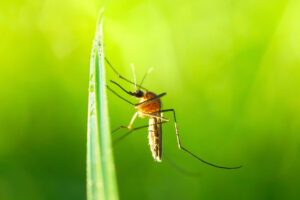
It’s easy to get frustrated when you’re swatting away a persistent wasp or cleaning up after a swarm of pigeons, but the truth is that the most irritating creatures are often the ones keeping our ecosystems from collapsing. While we tend to view these animals as nothing more than a nuisance at a summer barbecue or a threat to our garden plants, they’re usually the ones doing the dirty work behind the scenes. From natural pest control to essential pollination, their “annoying” habits are actually the very things that keep our food chains stable and our environment healthy. If these species suddenly vanished, we’d quickly realise that a bit of irritation is a very small price to pay for our own survival. Mosquitoes It feels almost offensive to include them, but here we are. Mosquitoes are one of the most universally despised insects alive, and the diseases they carry make them genuinely dangerous in many parts of the world. But they’re also a critical food source for hundreds of species of birds, bats, fish, and insects that depend on them at various life stages. Mosquito larvae are particularly important in aquatic ecosystems, where they form a significant part of the diet for fish and other water-dwelling creatures. Some plants also rely on mosquitoes for pollination. Wiping them out entirely, which has been proposed more than once, would send shockwaves through food chains that are difficult to fully predict. @beyond_blathers Replying to @montyc19 keep these good questions coming! #sciencecommunicator #entomologytok #womeninscience #sciencepodcaster #wetlandecologist ♬ original sound – Beyond Blathers Podcast 🍉 Wasps Nobody’s favourite guest at a summer barbecue, but wasps do an enormous amount of quiet ecological work that tends to go unacknowledged. They’re predatory insects that hunt caterpillars, flies, aphids and other creatures that would otherwise devastate garden plants and crops. They also pollinate plants, albeit less efficiently than bees, and fig wasps in particular are entirely responsible for pollinating fig trees. Without them, figs simply wouldn’t exist. Some species of wasp also produce venom compounds that are being studied for potential use in cancer treatment, which puts them in a slightly different light, even if they’re still absolutely insufferable at picnics. Bats Bats divide opinion sharply, but the case for them is strong. A single bat can eat thousands of insects in a single night, which makes them one of the most effective natural pest controllers we have. In agricultural terms, their contribution to keeping insect populations in check saves billions of pounds worth of crop damage globally every year. Many bat species are also pollinators and seed dispersers, particularly in tropical regions, where they’re responsible for spreading the seeds of plants that other animals can’t reach. Losing bat populations, which are already under significant pressure in many parts of the world, would have serious consequences for both farming and wild ecosystems. @hayley_wood A little repost because I’m in England visiting my family. Enjoy some bat facts 🦇🤎 #environmentalscience #wildlifebiology #conservation #bats #funfacts ♬ original sound – Hayley 🌿🦇🌻 Rats Rats have a genuinely terrible reputation and, in urban environments especially, it’s not entirely undeserved. But in the wild, they play a more complex role than most people give them credit for. They’re seed dispersers, helping to spread plants across wide areas, and they form an important part of the food chain for owls, foxes, snakes and various other predators that would struggle without them. In some ecosystems, they also aerate soil through their burrowing, which benefits plant growth. None of this makes them welcome in your kitchen, but it does mean their complete removal from any ecosystem tends to cause problems further up the chain. Vultures They’re not conventionally appealing, but vultures are doing some of the most important sanitation work in nature. They consume carcasses that would otherwise rot in the open, which reduces the spread of diseases like anthrax, botulism, and rabies. Their digestive systems are uniquely equipped to destroy bacteria that would be lethal to most other scavengers. In parts of Africa and Asia where vulture populations have collapsed, largely due to poisoning and habitat loss, the consequences have been significant, with increased disease spread and surging rat populations filling the scavenging gap in far less effective and more problematic ways. Flies Houseflies are revolting, and the reasons are well documented: they land on waste, they spread bacteria, they’re relentless. But flies as a broader group are doing a huge amount of ecological heavy lifting. Many species are important pollinators, particularly in cooler climates and high altitudes, where bees are less active. Blowflies and other carrion flies break down dead matter and return nutrients to the soil, and fly larvae are a vital food source for countless birds and other insects. The class of flies is enormous and varied, and most of the work they do happens quietly and without anyone noticing until the balance is disturbed. @ayavega_sci The importance of flies Imagine earth without them! #nature #science #insects #foryoupage #earth ♬ Clair de lune/Debussy – もつ Ants Ants in the house are maddening, particularly when they’ve found something sweet and the whole colony has apparently been notified within minutes. But outside, ants are remarkable ecosystem engineers. They aerate soil more effectively than almost any other creature their size, improve drainage, redistribute nutrients and shift enormous quantities of organic matter through their constant activity. Many plants have evolved specifically to rely on ants for seed dispersal, a relationship so established that some seeds have structures on them designed specifically to attract ants to carry them. Ant colonies also regulate populations of other insects, keeping various species from getting out of hand. Hornets Bigger, louder and more alarming than wasps, hornets have an even worse reputation. But they’re highly effective predators of insects that damage trees and crops, and in some ecosystems they’re one of the primary controllers of caterpillar and fly populations. Asian giant hornets, which have attracted significant attention for their impact on honeybee colonies, also play a role in their native

10 Annoying Animals We Actually Need to Survive Read More »

How Do Bears Know When to Wake Up From Their Hibernation?

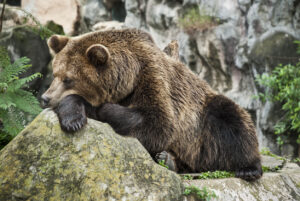
Bears don’t set an alarm, obviously, but the process that brings them out of hibernation each spring is surprisingly precise, driven by a combination of internal biology, environmental cues and physical changes that have been fine-tuned over thousands of years. Their internal clock does most of the heavy lifting. Bears have a circadian rhythm like most animals, but they also have what researchers call a circannual rhythm, which is an internal biological clock that runs on a yearly cycle rather than a daily one. This clock keeps ticking even when a bear is deep in hibernation, and it begins nudging the bear’s body towards waking well before any external signs of spring arrive. It’s genuinely internal, meaning a bear kept in a controlled environment with no seasonal cues will still wake up at roughly the right time of year. Changing day length is a key trigger. Even through the walls of a den, bears are sensitive to photoperiod, or the changing balance of light and dark across the seasons. As days start to lengthen in late winter and early spring, that change registers in the bear’s biology and begins influencing hormone levels. It’s a subtle signal, but it’s one of the more reliable environmental cues available because day length follows a predictable annual pattern regardless of what the weather is doing. Temperature changes send a signal too. A sustained rise in outside temperature is another cue that prompts bears to start stirring. This doesn’t mean a single warm day in February will bring them out; bears are fairly good at ignoring brief warm spells. It’s the broader, more consistent warming trend of early spring that their bodies respond to. If temperatures drop back down sharply, bears will often return to a torpor-like state and wait it out a little longer. @snugbarn The moment a bear wakes up from hibernation #bear #brownbear #animalfacts #wildlife #fypシ゚viral ♬ original sound – Snugbarn Their body fat reaches a critical low point. Bears enter hibernation carrying enormous fat reserves, and by late winter those reserves are running genuinely low. The drop in body fat triggers hormonal changes that push the bear towards waking up, partly because the body is essentially signalling that it can’t sustain the hibernation state much longer without food. It’s less a choice and more a biological necessity kicking in at the right moment. Hormones change dramatically as spring approaches. Testosterone in male bears and oestrogen in females begin rising in late winter, driven by the same seasonal cues that affect day length and temperature. These hormonal changes increase metabolic activity, raise body temperature gradually and make continued sleep increasingly difficult to maintain. By the time a bear is fully awake, its hormone levels have changed substantially from where they were at the peak of hibernation. Pregnant females have their own separate timing. Female bears who gave birth during hibernation, which is remarkably common, tend to wake up on a slightly different schedule driven by the needs of their cubs. The cubs will have been nursing through the winter and are ready to start exploring by early spring, which aligns with when their mother’s body is primed to wake. The demands of motherhood effectively layer on top of the usual biological triggers and can bring females out of the den a little earlier than males. @ilikebigcurls Replying to @Vilma Miriam Hernandez #greenscreen my mind has been blown too many times my friends 🤣🤣🤯🤯 #bears #hibernate #hibernation #americanschoolsystem #mindblown ♬ original sound – Shauna🧚‍♀️🍄🌲🌈✨ They don’t wake up all at once. Coming out of hibernation is a gradual process rather than a sudden switch from sleep to full alertness. Bears spend days, sometimes weeks, in a transitional state where their body temperature rises slowly, their heart rate increases, and they become more responsive to their surroundings before they actually leave the den. This slow transition is important because the body needs time to adjust after months of dramatically reduced function. Hunger becomes impossible to ignore. By the time a bear wakes properly, it’s lost a huge proportion of its body weight—often somewhere between a quarter and a third of what it weighed going in. That level of depletion creates an intense hunger drive that becomes one of the most powerful forces pushing the bear out into the world to find food. The first weeks after hibernation are spent eating almost constantly to begin rebuilding those fat stores. Males tend to emerge before females. In most bear species, males wake up and leave their dens earlier in the season than females, particularly females with cubs. Males are generally larger, carry more fat reserves going in and don’t have the additional demands of nursing young. Emerging earlier also gives them a head start on establishing territory and finding food before competition increases as more bears become active. @bigdandbubba Who else was taught that bears hibernate for like, 3 months straight?🙋‍♂️ . . . . . . . #hibernation #laugh #nature #winter #fyp #fypシ #radio #scared #countrymusic #music #country ♬ original sound – bigdandbubba The type of den affects when they wake. Bears den in all sorts of places: hollowed trees, rocky caves, dug-out burrows, sometimes just a sheltered depression in the ground. The insulation and microclimate of the den itself has some influence on how long a bear stays under. A well-insulated den buffers the bear from early temperature fluctuations, meaning bears in cosier dens might sleep slightly longer than those in more exposed spots where environmental changes register more quickly. They’re not fully unconscious during hibernation. This matters because it means bears are capable of responding to disturbances throughout winter, not just in spring. Unlike true deep hibernators such as ground squirrels, bears maintain a higher body temperature and can rouse themselves if threatened. This partial alertness means they’re never completely cut off from the environment around them, and it likely contributes to their ability to pick up on gradual seasonal changes even from within the den. Nobody fully understands every part of

How Do Bears Know When to Wake Up From Their Hibernation? Read More »

Why Some Animals Live 200 Years and Others Only Last a Day

The natural world has some pretty brutal gaps when it comes to how much time different species get. While a mayfly has barely enough time to find a mate before its 24 hours are up, there are sharks and tortoises that’ll still be knocking about long after we’re gone. There’s a massive range in these lifespans, and it’s not just down to luck or avoiding predators. It’s down to a complex trade-off between how fast an animal grows, how many offspring it produces, and the clever ways its cells repair themselves. Understanding why a bowhead whale can hit the 200 mark while a shrew is lucky to see its second birthday means looking at the specific biological “bargains” each species has made to keep its lineage going. It mostly comes down to how fast you live. There’s a rough rule in biology that smaller, faster animals tend to live shorter lives and larger, slower ones tend to live longer. Heart rate, metabolic rate, and lifespan are all loosely connected; animals that burn through energy quickly tend to age faster. A shrew’s heart beats around a thousand times a minute, and it lives for a year or two. A tortoise’s heart beats a handful of times a minute, and it can live for over a century. The relationship isn’t perfect and there are plenty of exceptions, but the basic pattern holds across a remarkable range of species, and it gives you a useful starting framework for thinking about why lifespans vary so dramatically. Predation pressure shapes how long animals are built to live. Evolution doesn’t build animals to live longer than they need to. If a species is likely to be eaten within a year or two regardless, there’s no evolutionary advantage to being built for a longer lifespan. The investment simply wouldn’t pay off. Animals with lots of predators tend to reproduce quickly, age quickly, and die young. Animals that are relatively safe from predation tend to develop longer lifespans because their genes have more opportunity to be passed on over time, whether through size, armour, flight, or living somewhere predators can’t easily reach. Bats are a striking example: they’re tiny mammals that should, by size alone, live just a few years, but because they can fly away from most threats they regularly live for twenty or thirty years. Some animals have essentially solved ageing. There are species that show what biologists call negligible senescence, meaning they don’t appear to age in any meaningful way. The naked mole rat is the most studied example. It lives for 30 years or more, shows almost no increase in mortality risk as it gets older, barely develops cancer, and maintains its physical condition to a degree that would be extraordinary in any other mammal its size. The ocean quahog clam lives for over 500 years with no obvious deterioration. These animals haven’t cheated death, but they’ve found biological strategies that keep cellular damage from accumulating the way it does in most species, and understanding how they do it is one of the more active areas in ageing research. Telomeres play a bigger role than most people realise. Every time a cell divides, the protective caps on the ends of chromosomes, called telomeres, get slightly shorter. When they shorten past a critical point, cells stop dividing and eventually die. This process is one of the core mechanisms of ageing, and the rate at which it happens varies considerably between species. Some long-lived animals have unusually effective telomere maintenance. Others, like certain turtles, appear to have telomeres that barely shorten at all over their lifetimes. The enzyme responsible for maintaining telomere length, telomerase, is active in ways in long-lived species that it simply isn’t in shorter-lived ones, and that difference has enormous downstream effects on how quickly the body ages. DNA repair efficiency separates long-lived species from short-lived ones. Cellular DNA gets damaged constantly by sunlight, by metabolic byproducts, by random errors during replication. Most animals have repair mechanisms that catch and fix this damage, but the efficiency of those mechanisms varies significantly between species, and it correlates strongly with lifespan. Longer-lived animals tend to have more robust DNA repair systems. The bowhead whale, which can live for over 200 years, has been found to carry unusually effective versions of genes involved in DNA repair and cancer suppression. Getting better at fixing the damage that causes ageing is, in evolutionary terms, one of the most reliable routes to a longer life. The Greenland shark is in a category of its own. Carbon dating of Greenland sharks has suggested lifespans of up to 400 years, making them the longest-lived vertebrate known to science. They grow extraordinarily slowly, at just a centimetre or so per year, and don’t reach sexual maturity until they’re around 150 years old. The cold, deep waters of the North Atlantic they inhabit slow their metabolism to a crawl, and that glacial pace of living appears to translate directly into an extraordinary lifespan. A Greenland shark alive today could have been born before the United States existed, which is a genuinely strange thing to sit with. Mayflies aren’t actually as short-lived as they seem. The adult mayfly lives for a day, sometimes less, but that’s only part of the story. The nymph stage that precedes it can last for one to three years underwater, during which the mayfly is feeding, growing, and developing. The adult form exists for one purpose only: reproduction. It doesn’t even have a functional digestive system because it doesn’t need one—it has just enough time to mate and lay eggs before it dies. The extreme brevity of the adult phase isn’t a failure of biology; it’s a highly efficient solution to the problem of reproduction that doesn’t require the adult form to do anything other than that single task. Body size and lifespan are connected, but not in a simple way. The general pattern of “bigger animals live longer” is real and observable across a wide range of

Why Some Animals Live 200 Years and Others Only Last a Day Read More »

Weird Things Iguanas Can Actually Do

Most people look at an iguana and think slow, sleepy, slightly grumpy lizard that mostly just sits there. Fair enough—they do spend a lot of time sunbathing like they’ve got nowhere to be. However, under that chilled exterior, iguanas are packed with strange little abilities that feel almost prehistoric. The more you learn about them, the more you realise they’re not just decorative reptiles. They’re full of odd, clever survival tricks. Iguanas can drop their tails on purpose. If a predator grabs an iguana by the tail, it can literally detach it and make a run for it. The tail keeps wriggling on the ground for several minutes, which distracts the predator just long enough for the iguana to escape. It sounds dramatic, but it’s a calculated move. The tail eventually grows back, though never quite as perfectly as the original. Still, losing part of your body to save your life is a wild party trick most animals don’t have. They can hold their breath underwater for ages. Despite looking like desert reptiles, many iguanas are excellent swimmers. Some species can stay submerged for up to 30 minutes if they need to avoid danger. They flatten their bodies slightly and use powerful tail strokes to glide through water. If you see one dive off a riverbank, it’s not panicking. It’s switching to aquatic mode like it’s done it a hundred times before. @animalogic Green Iguna’s have a 3rd eye! #fyp #iguana #nature #wildlife #thirdeye #spirituality #spiritualtok ♬ original sound – Animalogic They have a built-in third eye. It’s not an eye in the way you’re picturing, but iguanas have a light-sensitive organ on top of their head called a parietal eye. It can’t form images, but it detects changes in light and shadow. That extra sensor helps them spot predators swooping in from above. If a shadow suddenly passes over, they react fast. It’s like having a built-in motion detector on the roof of your head. They can survive big falls without much drama. Iguanas often live high up in trees. When threatened, they sometimes leap from surprising heights straight into water or onto the ground. Young iguanas in particular can fall several metres and just run off like nothing happened. Their light bodies and strong limbs help absorb the impact. It looks reckless, but for them, it’s routine. They sneeze out excess salt. If you’ve ever seen a white crust around an iguana’s nostrils, it’s not dirt. Iguanas have special salt glands that remove excess salt from their bodies. They expel it through sneezing, which looks funny but keeps their internal balance stable. It’s especially useful for species that live near coastal areas or eat salty plants. Some iguanas can change shade slightly. They don’t change colours as dramatically as chameleons, but iguanas can darken or lighten their skin a bit depending on temperature and mood. When they’re cold, they often appear darker to absorb more heat from the sun. When they’re warm or relaxed, their colour can lighten. It’s a subtle thermostat built into their skin. Marine iguanas feed underwater on algae. The marine iguana found in the Galápagos Islands is the only lizard in the world that forages in the ocean. These iguanas dive down to scrape algae off rocks, sometimes swimming through cold currents that would challenge other reptiles. After feeding, they haul themselves back onto warm lava rocks to heat up again. It’s an unusual mix of reptile and marine behaviour. They have surprisingly strong jaws. Iguanas are mostly herbivores, but they don’t nibble like rabbits. Their jaws are powerful enough to tear through tough leaves and stems. Their teeth are serrated and designed for slicing plant material efficiently. It’s less gentle grazing and more efficient shredding, which helps them process fibrous vegetation quickly. They can stay still for an incredibly long time. Stillness is one of their best defence strategies. An iguana can freeze completely, blending into branches or rocks so effectively that predators overlook it. That patience isn’t laziness. It’s calculated energy conservation. By not moving, they avoid drawing attention and save energy in hot climates. @creaciongrandiosa 🦎WHO RUNS FASTER THAN THIS BEAUTY!🦎IGUANA🦎 #iguana #iguanalovers #animals #nature #naturaleza #tiktokanimals #fyp #foryoupage #thankyou ♬ original sound – creaciongrandiosa They communicate with head bobs and body language. Iguanas aren’t silent statues. They use head bobs, dewlap extensions, and posture to communicate with each other. A quick series of head bobs can signal dominance. A slower movement can mean something entirely different. It looks subtle to us, but in iguana terms, it’s a full conversation. They can run faster than you’d expect. When startled, iguanas don’t shuffle. They sprint. Some can reach speeds of around 20 miles per hour over short distances. That sudden burst of speed often surprises people who assume they’re sluggish. One moment they’re lounging, the next they’re gone in a flash of claws and tail. Their tails double as powerful whips. An iguana’s tail isn’t just for balance. It can be used as a defensive weapon. If cornered, they’ll lash it side to side with enough force to sting. Combined with sharp claws and strong jaws, they’re not as helpless as their calm appearance suggests. Once you look past the slow blinking and sunbathing, iguanas feel less like background scenery and more like small, scaly survival experts. They’ve evolved to fall, swim, whip, sneeze salt, and even detach body parts if necessary. Not bad for an animal most people assume just sits on a branch all day.

Weird Things Iguanas Can Actually Do Read More »