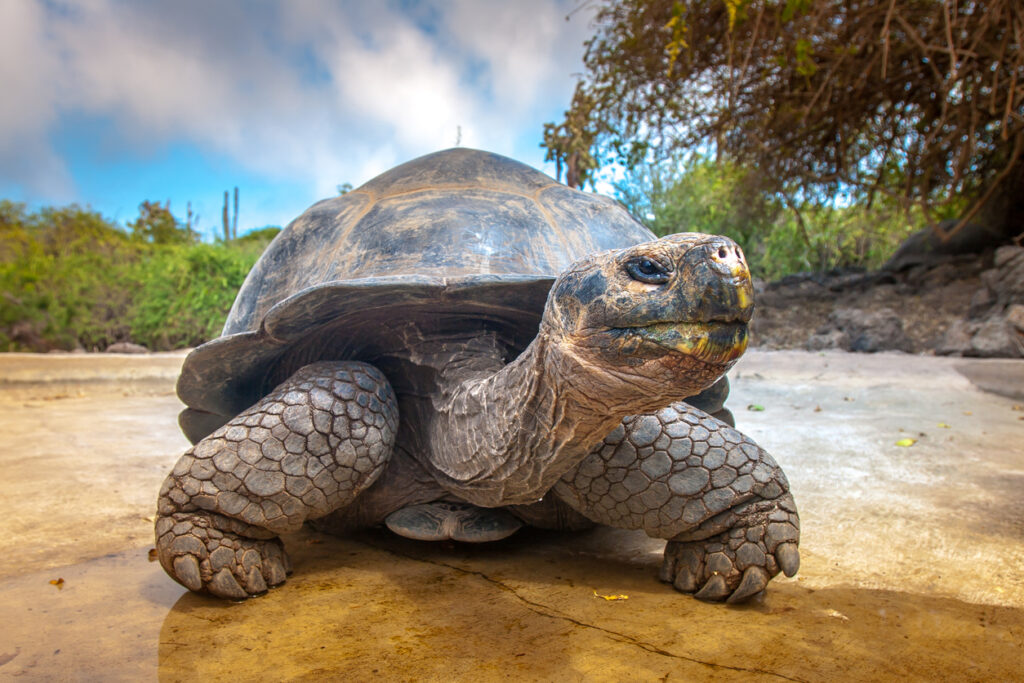
The natural world has some pretty brutal gaps when it comes to how much time different species get. While a mayfly has barely enough time to find a mate before its 24 hours are up, there are sharks and tortoises that’ll still be knocking about long after we’re gone.
There’s a massive range in these lifespans, and it’s not just down to luck or avoiding predators. It’s down to a complex trade-off between how fast an animal grows, how many offspring it produces, and the clever ways its cells repair themselves. Understanding why a bowhead whale can hit the 200 mark while a shrew is lucky to see its second birthday means looking at the specific biological “bargains” each species has made to keep its lineage going.
It mostly comes down to how fast you live.
There’s a rough rule in biology that smaller, faster animals tend to live shorter lives and larger, slower ones tend to live longer. Heart rate, metabolic rate, and lifespan are all loosely connected; animals that burn through energy quickly tend to age faster. A shrew’s heart beats around a thousand times a minute, and it lives for a year or two. A tortoise’s heart beats a handful of times a minute, and it can live for over a century.
The relationship isn’t perfect and there are plenty of exceptions, but the basic pattern holds across a remarkable range of species, and it gives you a useful starting framework for thinking about why lifespans vary so dramatically.
Predation pressure shapes how long animals are built to live.
Evolution doesn’t build animals to live longer than they need to. If a species is likely to be eaten within a year or two regardless, there’s no evolutionary advantage to being built for a longer lifespan. The investment simply wouldn’t pay off. Animals with lots of predators tend to reproduce quickly, age quickly, and die young.
Animals that are relatively safe from predation tend to develop longer lifespans because their genes have more opportunity to be passed on over time, whether through size, armour, flight, or living somewhere predators can’t easily reach. Bats are a striking example: they’re tiny mammals that should, by size alone, live just a few years, but because they can fly away from most threats they regularly live for twenty or thirty years.
Some animals have essentially solved ageing.
There are species that show what biologists call negligible senescence, meaning they don’t appear to age in any meaningful way. The naked mole rat is the most studied example. It lives for 30 years or more, shows almost no increase in mortality risk as it gets older, barely develops cancer, and maintains its physical condition to a degree that would be extraordinary in any other mammal its size.
The ocean quahog clam lives for over 500 years with no obvious deterioration. These animals haven’t cheated death, but they’ve found biological strategies that keep cellular damage from accumulating the way it does in most species, and understanding how they do it is one of the more active areas in ageing research.
Telomeres play a bigger role than most people realise.
Every time a cell divides, the protective caps on the ends of chromosomes, called telomeres, get slightly shorter. When they shorten past a critical point, cells stop dividing and eventually die. This process is one of the core mechanisms of ageing, and the rate at which it happens varies considerably between species.
Some long-lived animals have unusually effective telomere maintenance. Others, like certain turtles, appear to have telomeres that barely shorten at all over their lifetimes. The enzyme responsible for maintaining telomere length, telomerase, is active in ways in long-lived species that it simply isn’t in shorter-lived ones, and that difference has enormous downstream effects on how quickly the body ages.
DNA repair efficiency separates long-lived species from short-lived ones.
Cellular DNA gets damaged constantly by sunlight, by metabolic byproducts, by random errors during replication. Most animals have repair mechanisms that catch and fix this damage, but the efficiency of those mechanisms varies significantly between species, and it correlates strongly with lifespan. Longer-lived animals tend to have more robust DNA repair systems.
The bowhead whale, which can live for over 200 years, has been found to carry unusually effective versions of genes involved in DNA repair and cancer suppression. Getting better at fixing the damage that causes ageing is, in evolutionary terms, one of the most reliable routes to a longer life.
The Greenland shark is in a category of its own.
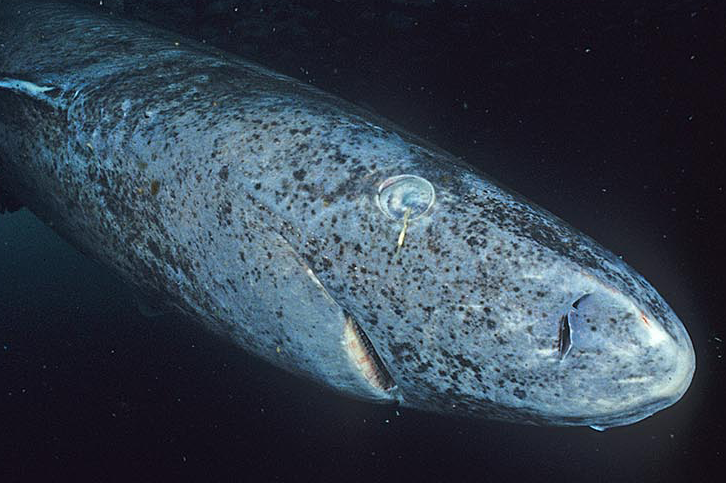
Carbon dating of Greenland sharks has suggested lifespans of up to 400 years, making them the longest-lived vertebrate known to science. They grow extraordinarily slowly, at just a centimetre or so per year, and don’t reach sexual maturity until they’re around 150 years old.
The cold, deep waters of the North Atlantic they inhabit slow their metabolism to a crawl, and that glacial pace of living appears to translate directly into an extraordinary lifespan. A Greenland shark alive today could have been born before the United States existed, which is a genuinely strange thing to sit with.
Mayflies aren’t actually as short-lived as they seem.
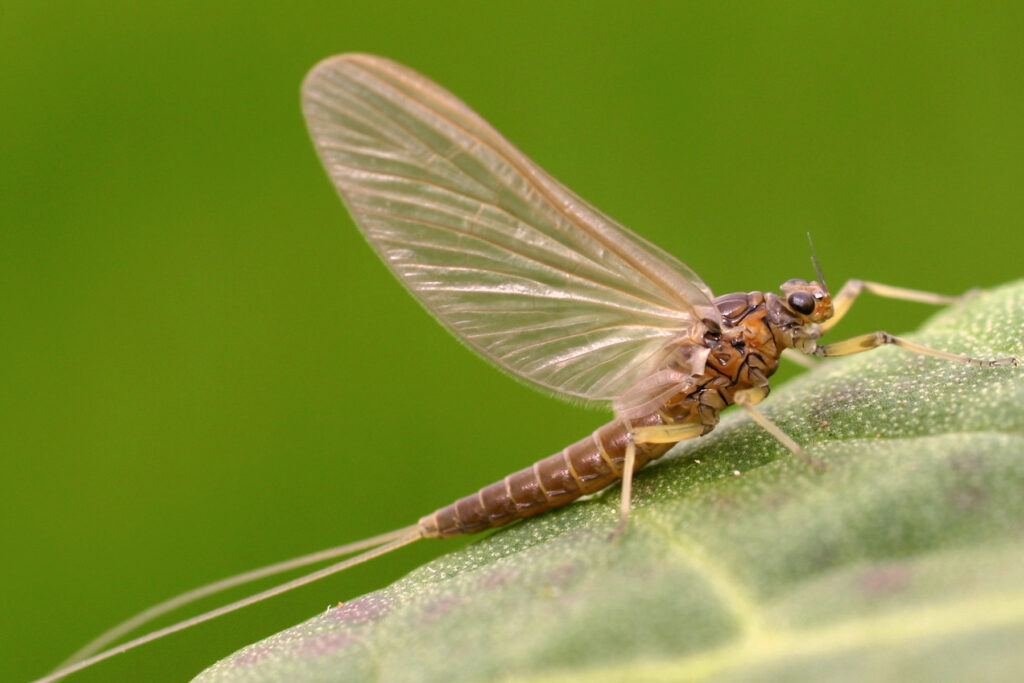
The adult mayfly lives for a day, sometimes less, but that’s only part of the story. The nymph stage that precedes it can last for one to three years underwater, during which the mayfly is feeding, growing, and developing. The adult form exists for one purpose only: reproduction.
It doesn’t even have a functional digestive system because it doesn’t need one—it has just enough time to mate and lay eggs before it dies. The extreme brevity of the adult phase isn’t a failure of biology; it’s a highly efficient solution to the problem of reproduction that doesn’t require the adult form to do anything other than that single task.
Body size and lifespan are connected, but not in a simple way.
The general pattern of “bigger animals live longer” is real and observable across a wide range of species. Elephants outlive mice, whales outlive dogs, tortoises outlive shrews. But the relationship breaks down in interesting ways at the edges. Some small animals live surprisingly long lives, and some large ones die relatively young.
Hippos live for around 40 years despite their enormous size, while a much smaller parrot can outlive them easily. The exceptions tend to have explanations, such as particular metabolic strategies, specific ecological pressures, unusual physiological adaptations, and they’re often more interesting than the rule itself.
Cancer resistance is a hidden factor in longevity.
One of the reasons large, long-lived animals are so interesting biologically is that they present what’s known as Peto’s paradox. A whale has trillions more cells than a mouse and lives for decades longer, which should statistically mean a far higher cancer rate—more cells dividing over more time means more opportunities for mutations.
However, whales don’t get cancer at dramatically higher rates than smaller animals. Something in their biology suppresses it, and the same applies to other long-lived species. Naked mole rats are almost entirely cancer-resistant. Elephants carry multiple copies of a key tumour-suppressing gene that humans only have one of. The ability to live long appears to require, among other things, a very good solution to cancer.
Environment shapes lifespan across generations.
Animals living in stable, predictable environments with reliable food sources tend to evolve longer lifespans than those in volatile, unpredictable ones. When survival from one year to the next is reasonably likely, it makes evolutionary sense to invest in longevity and produce fewer, better-cared-for offspring.
When the environment is harsh and survival is uncertain, the better strategy is to reproduce early, reproduce often, and not invest too heavily in a body that might not survive anyway. This is why you find such different life history strategies across species—each one is a solution to the particular set of conditions that shaped it over evolutionary time.
Hibernation and torpor can effectively extend a life.
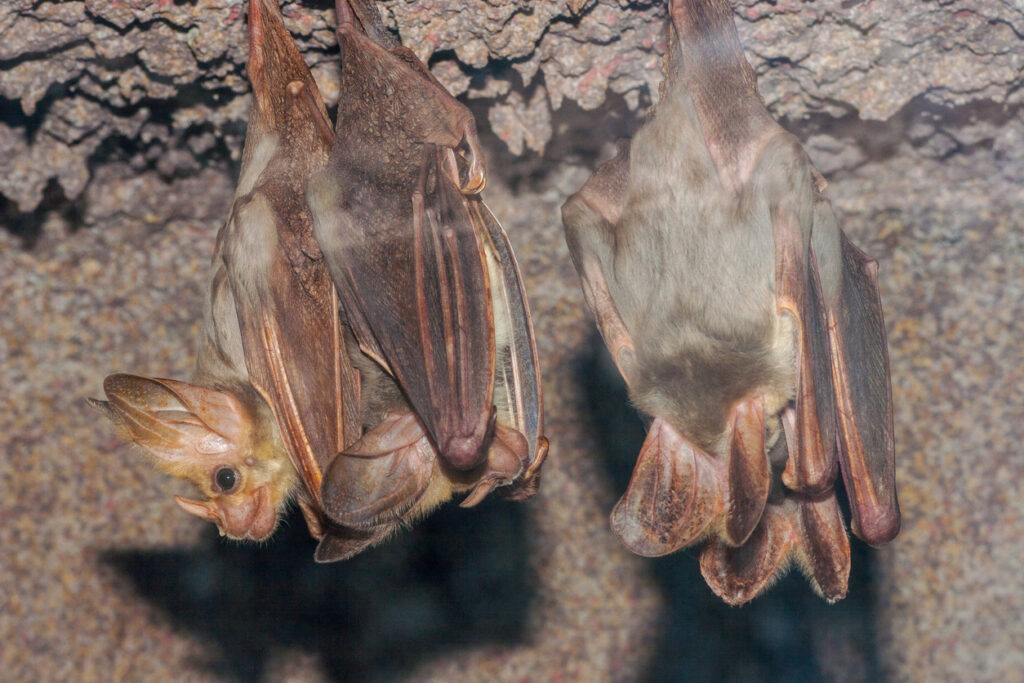
Animals that hibernate or enter states of torpor spend significant portions of their lives in a kind of suspended animation, where their metabolism drops dramatically and the biological processes that cause ageing slow down considerably. Bats that hibernate can live far longer than their active metabolic rate would predict.
The little brown bat, which weighs about as much as a few coins, can live for over 30 years, which is extraordinary for a mammal that small. The time spent in deep torpor is time during which the clock of ageing is running much more slowly, and that accumulates into a meaningful difference in overall lifespan compared to similarly sized animals that stay active year-round.
The immortal jellyfish technically doesn’t have to die at all.
Turritopsis dohrnii, a small jellyfish found in the Mediterranean and elsewhere, is the only known animal capable of reverting to its juvenile state after reaching sexual maturity. When stressed or aged, it can essentially restart its life cycle, transforming back into a polyp and beginning again from an earlier stage of development.
In theory, this process can repeat indefinitely, making it biologically immortal in a way that no other known animal is. In practice, most individuals in the wild die from predation or disease long before old age becomes relevant, but the underlying biological capacity to reset is real, and it makes the species unlike anything else we know of.
What long-lived animals are teaching us about human ageing
The study of extreme longevity in animals has shifted from a curiosity into a serious scientific field precisely because of what it might mean for human health. The genes that give naked mole rats their cancer resistance, the DNA repair mechanisms of bowhead whales, the telomere biology of long-lived turtles—all of it is being studied with the hope of understanding ageing well enough to slow it down in humans.
We’re not on the verge of living for centuries, but the gap between what’s biologically possible and what we currently achieve is becoming clearer, and the animals that have already solved the problems we’re trying to understand are increasingly the best place to look for answers.