
Most houseplants are remarkably good at tolerating conditions that are far from ideal, which means they can look alive for a long time without actually thriving. Learning to tell the difference changes how you care for them and usually results in plants that look noticeably better.
Happy plants grow, while surviving ones just sit there.
The clearest sign that a plant is doing well is consistent, visible growth. New leaves appearing regularly, stems extending, roots occasionally poking out of drainage holes — these are all signs of a plant that has what it needs and is using it. A plant that looks exactly the same month after month isn’t necessarily dying, but it’s not thriving either.
Some plants do have natural slow periods, particularly in winter when light levels drop, but a plant that never really moves in any season is telling you something about its conditions that’s worth paying attention to.
Leaf colour tells you a lot about what’s missing.
Deep, consistent colour across the leaves is a reliable indicator of a healthy plant. When leaves start to pale, yellow, or develop unusual patches, something is off — the question is what. Yellowing in older leaves at the base often points to overwatering or root issues. Yellowing across younger leaves can suggest a nutrient deficiency, particularly nitrogen.
Pale, washed-out colour across the whole plant usually means not enough light. Brown tips with otherwise green leaves often indicate low humidity or inconsistent watering. None of these are catastrophic on their own, but they’re the plant’s way of communicating, and reading them correctly means you can fix the actual problem rather than guessing.
@rootingfor_you We talk a lot about signs that your plant needs help – so let’s talk about signs that your plant is happy! Here are three signs that your monstera is thriving, with some tips on how to keep it that way 🪴💖 #fyp #planttok #tiktoklearningcampaign #monstera #plantcare #plantcaretips #planttok #plantlover #plants ♬ Cozy Day (Lofi) – The Machinist Beats
The soil should feel right for the plant you’re growing.
Overwatering kills more houseplants than almost anything else, and the soil is where you find the evidence. Healthy soil for most plants should cycle between slightly moist and nearly dry depending on the species—it shouldn’t be sitting wet for days at a time, and it shouldn’t be pulling away from the sides of the pot through sustained dryness either.
Stick a finger a couple of centimetres into the soil before watering rather than watering on a fixed schedule because the same plant needs more water in summer and less in winter, and schedules don’t account for that. Soil that smells musty or sour is a warning sign that roots may already be rotting underneath.
Root health is the part most people never check.
Everything visible above the soil depends on what’s happening below it, and roots in poor condition will eventually show up in the leaves and stems, no matter how well you’re caring for the plant on the surface. Healthy roots are white or light tan, firm, and relatively odourless. Brown, soft, or mushy roots indicate rot, usually from overwatering or poor drainage.
If your plant is struggling, and you can’t identify why from what you can see, carefully sliding it out of its pot and checking the root ball is often the most direct way to find out what’s actually going on. A plant with badly rotted roots needs intervention, not just better watering.
New growth looks different from struggling growth.
When a plant is genuinely healthy, new leaves tend to unfurl with good colour and reasonable size. When a plant is just hanging on, new growth often comes out smaller than it should be, pale, or distorted. Leggy growth—long stems with wide gaps between leaves—usually means the plant is reaching desperately for light and stretching itself thin trying to find it.
Compact, proportional new growth with leaves close together on the stem is what you’re looking for. The shape and quality of new leaves is often more informative than how the older ones look because older leaves carry the history of previous conditions while new ones reflect what’s happening right now.
Pests tend to show up when a plant is already weakened.
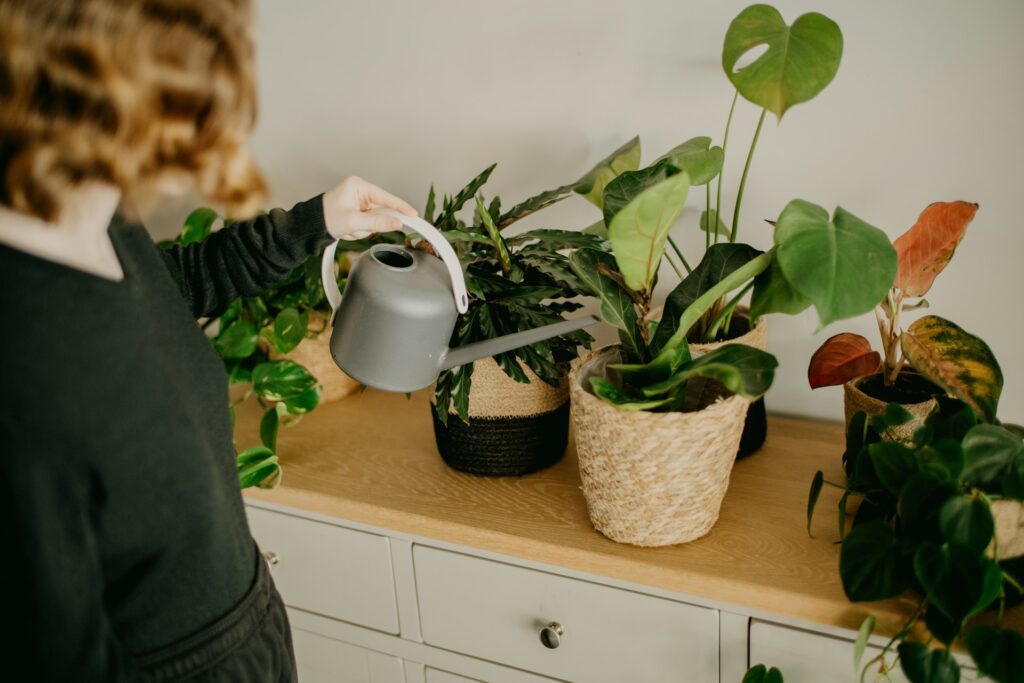
Healthy, vigorous plants do get pests, but they’re far more susceptible when they’re already stressed. If you’re finding yourself dealing with repeated infestations of spider mites, fungus gnats, mealybugs, or scale on a particular plant, it’s worth asking whether the underlying conditions are right rather than just treating the infestation.
Spider mites in particular thrive in dry conditions and often indicate low humidity. Fungus gnats breed in consistently wet compost and are almost always a sign of overwatering. Treating the pest without addressing the cause tends to result in the same problem coming back within weeks.
Wilting isn’t always about water.
The instinct when a plant wilts is to water it, and sometimes that’s exactly right. But wilting can also be caused by root rot, in which case watering makes things considerably worse. A plant with rotten roots can’t take up water even when the soil is wet, so it wilts despite not being dry.
Before reaching for the watering can, check the soil—if it’s already moist and the plant is still wilting, the problem is almost certainly the roots rather than the water supply. Overwatered and underwatered plants can look remarkably similar from above, which is why checking the soil first is always the better starting point.
Humidity matters more than most people think.
A lot of popular houseplants come from tropical environments with humidity levels much higher than the average British home, particularly in winter when central heating dries the air considerably. Plants struggling with low humidity tend to develop brown, crispy leaf tips and edges, drop leaves unexpectedly, or show signs of stress that don’t respond to changes in watering or light.
Grouping plants together raises the local humidity slightly as they transpire. A pebble tray with water beneath the pot helps too. For humidity-loving plants like ferns, calatheas, and orchids, a small humidifier nearby makes a more meaningful difference than misting, which evaporates too quickly to have a sustained effect.
@leafmealone.96 3 signs your plant is THRIVING 🌱 Featuring my peperomia, a low-maintenance cutie! Keep an eye out for these signs to know your plant’s living its best life. . . . . . . #PlantCare #Peperomia #PlantParent #PlantTips #Houseplants #PlantTok #PlantTok #Peperomia #HappyPlants #PlantCare #PlantTips #BeginnerPlants #EasyPlants #IndoorPlants #FYP #LearnOnTikTok #PlantTok #Houseplants #PlantCare #PlantParent #IndoorPlants #HappyPlants #PlantTips #BeginnerPlants #EasyPlants #PeperomiaCare #PlantParenthood #LowMaintenancePlants ♬ La Valse d’Amélie (Version piano) – Yann Tiersen
A plant that flowers on schedule is a happy plant.
For flowering houseplants, blooming at the expected time and producing a reasonable number of flowers is one of the clearest indicators that the plant has everything it needs. Plants that fail to flower despite being the right age and time of year are usually missing something—most commonly light, but sometimes a temperature drop that triggers the flowering response, or nutrients that have been depleted from soil that hasn’t been fed in a long time.
Peace lilies that haven’t flowered in years, orchids that won’t rebloom, or Christmas cacti that skip their season are all signs of conditions that are adequate for survival but not quite right for thriving.
Leaf texture and firmness reveal hydration and health.
Healthy leaves feel firm and substantial when you touch them; there’s a turgidity to them that comes from cells properly hydrated and functioning. Leaves that feel soft, limp, or papery are showing stress, whether from underwatering, overwatering, or temperature damage.
Succulent leaves that have gone wrinkled and soft need water, but leaves that have gone translucent and mushy have had too much. Getting familiar with how your specific plants feel when they’re healthy gives you a baseline to compare against, and subtle changes in texture often show up before visible colour changes do, which means you can catch problems earlier.
How quickly the soil dries out is useful information.
If you’re watering a plant and the water runs straight through the pot without the soil absorbing it, the compost has probably become hydrophobic, or dried out to the point where it repels rather than absorbs moisture. This often happens with peat-based composts that have been allowed to dry out completely.
The plant looks like it’s being watered, but the water isn’t reaching the roots. Sitting the pot in a container of water for half an hour allows the soil to rehydrate from the bottom up and sorts the problem more reliably than watering from the top. If soil is drying out within a day or two of watering, the plant may need repotting into a larger container or more frequent attention.
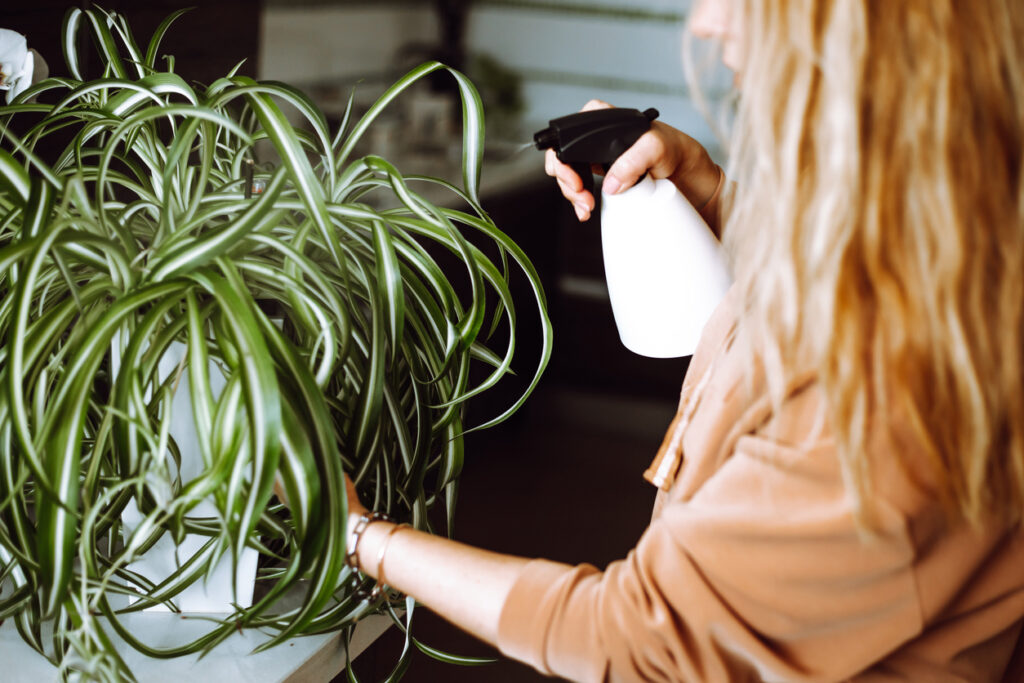
Dropping leaves sends different messages depending on which ones go.
Some leaf drop is completely normal, as plants shed older leaves as a natural part of their cycle. But the pattern of dropping tells you whether it’s normal or a sign of stress. Lower, older leaves dropping gradually is generally fine. Newer leaves dropping, or leaves falling from across the whole plant at once, indicates a problem.
Sudden, dramatic leaf drop in plants like ficus is often a response to being moved. They’re sensitive to changes in light and temperature and express their displeasure immediately and visibly. Gradual decline across the whole plant over weeks is more often a root or watering issue working its way up from below.
The best indicator is simply knowing your plant well.
Every species has its own version of happy, and learning what that looks like for the plants you actually own is more useful than any general rule. A fiddle leaf fig that looks concerning might be completely normal for its type. A pothos that looks fine might be quietly struggling. Spending a few minutes each week actually looking at your plants, not just walking past them, means you notice changes early when they’re still easy to address.
Most houseplant problems that become serious were visible weeks earlier to anyone paying close enough attention, and the difference between a plant that’s thriving and one that’s just surviving is usually a small adjustment made before the situation becomes harder to reverse.