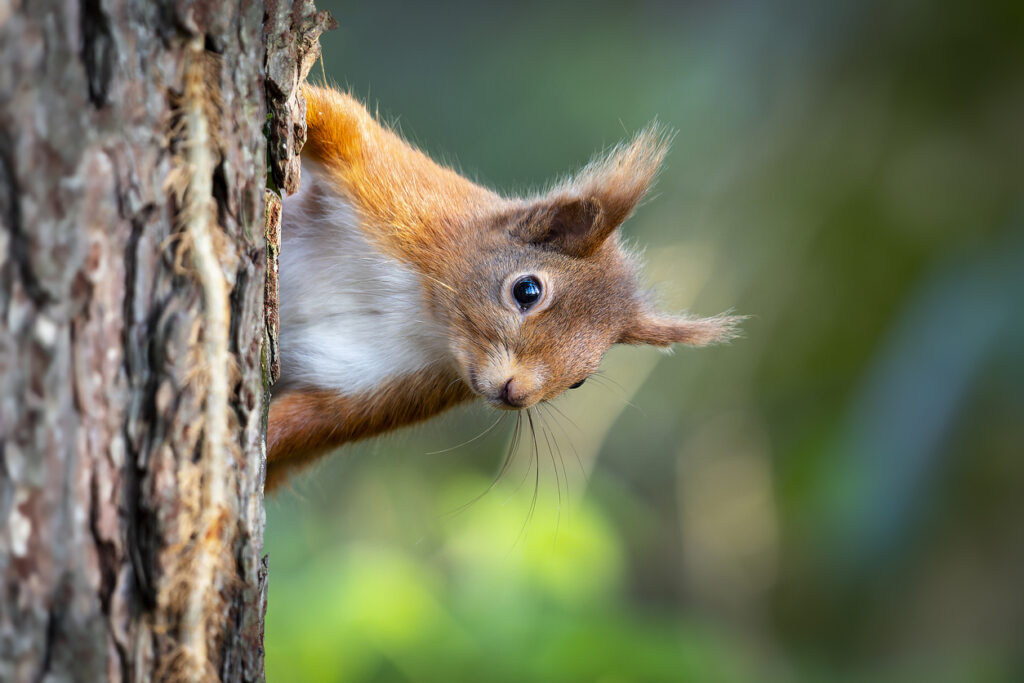
Most people can tell them apart by colour, but the differences between Britain’s native red squirrel and the introduced grey go considerably deeper than appearance, touching on behaviour, biology, diet, and a conservation story that’s still unfolding.
They’re not actually that closely related, despite looking similar.
Red and grey squirrels are both members of the squirrel family, but they’re distinct species that evolved separately on different continents. The red squirrel, Sciurus vulgaris, is native to Britain and spread across Eurasia, while the grey squirrel, Sciurus carolinensis, comes from the eastern forests of North America.
They share a broadly similar body plan because they occupy similar ecological niches, not because of any particularly close evolutionary relationship. The resemblance is more about convergent adaptation to tree-dwelling life than shared ancestry.
Grey squirrels are noticeably larger and heavier.
A grey squirrel typically weighs between 400 and 600 grams and has a noticeably more robust build than the red, which comes in at around 270 to 360 grams. That size difference matters in a competition for resources because a larger animal can cache more food, access a wider range of food sources, and see off competitors at feeding sites more effectively.
The grey’s physical advantage isn’t anything major when you look at individual animals side by side, but across an entire landscape and over years of competition it translates into a consistent edge that the smaller red simply can’t overcome.
Red squirrels have distinctive ear tufts that greys lack.
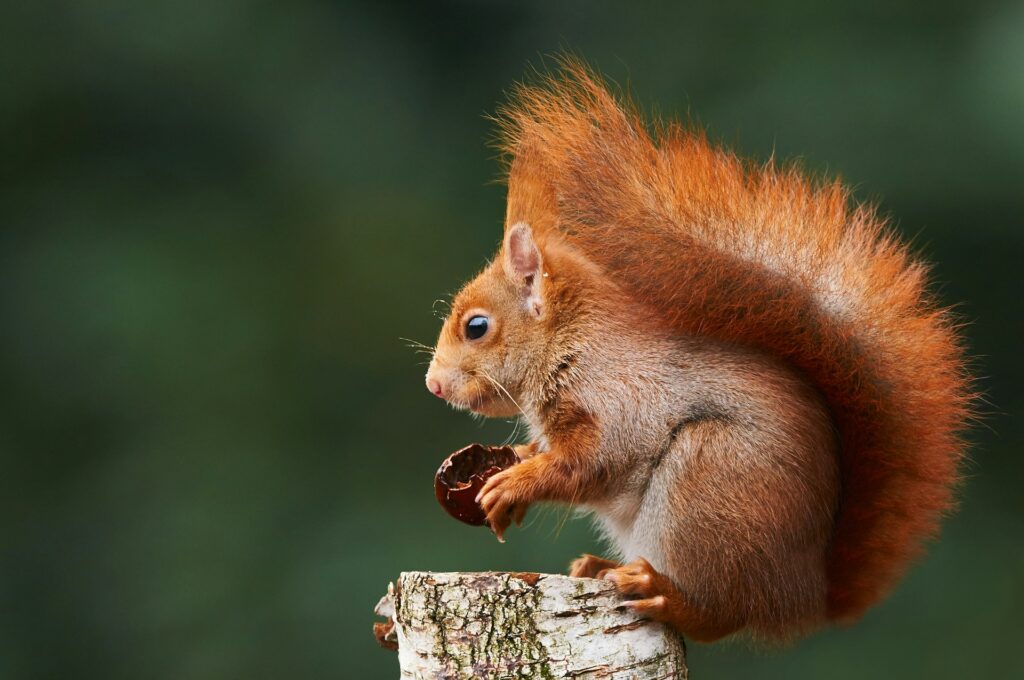
The long tufted ears of the red squirrel are one of its most recognisable features, particularly prominent in winter when the tufts are at their fullest. Grey squirrels have rounded, unadorned ears that give them a noticeably different facial appearance.
Red squirrels also have a longer, bushier tail relative to their body size, and their colouring varies more than most people realise, ranging from pale ginger through rich chestnut to almost dark brown depending on the individual and the season. Some grey squirrels also carry patches of reddish fur, which occasionally causes confusion in areas where both species are present.
Greys can digest acorns that reds cannot.
This is one of the most important biological differences between the two species and has had enormous consequences for the red squirrel’s survival in Britain. Grey squirrels can eat acorns before they’re fully ripe, when the tannin levels are still high enough to be toxic to red squirrels.
That means that in an oak woodland, greys can strip the food supply before reds are able to use it, effectively outcompeting them from the food source without any direct confrontation. Reds do better in conifer woodlands, where their ability to extract seeds from pine cones gives them a relative advantage that greys can’t as easily replicate.
Grey squirrels carry a disease that kills red squirrels.
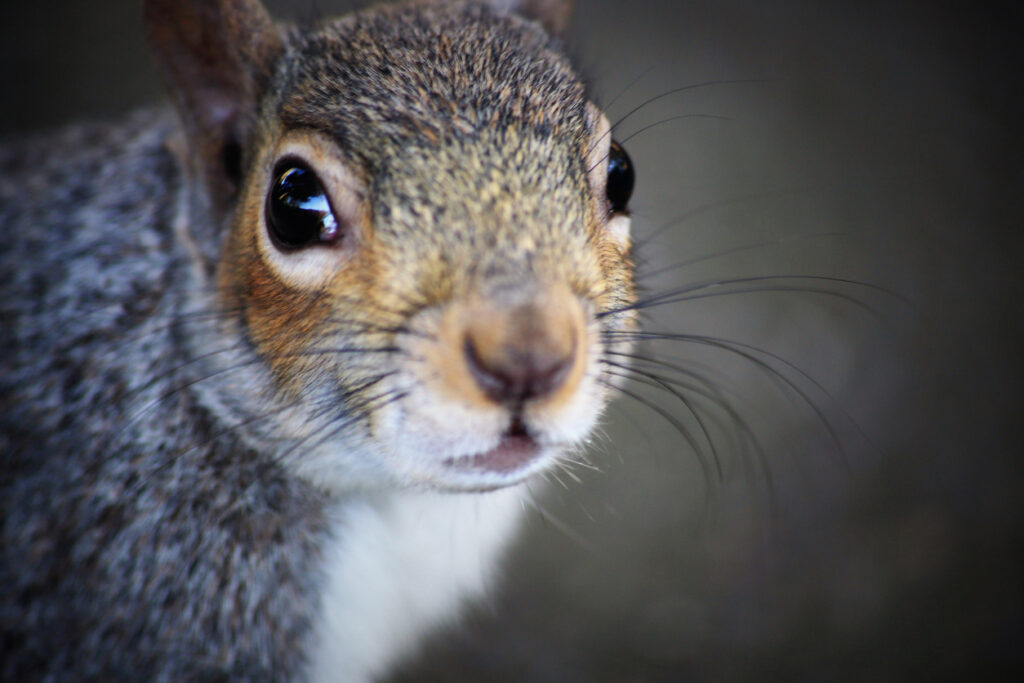
Squirrelpox virus is carried by grey squirrels, which are largely immune to its effects, but it’s fatal to red squirrels in the majority of cases. The virus causes skin lesions, lethargy, and discharge around the eyes and mouth, and infected red squirrels typically die within two weeks of showing symptoms.
The disease spreads through indirect contact at shared feeding sites and doesn’t require direct interaction between the species to transfer. In areas where greys carry the virus, its presence effectively accelerates the disappearance of reds beyond what competition alone would produce, turning a difficult situation into an almost impossible one.
They have different approaches to food storage.
Both species cache food to survive winter, but they go about it differently. Grey squirrels tend to scatter the hoard, burying individual items across a wide area and relying on spatial memory combined with smell to retrieve them. Red squirrels are more likely to larder hoard, creating larger concentrated stores in a smaller number of locations.
Greys are generally considered better at recovering cached food and are known to steal from other squirrels’ caches when the opportunity arises, which gives them another advantage in shared environments where food resources are contested.
Red squirrels are far more restricted in where they can survive in Britain.
Grey squirrels were introduced to Britain in the late 19th century and have since spread across most of England and Wales, pushing red squirrel populations into isolated strongholds in northern England, Scotland, and a handful of managed sites elsewhere.
The Lake District, Northumberland, and the Scottish Highlands hold the largest mainland populations, while islands including Anglesey, Brownsea, and several Scottish islands maintain red squirrel colonies in part because the water barrier limits grey squirrel access. The total red squirrel population in Britain is estimated at around 287,000, the vast majority of them in Scotland, compared to around 2.7 million greys.
Their activity patterns through winter differ considerably.
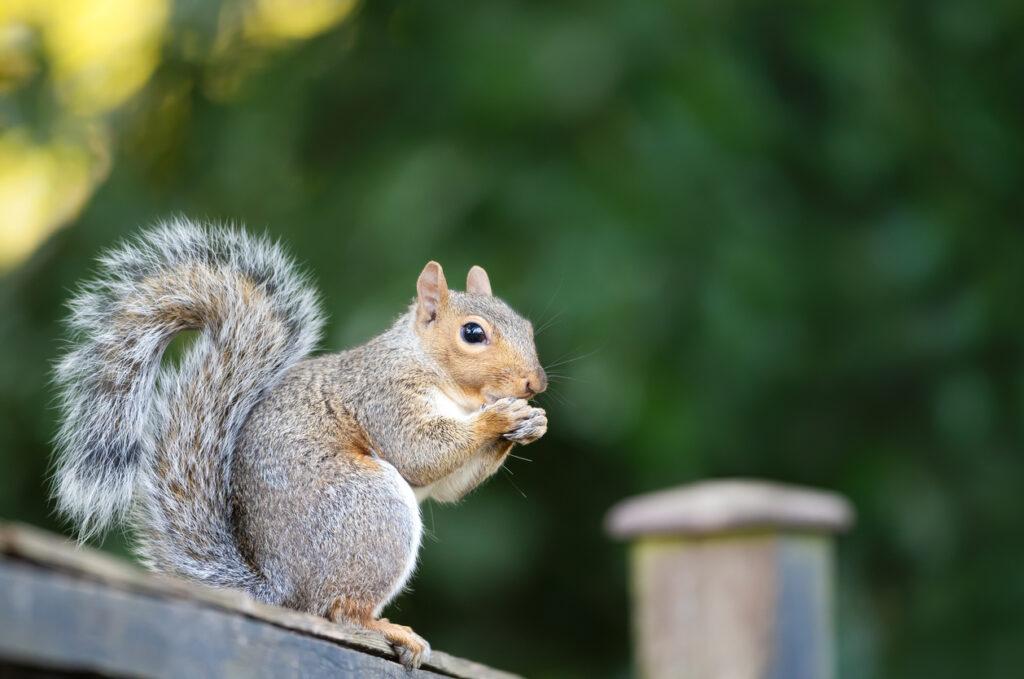
Neither species hibernates, but they handle winter differently. Red squirrels become less active during the coldest periods and may stay in their dreys for several days at a time during severe weather, drawing on stored fat reserves and cached food. Grey squirrels are generally more active through winter and better able to exploit a wider range of food sources when their primary caches run low.
Their greater winter resilience is part of what makes greys so successful in the varied woodland habitats of Britain, where mild winters don’t create the conditions that would give reds a meaningful advantage.
Red squirrels breed more slowly than greys.
Red squirrels typically produce one or two litters per year with two to three young per litter, while grey squirrels also produce two litters annually but with slightly higher survival rates for their young in the British environment. The cumulative effect of this across a population level, combined with the mortality pressure from squirrelpox in areas where greys are present, means that red squirrel numbers struggle to recover quickly from any decline.
Conservation projects that control grey squirrel numbers in red squirrel areas have demonstrated that reds can recover and expand given the opportunity, but the management has to be sustained consistently for the gains to hold.
Greys have had a major impact on British woodland ecology.
Beyond their effect on red squirrels, grey squirrels cause considerable damage to woodland trees by stripping bark, particularly from young broadleaf trees like beech, oak, and sycamore. The exposed wood is vulnerable to fungal infection and the damage can kill young trees or deform their growth in a big way, which affects the long-term structure and health of woodlands in ways that extend well beyond the squirrel population itself. Grey squirrels also predate bird nests, taking eggs and chicks from a range of species, which adds another layer to their ecological impact on the British countryside.
Conservation efforts are more complex than they might appear.

Protecting red squirrels in Britain requires actively managing grey squirrel populations in and around red squirrel areas, which is controversial and involves lethal control methods alongside fertility treatments currently in development. Oral contraceptive baits designed to reduce grey squirrel reproduction without harming other species are being trialled and represent a potential change in how the management is approached, but the scale of the challenge means that no single method is likely to be sufficient on its own.
The reintroduction of pine martens to parts of Britain has also shown promise, as pine martens preferentially predate grey squirrels, whose ground-level behaviour makes them more vulnerable than the nimbler reds.
In much of Europe, the red squirrel faces no such pressure.
The story of red versus grey squirrel is largely a British and Irish one. Across most of continental Europe, the red squirrel remains common and widespread because grey squirrels were never introduced in the same way or have been more successfully controlled where they have appeared.
In Italy, where grey squirrels were introduced in the 1940s and again in the 1990s, active eradication programmes have been implemented to prevent the same pattern from spreading through European forests. Britain’s situation is a cautionary example of what happens when a non-native species becomes too established to remove, and the effort required to simply hold the line for red squirrels reflects the difficulty of that lesson learned too late.