Gardening

Vegetables You Can Regrow in a Glass of Water on Your Windowsill

You don’t need a garden, a greenhouse, or even a particularly green thumb to grow your own food. Some of the most useful vegetables in your kitchen will happily regrow from scraps in nothing more than a glass of water on a sunny windowsill. If you want to feel like you’ve got a green thumb and get something yummy out of the bargain, here are a few to try growing yourself. Spring onions Spring onions are the easiest starting point and probably the most satisfying for beginners because the results are visible within days. When you’ve used the green tops, leave around five centimetres of the white root end and place it in a glass with just enough water to cover the roots. Put it somewhere with decent light, change the water every couple of days, and the green shoots will be back and ready to snip within a week. You can harvest from the same roots multiple times before they eventually give up, which makes a single bunch of spring onions go considerably further than it otherwise would. Celery Celery regrows beautifully from its base. When you’ve used all the stalks, cut the base off leaving about five centimetres intact and sit it cut-side up in a shallow dish of water on a bright windowsill. Within a few days new pale yellow leaves will begin emerging from the centre, and within a couple of weeks you’ll have a cluster of new growth that’s perfectly usable in cooking.  The regrown stalks are smaller and more delicate than the original, but the flavour is good, and the whole process costs nothing beyond a bit of patience and the water you were already drinking. Lettuce and other leafy greens The same base-in-water method that works for celery applies equally well to lettuce, romaine in particular, as well as bok choy and cabbage. Cut the base away from the leaves, leaving a few centimetres intact, and sit it in shallow water with the cut surface facing up. New leaves emerge from the centre relatively quickly, and while you won’t regrow a full head, the fresh leaves that appear are crisp and usable as salad or garnish. They tend to have a slightly milder flavour than the original plant, which suits them well for fresh eating. Garlic A garlic clove that has started sprouting a green shoot is usually treated as a sign it’s past its best and thrown away. It’s actually a sign that it wants to keep growing. Pop a sprouting clove into a small glass with a little water, and it will continue to produce green shoots that taste like a mild, fresh version of garlic that’s closer to a chive in strength than a full clove. They’re excellent snipped into salads, stirred through scrambled eggs, or used anywhere you want a subtle garlic flavour without the pungency of raw clove. Change the water regularly and a single clove will keep producing for a couple of weeks. Fennel Fennel bulb bases regrow in the same way as celery, sitting in a shallow dish of water on a bright windowsill. The feathery fronds that emerge are fully usable as a herb, with the same aniseed flavour as the original plant but in a finer, more delicate form. They work well as a garnish, in salads, or stirred through fish dishes in the same way you’d use dill. Fennel needs a bit more light than some of the others on this list, so a south-facing windowsill in winter makes a real difference to how quickly and abundantly it regrows. Leeks Leeks follow the same logic as spring onions. Cut the root end off leaving about five centimetres of the base intact, stand it in water deep enough to cover the roots, and new growth emerges from the top within a few days. The regrown greens won’t form a full leek, but they produce usable green tops that work well in soups, stir-fries, and anywhere you’d use the green part of a leek normally. Like spring onions, they can be harvested a few times over before the root base runs out of energy. Beetroot Beetroot is unusual in that it’s the tops rather than the root that you’re regrowing. Cut the leafy top off a fresh beetroot leaving about a centimetre of root attached and sit it in shallow water on a bright windowsill. New leaves will grow from the cut surface within a week or so, and while they won’t regenerate the root itself, the leaves are edible and worth having. Young beetroot leaves have a mild earthy flavour and can be used in salads or wilted into dishes like spinach. It’s a good way to get a second use out of something you’d otherwise put straight in the compost. Carrot tops Carrot tops work in the same way as beetroot. Cut the top of the carrot off with a centimetre or so of root still attached, and sit it cut-side down in shallow water. The feathery green tops that grow back are edible, though they have a slightly bitter flavour that suits them better as a herb or pesto ingredient than as a straightforward salad leaf. Blended with olive oil, garlic, and a handful of nuts, they make a usable pesto that gets a lot of food out of something most people put straight in the bin. Change the water every couple of days to keep things fresh. Lemongrass If you can find fresh lemongrass stalks with the root end intact, which most good supermarkets sell, they’ll regrow readily in a glass of water. Stand the stalks upright in a few centimetres of water in a sunny spot, and roots will begin forming within a week or two. Once the roots are a centimetre or so long, you can either pot the plant on into compost or continue growing it in water. The new growth that emerges from the top can be harvested as soon as it reaches a usable size,

Vegetables You Can Regrow in a Glass of Water on Your Windowsill Read More »

How to Grow a ‘Moon Garden’ That Only Looks Good at Night

Most gardens are designed to look their best when the sun is out, but you’re likely missing out on the best part of your outdoor space if it disappears the second the sun goes down. A moon garden is all about flipping that logic, choosing plants that only really start to perform when the light fades. Instead of a riot of colour, you’re looking for pale flowers that catch the moonlight and foliage with a silver sheen that practically glows in the dark. It’s a completely different atmosphere, one that’s more about the movement of shadows and the heavy scent of night-blooming petals than the usual daytime greenery. Start with white and pale flowers as your foundation. White flowers reflect moonlight and low artificial light in a way that coloured blooms simply don’t, and at dusk they seem almost to glow from within. The effect isn’t subtle — a border of white nicotiana or white cosmos in the half-dark looks genuinely luminous in a way it never does in full sun. Cream and pale yellow work similarly well, and mixing them gives the garden some tonal variation without losing that soft, reflective quality that makes the whole concept work. Colour doesn’t disappear completely at night, but white is where you build everything else around. Choose plants that release scent after dark. Some plants hold their fragrance back during the day and release it in the evening, which is one of the things that makes a moon garden feel so different from an ordinary one. Night-scented stock is the classic British example — unremarkable to look at, but the fragrance it produces after dark is extraordinary. Evening primrose, night-blooming jasmine, and tobacco plants all do something similar. Positioning these near seating areas means the scent arrives as you settle in rather than something you have to go looking for, and a warm still evening in a garden like this is a genuinely different experience. Add silver and grey foliage throughout. White flowers carry the garden after dark, but silver foliage holds it together between blooms and adds texture that reads well in moonlight. Stachys byzantina, artemisia, and silver-leaved lavender all catch the light in a similar way to white petals, and they do it all year rather than just in season. Dusty miller is another reliable option that stays silvery throughout the growing season. The effect when these are planted in groups is a kind of gentle shimmer across the bed that makes the whole garden feel cohered rather than just scattered with white patches. Include night-blooming plants that only open after dark. Some plants are genuinely nocturnal — they keep their flowers closed during the day and open them as the light fades. Moonflower, which is a climbing relative of the morning glory, opens large white blooms in the evening that last through the night and close again by morning. Evening primrose does the same, and the actual moment of opening, which happens quickly enough to watch, is one of those small things that feels quietly astonishing when you see it for the first time. These plants add a sense of occasion to the garden after dark that daytime-only gardens can’t replicate. Think carefully about where you put your seating. A moon garden works best when you’re in it rather than looking at it from a distance, and seating placement shapes the whole experience. Positioning a bench or table so that it faces the most planted section means you’re looking into the light-reflecting beds rather than away from them. Tucking seating into a corner surrounded by night-scented plants on three sides creates an enclosure that feels intentional and calm. It’s worth sitting in the spot at different points on a clear evening before the plants are in to get a sense of sightlines because what works in daylight planning doesn’t always translate once the sun goes down. Use lighting sparingly and warmly. The temptation is to add a lot of garden lighting, but too much cancels out the moonlit quality you’re trying to create. Low solar path lights or small uplighters positioned to catch white flowers and silver foliage from below are enough to make the garden navigable and beautiful without turning it into an outdoor room. Warm-toned bulbs work far better than cool white ones, which give everything a slightly clinical look. The best moon gardens use just enough light to enhance what the moon and ambient light are already doing, rather than replacing them entirely. Grow white climbing plants to add height. Vertical planting in pale tones extends the garden upward into the night sky and creates a backdrop that makes the whole space feel more considered. White climbing roses like Iceberg or Climbing Madame Alfred Carrière, white wisteria, and white-flowered clematis all work well on arches, trellises, or fences. Height matters more at night because you’re often sitting down in the garden rather than walking through it, which means your sightline is lower and a vertical white structure behind the planting registers immediately. It also catches any breeze and moves in a way that low planting doesn’t. Include plants with interesting shapes that read well in silhouette. On nights when the moon isn’t full or cloud cover reduces the light, the garden needs to work through shape rather than reflection. Architectural plants with strong outlines — globe thistles, alliums that have gone to seed, tall grasses, the angular forms of agapanthus seed heads — hold the eye even when colour and luminosity are minimal. A garden that’s been planted with silhouette in mind has something interesting to offer on every night of the month rather than just the bright ones, and those bold shapes give the pale flowers something to contrast against when the light is good. Plant in generous drifts rather than singles. One white flower in a border at night is easy to miss. A drift of twenty reads clearly even in low light and creates that glowing effect that moon gardens are known

How to Grow a ‘Moon Garden’ That Only Looks Good at Night Read More »

Plants That Eat Meat, and How They Catch Their Prey

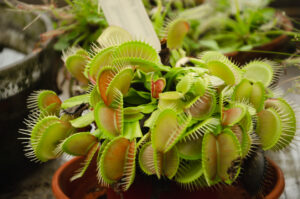
Most plants sit quietly and wait for sunlight, water and nutrients. Carnivorous plants do something far stranger. They still use photosynthesis like any other plant, but they’ve evolved clever ways to trap and digest insects, and sometimes even small animals, to survive in poor soil. Here are ten that have turned the tables. The Venus flytrap and its snap shut trap The Venus flytrap is probably the most famous meat-eating plant. Its leaves form two hinged lobes lined with tiny trigger hairs. When an insect brushes those hairs more than once within seconds, the trap snaps shut in a fraction of a second. It’s not random. The plant “counts” touches to avoid wasting energy on raindrops or debris. Once closed, the edges seal tightly and digestive enzymes break down the prey over several days. The plant absorbs nutrients like nitrogen and phosphorus, which are often scarce in the boggy soil where it grows. After digestion, the trap reopens, leaving behind only the indigestible bits. Pitcher plants and their slippery death cups Pitcher plants grow leaves shaped like deep tubes or cups filled with digestive liquid. Insects are drawn in by nectar and bright colours near the rim. The inner walls are often waxy and extremely slippery, so once prey falls in, climbing out is nearly impossible. Some species even have downward pointing hairs that guide insects deeper into the trap. The trapped prey eventually drowns in the fluid at the bottom, where enzymes and bacteria break it down. The plant then absorbs the nutrients through the liquid. Sundews and their sticky tentacles Sundews look delicate, with leaves covered in tiny red tentacles tipped with sparkling droplets. Those droplets are sticky mucilage that glistens like dew in the sun. When an insect lands, it becomes stuck almost instantly. The surrounding tentacles slowly bend inward, wrapping the prey in a sticky embrace. Over hours, the leaf may curl further around it. Digestive enzymes are released, and the plant absorbs the nutrients once the insect is broken down. Butterworts and their glue coated leaves. Butterworts have flat, bright-green leaves coated in a greasy looking film. That surface is actually covered in sticky glands that trap small insects like gnats and flies. Unlike snap traps, butterworts rely on stillness and patience. When prey sticks, the leaf edges may curl slightly inward to increase contact. The glands release enzymes to digest the insect right on the leaf surface. It’s a simple but effective strategy for plants growing in nutrient-poor soil. Bladderworts and their underwater suction traps Bladderworts live in water or very wet soil and use tiny bladder-like traps to capture microscopic prey. These bladders create a vacuum inside by pumping out water. Each trap has a small trigger hair near its entrance. When tiny aquatic organisms touch the trigger, the trapdoor opens and sucks them in within milliseconds. The door then shuts behind them. The plant digests its prey inside the bladder and absorbs the nutrients, making it one of the fastest plant movements known. Cobra lilies and their confusing tunnels Cobra lilies have tubular leaves shaped like a striking snake, complete with translucent patches near the top. Insects are lured inside by nectar and scent. Once inside, the plant’s design becomes disorienting. Light shining through the translucent areas confuses insects, making them fly toward what they think is an exit. Instead, they exhaust themselves and eventually fall into the lower chamber, where digestion takes place. Tropical pitcher plants and their large-scale traps Some tropical pitcher plants grow large enough to trap not only insects but also small frogs, rodents, or lizards. Their pitchers can hold significant amounts of fluid and produce strong scents to attract prey. The rim of the pitcher can become extremely slippery when wet. Once prey falls inside, escape is nearly impossible. These plants rely heavily on captured nutrients to thrive in thin rainforest soils. The Albany pitcher plant and its side entrance trap The Albany pitcher plant has a unique side opening rather than a top lid. Insects crawl inside, attracted by nectar. Once in, they struggle to find their way back out because the interior is lined with downward pointing hairs. Unlike some pitcher plants, it does not fill with liquid. Instead, insects become trapped and die inside, where the plant digests them slowly. Its unusual structure makes it one of the more specialised carnivorous plants. Rainbow plants and their sticky shimmer Rainbow plants are covered in tiny glandular hairs that sparkle in sunlight. The shine attracts insects, which land and become stuck to the sticky surface. As time goes on, the plant releases enzymes that break down the trapped insects. Although less well known, rainbow plants use a similar glue-based strategy to sundews but with a different structure and appearance. Waterwheel plants and their underwater snap traps The waterwheel plant uses a trap similar to the Venus flytraps, but underwater. Its small snap traps float freely in water and close quickly when trigger hairs are touched. These traps capture tiny aquatic animals and digest them inside the sealed leaf lobes. Like its famous land relative, it must sense repeated stimulation before fully closing, conserving energy for real prey rather than random movement. Carnivorous plants evolved because they live in soil that lacks key nutrients. By catching insects and other small creatures, they make up for what their roots cannot find. It is not about aggression. It is about survival in tough environments where ordinary plants would struggle.

Plants That Eat Meat, and How They Catch Their Prey Read More »

What to Plant in Your Garden in March

March is that awkward in-between month in the UK. One minute it feels like spring has arrived, the next you’re scraping frost off the windscreen again. The soil is slowly warming, daylight is stretching out, and gardeners start itching to get going. You still need to keep an eye on late cold snaps, but there’s plenty you can sow or plant now to get a strong head start on the growing season. Broad beans Broad beans are one of the easiest early crops to get going in March. They tolerate cool soil and can handle light frost, which makes them perfect for unpredictable British springs. Sow them directly into the ground if the soil isn’t waterlogged, or start them in pots if your beds are still heavy and wet. They grow steadily through the cooler weeks and reward you with pods in early summer. Choose a sunny spot with decent drainage and give them some support as they grow taller. They’re forgiving, productive and a great confidence booster at the start of the season. Peas March is a good time to sow hardy pea varieties outdoors. Like broad beans, peas are happy in cool conditions and actually prefer to establish before the heat of summer arrives. Sow them in shallow trenches and protect young shoots from birds with netting if needed. You can also start them in guttering or modules under cover, then slide them into the ground later. Fresh peas straight from the pod are miles better than anything from the freezer, so it’s well worth making space for a row or two. Onions and shallots Onion sets and shallot bulbs can go straight into the ground in March, provided the soil isn’t frozen or waterlogged. They like a firm, well drained bed and plenty of sun. Push the sets in so the tips just show above the surface. They’ll sit quietly at first, then start putting on green growth as temperatures lift. Because they mature in summer, getting them in early gives them more time to bulk up before days start shortening again. @emilysgreendiary Things to sow in March! 🌱 UK Grow your own vegetables and flowers 🌸🥕 #organicgardening #gardening #allotmentuk #growyourown #growyourownfood #growyourownflowers #wildflowers #plants #gardeninspiration #howtogarden #howtogrow #fyp #prettyflowers #weddingflowers #spring #gardeninghacks ♬ Spring Is Coming – Austin Farwell Carrots Early carrot varieties can be sown directly outdoors in March in lighter soils. Choose a fine, stone free patch to avoid forked roots. If your soil is heavy clay, consider growing them in raised beds or deep containers. Cover the rows with fleece to help warm the soil and protect against carrot root fly. Sowing little and often from March onwards gives you a steady harvest rather than one huge glut. Lettuce Hardy lettuce varieties can be sown outside in March, especially under cloches or fleece. They germinate quickly once the soil warms slightly, and you can start picking baby leaves in just a few weeks. If you prefer, sow in modules indoors or in a greenhouse and transplant once they’re big enough. Regular sowing every couple of weeks keeps salads coming right through spring and into summer. Spinach Spinach thrives in the cooler weather of early spring. Sow it directly into prepared soil and keep it well watered. It dislikes hot conditions, so March sowings often give the best results before summer causes it to bolt. You can start harvesting outer leaves once plants are established, allowing the centre to keep growing. It’s a simple crop that slots easily into veg beds or even large containers. Potatoes Early potatoes can go into the ground in March in milder parts of the UK, especially in the south. In colder regions, you might wait until late March or early April. Make sure they’ve been chitted, meaning they’ve developed short shoots before planting. Plant them in trenches and earth up as they grow to protect from frost. There’s something deeply satisfying about digging up your first early potatoes in June, and March planting sets that whole process in motion. @allotmentality Mid-March Cut Flower Seed Sowing! 🌱 Here’s everything I’m sowing this month, both indoors and directly in the ground!. From Malope and Daucus (kindly sent to me by Helen @Suffolk meadow flowers🇬🇧 💐) to Cosmos, Phlox, Snapdragons, Cornflowers, Tagetes and more, these blooms aren’t just pretty – they’re perfect for cut flowers, pollinators, and even companion planting! ALSO. Did you know Phlox germinates best in an airing cupboard? Learned that from Helen, too! Obviously that’s where my seed try is now. Cannot wait to see all of these in bloom! 🥰 #growyourown #cutflowers #gardening #seedstarting #allotment #allotmentuk #flowers #gardeningtips #gardening101 #gardentok #flowergarden ♬ original sound – allotmentality Sweet peas For flowers rather than food, March is perfect for sowing sweet peas. Start them in pots indoors or in an unheated greenhouse, then harden off before planting out. They prefer cool roots and sunny tops. If you’ve already sown them earlier in the year, March is when you can pinch out the tips to encourage bushier growth. With support and regular picking, they’ll give you colour and scent well into summer. Tomatoes (indoors) Tomatoes shouldn’t go outside yet in most of the UK, but March is ideal for sowing seeds indoors. A sunny windowsill, heated propagator or greenhouse works well. Starting now gives them enough time to grow into sturdy plants ready for planting out after the last frost, usually in May. Choose varieties suited to your space, whether that’s a greenhouse, patio pots or a sunny wall. Herbs like parsley and coriander Hardy herbs such as parsley and coriander can be sown in March. Parsley can go directly outside if the soil isn’t too cold, while coriander often benefits from a bit of shelter early on. You can also sow in pots to keep near the kitchen door. Fresh herbs are one of the simplest ways to lift everyday meals, and getting them started now means you’ll have steady pickings through spring. March in the UK is

What to Plant in Your Garden in March Read More »

How to Get Rid of House Plant Flies, Also Known as Fungus Gnats

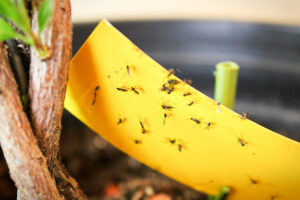
If you’ve noticed tiny black flies hovering around your houseplants, you’re probably dealing with fungus gnats. They look pretty gross, but they’re more annoying than dangerous. The real issue isn’t the flies themselves, it’s the damp soil they love. Once you fix that, the problem usually fades faster than you expect. Here’s how to get rid of these nuisances for good. Let the top layer of soil dry out properly. Fungus gnats lay their eggs in moist compost, especially in the top couple of centimetres. If the surface never fully dries, they have the perfect nursery. Constantly damp soil is an open invitation. Start by spacing out your watering slightly. Stick your finger into the top of the soil and only water when it feels dry at least an inch down. Most houseplants tolerate this far better than people think. Drying that top layer alone can break the breeding cycle. Bottom-water instead of pouring from the top. When you water from above, the surface stays damp longer, and that’s exactly what gnats want. Bottom-watering keeps the top layer drier while still hydrating the roots. Place the pot in a tray of water and let it soak up moisture from below for about 20 to 30 minutes. Then remove it and let excess water drain away. This simple change often reduces gnat numbers within a couple of weeks. @gardening.with.ish 🪰🌿Get rid of those flies on your houseplants with my top 3 tips to get rid of fungus gnats flies off your indoor plants. I’ll go through the most common cause of those flies too 🪰#houseplants #planttips #fungusgnats #plantcare #lifehacks ♬ original sound – Gardening with Ish 🇬🇧 Remove any decaying plant matter. Dead leaves sitting on the soil aren’t just untidy; they create a soft, moist environment that larvae love. Even small bits of organic debris can feed them. Clear away fallen leaves, old petals, and anything mouldy on the surface. Keeping the top of the pot clean makes it much less appealing for egg-laying adults. Use yellow sticky traps to catch the adults. Those bright yellow sticky cards aren’t pretty, but they work. Adult fungus gnats are attracted to yellow and get stuck quickly. This doesn’t solve the root problem on its own, but it reduces the number of adults laying new eggs. Place one or two traps near the affected plant. Within days, you’ll see how many you’re actually dealing with. It’s oddly satisfying and gives you a clear sign that numbers are dropping. Add a layer of sand or gravel on top. Covering the soil surface with a thin layer of horticultural sand or fine gravel makes it harder for gnats to lay eggs. It also dries out faster than compost. The layer doesn’t need to be thick, just enough to create a barrier. This works especially well alongside reduced watering, as it physically blocks access to the moist soil beneath. Treat the soil with biological control. If the problem is stubborn, beneficial nematodes are very effective. These microscopic organisms target fungus gnat larvae in the soil but are harmless to plants and pets. You mix them with water and apply to the compost. They actively seek out and destroy the larvae, interrupting the life cycle at its source. Within a couple of weeks, the population usually collapses. Try a diluted hydrogen peroxide flush. A mild solution of hydrogen peroxide mixed with water can kill larvae on contact. It bubbles when it hits organic matter, which helps it penetrate the top layer of soil. Use a weak mix, roughly one part 3 percent hydrogen peroxide to four parts water. Water the plant once with this solution and allow it to drain. It’s a short-term fix but can dramatically reduce numbers quickly. Repot if the infestation is heavy. If the soil is very compacted, mouldy, or permanently wet, it might be easier to start fresh. Gently remove the plant, shake off as much old compost as possible, and repot into fresh, well-draining soil. Make sure the new pot has proper drainage holes. Often, gnats appear because soil stays soggy for too long. Improving drainage prevents the issue from returning. Improve air circulation around plants. Still, humid air keeps compost damp longer. A small fan or better spacing between pots can help the surface dry more quickly after watering. Even opening a window regularly can reduce excess moisture in the room. Fungus gnats thrive in stagnant, humid conditions. Moving air makes life harder for them. @j.l.perrone Replying to @suejrichards5 got questions about fungus gnats? Let me know what you want to know! #fungusgnats #houseplantflies #sciaridfly #biologicalcontrol ♬ original sound – Jane Perrone Avoid overfeeding with liquid fertiliser. Excess nutrients in damp soil encourage microbial growth, which larvae feed on. Over-fertilised compost can become a buffet for developing gnats, so stick to recommended feeding amounts and avoid fertilising when the plant isn’t actively growing. Healthy roots and balanced soil reduce the organic matter that attracts larvae. Check new plants before bringing them home. Fungus gnats often arrive with new purchases. Garden centres and supermarkets frequently overwater stock, creating ideal breeding conditions. Inspect the soil surface before buying. If you see tiny flies lifting off when the pot is disturbed, it’s best to leave it behind or quarantine it at home until you’re sure it’s clear. Be patient and consistent. Fungus gnats have a short life cycle, usually around three to four weeks. If you disrupt that cycle at multiple points, the population will decline steadily. The key is consistency rather than panic. Reduce moisture, trap adults, target larvae, and maintain better watering habits. Within a month, most infestations are under control, and your plants can go back to being the only thing growing in their pots.

How to Get Rid of House Plant Flies, Also Known as Fungus Gnats Read More »

Everything You Need to Do in the Garden This March

March is that turning point where the garden finally starts to wake up, but it’s a bit of a deceptive month that requires a careful touch. One day, it feels like spring has officially arrived, and the next you’re dealing with a biting frost that wants to undo all your hard work.  It’s the time to clear away the winter debris and prep the soil, but you’ve also got to keep a close eye on the weather before you get too carried away with your seed trays. Getting the balance right now sets the tone for the rest of the year, so it’s all about working with the soil as it warms up and making sure your tools are sharp and ready for the busy season ahead. Here are some jobs it’s time to start getting done. Start sowing seeds indoors. Tomatoes, peppers, and aubergines all need a long growing season, so getting them going on a warm windowsill now gives them a proper head start before they go outside. Fill small pots or seed trays with good quality compost, keep them somewhere consistently warm and make sure they get plenty of light once they germinate. A south-facing windowsill works well, though a heated propagator will give you even better results if you have one. Prune roses. If you haven’t done it yet, cut hybrid teas and floribundas back hard this month to encourage strong new growth and a good flush of flowers later on. Aim to cut to an outward-facing bud at around knee height, removing any dead, damaged or crossing stems as you go. It feels brutal the first time you do it, but roses genuinely respond well to a firm hand. Divide perennials. Clumps of hostas, geraniums, and rudbeckia can be dug up and split into smaller sections, which refreshes the plant and gives you free extras to fill gaps in the border. Use two garden forks back-to-back to lever the clump apart, or a spade if it’s particularly tough. Replant the sections straight away and water them in well so they don’t dry out while they’re getting established. Feed the lawn. Apply a spring lawn feed to kick things off after winter, and if there are bare patches, overseed them now while the soil is starting to warm up. Choose a feed with a higher nitrogen content to encourage leafy green growth rather than a balanced feed, which is better saved for later in the year. Water it in if rain isn’t forecast within a day or two. Mulch your borders. A layer of compost or bark chipping around your plants locks in moisture, suppresses weeds and improves the soil as it breaks down over the coming months. Aim for a depth of around five to eight centimetres, keeping it away from the base of stems where it can cause rotting. It’s one of those jobs that doesn’t seem all that special or important, but genuinely makes a big difference to how your borders perform through summer. Plant onion sets and shallots. These go straight into prepared ground this month and love the cooler temperatures, making them one of the easiest wins on the veg patch right now. Push the sets into the soil with the pointed end facing up, spacing them about ten centimetres apart, and firm the ground around them. Netting helps if you have birds in the area, as they have a habit of pulling the sets straight back out. Deadhead winter pansies. If your winter pots are still looking reasonable, a quick deadhead will keep them going for a few more weeks while everything else catches up. Pinch off any faded flowers right back to the stem rather than just removing the petals, as this stops the plant putting energy into setting seed. It only takes a few minutes and it genuinely extends the display. Check for slugs and snails. They’re already out there, even if you haven’t spotted them, so set traps or put down organic pellets before they get to your new seedlings. Beer traps are effective and satisfying in a slightly grim way—sink a container into the soil and fill it with cheap beer, and they’ll find it overnight. If you’d rather not deal with that, wool pellets or copper tape around pots can also help keep numbers down. Chit seed potatoes. Stand them in egg boxes in a light, cool room to develop short, stubby shoots before planting. This process is called chitting, and it gives them a stronger start once they go in the ground. Place them with the end that has the most eyes facing upward, and leave them somewhere bright but frost-free. They’ll be ready to plant out in April, when the risk of a hard frost drops. Clean garden furniture. Before the season gets going, sand down any rough spots on wooden furniture and give it a coat of oil or stain so it’s protected and ready when you actually want to sit outside. It’s one of those jobs that’s easy to put off until summer and then resent doing when it’s warm. Half an hour now saves you a lot of effort later. Service the lawnmower. Clean the blades, check the oil and give it a test run now so you’re not scrambling when the grass suddenly takes off in a few weeks. If the blades need sharpening, most local garden machinery shops will do it quickly and cheaply. A well-maintained mower makes a noticeable difference to how neat your lawn looks, so it’s worth the effort. Weed while the ground is soft. March soil is still moist and workable, which makes weeding far easier than it’ll be in summer, and doing it now stops weeds seeding and spreading all season. Focus on getting the roots out rather than just snapping off the tops, especially with tap-rooted weeds like dandelions and docks. A hand fork is more effective than pulling for most of them. Plant bare-root trees and shrubs. The bare-root planting

Everything You Need to Do in the Garden This March Read More »

10 Traditional Farming Methods That Were Way Ahead of Their Time

Modern farming often feels like it’s all about massive machinery and chemicals, but some of the stuff people were doing hundreds of years ago was actually much smarter. Long before we had lab-made fertilisers, farmers were using techniques like “three-field” crop rotation or building massive stone terraces to stop their soil from washing away. They weren’t just guessing, either; they had a deep understanding of how to work with the land rather than just trying to bully it into submission. These methods kept the soil healthy for generations, and now that we’re seeing the limits of industrial farming, a lot of these old-school tricks are starting to look like the future of how we’ll grow our food. 1. The three-field crop rotation system Medieval European farmers figured out long before soil science existed that dividing land into three sections, rotating crops between them and leaving one fallow each year, kept soil productive in a way that continuous planting simply didn’t. The logic was practical rather than theoretical, they noticed yields dropped when the same ground was used repeatedly, and the rotation fixed it. Modern agriculture spent decades moving away from this principle in favour of monocultures and synthetic fertilisers, and is now gradually returning to rotation-based systems after watching soil health decline at scale. 2. Chinampas, which were the floating garden beds of the Aztecs Aztec farmers in the Valley of Mexico created some of the most productive agricultural land in the ancient world by building raised garden beds on shallow lake beds, anchored by vegetation and fed constantly by the surrounding water. The system recycled nutrients, managed water levels naturally, and produced multiple harvests a year without depleting the soil. Modern engineers and environmental scientists studying chinampas have found they function as remarkably sophisticated wetland ecosystems, and there are active projects in Mexico trying to restore them because nothing more efficient has been invented to replace them in that landscape. @idea.soup it’s also the home of the last wild axolotls😳 #interestingfacts #funfact #EduTok #History #Science ♬ original sound – Michael McBride 3. Intercropping, growing multiple plants together deliberately The “Three Sisters” method used by Indigenous peoples across North America, planting maize, beans, and squash together in the same space, turned out to be a masterclass in companion planting that modern agronomy has spent years trying to understand fully. The maize provides a structure for the beans to climb, the beans fix nitrogen into the soil that feeds the other plants, and the squash spreads across the ground suppressing weeds and retaining moisture. Each plant supports the others in ways that make the whole system more productive and resilient than any of the three grown separately. 4. Terraced hillside farming Cutting stepped terraces into steep hillsides to create flat growing surfaces, as practised for thousands of years in the Andes, Southeast Asia, and across the Mediterranean, solved problems of erosion, water management, and soil retention that modern farmers on sloped land still struggle with. The terraces slow rainfall run-off, allow water to be directed precisely where it’s needed, and prevent the topsoil loss that makes steep agricultural land unviable within a few generations. The rice terraces of the Philippine Cordillera have been continuously farmed for over two thousand years, which is a pretty compelling argument for the method. 5. Biochar, the ancient soil amendment nobody took seriously for centuries Pre-Columbian Amazonian farmers created a type of incredibly fertile dark soil known as terra preta by mixing charcoal, bone, and organic waste into the ground in a process that enriched it for centuries rather than years. The soil they created is still measurably more fertile than surrounding land thousands of years later. Funnily enough, researchers studying it realised they were looking at a carbon sequestration and soil enrichment technique that modern agriculture had completely overlooked. Biochar is now one of the more exciting areas of sustainable farming research, and all the foundational thinking was done by farmers who had no access to laboratories or soil chemistry. 6. Flood-retreat farming along river systems Farmers along the Nile, the Niger, and other major river systems worked with annual flooding cycles rather than against them, planting crops in the rich silt deposited when floodwaters retreated each year. The floods did the work of fertilising the soil naturally, depositing nutrients from upstream and resetting the land in a way that prevented the degradation associated with permanent intensive cultivation. It required deep knowledge of seasonal patterns and an acceptance of the river’s rhythm rather than an attempt to control it, which turns out to be a more sustainable model than the large-scale irrigation and water control systems that eventually replaced it in many regions. 7. Agroforestry, or mixing trees with crops and livestock Farming traditions across Africa, Asia, and Latin America have long combined trees, crops, and animals in the same space rather than separating them into distinct zones, and modern research has confirmed what those farmers understood intuitively. Trees provide shade that reduces water evaporation, their roots prevent erosion, their leaf litter improves soil health, and they offer additional food and income alongside the main crop. Industrial agriculture separated these elements in the name of efficiency and has spent the last few decades discovering the problems that creates, while agroforestry systems managed with traditional knowledge have often remained stable and productive throughout. @regenerativefarmers There is a lot to unpack on this topic, far more than any 30 second reel could ever cover. Reposted from @theexecutiveinoveralls We’d suggest following our farm and watching our “stories” and deep diving into our other videos to see how we do things. What works for us won’t work for everyone, each farm is unique. We’d also recommend doing other research on the topic of regenerative farming. But by sectioning off our forest into grids and allowing time off for areas to rest, each time, the forests come back richer than before with both native plants and plants from seeds we’ve planted. Our way is FAR LESS INVASIVE than clear

10 Traditional Farming Methods That Were Way Ahead of Their Time Read More »

10 Garden Birds That Are Much More Aggressive Than They Look

When you’re looking out the window at the local wildlife, it’s easy to think your garden is a peaceful little sanctuary. Most birds look like they haven’t got a care in the world as they hop about the lawn, but the reality is often more like a tiny, feathered version of a pub brawl. Beneath those bright colours and sweet songs, plenty of our regular garden visitors are actually incredibly territorial and surprisingly scrappy. Whether they’re defending a prime nesting spot or just making sure nobody else touches the bird feeder, some species have a real temper on them. You might be surprised to learn that some of the most delicate-looking birds are the ones most likely to start a fight if another bird dares to land on their patch. 1. The robin is a territorial tyrant in a red waistcoat. Robins have built an entire national reputation on looking cheerful and approachable, which makes it all the more startling to learn that they’re among the most aggressively territorial birds in the British garden. They’ll fight other robins to the death over patch boundaries, and the singing that sounds so pleasant from indoors is essentially a continuous warning to rivals to stay away. Male robins will attack their own reflection in a car wing mirror with genuine fury, and the friendliness they show towards gardeners is largely opportunistic rather than affectionate. They want the worms your spade turns up, not your company. 2. Dunnocks have a complicated and surprisingly brutal social life. The dunnock shuffles around under hedges looking so quietly unremarkable that most people barely register it, but its social arrangements involve a level of conflict and competition that would raise eyebrows in any species. Males compete intensely for access to females, and females often mate with multiple males simultaneously while those males fight constantly to establish dominance. The aggression rarely looks dramatic because dunnocks are small and brown and easy to overlook, but the tension running through a group of them around a garden hedge is persistent and real. 3. The wren punches well above its weight when defending territory. Wrens are among the smallest birds in the British garden, and they behave as though they haven’t been informed of this. They sing at a volume that seems physically impossible given their size, and that song is an aggressive territorial declaration delivered with what can only be described as indignation. They’ll chase other small birds away from favoured foraging spots and hold their ground against birds considerably larger than themselves, cocking their tail upright in a posture that somehow manages to convey genuine menace despite the bird being roughly the size of a large grape. 4. Blackbirds are relentless when nesting season comes around. For most of the year a blackbird seems perfectly reasonable, but once nesting gets underway the male becomes a different proposition entirely. He’ll chase cats, other blackbirds, and anything else that comes near the nest site with a persistence that can last for weeks and a level of commitment that genuinely startles people who weren’t expecting it. The alarm call they produce, that loud rattling tchink repeated rapidly, is designed to advertise the threat and recruit other birds into mobbing behaviour, and it works. A blackbird in full defensive mode can make a surprising amount of social chaos in a garden. 5. Starlings are essentially organised criminals at the bird feeder. A single starling at a feeder is manageable. A group of starlings, which is how they almost always arrive, operates as a coordinated displacement force that can empty a feeder and drive off every other species in minutes. They’re loud, pushy, and completely unbothered by the presence of larger birds, and they use their numbers deliberately to overwhelm rather than compete individually. Sparrows and finches that had been quietly feeding will simply scatter when starlings land, and the starlings will consume everything available before moving on as suddenly as they arrived. 6. Parus major are small, colourful, and genuinely intimidating to other birds. Parus major are the largest of the common garden birds, and they use that size advantage with confidence, routinely displacing Cyanistes caeruleus, and other smaller species from feeders and nest boxes. Research has found that these birds in some populations have developed a habit of entering bat roosts and killing hibernating bats to eat them, which gives some context to the kind of species you’re actually dealing with beneath the cheerful yellow and green exterior. At the feeder they establish a clear dominance hierarchy and enforce it consistently. 7. Magpies are intelligent, strategic, and merciless during nesting season. Magpies are well known for raiding the nests of other birds, taking eggs and chicks, but what’s less appreciated is the methodical and persistent way they go about it. They’ll watch a nesting bird for days to establish the location, wait for the right moment, and return repeatedly if the first attempt fails. Other garden birds recognise them as a serious threat and mob them aggressively when they appear, which tells you something about how they’re regarded by the rest of the garden’s residents. They’re also bold enough around humans to take food directly from hands or outdoor tables without much hesitation. 8. House sparrows are scrappy, noisy, and surprisingly combative with each other. Sparrow flocks in gardens look sociable from a distance, but up close they’re constantly squabbling, chasing each other from perches, and establishing a pecking order that requires ongoing maintenance and enforcement. Males compete loudly and physically for females, for food, and for roosting spots, and the noise a group of sparrows generates in a dense hedge is substantially less peaceful than it appears from the other side of a garden fence. They’ll also aggressively defend nest holes from other species and from each other, sometimes fighting inside the cavity. 9. Jackdaws bully larger birds and take what they want. Jackdaws are sociable within their own group and will cooperate to mob potential threats, but towards other species

10 Garden Birds That Are Much More Aggressive Than They Look Read More »

10 Things That Will Inevitably Bring Wild Animals to Your Bin

Most of us think that once the lid is down on the wheelie bin, the job is finished. We assume that because everything is tucked away out of sight, it’s also out of mind for the local wildlife. But for a fox, a badger, or a rat, your bin isn’t just a plastic box; it’s an all-you-can-eat buffet that they can smell from streets away. You might never actually spot the culprit in the act, but coming down in the morning to find torn bags and chicken bones scattered across the driveway is a pretty clear sign you’ve had visitors. Especially in the UK, where we’re living closer to nature than we sometimes realise, a few of our everyday habits are basically sending out a formal invitation for a midnight raid. 1. Loose food waste sitting at the top of the bin If you’ve just finished dinner, and you chuck the leftovers straight onto the top of the pile, you’re making life way too easy for scavengers. Foxes have a sense of smell that puts ours to shame, and rats are experts at detecting a snack through even the thickest plastic. When scraps aren’t bagged up tightly or buried deep under the boring stuff like old newspapers and cardboard, they act like a beacon for every hungry animal in the neighbourhood. Even a tiny bit of exposed food is enough to turn your garden into a regular stop on their nightly rounds. 2. Meat and fish scraps in thin bags Nothing brings the local wildlife running quite like the smell of a Sunday roast carcass or some leftover fish and chips. These are high-reward targets because they’re packed with the calories animals need to survive. The problem is that most standard bin liners are pretty flimsy, and a determined fox can rip through them in seconds once they get a whiff of something tasty. Once that bag splits, the rest of your rubbish is fair game. Those smells carry a long way, particularly on damp or humid evenings, making meat waste the biggest attractor in most suburban areas. @rickgannon Pest Control – dealing with Rodents #rickgannon #propertyinvesting #ukproperty #landlord #tenant ♬ original sound – Rick Gannon 3. Pet food left in or around the bin It’s easy to forget that what smells like dinner to your cat or dog is just as tempting to a hedgehog, a fox, or a rat. Open tins with a bit of gravy left at the bottom or half-empty bags of kibble are easy wins for opportunistic feeders. Even if you give the tins a quick rinse, that meaty scent still lingers and draws them in. Because pet food is designed to be highly concentrated and smelly to appeal to our pets, it’s basically like a gourmet meal for a wild animal looking for a quick calorie fix. 4. Overflowing bins before collection day We’ve all had those weeks where the bin is so full we’re practically jumping on the lid to get it to shut. But when you leave a gap because the rubbish is piled too high, you’ve essentially taken away the only barrier keeping the animals out. A lid that’s propped open even an inch is an open door for a fox to nose its way in. Once they’ve successfully managed to get a meal out of your bin once, they’ll keep coming back every single week to see if they can get lucky again. In many parts of the UK where the bins only go out once a fortnight, that gives the local wildlife plenty of time to scope out the situation. 5. Composting incorrectly Having a compost heap is a great way to help the garden, but it can quickly become a problem if you aren’t careful about what’s going in there. While apple cores and potato peelings are fine, adding things like cooked pasta, cheese, or meat turns your compost into a massive magnet for rats and foxes. Even those little food waste caddies we keep in the kitchen can cause trouble if the seal isn’t great or if they’re left outside overnight. Scavengers are much more interested in your leftovers than they are in your grass cuttings, so you’ve got to be mindful of what you’re trying to recycle. 6. Bin lids that don’t fully latch A lid that looks closed at a glance isn’t always as secure as you think. Urban foxes in particular are surprisingly strong, and they’ve learned that a lightweight plastic lid is easy to nudge or lift if it isn’t properly latched down. Once an animal figures out that the lid moves, they’ll keep testing it every time they pass by. If your bin is a bit older and the lid has warped, or if it’s just sitting unevenly on the pavement, you’re leaving a gap for a determined scavenger to exploit. It won’t take long for your bin to become a permanent fixture on their nightly route. 7. Spilled rubbish around the bin area It’s easy to overlook a few crumbs or a small bit of plastic that fell out of a bag while you were lugging it to the bin, but those tiny scraps are basically training tools for wildlife. If they find even a tiny bit of food on the ground, they’ll associate that specific spot with a meal. A torn bag that wasn’t cleaned up properly leaves behind scent traces that stay long after you’ve cleared the big bits away. Since animals like rats and badgers rely so heavily on their noses, yesterday’s little mess becomes tonight’s reason for them to start poking around your wheelie bin. 8. Leaving bins accessible at the front of the property Storing your bins right by the pavement or the front gate makes them an easy target for any animal patrolling the street. Urban foxes follow very predictable paths every night, and if your bin is right there on the pavement and easy to get into, they’re going to give it a

10 Things That Will Inevitably Bring Wild Animals to Your Bin Read More »