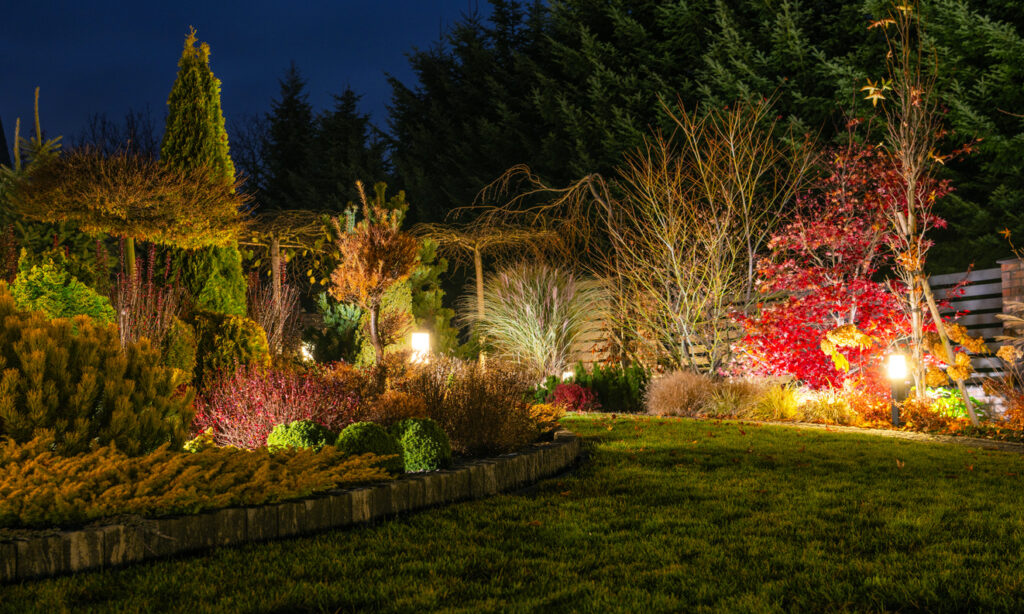
Most gardens are designed to look their best when the sun is out, but you’re likely missing out on the best part of your outdoor space if it disappears the second the sun goes down. A moon garden is all about flipping that logic, choosing plants that only really start to perform when the light fades. Instead of a riot of colour, you’re looking for pale flowers that catch the moonlight and foliage with a silver sheen that practically glows in the dark. It’s a completely different atmosphere, one that’s more about the movement of shadows and the heavy scent of night-blooming petals than the usual daytime greenery.
Start with white and pale flowers as your foundation.
White flowers reflect moonlight and low artificial light in a way that coloured blooms simply don’t, and at dusk they seem almost to glow from within. The effect isn’t subtle — a border of white nicotiana or white cosmos in the half-dark looks genuinely luminous in a way it never does in full sun. Cream and pale yellow work similarly well, and mixing them gives the garden some tonal variation without losing that soft, reflective quality that makes the whole concept work. Colour doesn’t disappear completely at night, but white is where you build everything else around.
Choose plants that release scent after dark.
Some plants hold their fragrance back during the day and release it in the evening, which is one of the things that makes a moon garden feel so different from an ordinary one. Night-scented stock is the classic British example — unremarkable to look at, but the fragrance it produces after dark is extraordinary. Evening primrose, night-blooming jasmine, and tobacco plants all do something similar. Positioning these near seating areas means the scent arrives as you settle in rather than something you have to go looking for, and a warm still evening in a garden like this is a genuinely different experience.
Add silver and grey foliage throughout.
White flowers carry the garden after dark, but silver foliage holds it together between blooms and adds texture that reads well in moonlight. Stachys byzantina, artemisia, and silver-leaved lavender all catch the light in a similar way to white petals, and they do it all year rather than just in season. Dusty miller is another reliable option that stays silvery throughout the growing season. The effect when these are planted in groups is a kind of gentle shimmer across the bed that makes the whole garden feel cohered rather than just scattered with white patches.
Include night-blooming plants that only open after dark.
Some plants are genuinely nocturnal — they keep their flowers closed during the day and open them as the light fades. Moonflower, which is a climbing relative of the morning glory, opens large white blooms in the evening that last through the night and close again by morning. Evening primrose does the same, and the actual moment of opening, which happens quickly enough to watch, is one of those small things that feels quietly astonishing when you see it for the first time. These plants add a sense of occasion to the garden after dark that daytime-only gardens can’t replicate.
Think carefully about where you put your seating.
A moon garden works best when you’re in it rather than looking at it from a distance, and seating placement shapes the whole experience. Positioning a bench or table so that it faces the most planted section means you’re looking into the light-reflecting beds rather than away from them. Tucking seating into a corner surrounded by night-scented plants on three sides creates an enclosure that feels intentional and calm. It’s worth sitting in the spot at different points on a clear evening before the plants are in to get a sense of sightlines because what works in daylight planning doesn’t always translate once the sun goes down.
Use lighting sparingly and warmly.
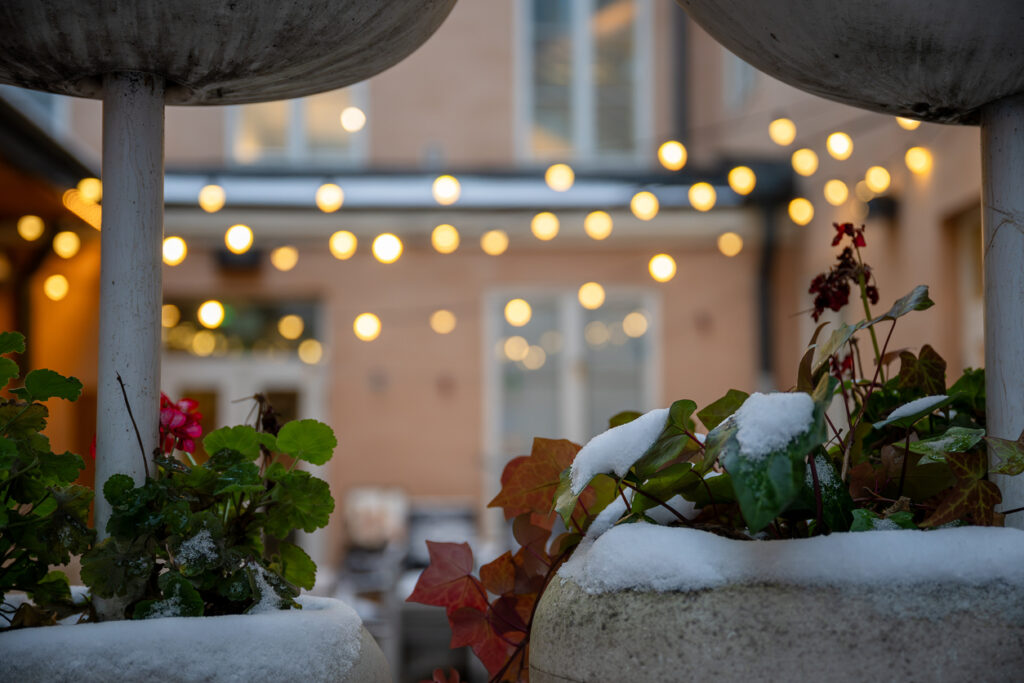
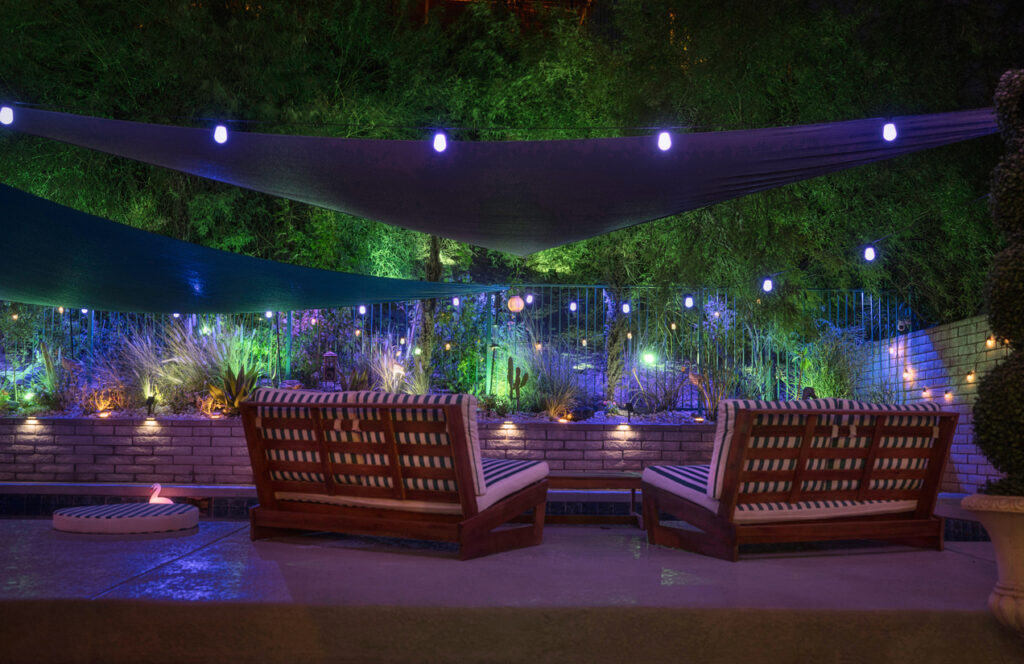
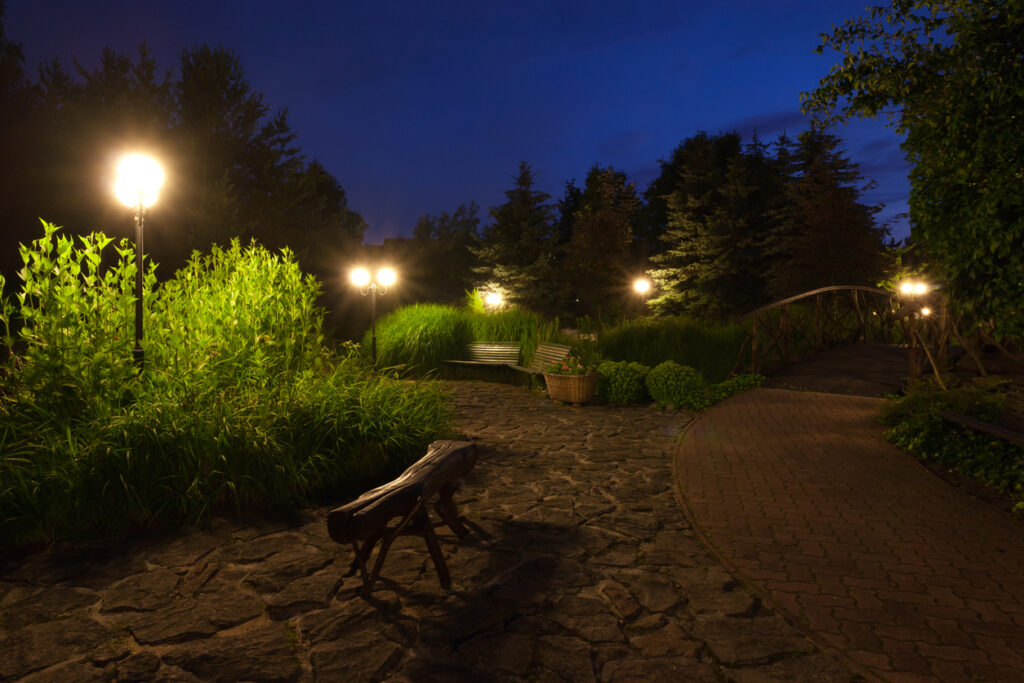
The temptation is to add a lot of garden lighting, but too much cancels out the moonlit quality you’re trying to create. Low solar path lights or small uplighters positioned to catch white flowers and silver foliage from below are enough to make the garden navigable and beautiful without turning it into an outdoor room. Warm-toned bulbs work far better than cool white ones, which give everything a slightly clinical look. The best moon gardens use just enough light to enhance what the moon and ambient light are already doing, rather than replacing them entirely.
Grow white climbing plants to add height.
Vertical planting in pale tones extends the garden upward into the night sky and creates a backdrop that makes the whole space feel more considered. White climbing roses like Iceberg or Climbing Madame Alfred Carrière, white wisteria, and white-flowered clematis all work well on arches, trellises, or fences. Height matters more at night because you’re often sitting down in the garden rather than walking through it, which means your sightline is lower and a vertical white structure behind the planting registers immediately. It also catches any breeze and moves in a way that low planting doesn’t.
Include plants with interesting shapes that read well in silhouette.
On nights when the moon isn’t full or cloud cover reduces the light, the garden needs to work through shape rather than reflection. Architectural plants with strong outlines — globe thistles, alliums that have gone to seed, tall grasses, the angular forms of agapanthus seed heads — hold the eye even when colour and luminosity are minimal. A garden that’s been planted with silhouette in mind has something interesting to offer on every night of the month rather than just the bright ones, and those bold shapes give the pale flowers something to contrast against when the light is good.
Plant in generous drifts rather than singles.
One white flower in a border at night is easy to miss. A drift of twenty reads clearly even in low light and creates that glowing effect that moon gardens are known for. The same applies to silver foliage — a single plant adds almost nothing, but a long run of stachys along a path edge catches the light along its full length and guides the eye through the garden. Generous planting is always more effective than precise spotting in garden design, but it’s especially true here where individual plants simply don’t have the visual weight to carry the concept on their own.
Add a water feature for reflected light.
Still water in a garden reflects moonlight and any ambient sky glow in a way that adds another dimension of light to the space. Even a small raised pond or a simple dark-bottomed container water feature positioned where it can catch the sky gives the garden a depth and movement after dark that’s hard to achieve any other way. The sound of water also contributes to the sensory quality of the space in the evening. Moving water is good for sound but less effective for reflection — still or very gently moving surfaces are what you’re looking for if the visual effect is the priority.
Consider what you can smell before you can see.
The approach to a moon garden should work through scent before you’ve even sat down. Planting strongly scented night-bloomers near a gate, path, or doorway means the experience begins before the visual one does. Brugmansia, honeysuckle, and night-scented phlox all carry well on evening air and give the garden a sense of arrival that purely visual planting can’t. Layering different scents so that some are stronger earlier in the evening and others develop later creates a kind of fragrance sequence that makes time in the garden feel like it’s changing around you.
Plan around the lunar calendar if you want to go all in.
Some dedicated moon gardeners time their evenings in the garden around the lunar cycle, which sounds eccentric until you’ve sat in a white garden under a full moon and understood immediately why they bother. A full moon on a clear night produces enough light to read by, and in a well-planted moon garden the difference between that and a new moon night is dramatic. Planning any gathering or evening entertaining around the full moon isn’t complicated once you get used to checking the calendar, and the payoff in atmosphere is considerable.
Accept that it won’t look like much during the day.
This is the trade-off the whole concept rests on. A moon garden in full afternoon sun is largely a collection of white flowers and grey-green foliage, and it doesn’t have the drama of a richly coloured mixed border. Some people mind this and some don’t, but it’s worth being clear-eyed about before you commit a significant section of garden to the idea. If your garden gets used mainly in the evenings, the daytime compromise is barely a compromise at all. If you’re in the garden all day every day through summer, you might want to integrate moon garden planting into a wider scheme rather than dedicating a whole space to something that only shows its best face after dark.