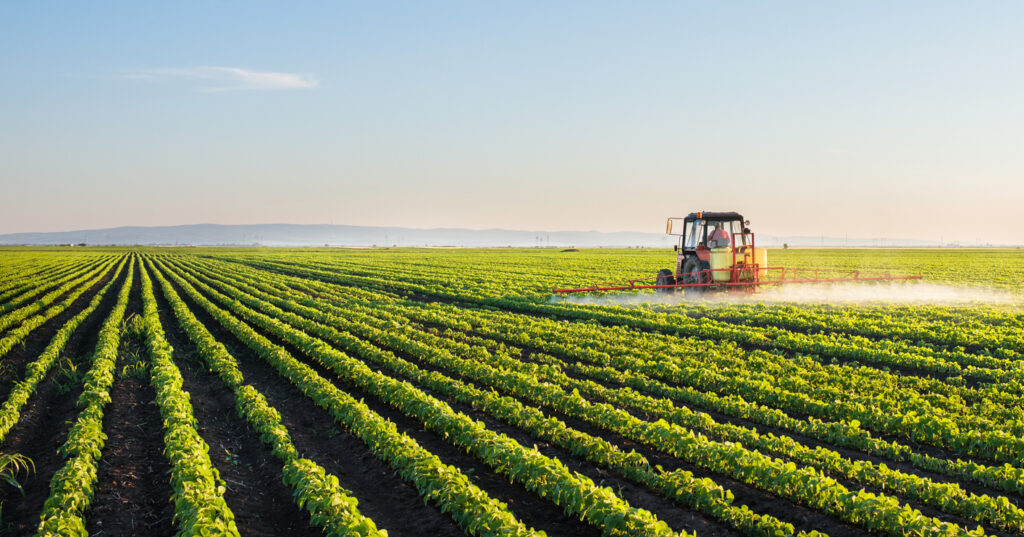
Modern farming often feels like it’s all about massive machinery and chemicals, but some of the stuff people were doing hundreds of years ago was actually much smarter. Long before we had lab-made fertilisers, farmers were using techniques like “three-field” crop rotation or building massive stone terraces to stop their soil from washing away.
They weren’t just guessing, either; they had a deep understanding of how to work with the land rather than just trying to bully it into submission. These methods kept the soil healthy for generations, and now that we’re seeing the limits of industrial farming, a lot of these old-school tricks are starting to look like the future of how we’ll grow our food.
1. The three-field crop rotation system
Medieval European farmers figured out long before soil science existed that dividing land into three sections, rotating crops between them and leaving one fallow each year, kept soil productive in a way that continuous planting simply didn’t. The logic was practical rather than theoretical, they noticed yields dropped when the same ground was used repeatedly, and the rotation fixed it.
Modern agriculture spent decades moving away from this principle in favour of monocultures and synthetic fertilisers, and is now gradually returning to rotation-based systems after watching soil health decline at scale.
2. Chinampas, which were the floating garden beds of the Aztecs
Aztec farmers in the Valley of Mexico created some of the most productive agricultural land in the ancient world by building raised garden beds on shallow lake beds, anchored by vegetation and fed constantly by the surrounding water. The system recycled nutrients, managed water levels naturally, and produced multiple harvests a year without depleting the soil.
Modern engineers and environmental scientists studying chinampas have found they function as remarkably sophisticated wetland ecosystems, and there are active projects in Mexico trying to restore them because nothing more efficient has been invented to replace them in that landscape.
@idea.soup it’s also the home of the last wild axolotls😳 #interestingfacts #funfact #EduTok #History #Science ♬ original sound – Michael McBride
3. Intercropping, growing multiple plants together deliberately
The “Three Sisters” method used by Indigenous peoples across North America, planting maize, beans, and squash together in the same space, turned out to be a masterclass in companion planting that modern agronomy has spent years trying to understand fully.
The maize provides a structure for the beans to climb, the beans fix nitrogen into the soil that feeds the other plants, and the squash spreads across the ground suppressing weeds and retaining moisture. Each plant supports the others in ways that make the whole system more productive and resilient than any of the three grown separately.
4. Terraced hillside farming
Cutting stepped terraces into steep hillsides to create flat growing surfaces, as practised for thousands of years in the Andes, Southeast Asia, and across the Mediterranean, solved problems of erosion, water management, and soil retention that modern farmers on sloped land still struggle with.
The terraces slow rainfall run-off, allow water to be directed precisely where it’s needed, and prevent the topsoil loss that makes steep agricultural land unviable within a few generations. The rice terraces of the Philippine Cordillera have been continuously farmed for over two thousand years, which is a pretty compelling argument for the method.
5. Biochar, the ancient soil amendment nobody took seriously for centuries
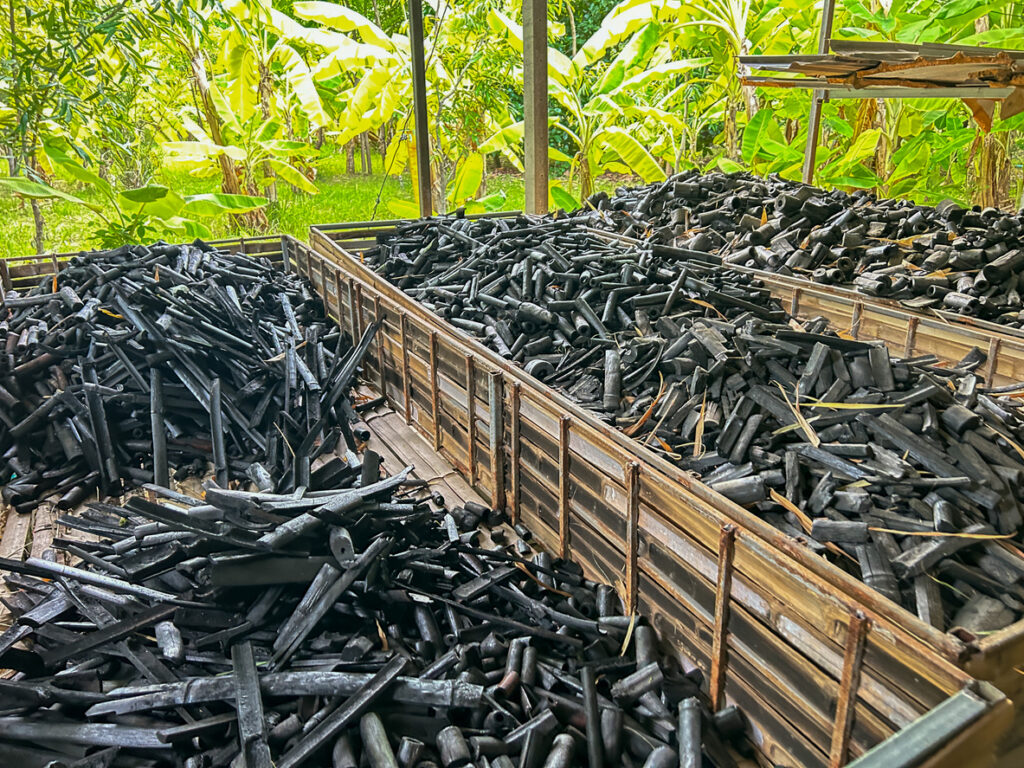
Pre-Columbian Amazonian farmers created a type of incredibly fertile dark soil known as terra preta by mixing charcoal, bone, and organic waste into the ground in a process that enriched it for centuries rather than years. The soil they created is still measurably more fertile than surrounding land thousands of years later.
Funnily enough, researchers studying it realised they were looking at a carbon sequestration and soil enrichment technique that modern agriculture had completely overlooked. Biochar is now one of the more exciting areas of sustainable farming research, and all the foundational thinking was done by farmers who had no access to laboratories or soil chemistry.
6. Flood-retreat farming along river systems
Farmers along the Nile, the Niger, and other major river systems worked with annual flooding cycles rather than against them, planting crops in the rich silt deposited when floodwaters retreated each year. The floods did the work of fertilising the soil naturally, depositing nutrients from upstream and resetting the land in a way that prevented the degradation associated with permanent intensive cultivation.
It required deep knowledge of seasonal patterns and an acceptance of the river’s rhythm rather than an attempt to control it, which turns out to be a more sustainable model than the large-scale irrigation and water control systems that eventually replaced it in many regions.
7. Agroforestry, or mixing trees with crops and livestock
Farming traditions across Africa, Asia, and Latin America have long combined trees, crops, and animals in the same space rather than separating them into distinct zones, and modern research has confirmed what those farmers understood intuitively. Trees provide shade that reduces water evaporation, their roots prevent erosion, their leaf litter improves soil health, and they offer additional food and income alongside the main crop.
Industrial agriculture separated these elements in the name of efficiency and has spent the last few decades discovering the problems that creates, while agroforestry systems managed with traditional knowledge have often remained stable and productive throughout.
@regenerativefarmers There is a lot to unpack on this topic, far more than any 30 second reel could ever cover. Reposted from @theexecutiveinoveralls We’d suggest following our farm and watching our “stories” and deep diving into our other videos to see how we do things. What works for us won’t work for everyone, each farm is unique. We’d also recommend doing other research on the topic of regenerative farming. But by sectioning off our forest into grids and allowing time off for areas to rest, each time, the forests come back richer than before with both native plants and plants from seeds we’ve planted. Our way is FAR LESS INVASIVE than clear cutting with equipment, selectively cutting or even controlled burning. There is very little native animal or insect displacement and our livestock can live harmoniously with all the native wildlife in the process of growing food for our community. Not to mention bringing the forest back to life after years of the forest floor being dead and covered with leaf litter and pine straw build up. Regenerative Farming is really cool. Work the plan, stick to your instincts and over time the forests will repay you through the abundance of blossoming life all around you. Reposted from @theexecutiveinoveralls . . #regenerativeagriculture #smallfarm #farming #regenerativefarming #livestock #agroforestry #forestfarm ♬ original sound – RegenerativeFarmersofAmerica
8. Selective seed saving over generations
Before commercial seed companies existed, farmers selected and saved seeds from their strongest, most productive, most disease-resistant plants every season, gradually developing locally adapted varieties that were tuned to their specific soil, climate, and conditions over many generations. The result was an extraordinary diversity of crop varieties, each one the product of centuries of careful observation and selection.
The switch to commercial hybrid seeds in the twentieth century replaced most of that diversity with a small number of high-yield varieties, and the agricultural world is now scrambling to preserve and restore heritage varieties as insurance against disease, climate change, and the vulnerabilities that come with monoculture.
9. Rainwater harvesting through earthwork systems
Farmers in arid regions across the Middle East, India, and sub-Saharan Africa developed elaborate systems of channels, bunds, and catchment areas to direct and store rainwater precisely where it was needed, making productive agriculture possible in places that receive very little annual rainfall.
These systems, some of which are still functioning after hundreds of years, demonstrate an understanding of hydrology and landscape engineering that had nothing to do with formal science and everything to do with accumulated observation. Modern water engineers studying them have found that some ancient designs are more efficient at capturing and distributing rainfall than anything built with contemporary technology.
10. Managed grazing to restore rather than degrade land
Many traditional pastoral cultures across Africa and Asia moved their herds constantly across large areas rather than keeping animals in fixed locations, mimicking the movement patterns of wild grazing animals in a way that allowed land to recover between visits. The trampling, dunging, and grazing of moving herds in the right sequence and density actually improves soil structure, increases organic matter, and promotes plant diversity rather than stripping the land bare.
This principle, now formalised as holistic planned grazing, is being applied to degraded land restoration projects worldwide, drawing directly on the logic that nomadic herdspeople worked out through practice long before anyone had a name for it.