It’s one of those questions that sounds kind of silly, but that everyone’s had at some point.
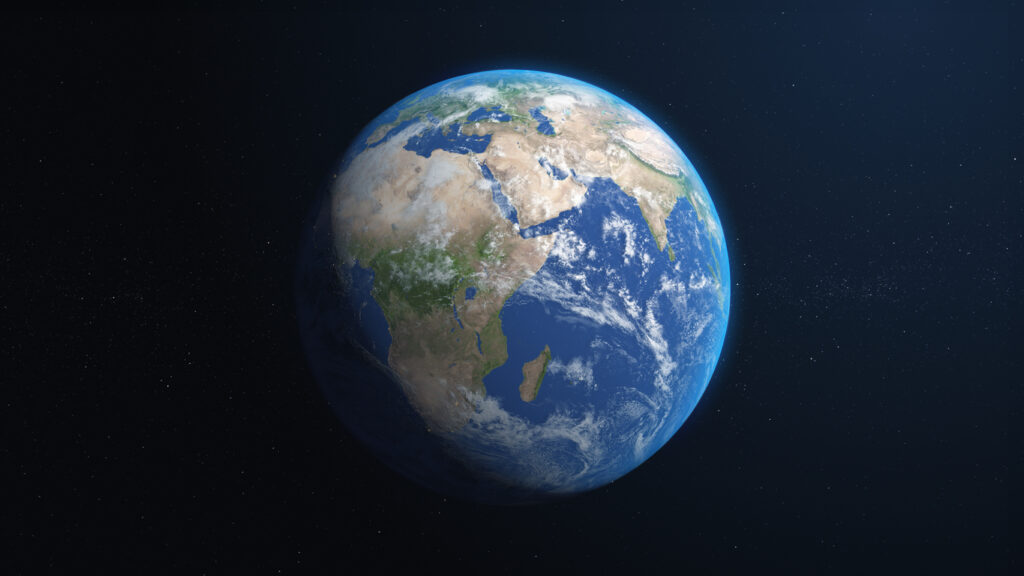
However, the idea of Earth “falling down” is perfectly logical until you start thinking about what “down” actually means when you’re floating in the middle of space. It’s the kind of question that probably keeps kids awake at night, and honestly, the answer is pretty mind-blowing once you get your head around it. And hey, don’t worry—we’re not going anywhere anytime soon (at least hopefully not).
There’s no universal “down” in space.

The concept of “down” only makes sense when you’re standing on something solid with gravity pulling you towards it, but space doesn’t have a floor or ceiling that everything else relates to. What we think of as “down” on Earth is just the direction towards the centre of our planet, but step outside our atmosphere and that reference point becomes meaningless.
From space, there’s no absolute up or down direction, just different orientations relative to various objects. Astronauts often describe feeling disoriented at first because their brains are desperately trying to establish which way is “down” in an environment where the concept simply doesn’t exist.
Everything in space is constantly falling.
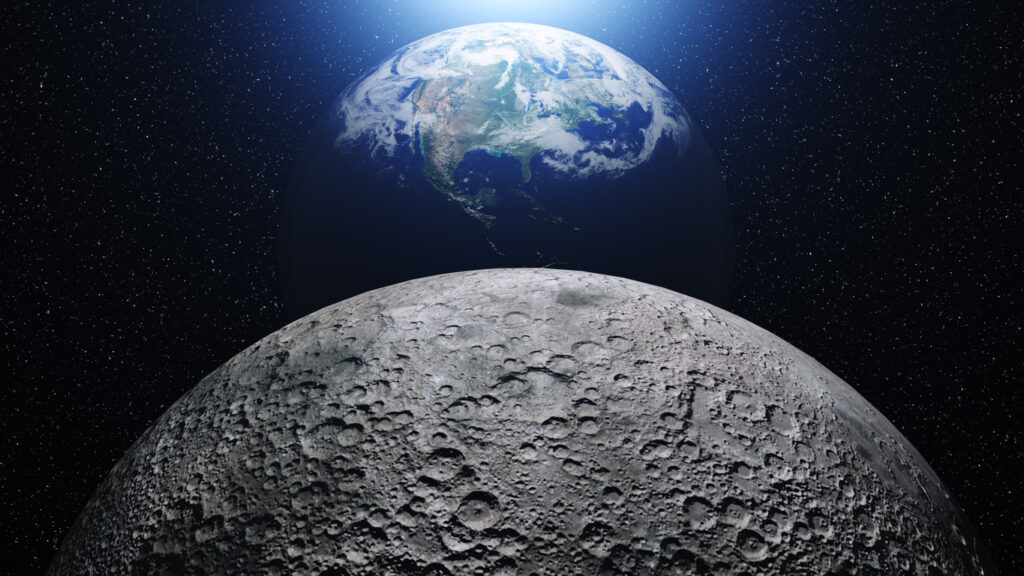
Earth is actually falling all the time, but it’s falling around the Sun rather than towards something below it. This constant falling motion, combined with Earth’s sideways momentum, creates what we call an orbit, like a ball rolling around the inside of a bowl that never quite reaches the bottom.
The same principle applies to everything in space: the Moon is falling around Earth, Earth is falling around the Sun, and our entire solar system is falling around the centre of our galaxy. It’s falling all the way down, just in circles rather than straight lines.
The Sun’s gravity keeps us in line.
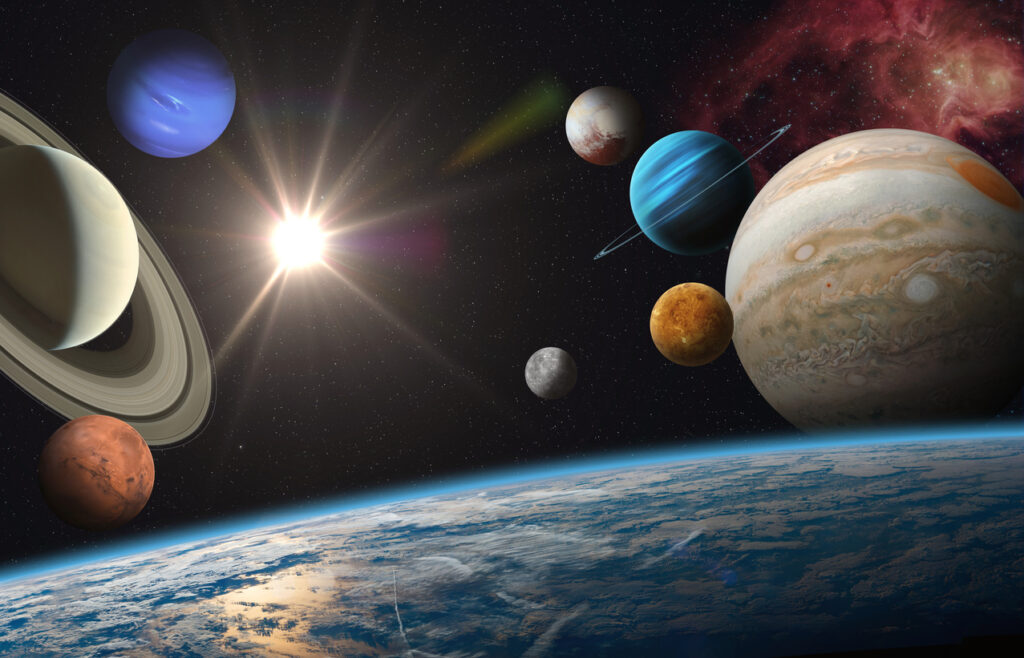
While Earth isn’t falling “down” towards anything, it is being held in its orbit by the Sun’s immense gravitational pull. Without this gravitational anchor, Earth would shoot off into space in a straight line, carrying us along for a very cold and dark ride.
The Sun’s gravity acts like an invisible rope, constantly pulling Earth towards it, but Earth’s sideways motion means it keeps missing and swinging around instead. It’s a delicate balance that’s been working perfectly for billions of years, keeping us at just the right distance for liquid water and life.
We’re riding on a giant spinning ball.
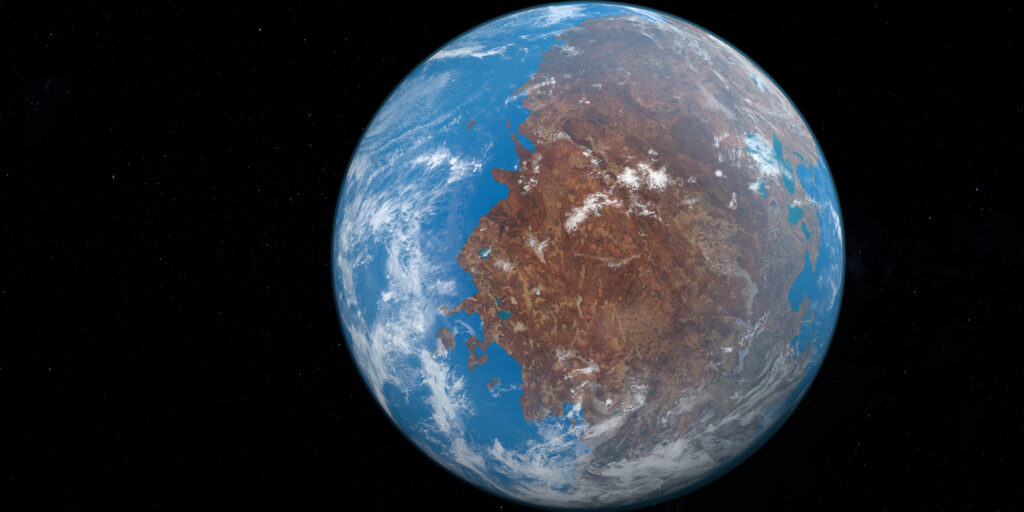
Earth’s rotation creates the illusion of stability, but we’re actually whizzing through space on a ball that’s spinning at roughly 1,000 miles per hour at the equator. This rotation, combined with our orbital motion around the Sun, means we’re moving incredibly fast even when we feel completely stationary.
The spinning motion also creates centrifugal force that very slightly counteracts gravity, making you weigh slightly less at the equator than at the poles. It’s a tiny effect, but it demonstrates that even our sense of “down” is influenced by Earth’s motion through space.
Gravity works in all directions.
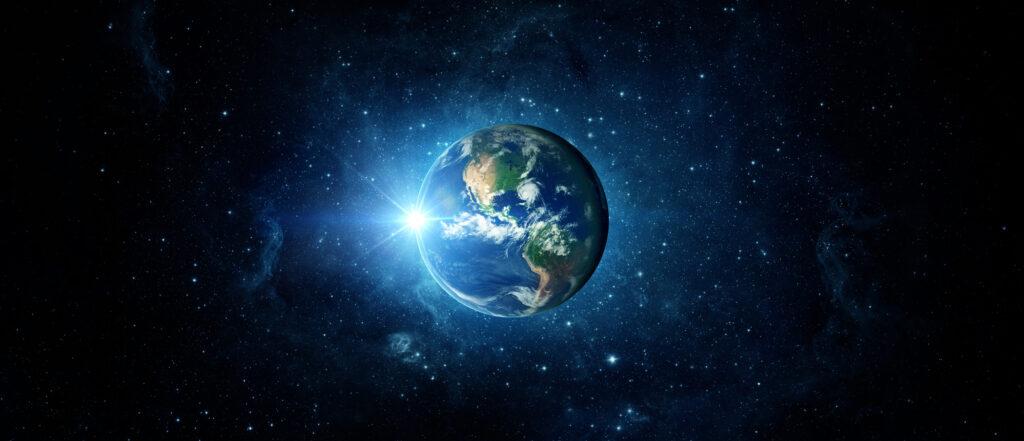
Gravity doesn’t pull things “down” in some universal sense, it pulls objects towards each other based on their mass. Earth’s gravity pulls everything towards its centre, which happens to be beneath our feet, but if you were on the opposite side of the planet, their “down” would be pointing in the completely opposite direction from yours.
Every object with mass in the universe is pulling on every other object, though the effect is only noticeable when one of the objects is really massive like a planet or star. Earth and the Sun are engaged in a mutual gravitational dance, with each pulling on the other.
Our solar system is part of an even bigger dance.
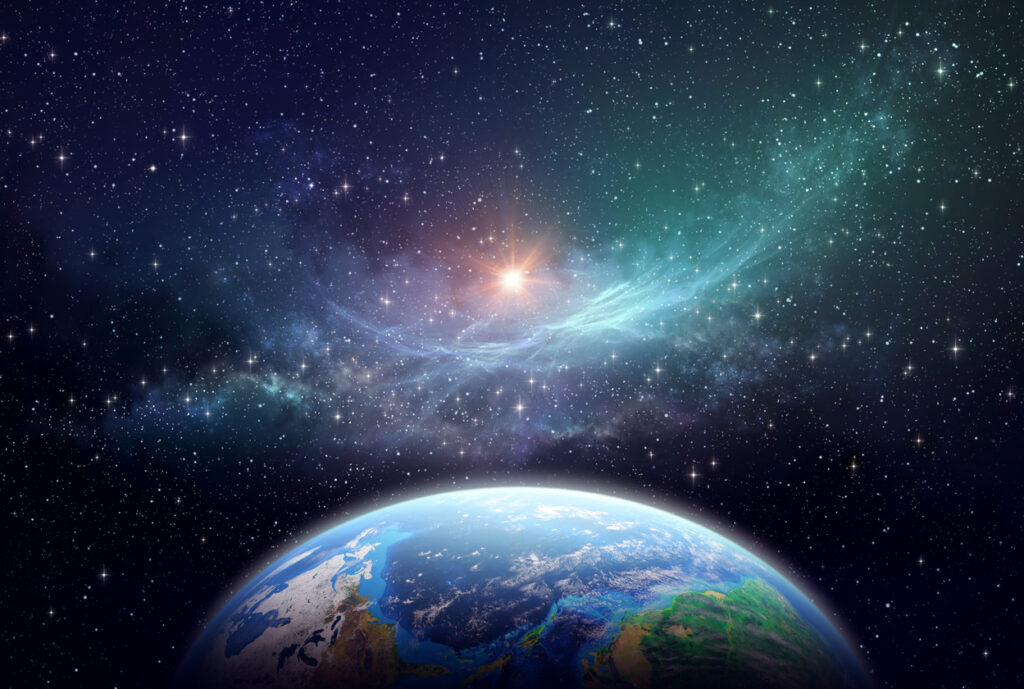
Not only is Earth orbiting the Sun, but our entire solar system is orbiting around the centre of the Milky Way galaxy at incredible speeds. We’re part of a cosmic carousel that takes about 200 million years to complete one rotation around the galactic centre.
This means that while Earth isn’t falling down in the traditional sense, it is participating in multiple layers of cosmic motion that keep it from flying off into the void. It’s like being on a merry-go-round that’s on a train that’s orbiting through space.
Space itself doesn’t have a bottom.
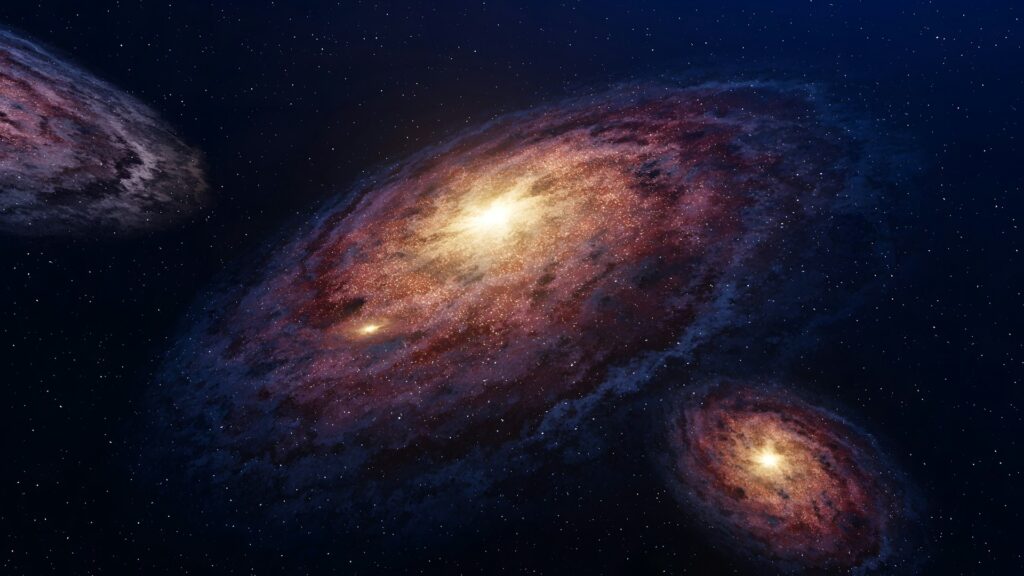
The universe doesn’t have edges or a bottom that things can fall towards, as far as we know. Space appears to extend infinitely in all directions, which means there’s literally nowhere for Earth to fall down to.
Even if there were some kind of cosmic “bottom,” the distances involved would be so vast that Earth would never reach it within the lifetime of the universe. We’re talking about scales so large that our entire solar system would look like an invisible speck.
Einstein showed us space is curved.

According to Einstein’s theory of relativity, massive objects like the Sun actually bend the fabric of space itself, creating curves that objects naturally follow. What we experience as gravity is really just objects moving along the path of least resistance through curved space.
This means Earth isn’t being pulled by a mysterious force so much as it’s rolling along a cosmic hill created by the Sun’s mass. It’s like a marble rolling around a bowling ball that’s sitting on a stretched rubber sheet, following the natural curves in the surface.
The whole universe is expanding.
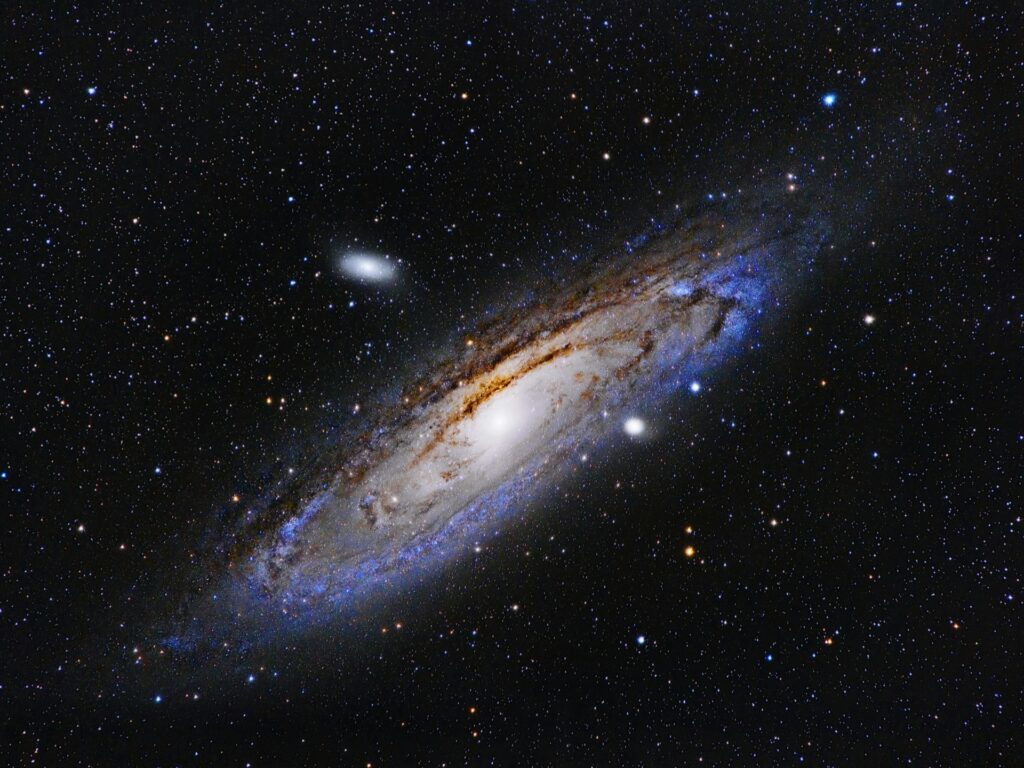
On the largest scales, space itself is expanding, carrying galaxies away from each other like raisins in rising bread dough. This expansion means that distant objects are moving away from us not because they’re flying through space, but because space itself is getting bigger.
This cosmic expansion provides another reason why Earth can’t fall “down”: there’s no fixed reference frame for the entire universe to fall relative to. Everything is moving away from everything else, making the concept of absolute direction meaningless on cosmic scales.
We’re in perfect balance.
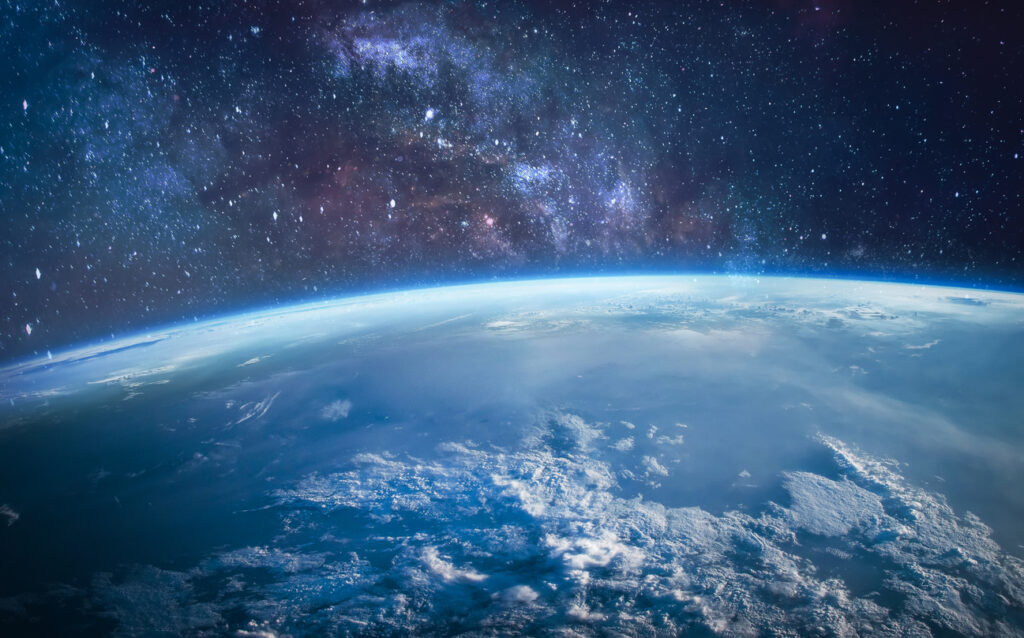
Earth doesn’t fall down because it’s in a stable orbit that represents a perfect balance between motion and gravity. We’re moving fast enough sideways that we keep missing the Sun when gravity tries to pull us towards it, but not so fast that we escape the Sun’s gravitational influence entirely.
This orbital balance is incredibly precise because if Earth were moving slightly faster, we’d spiral outward into space, and if we were moving slightly slower, we’d eventually spiral into the Sun. The fact that we’re in this perfect sweet spot is one of the remarkable things that make life on Earth possible.