Hummingbirds are famous for hovering midair, but they also have a party trick no other bird can match: flying backwards.
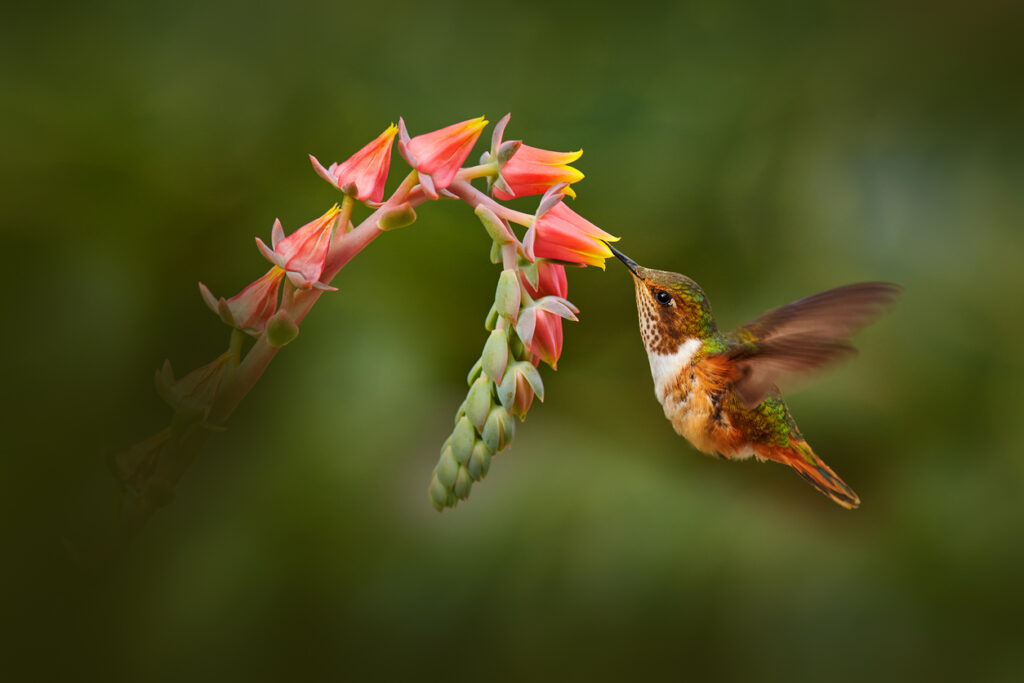
While it certainly looks effortless from the outside, it’s the result of unique anatomy, physics, and behaviour. It also takes a whole lot of strength, coordination, and concentration, making it all the more impressive. Here’s how and why they do it.
1. Their wings rotate like helicopter blades.
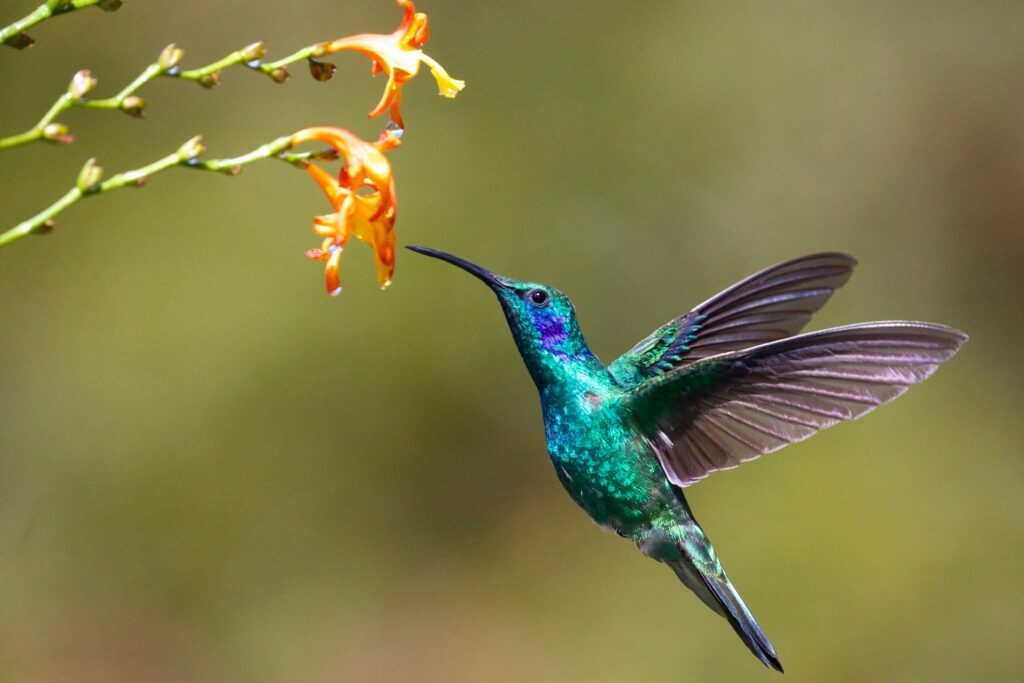
Most birds fly by flapping their wings up and down, generating lift only on the downstroke. Hummingbirds are different. Their wings rotate in a precise figure-eight pattern, creating lift on both the downstroke and the upstroke.
Their unique motion works much like the blades of a helicopter, giving them complete control in the air. It’s the reason they can hover in place, dart sideways, and even reverse in mid-flight without losing balance.
2. Their shoulder joints are highly flexible.

Unlike most birds, which have limited range of motion in their wings, hummingbirds have shoulder joints built like ball-and-socket mechanisms. This allows their wings to twist almost 180 degrees during each beat.
That flexibility means they can change direction instantly, including reversing mid-hover. Without it, backward flight would be impossible, as most birds’ joints simply don’t allow such rotation.
3. Their muscles are built for control.
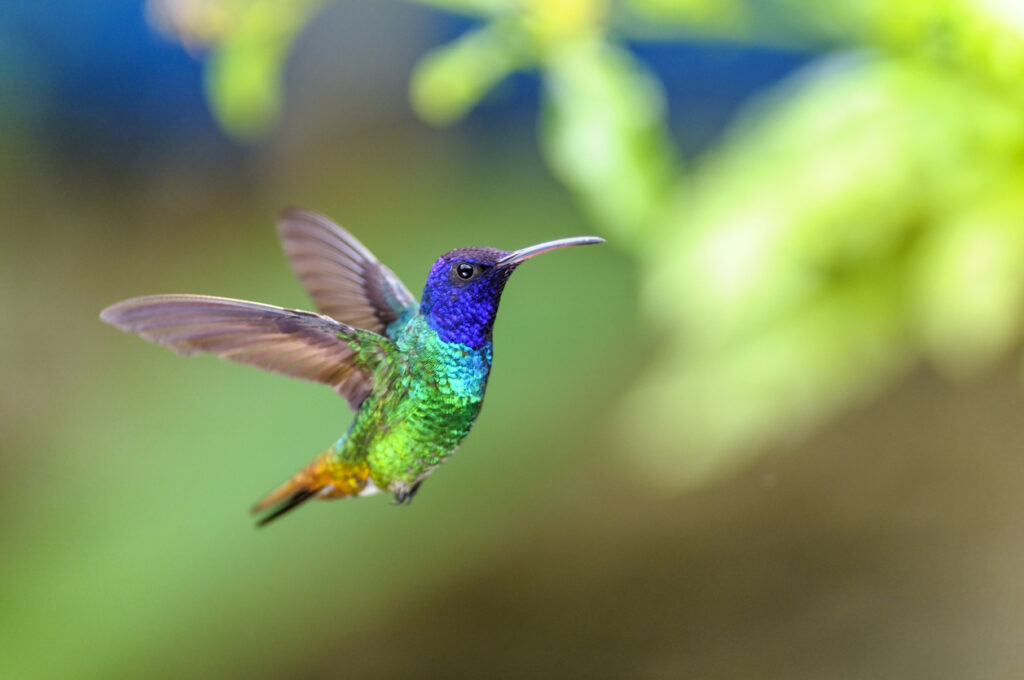
Nearly a third of a hummingbird’s entire body weight is concentrated in its chest muscles. These oversized pectorals power their rapid wingbeats, which can reach 70 to 80 beats per second in some species.
Their extraordinary muscle-to-body ratio gives them fine control over each tiny movement. When reversing, they can make micro-adjustments that keep their flight stable and precise, something most birds could never attempt.
4. Their brains process motion differently.

Flying backwards requires incredibly fast reflexes. Hummingbirds have unusually large brain regions dedicated to vision and movement, allowing them to process information in split seconds.
That neurological speed keeps them steady as they hover or retreat from flowers. While other birds might lose balance or crash, hummingbirds react almost instantly to changes in airflow or visual cues.
5. Backward flight helps them feed efficiently.

The main reason hummingbirds evolved this ability is practicality. They feed on nectar from flowers, which means hovering in one spot while drinking. Flying backwards allows them to move away cleanly without turning around.
It also saves energy when visiting hundreds of flowers a day. It also helps them fend off rivals, as they can dart back and forth with ease while defending their feeding territory.
6. They beat their wings at astonishing speed.

Most birds flap their wings a few times per second, but hummingbirds take this to extremes. Depending on the species, they beat their wings between 50 and 80 times per second, creating the rapid buzz we associate with them.
Their lightning-fast rhythm generates the air pressure they need to hover and reverse. It’s also what demands so much fuel from their diet, since sustaining that speed burns calories at an incredible rate.
7. They can also fly upside down.

Backwards flight isn’t their only trick. Hummingbirds have been observed flipping upside down during sharp dives or escape manoeuvres. They can roll, dart, and twist with precision no other small bird can manage.
That agility is a side effect of their wing structure. Their ability to hover gives them far more freedom in three-dimensional space, meaning they can perform acrobatics that look almost impossible in the bird world.
8. Backward flight costs extra energy.
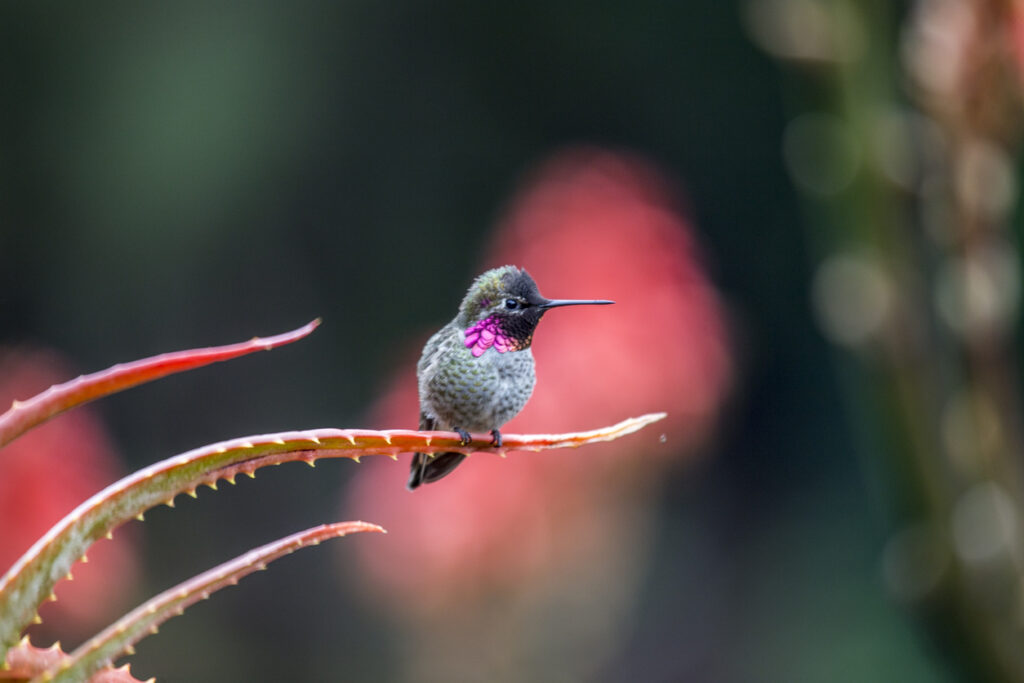
Flying in reverse uses more energy than moving forward. Every second spent hovering or retreating requires their muscles to work overtime, which is why they feed so often throughout the day.
To sustain their constant movement, they consume up to twice their body weight in nectar daily. The high sugar intake fuels the constant wingbeats that allow them to pull off such demanding manoeuvres.
9. They’re an exception among 10,000 bird species.
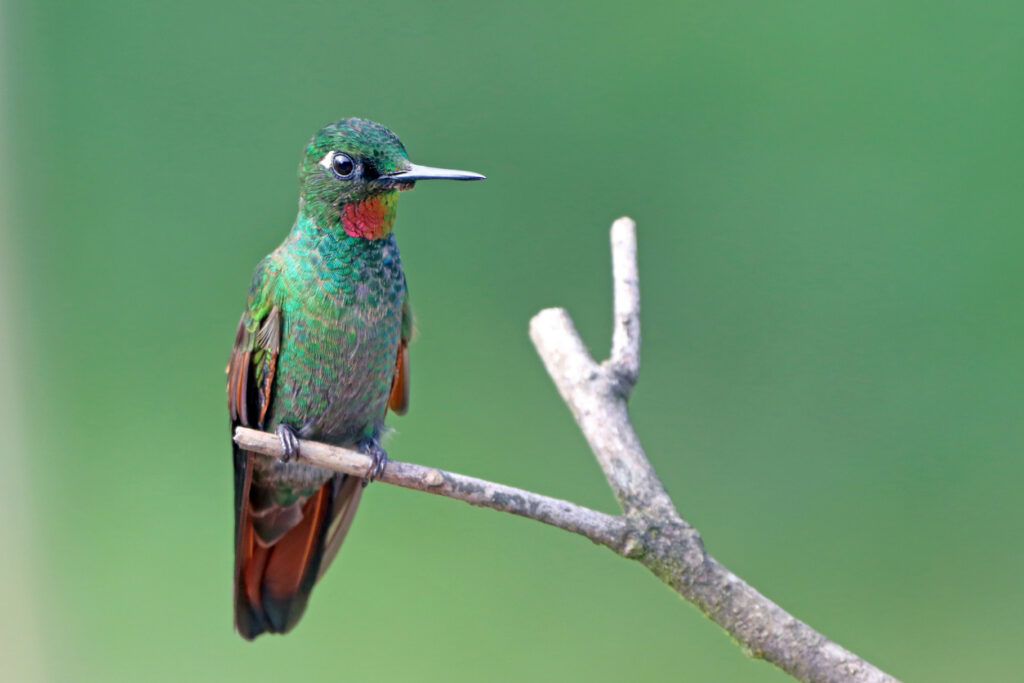
Out of more than 10,000 bird species in the world, only hummingbirds can fly backwards in a controlled, sustained way. Some birds, like kestrels, can hover briefly, but none can reverse in the same way.
This makes hummingbirds evolutionary outliers. Their specialised anatomy and behaviour diverged from typical bird flight, giving them abilities unmatched anywhere else in the avian kingdom.
10. Scientists study them for inspiration.

Researchers are fascinated by hummingbird flight, especially when it comes to designing drones and aerial robots. Their hovering and reversing skills are models of efficiency and control.
By studying their mechanics, scientists hope to mimic their movements in technology. Even with advanced engineering, humans have yet to match the effortless agility of a hummingbird in full flight.