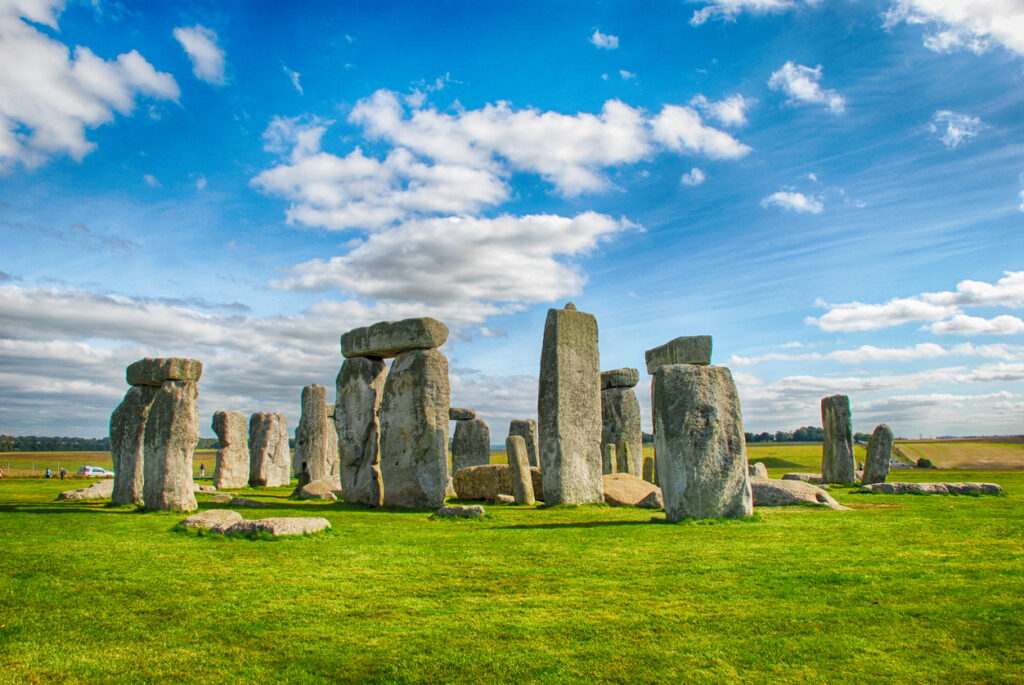
Stonehenge has been puzzling people for thousands of years, and despite decades of archaeological research, advanced dating techniques, and countless theories, we still have no definitive answer for why our ancestors hauled gigantic stones hundreds of miles to arrange them in a circle on a windswept plain. Every theory seems plausible until you examine it closely, then falls apart under scrutiny, leaving us with more questions than answers.
1. Ancient astronomical observatory theory
The stones align with solstices and lunar cycles, suggesting Stonehenge was a prehistoric computer for tracking celestial events. The heel stone perfectly frames the sunrise on the summer solstice, and other alignments correspond to moon phases and eclipses.
But the astronomical alignments aren’t unique or particularly sophisticated compared to other stone circles, and many of the supposed alignments require ignoring stones that don’t fit the pattern. If it was an observatory, it was a remarkably inefficient one.
2. Healing temple for ancient pilgrims
Archaeological evidence shows people travelled from across Europe to visit Stonehenge, many bringing cremated remains or showing signs of injury and disease. The bluestones from Wales were believed to have healing properties in folklore for centuries.
However, there’s no evidence that people were actually healed there, and the “healing stones” theory relies heavily on much later folklore that might have nothing to do with the original purpose. Sick people travel to many places without those places being specifically designed for healing.
3. Ancient burial ground and ancestor worship site
Hundreds of cremated remains have been found at Stonehenge, spanning several centuries of use. The site clearly had strong associations with death and burial rituals, possibly serving as a sacred cemetery for elite families or important leaders.
But burial was likely a secondary use rather than the primary purpose, since the monument’s construction clearly took priority over the burials. Many other stone circles also contain burials, without being considered primarily burial sites.
4. Sound amplification and acoustic temple
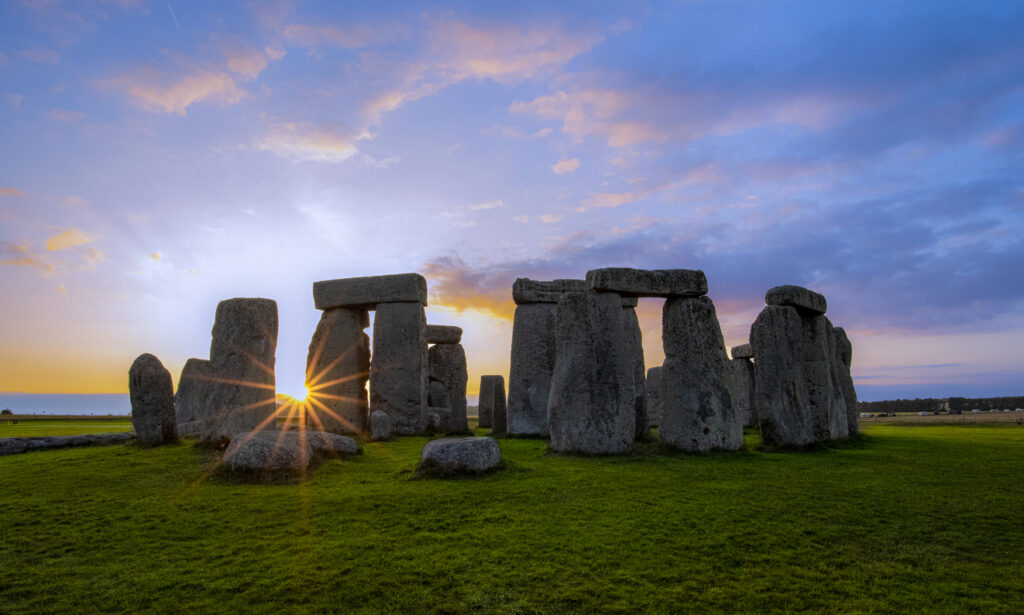
The stone arrangement creates interesting acoustic properties that would have amplified voices and musical instruments. Some researchers believe the monument was designed specifically to enhance ritual sounds and create immersive audio experiences for ceremonies.
The acoustic theory falls apart when you consider that the stones as they stand today are incomplete, and we don’t know what the original acoustic properties would have been. Plus, many natural rock formations create similar sound effects without being intentionally designed.
5. Symbol of political unity between warring tribes
Building Stonehenge required cooperation between different groups across Britain, possibly representing a peace treaty or alliance made permanent in stone. The huge undertaking could only have been accomplished through unprecedented collaboration between normally hostile tribes.
This theory doesn’t explain why they chose this particular location or design, and there’s no archaeological evidence of the kind of widespread conflict that would make such a unity monument necessary or meaningful.
6. Ancient calendar for agricultural planning
The stone alignments could have helped farmers determine the best times for planting, harvesting, and animal breeding by tracking seasonal changes. This would have been valuable information for survival in a challenging agricultural environment.
But Neolithic farmers already had perfectly good methods for tracking seasons without building gigantic stone monuments. The theory also doesn’t explain the enormous effort and expense involved for what could have been achieved much more simply.
7. Gateway between the world of the living and the dead
The circular design and association with burials suggest Stonehenge might have been conceived as a portal or boundary between earthly life and the afterlife. The huge effort to build it reflects the importance of properly managing this spiritual transition.
This theory is impossible to prove or disprove, since it deals with spiritual beliefs that left no physical evidence. It also doesn’t explain the specific design choices or why this location was chosen for such a gateway.
8. Display of power and wealth by elite rulers
Building Stonehenge required organising comprehensive labour forces and resources, possibly serving as the ultimate status symbol for powerful leaders who wanted to demonstrate their ability to mobilize entire populations for non-essential projects.
While this explains the massive scale, it doesn’t account for the specific astronomical alignments and continued use over many centuries. Pure status symbols usually don’t require such precise engineering or maintain their importance across generations.
9. Sacred geometry and mathematical knowledge demonstration
The precise measurements and alignments suggest Stonehenge was built to showcase advanced mathematical and engineering knowledge. The monument could have served as a kind of ancient university or demonstration of geometric principles.
However, the mathematical sophistication required could have been demonstrated much more simply, and there’s no evidence that Stonehenge was used for teaching or that its builders possessed unusually advanced mathematical knowledge.
10. Territorial marker and ancient boundary stone
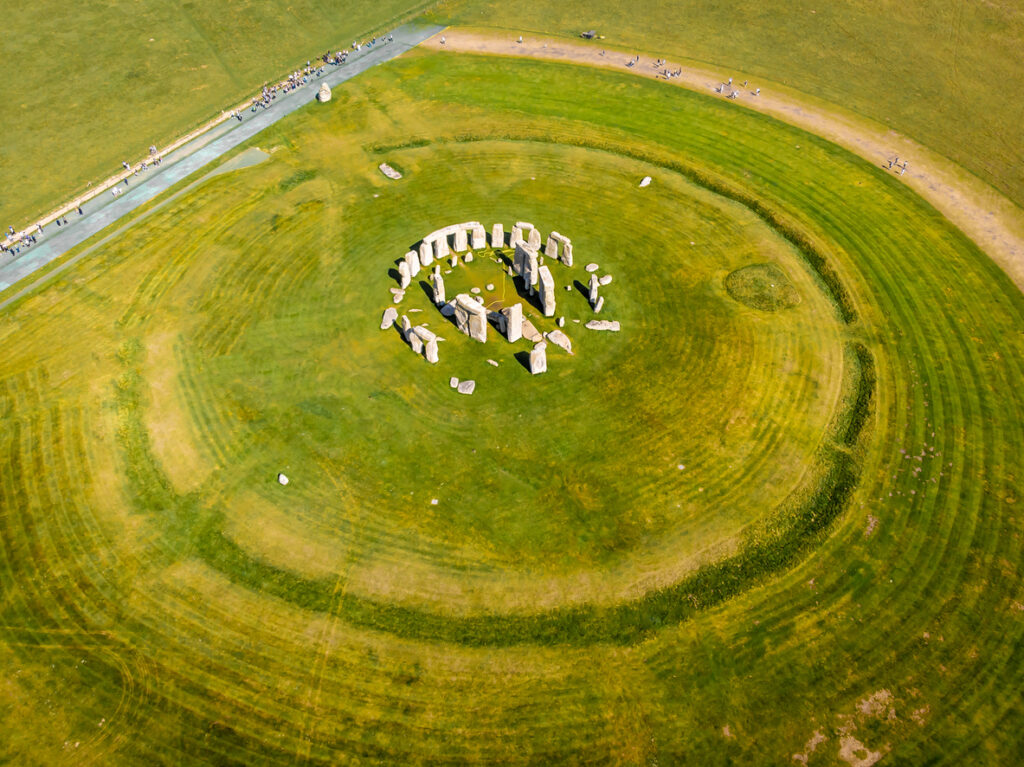
The monument might have served as a major landmark, defining territorial boundaries between different groups or marking the edge of sacred or politically important land. Its visibility and permanence would have made it an ideal boundary marker.
This theory doesn’t explain the internal complexity of the design or the continued additions and modifications over centuries. Simple boundary markers don’t typically require such elaborate construction or ongoing maintenance.
11. Religious pilgrimage destination and sacred centre
Stonehenge could have been the centre of a widespread religious movement that drew pilgrims from across Europe. The major investment suggests it served a large population beyond just the local area, possibly as a kind of ancient Mecca.
While there’s evidence of long-distance travel to the site, there’s no proof of organised religion sophisticated enough to support such pilgrimage networks, and we have no idea what beliefs would have motivated such journeys.
12. Combination theory: multipurpose sacred complex
Rather than having one single purpose, Stonehenge might have served multiple functions simultaneously – burial site, astronomical tool, healing centre, and religious focal point all in one. This would explain why no single theory fully accounts for all the evidence.
The combination theory is probably closest to the truth, but it’s essentially admitting that we don’t really know what Stonehenge was for. Saying it served multiple purposes doesn’t actually explain why it was built or what those purposes were supposed to accomplish.