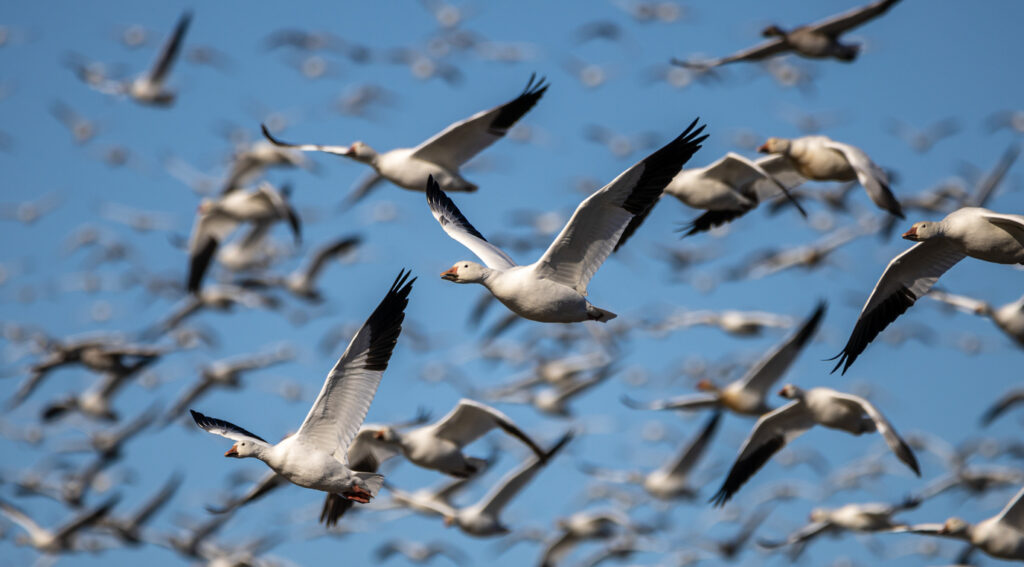
Birds could theoretically just tough it out through winter like squirrels and bears do, but they’ve chosen the exhausting option of flying thousands of miles twice a year instead. This massive undertaking seems crazy until you realise they’re basically following nature’s oldest business model: go where the resources are abundant, and the competition is minimal. Here are just some of the reasons they travel so far.
1. Winter turns their world into a food desert.
When temperatures drop, insects vanish, seeds get buried under snow, and fruit stops growing. Birds that depend on these food sources would literally starve if they hung around through the winter months.
Migration is basically following their dinner south, where bugs are still crawling around and plants are still producing food. They’re basically chasing food across continents, as the alternative is death by starvation.
2. They’re built for flying, not freezing.
Unlike mammals that can grow thick fur or pack on fat for hibernation, birds have lightweight bodies designed for flight rather than surviving harsh weather. Their hollow bones and fluffy feathers prioritise being airborne over staying warm.
Trying to survive freezing temperatures would require becoming so bulky they couldn’t fly properly. They’ve basically chosen to be excellent at escaping problems rather than enduring them, which honestly seems smarter.
3. The good nesting spots are seasonal.
Many birds time their migrations to show up at breeding grounds exactly when conditions are perfect for raising babies. This timing gives their chicks the best shot at not dying horribly in their first few weeks.
Arctic terns fly from one end of the planet to the other because they’re essentially chasing endless summer. They get to breed in prime conditions twice per year instead of making do with whatever’s available locally.
4. Less competition means more food for everyone.
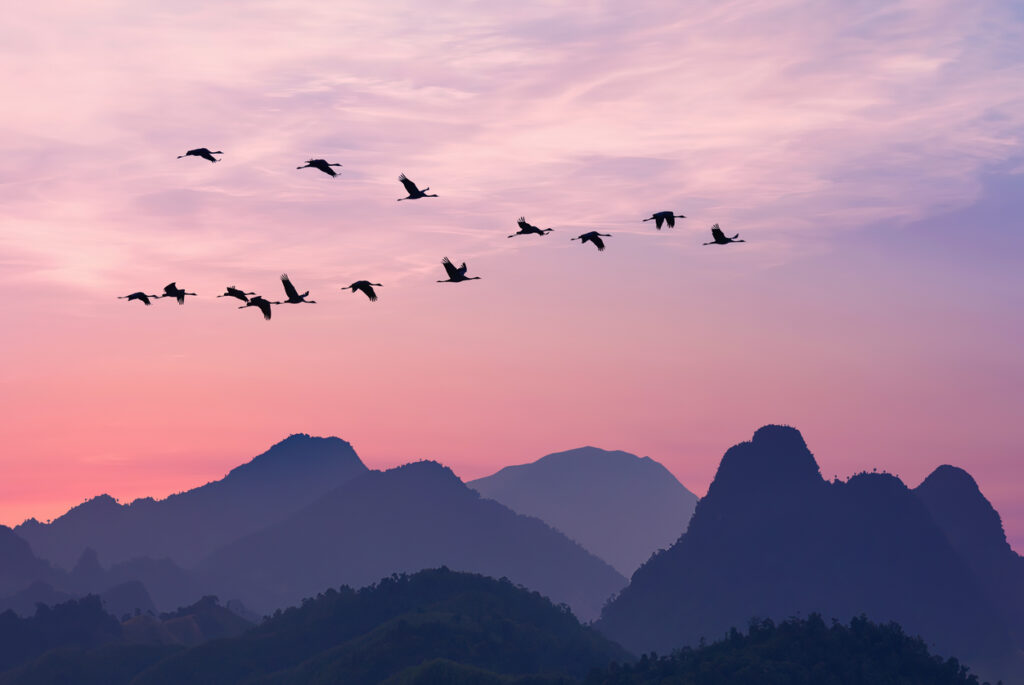
Migrating to areas that become temporarily loaded with resources means they don’t have to fight other birds for every scrap. When billions of insects emerge during northern summers, migrating birds get exclusive access to the feast.
Birds that stay put year-round have to constantly battle for limited local resources, while migrants can show up and gorge themselves on seasonal abundance. They pretty much have VIP access to nature’s all-you-can-eat buffet.
5. Their bodies force them to move, whether they want to or not.
Birds have internal clocks tied to daylight hours that control hormone production and breeding cycles. These biological rhythms literally make them restless and uncomfortable if they don’t migrate on schedule.
Fighting these urges would be like trying to ignore being hungry or tired — technically possible but absolutely miserable. Their bodies start preparing for the journey automatically, whether their brains think it’s a good idea or not.
6. They’ve figured out how to hitchhike on air currents.
Migrating birds take advantage of predictable wind patterns and thermal currents that make long-distance travel way easier than it looks. They’re basically surfing invisible highways in the sky.
What seems like an impossible journey becomes much more manageable when you know how to catch free rides on moving air. They’ve turned the atmosphere into their personal transportation network.
7. It’s programmed into their DNA like an unbreakable habit.
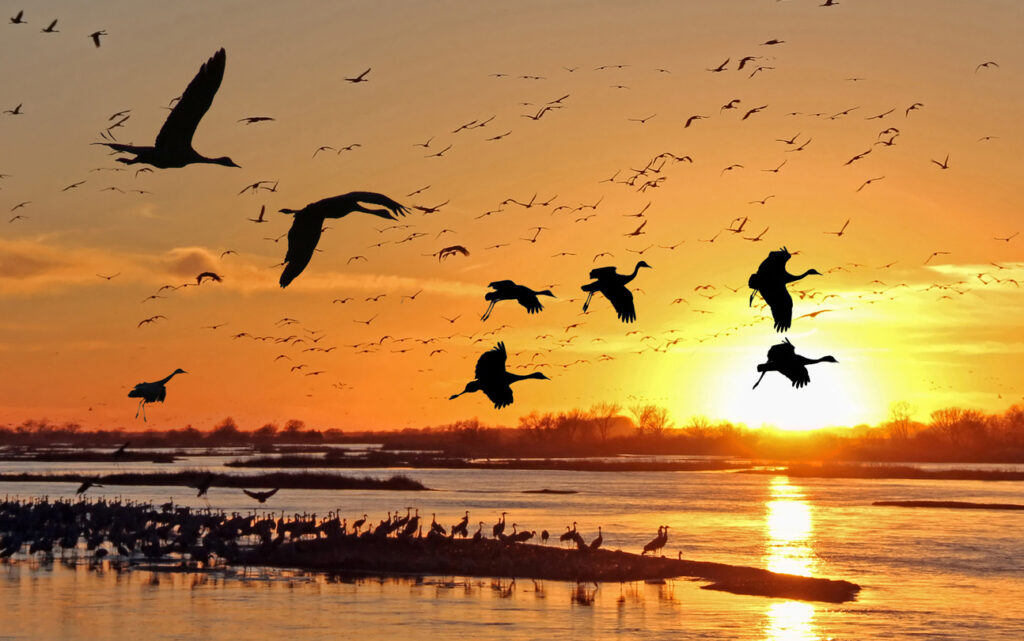
Migration routes and timing are hardwired into bird genetics through millions of years of evolution. Young birds inherit detailed travel plans they’ve never used before, but somehow know how to execute perfectly.
This genetic GPS is so precise that birds can navigate to specific spots they’ve never visited using inherited knowledge. Oddly enough, they’re born with perfect directions to places they’ve never even been.
8. Flying thousands of miles is actually more efficient than staying.
While migration requires a huge energy investment upfront, it’s actually cheaper than trying to survive harsh local conditions. Birds turn themselves into living fuel tanks specifically for these journeys.
The energy cost of the flight is less than what they’d spend trying to stay warm and find scarce food through brutal winters. They’re making a smart investment that pays off in not dying.
9. Their programming hasn’t caught up to climate change.
Birds are stuck with migration patterns that evolved over millions of years, but climate change is happening in just decades. Even if staying put became possible, their biology is still running on ancient software.
They’re responding to environmental cues that no longer match reality perfectly. It’s like following GPS directions that haven’t been updated for new road construction — mostly right but occasionally completely wrong.
10. Peer pressure keeps the whole system going.

Young birds learn migration routes by following older birds, creating a cultural tradition that gets passed down through generations. Even if conditions changed, the social expectation to migrate would continue.
Individual birds can’t just opt out of a system that requires everyone to participate. Even if one wanted to give migration a miss, it’s practically impossible, as they work together as a flock and individuality isn’t really a thing.
11. Staying put makes you an easy target.
Remaining in one location year-round makes birds predictable for predators who learn their habits and hunting grounds. Migration creates constantly moving targets that are much harder to catch.
By never staying anywhere long enough for predators to figure them out, migratory birds avoid becoming someone’s regular meal. They pretty much never sleep in the same place twice to avoid getting tracked down.
12. Moving around keeps them healthier.
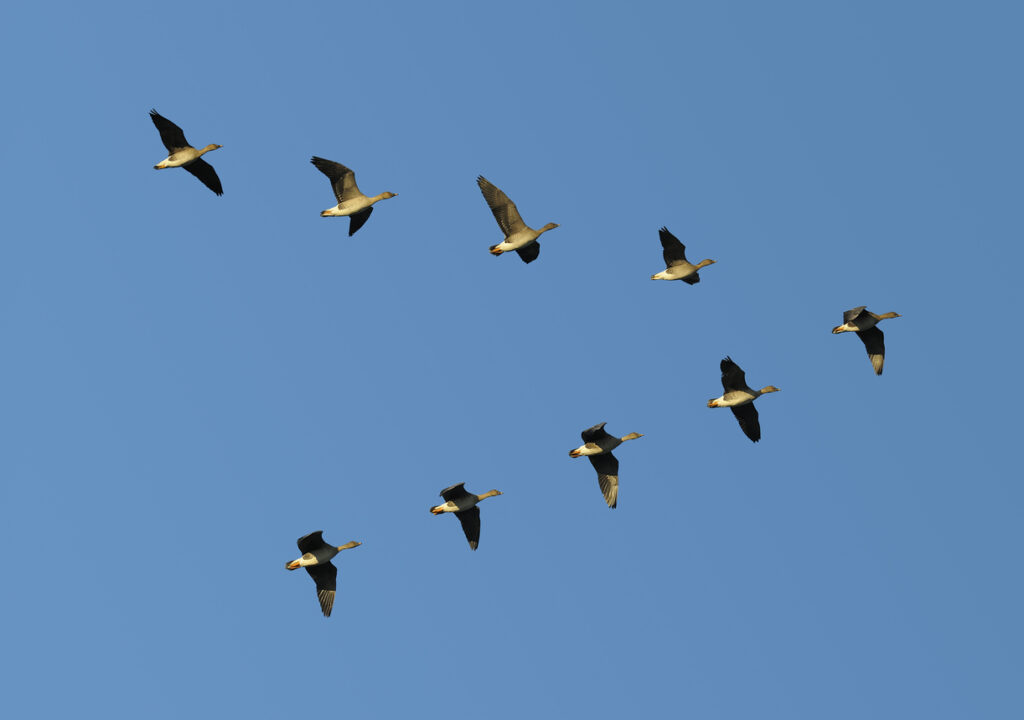
Constantly changing environments helps birds avoid building up nasty parasite loads or catching location-specific diseases. Migration gives them a natural health reset twice per year.
Staying in one spot allows bugs and diseases to really get established, while moving around disrupts these cycles before they become serious problems. It’s like changing your entire living situation to avoid getting sick.
13. They’re locked into a system that’s worked for millions of years.
Migration has become so fundamental to many species that stopping would require completely rewiring their biology, behaviour, and entire life strategy. They’re committed to constant movement because everything about them depends on it.
Even if staying put suddenly became better, the biological machinery of migration is too deeply embedded to change quickly. They’re stuck with a lifestyle choice their ancestors made millions of years ago.