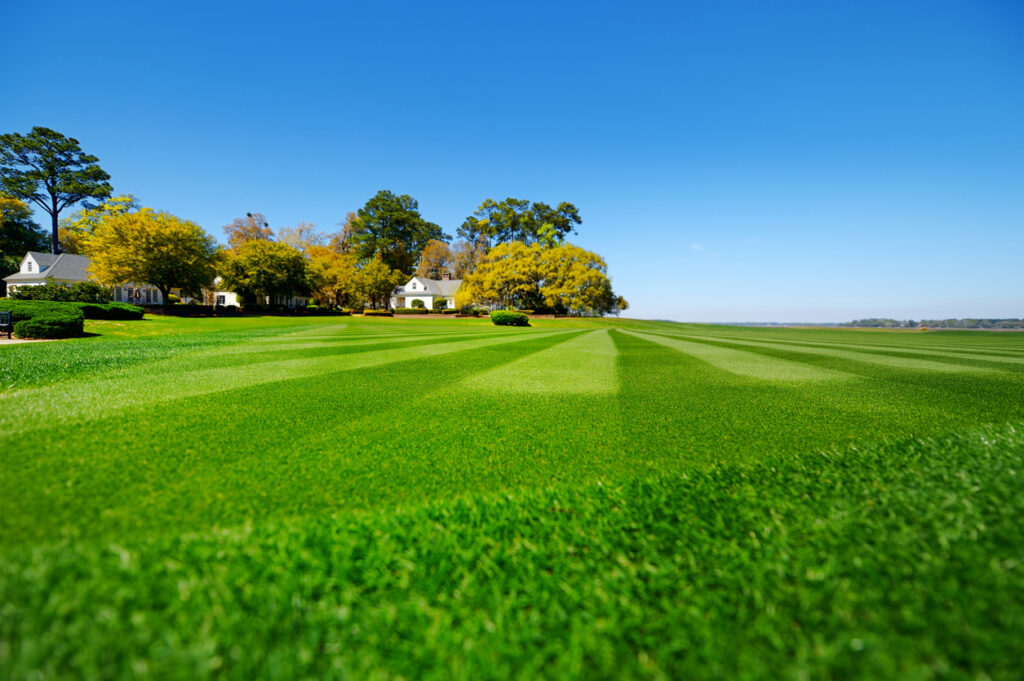
The immaculate green lawn has been the gold standard of British garden pride for generations. Weed-free, evenly cut, uniformly coloured. It looks tidy. It also happens to be one of the least ecologically useful things you can do with a patch of ground.
A perfect lawn is essentially a biological desert.
Grass cut short and kept uniform offers almost nothing to the living world around it. There’s no nectar, no seeds, no shelter, no food source for anything beyond the occasional crow looking for worms. The aesthetic appeal of a perfect lawn is real enough, but underneath that visual neatness is a surface that supports almost no life at all.
Ecologists sometimes describe heavily managed lawns as green concrete, which sounds harsh until you actually think about what’s living in one versus what’s living in a patch of unmown grass nearby. The difference is enormous.
Mowing removes the flowers that insects depend on.
Clover, dandelions, self-heal, and creeping buttercup will all appear in a lawn left alone for even a short time, and all of them are valuable food sources for bees, hoverflies, and other pollinators. Regular mowing cuts them down before they can flower, which means the lawn never produces the nectar and pollen that insects need.
Britain has lost a large proportion of its pollinator populations over the past several decades, and the combined effect of millions of households maintaining flower-free lawns is a meaningful part of that picture. A dandelion in a lawn isn’t a failure of maintenance. It’s a meal for something that needs one.
@archdigest Historian Ted Steinberg, whose work focuses on the intersection of society, the environment, and the law, explains the declining interest in the “perfect” lawn. #clover #lawncare #ecofriendly #greenliving #historytok ♬ original sound – Architectural Digest
Pesticides and herbicides wipe out far more than their targets.
Lawn treatments designed to kill weeds or prevent moss don’t stop working once they’ve dealt with the intended problem. They move through the soil, affect the organisms living in it, and can wash into nearby drains and waterways during rainfall.
Weedkillers containing glyphosate have been linked to declines in soil health and have been found in water sources at levels that concern environmental researchers. The insects, earthworms, and soil microorganisms that happen to live in or pass through a treated lawn don’t distinguish between a targeted chemical and a general one. They just die or leave, and the ecosystem loses another piece.
Short grass gives hedgehogs and other animals nowhere to hide.
Hedgehogs, slow worms, frogs, toads, and a range of beetles all rely on longer grass and garden debris for shelter, particularly during the day and during hibernation periods. A tightly mown lawn with the edges trimmed and the borders cleared offers none of that.
As gardens have become tidier over the years and the overall footprint of managed grass has expanded, the patchwork of sheltered spots that small animals depend on has fragmented. Hedgehog numbers in Britain have dropped by roughly a third since the turn of the century, and loss of suitable habitat in gardens is consistently cited as one of the contributing factors.
Soil compaction from regular mowing damages the ground itself.
Mowing equipment, particularly heavier ride-on mowers, compacts the soil over time, reducing the air pockets that roots, worms, and soil organisms need to survive. Compacted soil drains poorly, which means water sits on the surface rather than soaking through, leading to both waterlogging after rain and dry, stressed grass during dry spells.
It also makes it harder for any plant to establish deep roots, which ironically makes the lawn more vulnerable to the weeds and bare patches that mowing was supposed to prevent. The more aggressively a lawn is managed, the more management it tends to require.
Watering a perfect lawn in summer wastes an extraordinary amount of water.
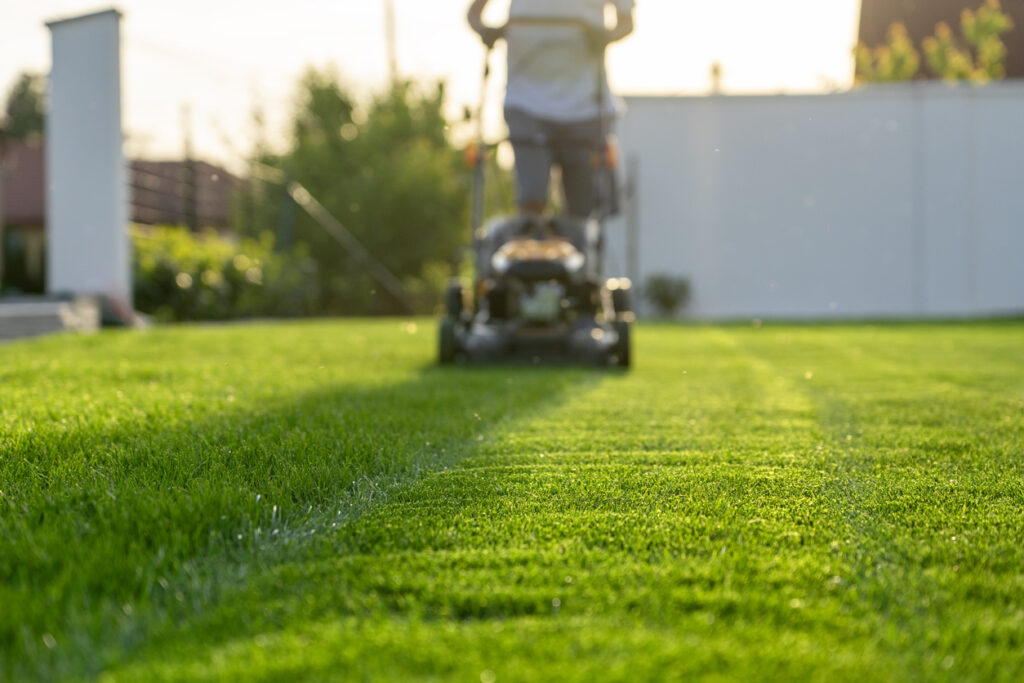
Keeping grass green through a dry British summer requires regular watering, and the quantities involved are larger than most people realise. Garden watering accounts for a major spike in domestic water use during dry periods, and much of that goes onto lawns.
In the context of increasingly unpredictable summers and real pressure on water supplies in parts of England, using drinking-quality water to maintain a specific shade of green starts to look difficult to justify. Grass that goes brown in summer isn’t dying. It’s dormant, and it comes back on its own when the rain returns. Brown lawns in August are not a failure. They’re the sensible response to dry conditions.
Grass clippings and leaf removal strip the soil of nutrients.
When you collect grass clippings and remove fallen leaves rather than letting them break down where they land, you’re taking organic matter out of the system that would otherwise return nutrients to the soil. Decomposing leaves create the kind of rich, loose layer that soil organisms thrive in, and that layer is what healthy plant growth depends on.
Removing it consistently leaves the soil increasingly depleted, which means more fertiliser is needed to compensate, which creates its own set of problems. Leaf litter is also where hedgehogs build their winter nests, where beetles overwinter, and where slow worms shelter. Bagging it up and putting it in the bin removes all of that at once.
Fertilisers push grass to grow faster, which demands more mowing
Lawn fertilisers stimulate rapid grass growth, which produces the lush, thick appearance many gardeners are after. However, faster-growing grass needs cutting more often, which means more disturbance to any invertebrates living in it, more fuel or electricity used by the mower, and more clippings being removed from the system.
Excess nitrogen from fertilisers also leaches into soil and groundwater, contributing to a process called eutrophication in nearby ponds and streams, where algae blooms fed by the run-off use up the oxygen in the water and kill the life within it. The lush green lawn can have consequences that extend well beyond the garden fence.
Artificial grass is even worse than a maintained natural lawn
The appeal of artificial grass is understandable: no mowing, no weeding, stays green all year. But a plastic lawn is genuinely one of the most ecologically damaging things you can install in a garden. It prevents any water from soaking into the ground, contributes to urban flooding, heats up noticeably in summer creating a heat island effect, and provides absolutely nothing for wildlife.
Microplastics from degrading artificial turf have been found in soil and waterways. The ground beneath it becomes lifeless relatively quickly, and when the product eventually needs replacing, it goes to landfill. It solves the inconvenience of lawn maintenance while making every underlying problem way worse.
@julianadeliberais Now that you know your lawn may be harming the environment, look into better alternatives for your area. A lot of them have the added benefit of not needing to be mowed which will also save you time (or money, if you have someone do it for you) #grasstok #lawn #environmentallyfriendly #polinator ♬ Summer day – TimTaj
Even the edges matter more than most people think.
The strips of land along fences, walls, and path edges that get trimmed and cleared are some of the most valuable spots in a garden for wildlife if they’re left alone. These margins are where insects overwinter in hollow stems, where spiders build webs, where small mammals move between gardens, and where opportunistic plants get a foothold.
The compulsion to neaten every edge of the lawn removes a disproportionate amount of habitat for the relatively small visual difference it makes. In ecological terms, a messier margin is almost always a more productive one, and loosening the grip on those borders a little costs very little but gives back quite a lot.
The obsession with perfection is a relatively recent cultural habit.
The idea of the perfect domestic lawn as a social norm is largely a twentieth century invention, driven partly by the availability of affordable mowers and partly by advertising that sold a particular vision of what a respectable garden should look like. Before that, garden spaces tended to be more varied, with grass left longer in places, wildflowers tolerated or even encouraged, and the boundary between managed and unmanaged space much less rigid.
That change happened quickly and has had consequences that nobody was thinking about at the time. The good news is that cultural habits around gardens can shift back, and there are clear signs that attitudes are already starting to change.
Small changes make a genuine difference.
None of this requires pulling up the lawn and starting again. Leaving one corner uncut, stopping the use of herbicides, letting the clover flower before you mow, putting the leaf blower away in autumn, adding a small log pile in a quiet corner, any of these things creates opportunity for wildlife in ways that accumulate across a neighbourhood.
The no-mow May movement, which asks gardeners to put the mower away for a month in spring, has demonstrated that even a short break in management produces a visible return of flowers and insects remarkably quickly. The lawn doesn’t have to disappear. It just has to matter a little less than it currently does.