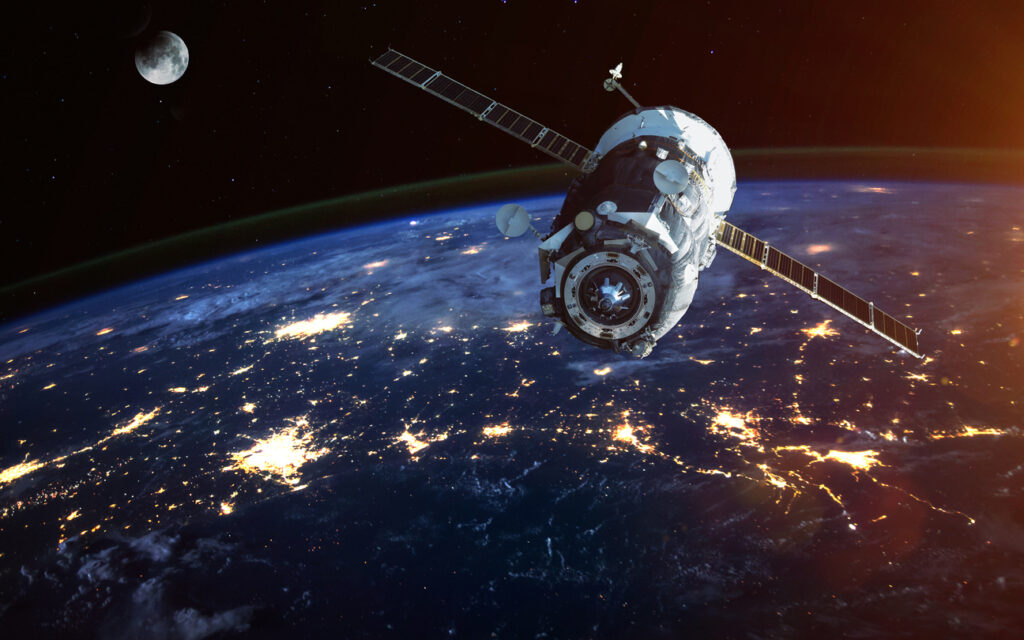
We tend to picture space as this gleaming, sterile frontier that’s untouched, weightless, and perfectly clean. Weirdly enough, that’s not actually the case. When astronauts and scientists bring things back from beyond our planet, what returns isn’t always neat or predictable. Some of it glows faintly, smells odd, mutates, or even grows. These aren’t your standard souvenirs, either; they’re the eerie reminders that space doesn’t play by Earth’s rules.
Over the decades, missions have uncovered all kinds of things, and each discovery challenges what we think we know about life, death, and what it means to exist outside our world. These are some of the creepiest, most fascinating things that have ever made their way back from space, and what they reveal about the strange, unpredictable universe we’re part of.
1. Lunar dust that smelled like gunpowder
When Apollo astronauts tracked Moon dust into their spacecraft, they were hit with a surprise: it smelled. The comparison everyone made was gunpowder, as it was metallic, sharp, and oddly familiar. This was bizarre, considering the Moon has no oxygen, no organic matter, and definitely no combustion.
The smell only appeared once the dust mixed with air inside the cabin, suggesting some kind of chemical reaction happening right before their eyes. Even today, scientists don’t fully understand what causes it. Whatever it is, that faint “burnt” scent might be the Moon’s way of announcing itself to anyone who dares to bring a piece of it home.
2. Space bacteria that survived the trip
When researchers examined samples collected from the outer surface of the International Space Station, they found bacteria that didn’t exist there before launch. In other words, something microscopic, and very much alive, hitched a ride from space.
It’s one of those discoveries that sounds like science fiction but isn’t. The microbes appear to have survived the extreme radiation and vacuum of orbit, suggesting life (at least in its simplest form) might not be confined to Earth. If bacteria can drift between worlds and survive, it adds weight to the idea that life could travel across the cosmos on meteorites or dust, in a concept known as panspermia.
3. Rocks that keep changing colour

Some meteorites behave oddly once they’re brought back to Earth. Over time, their surfaces darken, lighten, or take on new hues entirely. These subtle colour shifts happen as they react to humidity and the chemical composition of our atmosphere, which are elements they never encountered in space.
For scientists, it’s like watching a living thing adapt to a new planet. Each change is a quiet reminder that these rocks are not from here, and that our environment affects them as much as they once shaped the heavens they came from.
4. A fungus that grew on the Mir space station
When the Russian space station Mir was still in orbit, astronauts noticed something creeping across its metal walls: a black, stubborn fungus that refused to die. As time went on, it even began eating into the ship’s plastic and metal components.
The idea that something could feed on a space station sent chills through the scientific community. The fungus didn’t just survive; it thrived, adapting to microgravity and high radiation levels. It’s still being studied today because it challenges what we think life can withstand. If a fungus can digest a spacecraft, it’s easy to imagine what else might survive out there.
5. Moon rocks that made scientists uneasy
When the first Moon rocks returned to Earth in 1969, NASA didn’t take any chances. The samples were sealed in vacuum containers and handled inside quarantined labs by scientists in full protective suits. At the time, no one knew if the rocks might carry alien microbes, or if exposure could trigger a planetary contamination event.
The fear wasn’t totally unfounded, as it turns out. This was the first time in history that material from another world had entered Earth’s ecosystem. Today, the samples are still guarded and handled with extreme care, not because of fear, but because they’re irreplaceable relics of another world.
6. Tools that floated away and came back burned
Even the smallest mistakes in space have consequences. During a repair mission, an astronaut accidentally let go of a metal tool kit, which slowly drifted away, becoming a new piece of space debris. Months later, fragments of that same kit re-entered Earth’s atmosphere and burned up, streaking across the sky in a fiery display visible from the ground.
It was a strangely poetic moment to experience the return of something human, briefly transformed by its time beyond the planet, before vanishing forever.
7. Dust that carried a mystery smell
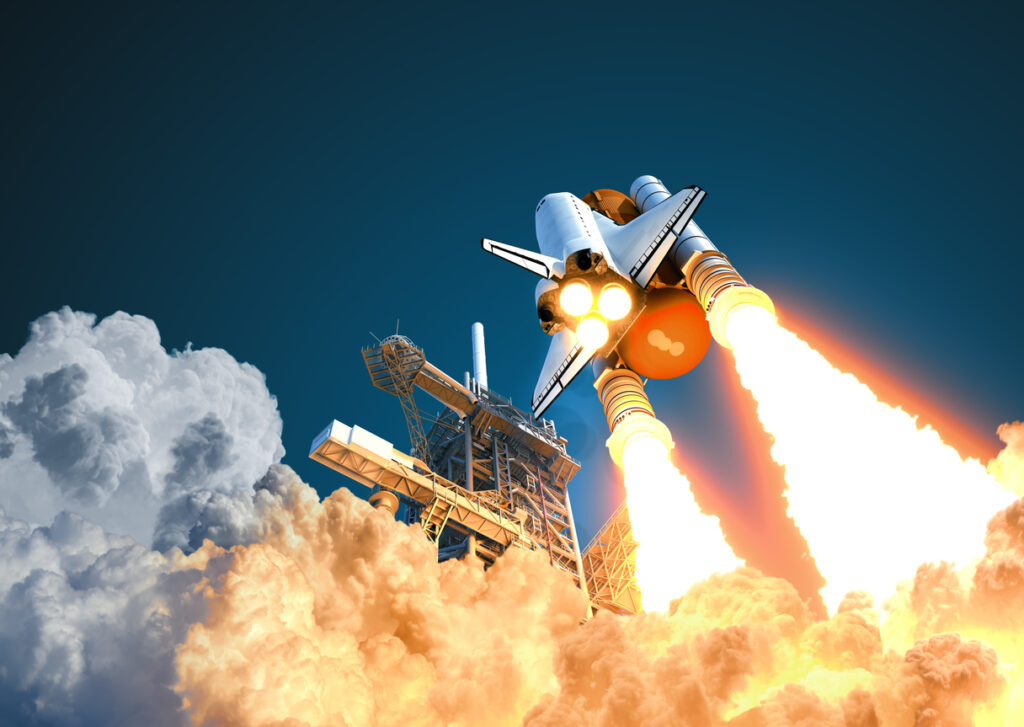
When NASA’s Genesis spacecraft crash-landed in the Utah desert in 2004 after collecting solar wind particles, it broke open, and scientists smelled something strange. They described the scent as “burnt electronics mixed with something sweet,” a result of high-energy solar particles reacting with the metal inside the capsule.
For a few moments, the team was inhaling something that had literally touched the Sun. It’s one of those haunting reminders that even invisible particles from deep space can leave a very tangible mark on us.
8. A capsule filled with cosmic radiation
Every object that spends time outside Earth’s atmosphere picks up traces of radiation from cosmic rays. When those spacecraft return, the metal shells often remain slightly radioactive. They weren’t dangerous or anything, but detectable. Engineers who handle them wear protective gear and use sensitive instruments to measure what the cosmos has left behind. It’s an invisible souvenir from space, proof that even the emptiness between stars is far from harmless.
9. The ashes of humans scattered in orbit
Over the years, several memorial spaceflights have carried small portions of human ashes into orbit, which is a poetic farewell for those who wanted to be part of the stars. These capsules eventually burn up in the atmosphere, scattering their contents across the sky in microscopic fragments.
It’s beautiful and eerie at the same time, the idea that particles of once-living people have floated above the Earth and returned as stardust, merging with the very world they left behind.
10. A camera covered in decades-old Moon dust
In 2015, a camera from the Apollo 11 mission resurfaced after spending over 40 years locked away. It was still coated in lunar dust from 1969, untouched since humanity’s first steps on the Moon. That dust is now one of the rarest substances on Earth, studied in labs under controlled conditions.
Every particle tells a story of exposure to an environment utterly unlike our own. It’s fragile, ancient, and still faintly carries the history of a world where no wind blows and no life stirs.