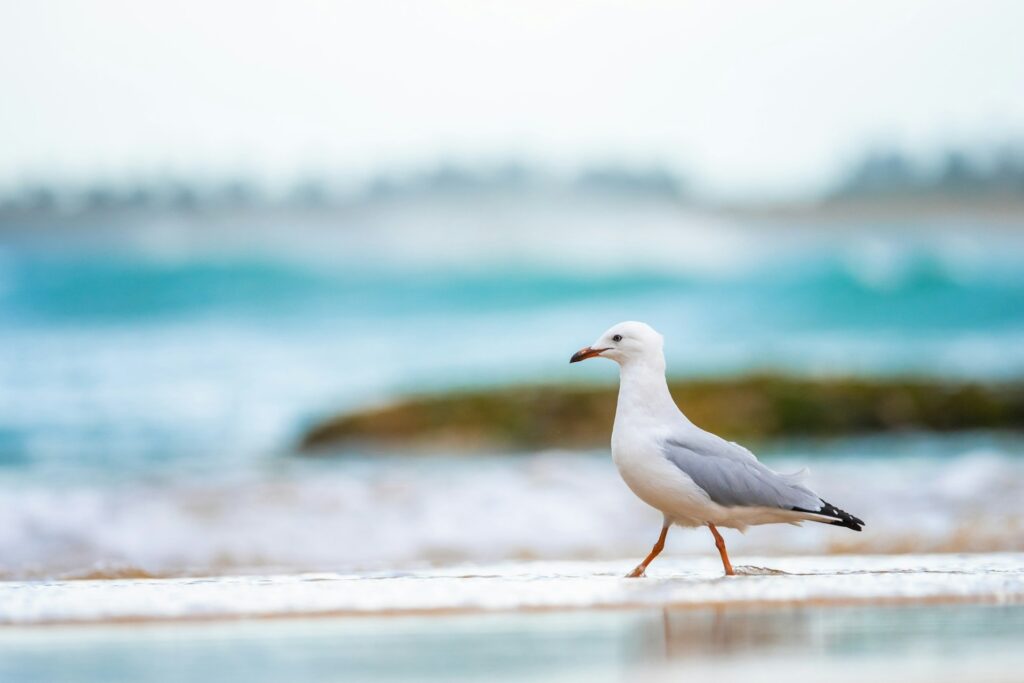
It sounds like the sort of story you’d expect from a nature programme, but it’s very real. Back in August 2000, a young glaucous-winged gull was found orphaned in Vancouver, Canada and taken into the care of the Wildlife Rescue Association of BC. The bird spent a month learning how to fly, swim and forage at the Wildlife Hospital before being released at Belcarra, complete with an identification band to track its progress.
That band was a small piece of insurance. For rehabilitators, it’s the only way of knowing whether their efforts actually help wild birds survive in the long run. At the time, no one knew whether this particular gull would make it past its first winter.
Fast-forward nearly a quarter of a century, and the bird has not only made it, but been spotted twice in the same year. Researchers with Environment and Climate Change Canada, working as part of the Salish Sea Gull Project, recaptured it in White Rock in early 2024, fitting it with new colour bands to make future sightings easier. In September, the gull was seen again, and that’s proof that it’s still thriving after all these years. The full story was reported by The Squamish Chief.
“I was very surprised and pleased to hear of this recapture report after 24 years! This more than exceeded my hopes for its future when the bird was originally released back into the wild after banding,” Thunstrom said. “It would be interesting to know what experiences the bird had in those years and how many young it produced in that time, but most satisfying is that it survived and did so well.”
Why this is such a big deal, and how people can help
For Liz Thunstrom, the Master Bander who originally released the gull, the re-appearance was extraordinary. She said she had hoped it would do well, but never imagined it would still be alive and healthy nearly 24 years later. She also wondered about the bird’s untold story—how far it had travelled, whether it had raised chicks of its own, and what challenges it had faced.
The sighting also shows the value of long-term monitoring. The Salish Sea Gull Project is part of a five-year marine bird conservation programme, and glaucous-winged gulls are a particular focus because they act as indicators of the ocean’s health. If the local marine environment is struggling, the gull population reflects that. Being able to track survival rates through banding gives scientists a clearer picture of how these birds, and by extension the wider ecosystem, are coping.
The gull’s long life is encouraging, but conservationists are quick to point out that they can’t do this work alone. Bird banding relies on the public as much as on researchers. If people spot a gull with coloured bands, reporting it can add another vital piece of information to the puzzle. One simple observation could help reveal how well marine bird populations are holding up in a changing climate.