Few birds live up to their nickname quite like the hoatzin.
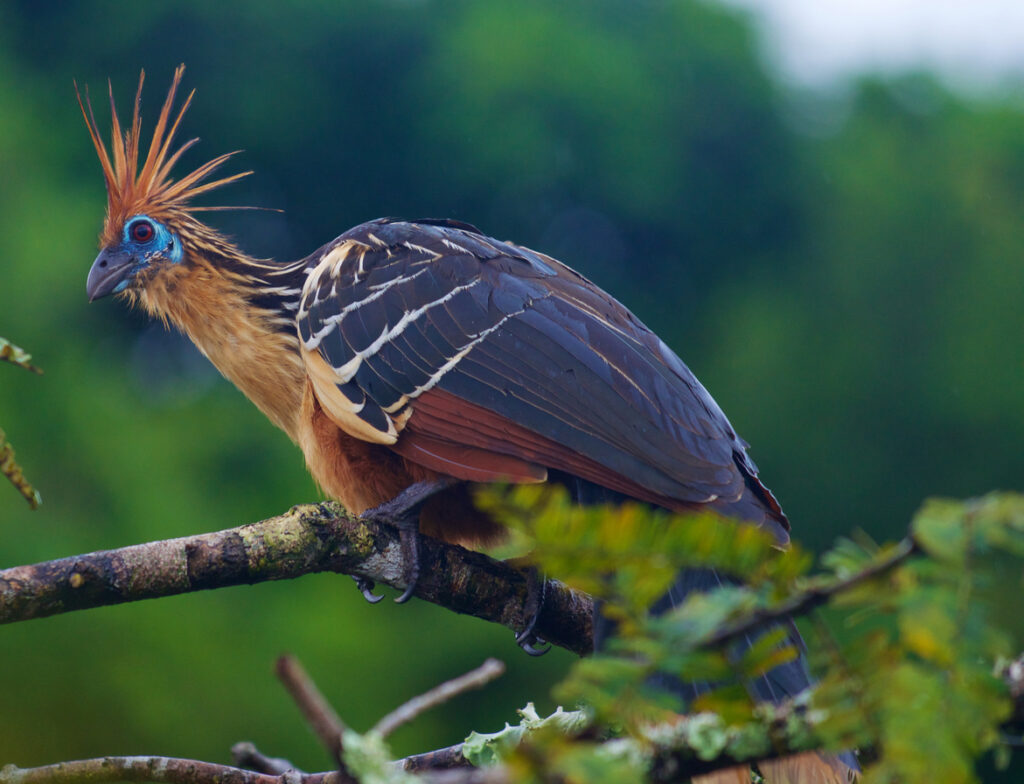
Found in the swamps and forests of South America, this odd-looking creature has a digestive system that works more like a cow’s than a bird’s, and it absolutely reeks because of it. The hoatzin ferments the leaves it eats in a specialised stomach, producing a powerful, manure-like smell that’s earned it the title of “stinkbird.”
While it might sound unpleasant, that foul odour actually protects it from predators. In the animal world, smelling terrible can sometimes be the smartest survival strategy of all.
It’s the only bird that digests food like a cow.
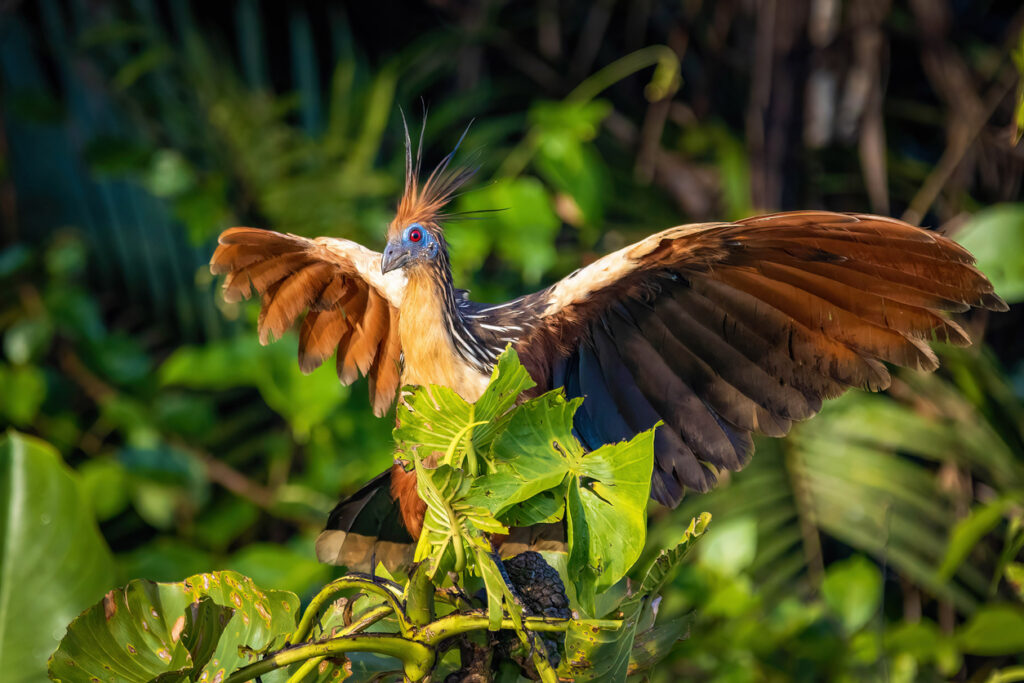
The hoatzin is the only bird known to have a foregut fermentation system, using an enlarged crop and esophagus filled with bacteria to break down leaves. Like cattle, the crop serves as a fermentation chamber where specialised bacteria digest the tough cellulose in plant tissue.
Over a thousand bacterial species live in the hoatzin’s crop, some shared with ruminant mammals, others unique to these birds. It’s essentially carrying a compost heap in its chest, slowly fermenting every meal before it hits the stomach.
That digestion process is why it stinks.
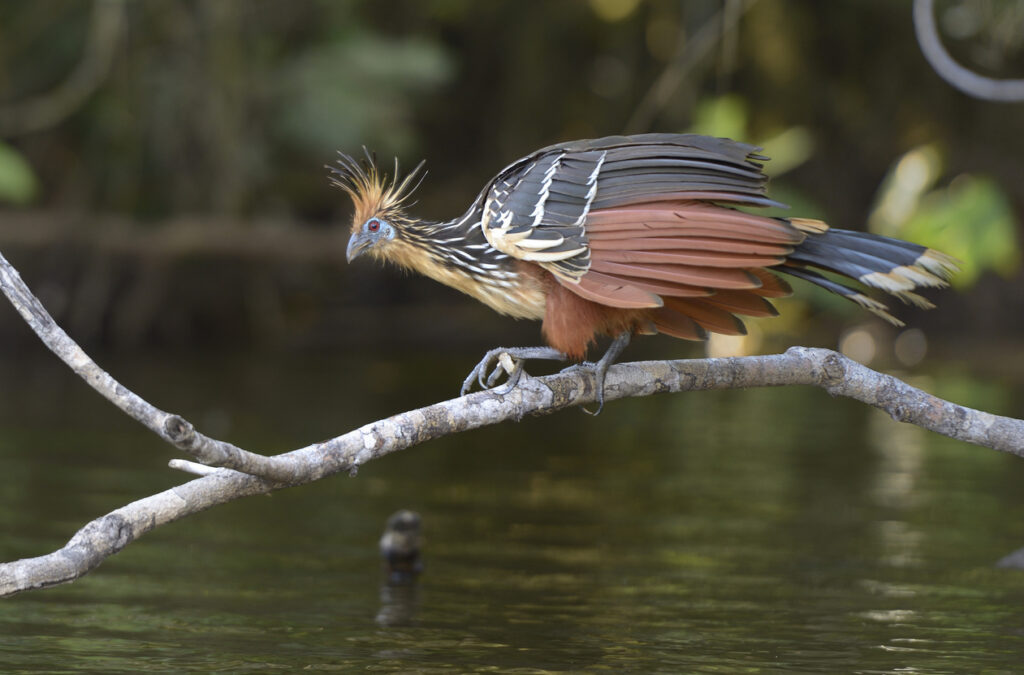
The hoatzin smells like fresh cow manure or rotting vegetation because of the fermentation happening in its gut. The fermented foliage releases methane, which the bird expels through burping, creating a powerful barnyard odour.
Locals call it the stinkbird because they smell bad from their digestive system working overtime to break down foliage no self-respecting bird should be eating. That foul smell acts as natural defence. Predators avoid the bird because they think it’s rotten or poisonous.
Digestion takes so long, they’re essentially immobile.
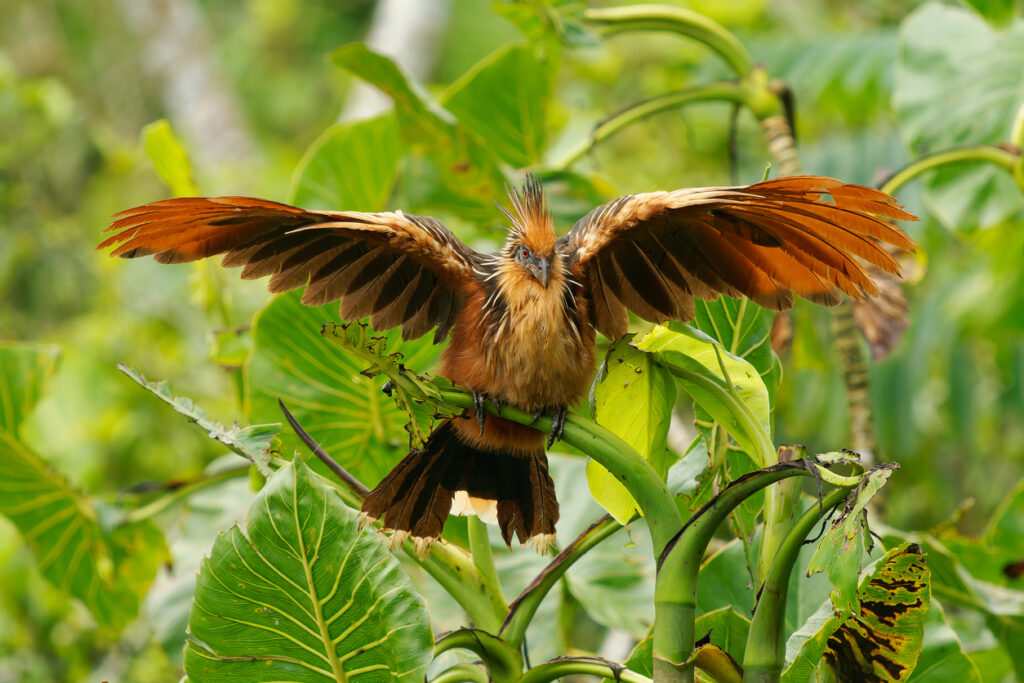
A hoatzin meal takes up to 45 hours to pass through their system. That’s why these birds loaf around for up to 80% of the time: they’re effectively chewing the cud.
They often can’t fly when their crops are engorged with fermenting leaves because they’re too top-heavy. Even on an empty stomach, they’re clumsy fliers because their flight muscles got reduced to make room for that massive fermentation chamber.
Their chicks are born with functional claws on their wings.
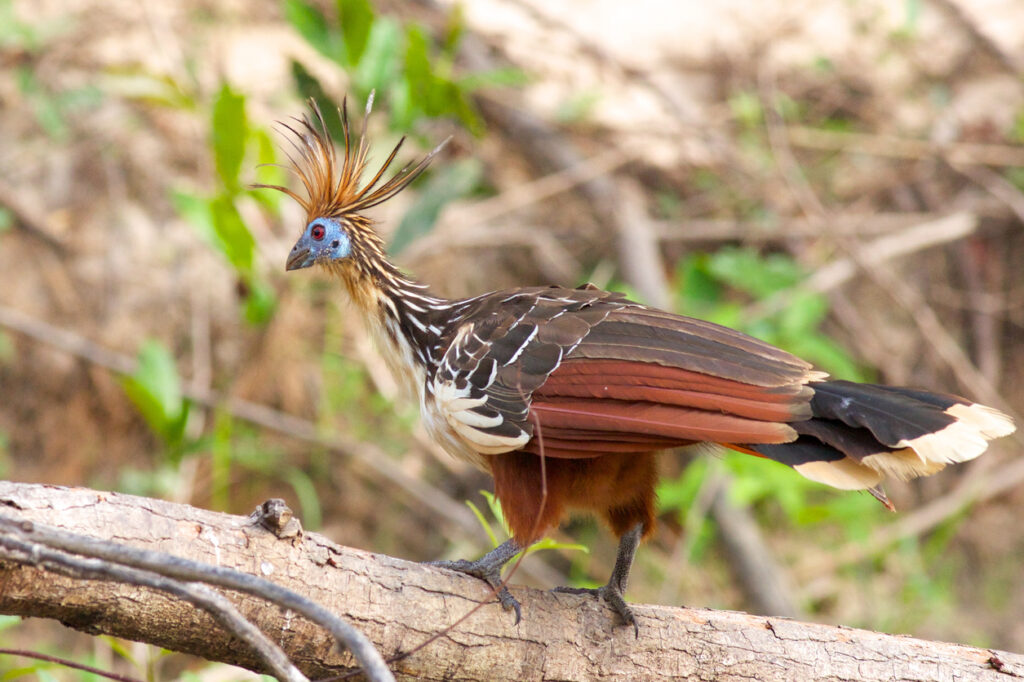
Hoatzin chicks have two claws on each wing that they can use immediately after hatching. Using these claws and their oversized feet, they scramble around tree branches without falling, functioning like tiny four-legged climbers.
A 2024 study found that hoatzin chicks crawl using an alternating gait pattern, moving front and rear limbs on opposite sides, exactly like lizards and dogs walk. It’s never been documented in birds before, making these chicks genuinely unique.
When threatened, chicks dive into water and swim to safety.
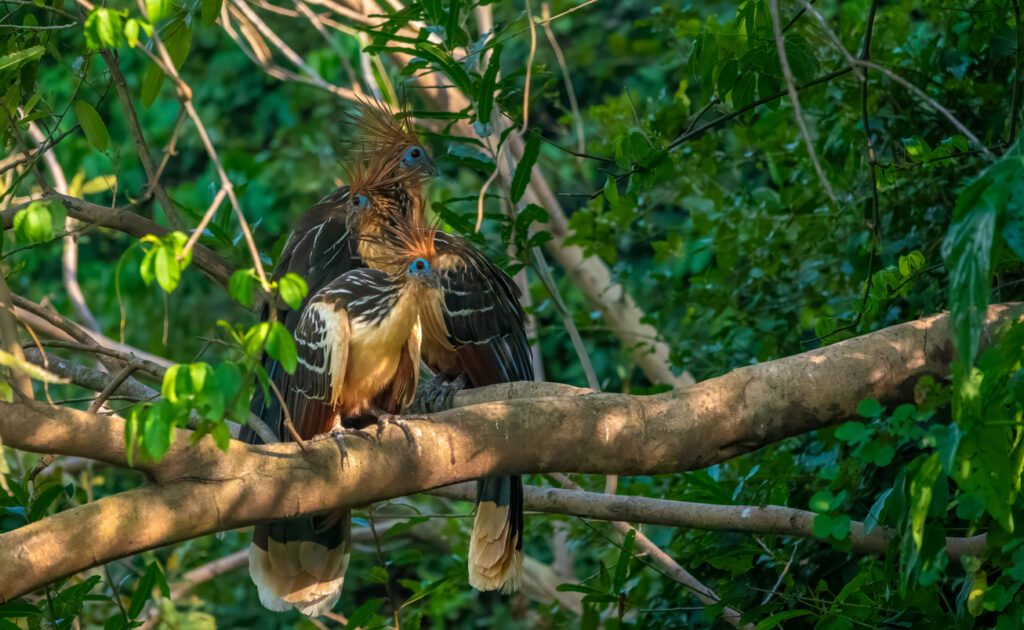
When predators like great black hawks attack, the chicks drop from the nest into the water below, swim underwater to escape, then use their clawed wings to climb back up. Chicks can swim from as young as five to six days old.
If they can’t keep predators away in the trees, they’ll jump into the water, even if it means facing aquatic threats. They paddle to safety, hide along the bank until danger passes, then claw their way back to the nest.
They nest directly over water on purpose.
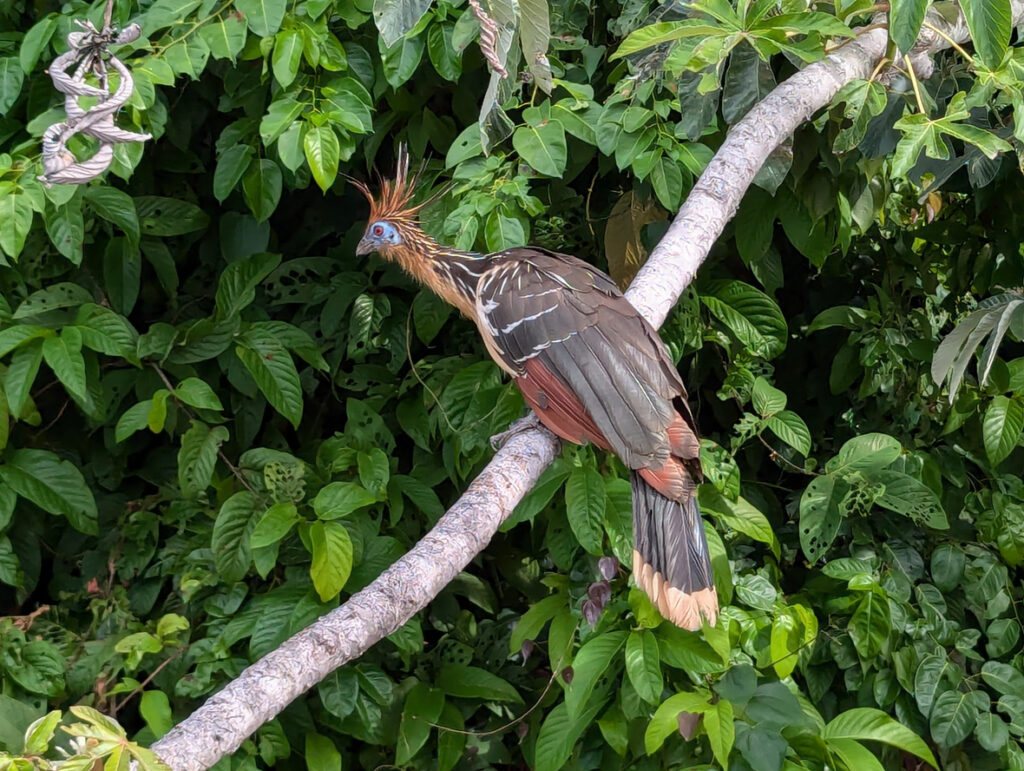
Hoatzins build stick nests in trees hanging over water in seasonally flooded forests. Nests are built over water for protection, creating little hoatzin communities in riverside trees. It’s deliberate; the water escape route is built into their survival strategy.
They lay two or three eggs and both parents share incubation duties, which is unusual among birds. Scientists have observed up to five adults tending a single nest, bringing food and protecting chicks from danger.
They’re terrible at flying.
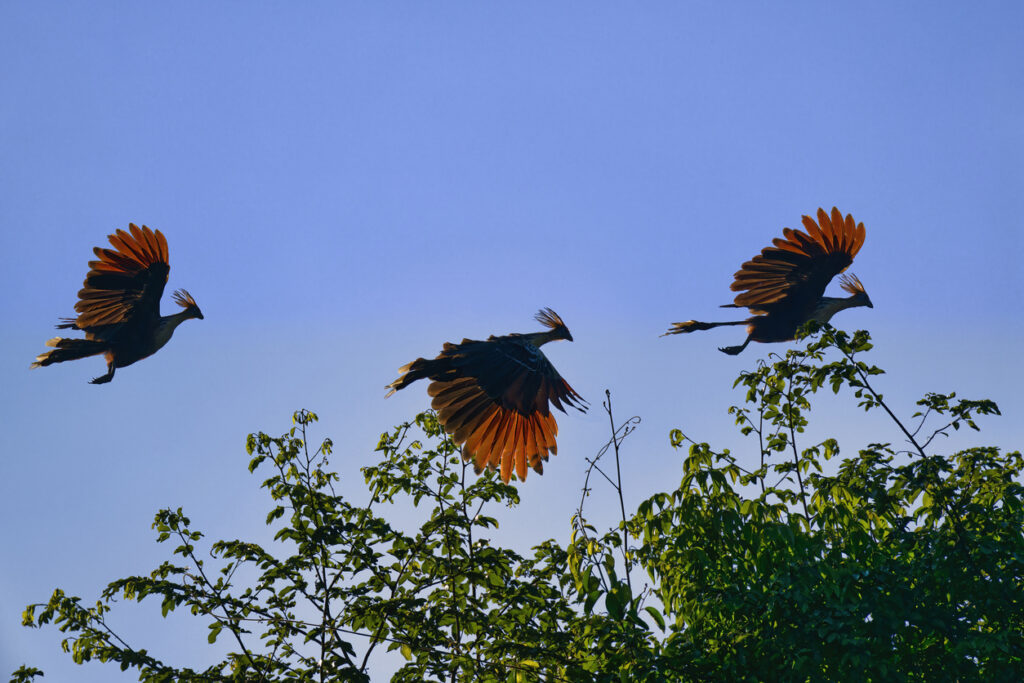
The hoatzin’s enlarged gut makes it both smelly and clumsy, as the massive fermentation chamber makes flying difficult. Their sternum and flight muscles are less developed than other flying birds. Evolution traded flight capability for digestive capacity.
When they do take flight, they crash-land with all the grace of a thrown brick. They’re essentially flying cows in that they’re heavy, awkward, and built for processing vegetation rather than aerial manoeuvres.
Nobody’s quite sure where they fit evolutionarily.
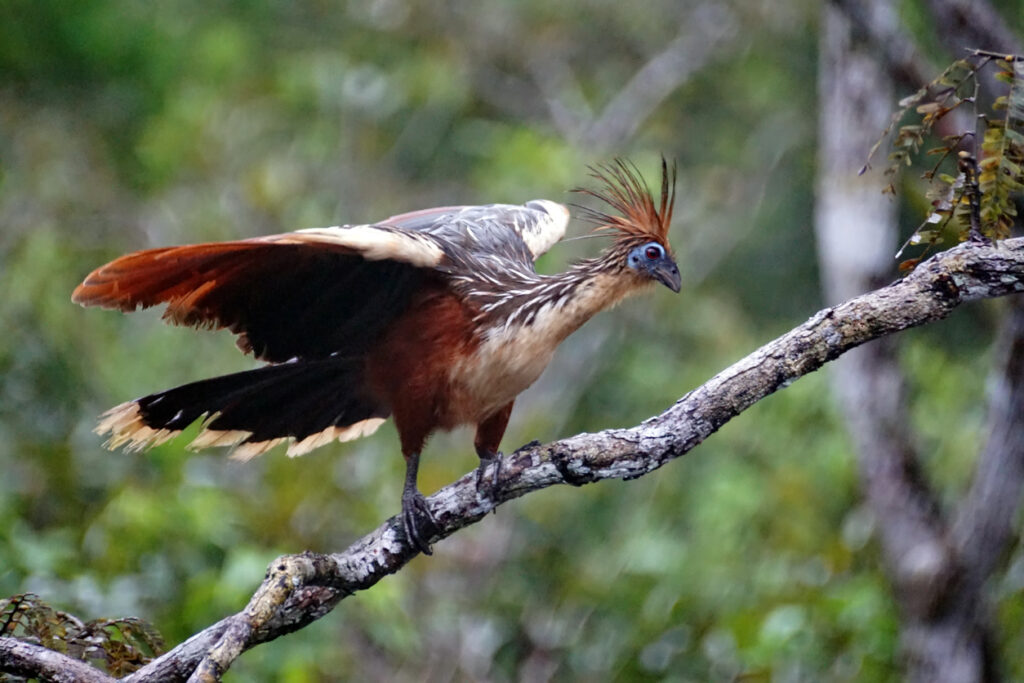
A 2015 genetic study suggested the hoatzin is the last surviving member of a bird line that branched off 64 million years ago, shortly after dinosaurs became extinct. But a 2024 study couldn’t clearly place them, assigning them to a group of evolutionary orphans with no definitive connections.
The hoatzin is the only living species in its family and the only bird in its order. It has no close relatives that aren’t extinct. They’re genuinely alone on the evolutionary tree, and scientists still can’t work out why.
Those wing claws probably aren’t prehistoric leftovers.
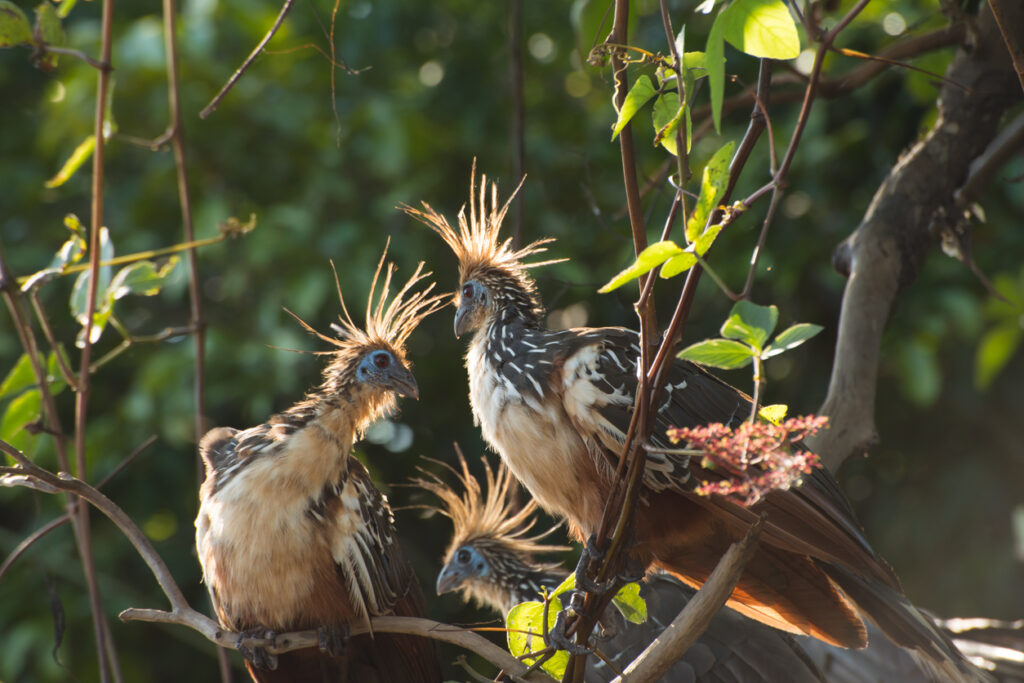
The wing claws inevitably led to comparisons with Archaeopteryx, but scientists now believe the trait evolved separately rather than being inherited from ancient birds. There are significant differences between hoatzin and archaeopteryx skeletons—different shoulder bone shapes, and hoatzins lack the long bony tail.
The wing claws may have evolved quite recently, allowing the hoatzin to survive in the dense Amazon jungle. They’re a modern adaptation to a specific problem, not a relic from the Jurassic period.
They only eat leaves, which is wildly unusual for birds.
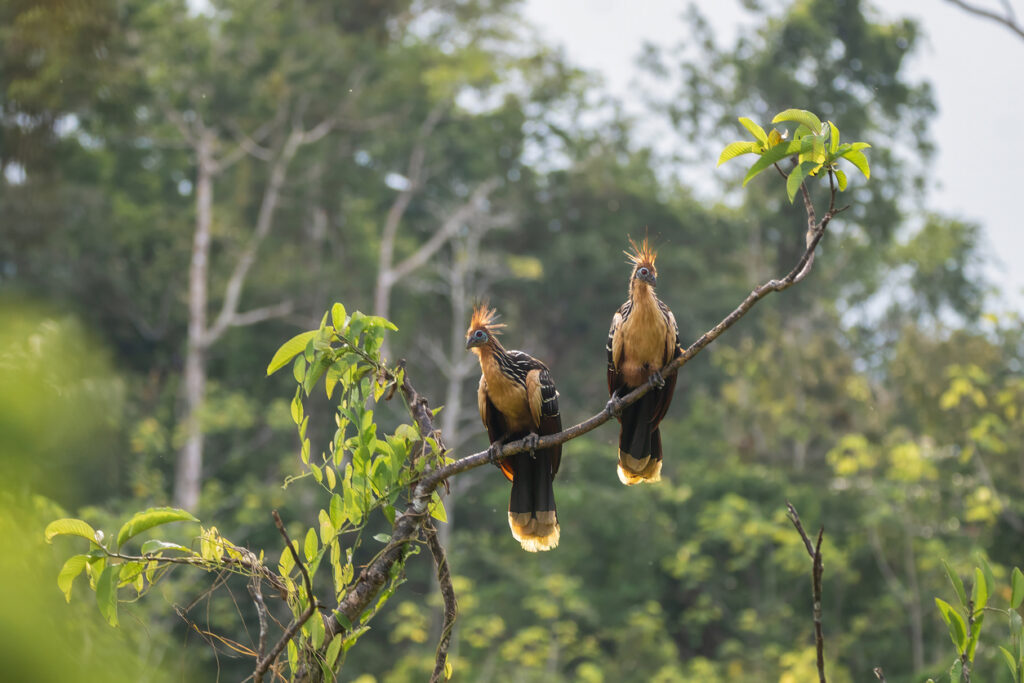
The hoatzin eats leaves from over 50 plant species, including toxic ones that would kill other birds. One Venezuelan study found their diet was 82 per cent leaves, 10% flowers, and 8% fruit.
They’re the only truly folivorous birds in existence; their specialised diet means they don’t compete with other birds for food. It’s an ecological niche so extreme that no other bird species has managed to occupy it.
The smell makes them basically inedible.
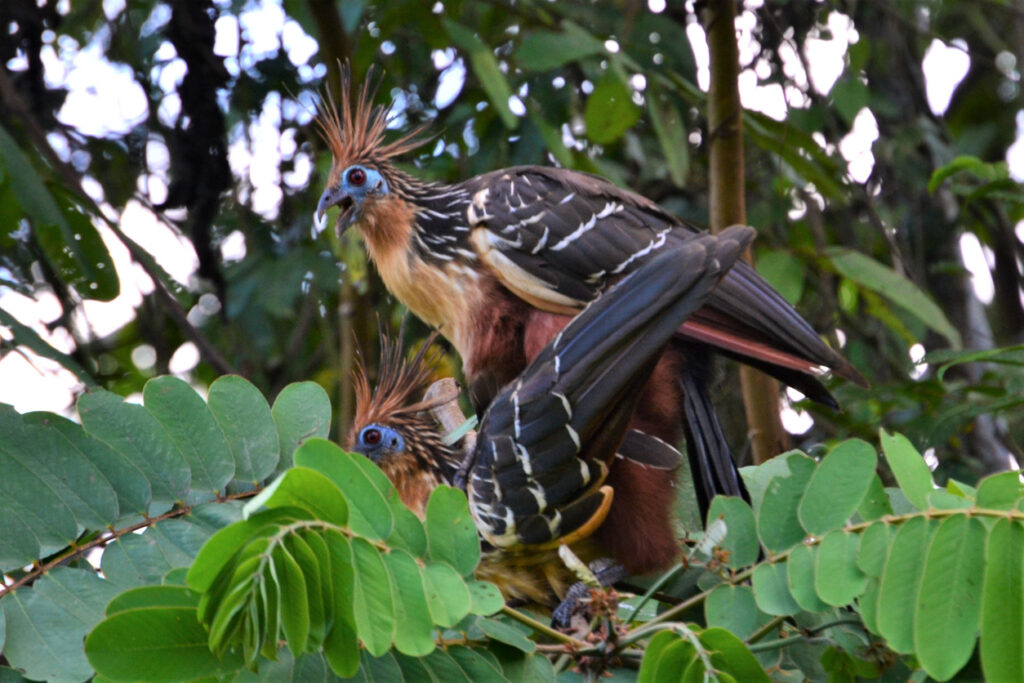
Hoatzins reportedly not only smell bad, their taste is also pretty unpleasant. Maybe that’s why they haven’t been overhunted like many birds. The fermentation-based digestion creates a powerful manure-like odour that permeates their flesh, feathers, and nests.
Indigenous people of the Amazon rarely hunt hoatzins for food despite their slow movements and easy accessibility. When your entire body smells like a compost heap, predators generally leave you alone.
They’re surprisingly social and vocal.
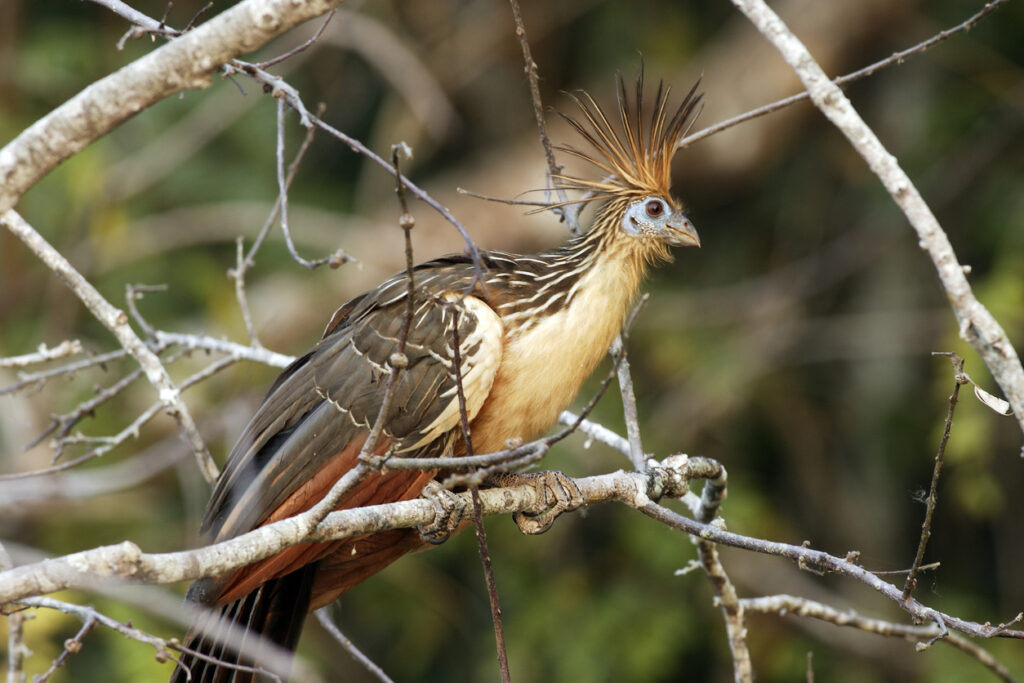
Hoatzins form family groups of up to a dozen or more individuals; in fact, flocks of 40 or more birds have been recorded. They engage in the hoatzin equivalent of cattle lowing. There’s a cacophony of grunts, squawks and hisses, often delivered in unison.
Usually one particularly enthusiastic individual sets them off, leading the rest of the ensemble in a bizarre chorus. They’re loud, social, and spend most of their time lounging together while their guts ferment the day’s leaves.