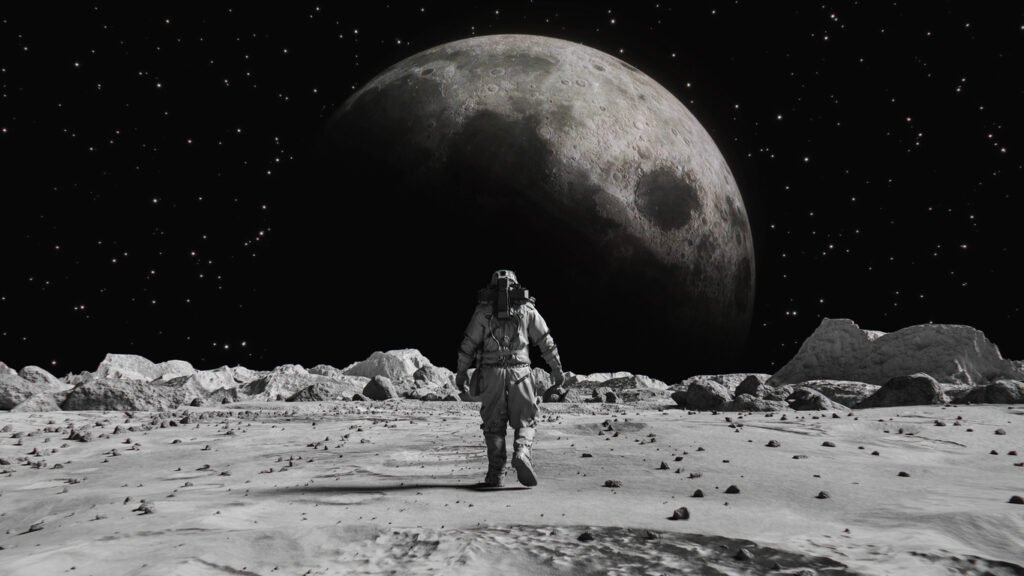
It’s one of the most common questions in space exploration, and it’s a fair one. If humans walked on the Moon more than fifty years ago with 1960s technology, why does returning feel so complicated in 2025? The answer says a lot about how the original programme actually worked, and what’s changed since.
Apollo was built on a scale that’s never been repeated
At its peak, the Apollo programme employed around 400,000 people and consumed roughly 4% of the entire US federal budget. That’s not a typo. It was an unprecedented national mobilisation driven by a specific geopolitical moment—the Cold War space race with the Soviet Union—that created the political will to spend money at a scale that simply hasn’t existed since.
The Saturn V rocket that carried astronauts to the Moon remains one of the most powerful machines ever built, and the infrastructure, expertise and institutional knowledge required to produce it was largely dismantled once the programme ended. You can’t just dust off the blueprints. The supply chains, the trained workforce and the manufacturing capacity are gone.
Going to the Moon was genuinely dangerous and everyone knew it.
Apollo wasn’t safe. It was fast. The programme accepted risks that would be considered completely unacceptable today, and some of those risks resulted in deaths. Apollo 1 killed three astronauts on the launch pad during a test. Apollo 13 nearly killed its crew entirely.
The culture of that era prioritised getting there over ensuring every possible contingency was accounted for, and the missions that succeeded did so partly through engineering brilliance and partly through fortune. Modern space programmes operate under very different safety standards, and meeting those standards takes time, money, and iteration that the original Apollo schedule simply didn’t allow for.
The political urgency disappeared the moment it was achieved.
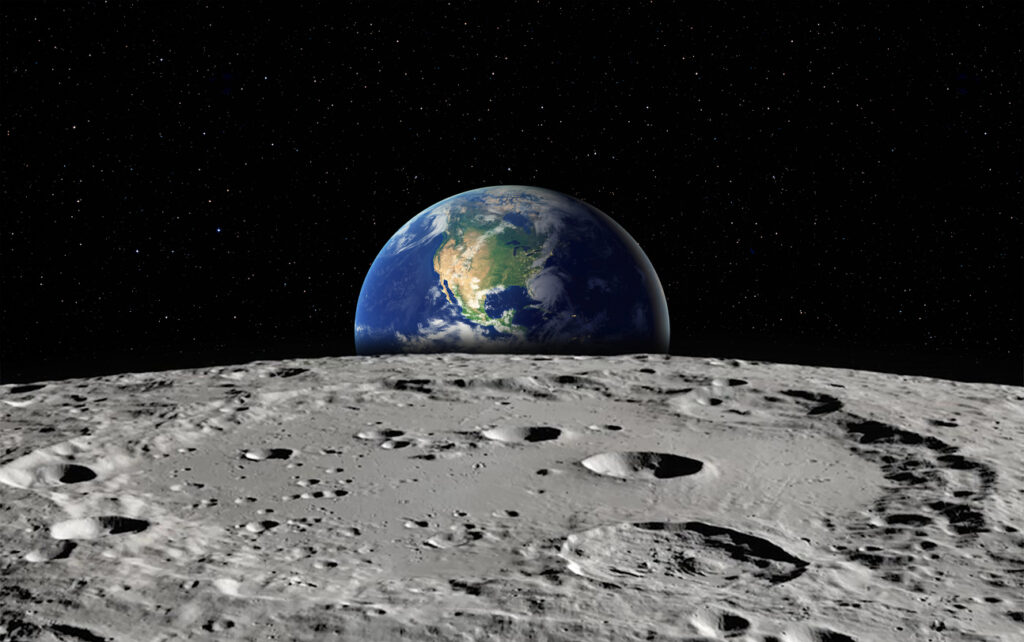
Kennedy’s goal was to land a man on the Moon before the end of the decade, beat the Soviets, and demonstrate American technological supremacy. Once that was done, the motivation that had sustained the programme at enormous cost largely evaporated. Congress cut NASA’s budget in a big way in the early 1970s, and the final planned Apollo missions were cancelled.
The Moon had been reached, the point had been made, and the political appetite for sustaining that level of investment in pure exploration wasn’t there. Space exploration has struggled for consistent long-term funding ever since because it’s inherently difficult to sustain political support for something that takes decades and doesn’t produce immediate tangible results.
Building new systems from scratch takes longer than people expect.
NASA didn’t maintain the capability to go to the Moon after Apollo ended. That means everything needed for a return—the rockets, the spacecraft, the landers, the suits, the life support systems—has had to be designed and built again essentially from the ground up, incorporating modern technology, modern safety requirements and modern ways of working.
The Space Launch System, NASA’s current heavy lift rocket, took over a decade to develop and cost vastly more than originally projected. That’s not unique to NASA. Large, complex engineering programmes almost always take longer and cost more than planned. The original Apollo timeline was extraordinary by any standard, and replicating that pace without a comparable level of national urgency has proved unrealistic.
The Moon is genuinely hostile in ways that are hard to engineer around
The lunar surface is not a forgiving environment. Temperature swings between roughly 127 degrees Celsius in direct sunlight and minus 173 degrees in shadow. The dust is sharp, abrasive and gets into everything because there’s no wind or weathering to smooth it down over time. It caused real problems during Apollo and would cause more on longer missions.
Radiation exposure without the protection of Earth’s magnetic field is a serious health concern for extended stays. There’s no breathable atmosphere and no liquid water accessible at most locations. Every system needed to keep humans alive on the Moon has to work perfectly in conditions that degrade equipment quickly and leave very little room for error.
We’re trying to do something considerably more ambitious this time
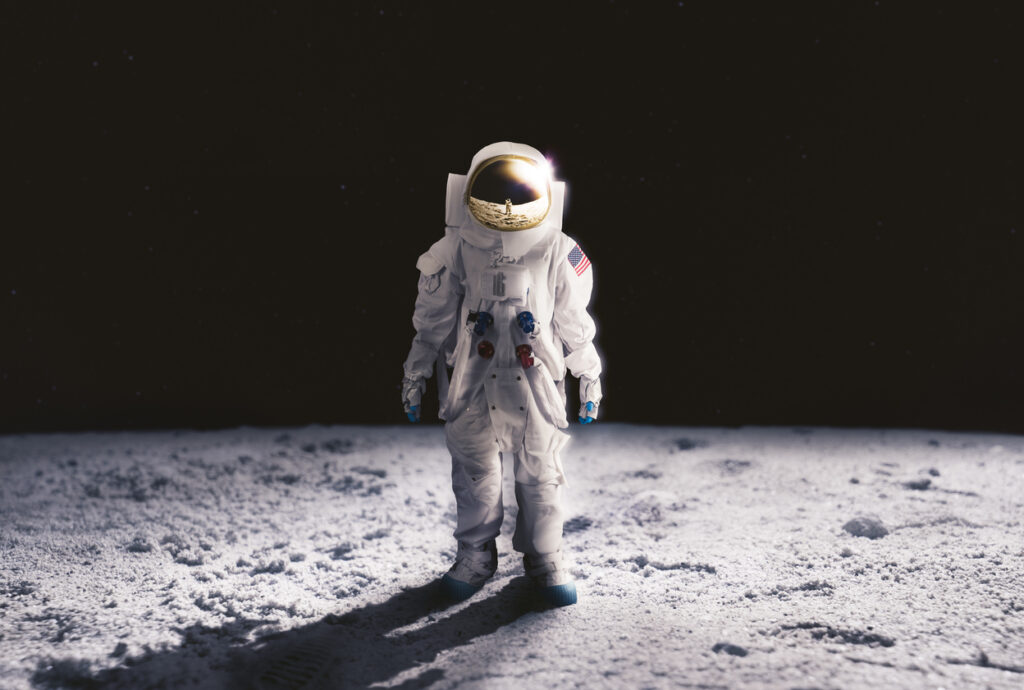
The Apollo missions landed, collected samples, planted a flag and came home, with the longest stay on the surface being just under three days. The current Artemis programme isn’t just trying to repeat that. The goal is to establish a sustainable human presence on and around the Moon, including a lunar gateway station in orbit and eventually a surface base.
That’s a fundamentally different engineering challenge to a short visit, and the complexity scales up enormously when you’re designing systems that need to function reliably over months rather than days. It’s the difference between camping overnight and building a house.
Modern rockets are designed differently to Saturn V
Saturn V was designed to do one thing extremely well: get a heavy payload to the Moon as quickly as possible. It was not reusable, it was not cost-efficient, and it was not designed with long-term sustainability in mind. Modern launch vehicles, particularly those being developed by commercial companies like SpaceX, are built around reusability and cost reduction.
That approach is ultimately more sustainable, but it requires solving different problems, and a reusable rocket involves engineering compromises and challenges that a single-use vehicle doesn’t. SpaceX’s Starship, which is central to NASA’s current lunar plans, is the most ambitious rocket ever attempted in some respects, and getting it to the Moon reliably is an unsolved problem that’s still being worked through.
International competition is reshaping the timeline

The original Moon race was a two-horse competition between the US and the Soviet Union. The current situation involves China with a clearly stated goal of landing astronauts on the Moon before 2030, alongside contributions from the European Space Agency, Japan, India and various commercial players.
That competition is applying some of the same kind of pressure that accelerated Apollo, but the environment is more fragmented and the international partnerships involved in Artemis add coordination complexity that a single national programme doesn’t have. Whether renewed competition will sharpen the timeline or complicate it probably depends on how the next few years unfold.
The conspiracy question deserves a direct answer
The difficulty of returning isn’t evidence that we never went. The technology used for Apollo was purpose-built for that specific goal and then abandoned. Recreating it isn’t straightforward for the same reasons that recreating anything that required decades of specialist development and was subsequently dismantled is not straightforward.
Independent tracking stations around the world including in countries with every reason to expose a hoax monitored the missions in real time. Hundreds of kilograms of lunar samples have been studied by scientists globally for fifty years. Laser reflectors left on the surface by Apollo astronauts are still used by observatories today. The challenge of returning reflects the cost, complexity and political difficulty of large-scale space exploration, not doubt about whether it happened.
It is actually happening, just slowly
Artemis has already sent an uncrewed spacecraft around the Moon and back. A crewed lunar flyby has been planned and a Moon landing, the first since Apollo 17 in 1972, is currently targeted for the latter half of this decade. Whether those timelines hold is another question as NASA’s programmes have a long history of delays, but the hardware exists, the mission plans exist, and real progress is being made. Getting back to the Moon was always going to be hard. The more honest question isn’t why it’s taking so long. It’s why anyone expected it to be straightforward in the first place.