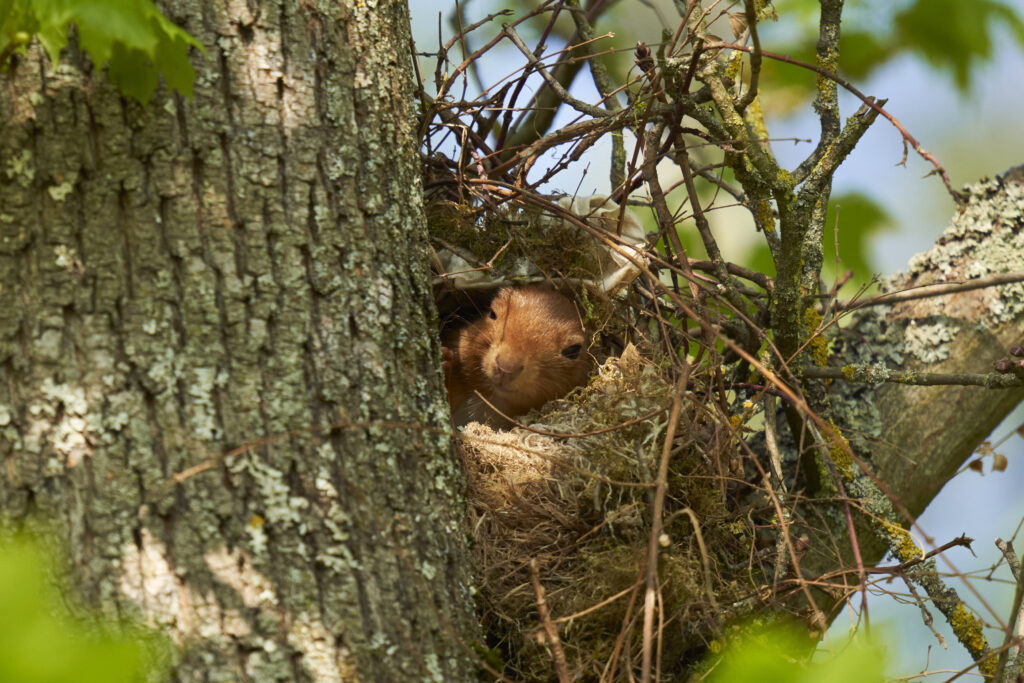
If you’ve ever looked up at a tangled ball of twigs high in a tree and wondered what it was, chances are you were staring at a squirrel’s nest, also called a drey. These clever little structures might look messy from below, but they’re carefully built to survive the weather, raise young, and stay hidden from predators. Whether you’re just curious or hoping to spot one for yourself, here’s everything you need to know about where squirrels build their nests and how they manage to pull it off using nothing but natural materials and sheer determination.
Squirrels usually build nests high up in trees.
The most common place to find a squirrel nest is about halfway up a tree, usually between 6 to 15 metres high. That height gives them a great view of their surroundings while staying out of reach of most ground predators. They tend to pick strong, forked branches close to the trunk for extra stability. That way, the nest won’t blow away in the wind or come tumbling down during bad weather. It’s a sweet spot between safety, shelter, and a good lookout post.
They also build nests in tree hollows.
When they’re lucky enough to find a hollowed-out tree trunk or cavity, squirrels will often set up camp inside. These spots are warmer, drier, and a bit more protected than open nests made of twigs. Tree cavities are especially popular during winter or breeding season because they hold heat better. Some squirrels even use both types of nests—one for sleeping and another for raising their young or hiding food.
A squirrel nest is called a “drey.”
While “nest” works just fine, the proper name for the structure is a drey. It’s typically a compact, round ball of sticks, leaves, moss, and bark—about the size of a football, but a bit messier-looking. Inside, there’s a hollow chamber lined with softer material to make it warm and comfy. It might not look like much from the outside, but it’s surprisingly weatherproof and well-insulated on the inside.
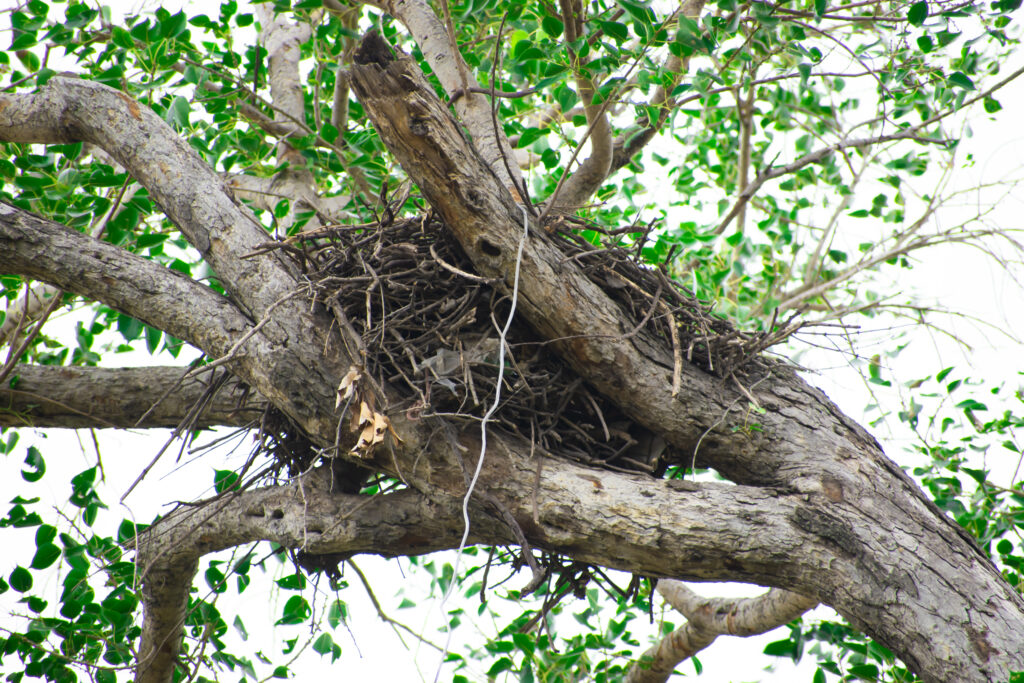
They start with a twig framework.
Building a drey starts with a base of strong twigs and small branches. The squirrel weaves them together into a sort of basket that forms the outer shell and gives the whole thing its structure. This framework is essential because it needs to be sturdy enough to hold a squirrel’s weight and withstand the elements. Once the base is set, they start packing in leaves, grass, and softer materials to insulate the inside.
Leaves and moss are used for insulation.
After the outer shell is done, squirrels gather soft, flexible materials like dried leaves, moss, shredded bark, and grass. These are carefully layered inside to trap body heat and keep out the cold and damp. This is especially important in the UK, where winters can be wet and chilly. The result is a surprisingly snug hideaway that holds warmth in and offers a bit of protection from rain or snow.
Dreys often have more than one entrance.
Most squirrel dreys aren’t just one-hole huts—they have a main entrance and often one or two emergency exits tucked into the sides. This gives the squirrel a quick escape route if a predator comes too close. It also helps with airflow inside the nest, preventing it from getting too stuffy or damp. The squirrel can move in and out easily without drawing too much attention to one single opening.
They can build a nest in a day, but improve it over time
Squirrels are impressively fast builders and can construct the basic shape of a drey in less than a day if needed. But usually, they take their time improving and reinforcing it over several days. They’ll often return to the same nest over and over, adding more insulation, plugging gaps, or rebuilding parts that have weathered down. It’s not a one-and-done job. It’s more like ongoing home maintenance.

Squirrels usually have more than one nest.
Rather than sticking to just one drey, squirrels tend to build and rotate between several. This gives them options if one nest becomes unsafe, waterlogged, or infested with pests. It’s also useful for storing food. A squirrel might stash acorns or nuts in one drey and sleep in another, depending on the season and situation. It’s a clever way of spreading risk and staying flexible.
Nests are used for raising young.
When it’s time to raise babies, squirrels line their nests with extra care. The inner chamber becomes a safe, warm nursery for their kits, which are born blind and helpless in the early spring or summer. The mother will spend most of her time inside the drey while the young are small, only leaving to gather food. After a few weeks, she’ll start encouraging them to venture out and explore the branches nearby.
You can spot dreys in winter more easily.
During autumn and winter, when the leaves have dropped, squirrel nests become much easier to spot. Look up into the bare branches, and you’ll see round, ball-like clusters nestled near the trunk. They can look a bit like old birds’ nests at first, but they’re usually larger, rounder, and made of chunkier materials. Once you’ve seen a few, you’ll start spotting them everywhere on woodland walks.

Not all nests are occupied year-round.
Squirrels come and go depending on the season and their needs. A drey used in spring might be abandoned by summer, while another one is suddenly repaired and moved into for the colder months. Don’t assume a nest is empty just because you don’t see activity right away. Squirrels are crepuscular, meaning they’re most active at dawn and dusk, so the drey’s resident might just be out foraging.
They don’t hibernate, so the nest matters all winter.
Unlike hedgehogs or dormice, squirrels don’t hibernate. They stay active all year round, including during the coldest months. That makes the quality of their nests especially important in winter. They rely on their drey to keep them dry, sheltered, and warm between food runs. You might not see them as often in winter, but rest assured, they’re curled up inside somewhere, waiting for a break in the weather.