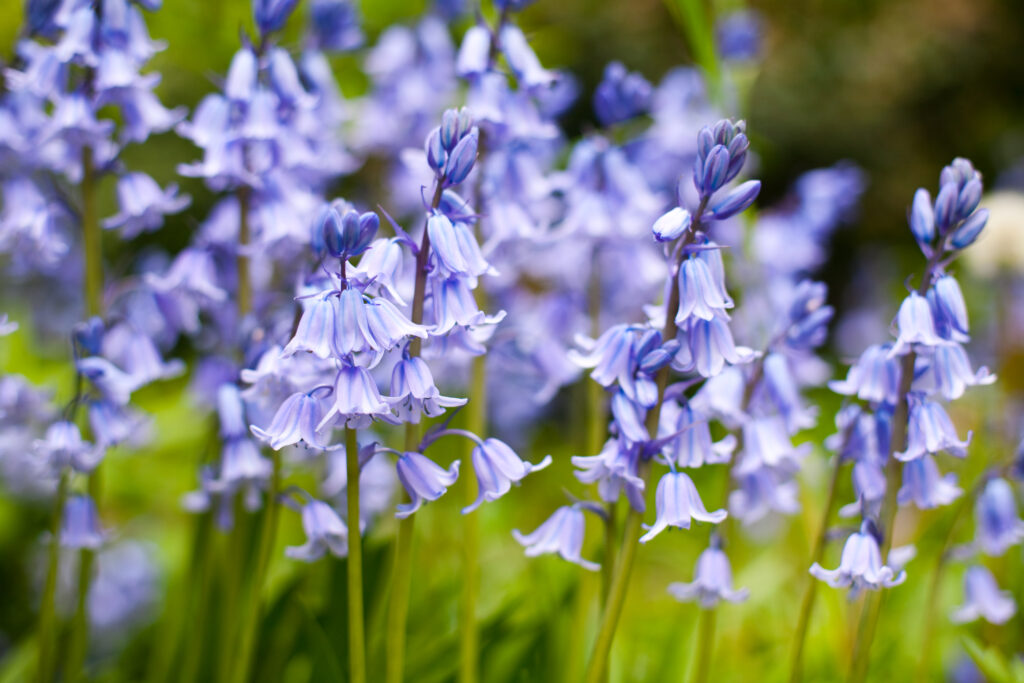
They’re a welcome sign of spring and a favourite among walkers and nature lovers, but how much do you really know about bluebells? These delicate, nodding flowers carpet British woodlands each year, turning forests into dreamy, violet-hued scenes. However, behind the beauty, there are a few surprises, including a toxic side that most people don’t know about. Here’s a closer look at what makes bluebells so special, so widespread, and why you definitely shouldn’t go munching on them.
Yes, bluebells are poisonous.
All parts of the bluebell plant are toxic—leaves, flowers, bulbs, and stems. They contain glycosides, which can cause stomach upset, heart irregularities, and even more serious effects if enough is ingested. Thankfully, they taste terrible, which tends to put most people and animals off. Even touching them too much can cause mild skin irritation in some people, especially if the sap gets on your hands. So while they’re beautiful to look at, it’s best to admire them without handling or picking them unnecessarily.
The bluebells you see might not be native.
The UK has two types of bluebells: the native English bluebell (Hyacinthoides non-scripta) and the more upright, less fragrant Spanish bluebell (Hyacinthoides hispanica). The Spanish type is often found in gardens and hybridises easily with the native ones. This crossbreeding can be a problem, as the hybrids threaten the genetic purity of native bluebell populations. That’s why conservationists encourage people not to plant Spanish bluebells near woodland or wild areas.
Bluebells are protected by law.
It’s actually illegal to dig up bluebells from the wild in the UK. Under the Wildlife and Countryside Act (1981), you can’t uproot them or sell them if they were taken from natural habitats. Picking a few flowers isn’t a crime, but yanking up the whole plant is. This legal protection exists because native bluebells are slow to grow and sensitive to disturbance. A trampled patch might take years to recover, which is why keeping to the paths in bluebell woods really does make a difference.
They thrive in ancient woodland.
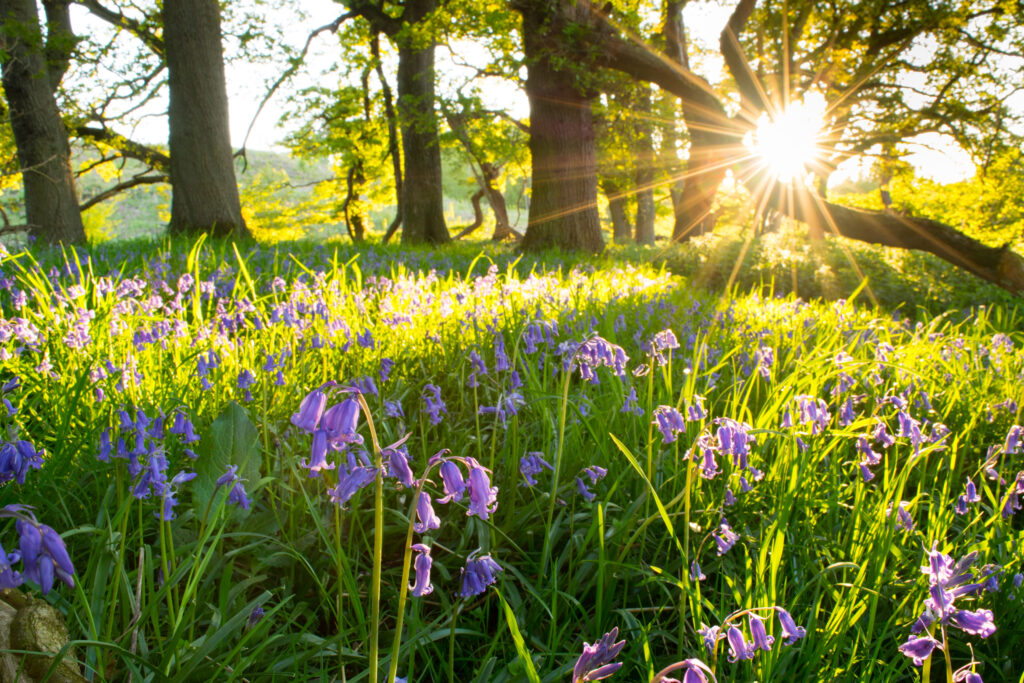
Bluebells are often seen as an indicator species for ancient woodland—places where trees have stood continuously for centuries. If you spot a thick carpet of bluebells, chances are the woodland is old and relatively undisturbed. They spread slowly through bulbs and seeds, which is why they tend to appear in areas with a long history of woodland cover. Their presence is like a living clue to the history of the land beneath your feet.
Their scent helps attract early pollinators.
One of the joys of walking through a bluebell wood is the soft, sweet fragrance in the air. That scent isn’t just for us. It’s designed to attract insects like bees, which are crucial for pollinating the flowers in early spring. Because bluebells bloom before the trees have fully leafed out, they take advantage of the extra light and warmth. Their timing means they offer an early nectar source for emerging insects coming out of hibernation.
They can form enormous colonies.
Bluebells aren’t just sprinkled around randomly. They form dense, spectacular colonies by spreading underground through bulb division. Over decades, this can create whole carpets of flowers that come back year after year in the exact same place. That’s why some bluebell woods feel almost magical—they’ve had time to settle in and dominate the woodland floor. Once established, they’re surprisingly hardy, returning even after harsh winters or dry springs.
Their flowers hang to one side.
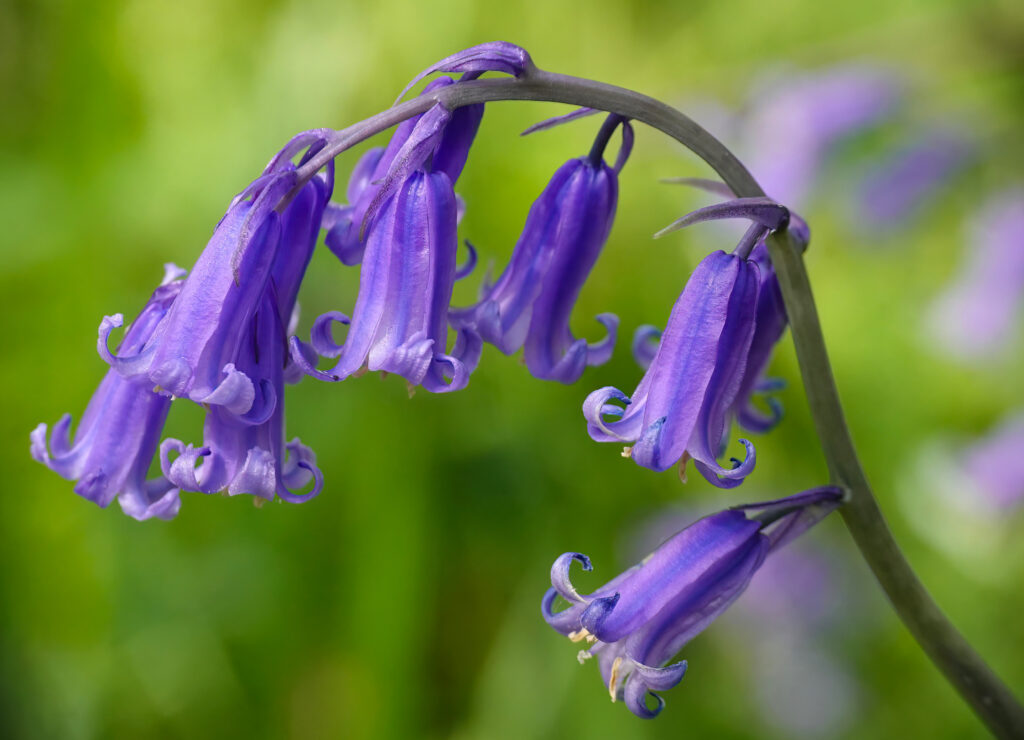
If you’re trying to tell native bluebells from hybrids or Spanish varieties, look at the way the flowers hang. English bluebells have a distinctive droop to one side of the stem, with narrow, tube-shaped blooms and curled-back tips. Spanish bluebells stand more upright and have flowers all around the stem, usually with wider leaves and a much fainter scent. Spotting the difference becomes easier once you know what to look for, and it’s quite satisfying when you do.
Bluebells have a rich history in folklore.
In old English folklore, bluebells were thought to be enchanted, and associated with fairies, warnings, or even mischief. Some tales said that if you heard a bluebell ring, it meant bad luck or even death was near. Other stories claimed fairies used them to lure people into the woods, never to return. Whether you believe in woodland spirits or not, there’s something undeniably eerie and beautiful about walking through a sea of bluebells in total quiet.
They were once used to make glue.
In medieval times, bluebell sap was actually used to bind pages in books and to glue feathers onto arrows. The gluey, sticky nature of the sap made it useful before synthetic adhesives came along. It wasn’t exactly pleasant to work with (thanks to the toxins), but it got the job done. It’s a little detail that shows how plants were once used in all sorts of everyday tasks. Even the pretty ones had practical purposes.
They’re part of the UK’s identity.
With nearly half the world’s bluebell population found in the UK, they’re seen as a symbol of British springtime. Their appearance in woodlands and hedgerows is something many people actively look forward to each year. Bluebell season draws photographers, families, and walkers alike, and protecting these flowers has become part of protecting the feel of spring itself. When you see them in bloom, you know winter’s properly behind you.