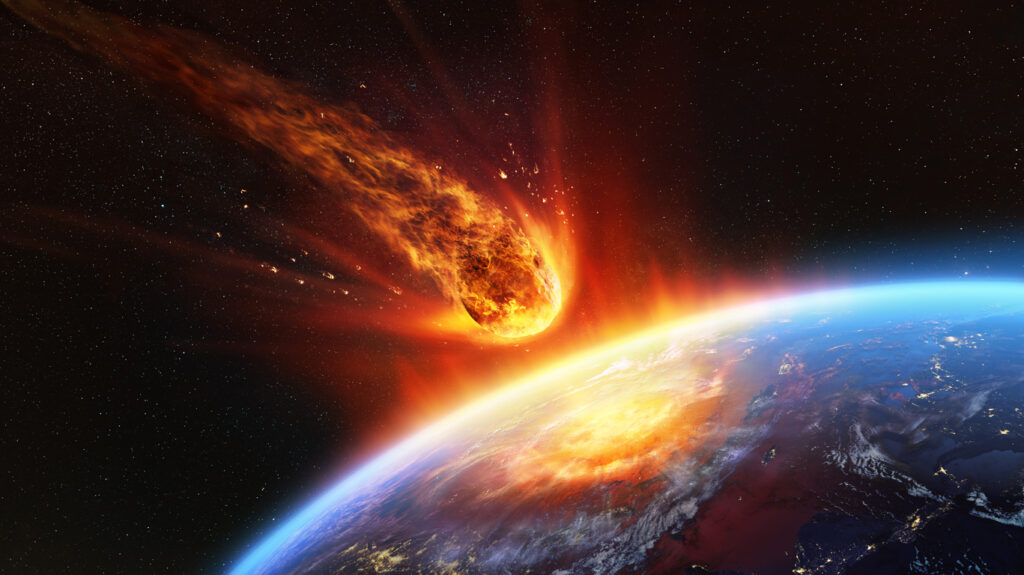
The idea of a massive rock from space hitting us feels like something out of a blockbuster film, but the reality would be a lot less cinematic and a lot more grim. You’ve likely wondered how we’d actually handle it with the technology we’ve got now, and the truth is that the impact itself is only the start of the problem. It’s the chain reaction that follows—the way the atmosphere, the oceans, and our entire global infrastructure would buckle under the pressure—that really changes the game. If something substantial were to head our way today, the fallout would reach every corner of the planet in ways that have nothing to do with the initial crash site.
Detection would likely come weeks or months in advance.
The global network of telescopes and monitoring programmes that track near-Earth objects has improved significantly in recent decades. For a large incoming asteroid, detection would probably come weeks, months, or even years ahead of impact, depending on the object’s size and trajectory. Smaller rocks are much harder to spot, and there are still gaps in coverage that mean a genuinely small but locally destructive impactor could arrive with very little warning. The Chelyabinsk meteor in 2013 wasn’t detected at all before it entered the atmosphere.
The size of the asteroid determines almost everything.
A rock ten metres across burns up in the atmosphere and causes minimal damage. A 100-metre object reaches the surface with enough energy to flatten a city. Something a kilometre wide causes regional catastrophe. A ten-kilometre impactor, roughly the size of the one thought to have ended the dinosaurs, triggers effects that reshape the entire planet. Most of the conversation around impact scenarios focuses on the middle range, objects large enough to cause serious regional damage but small enough that we might actually survive them as a civilisation.
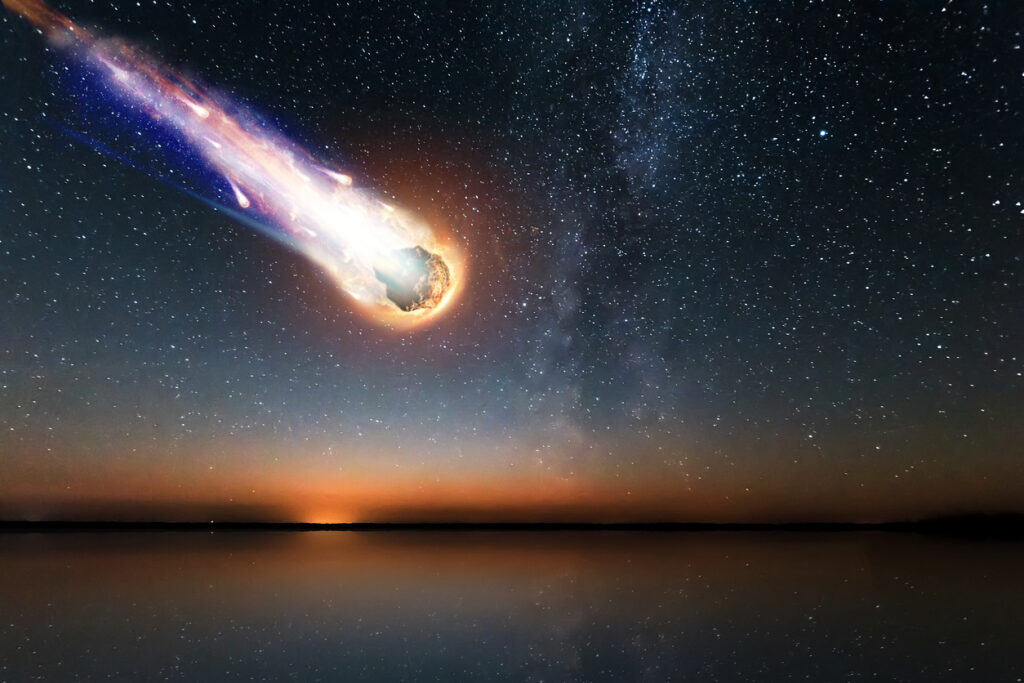
Entry into the atmosphere creates a spectacular and terrifying light show.
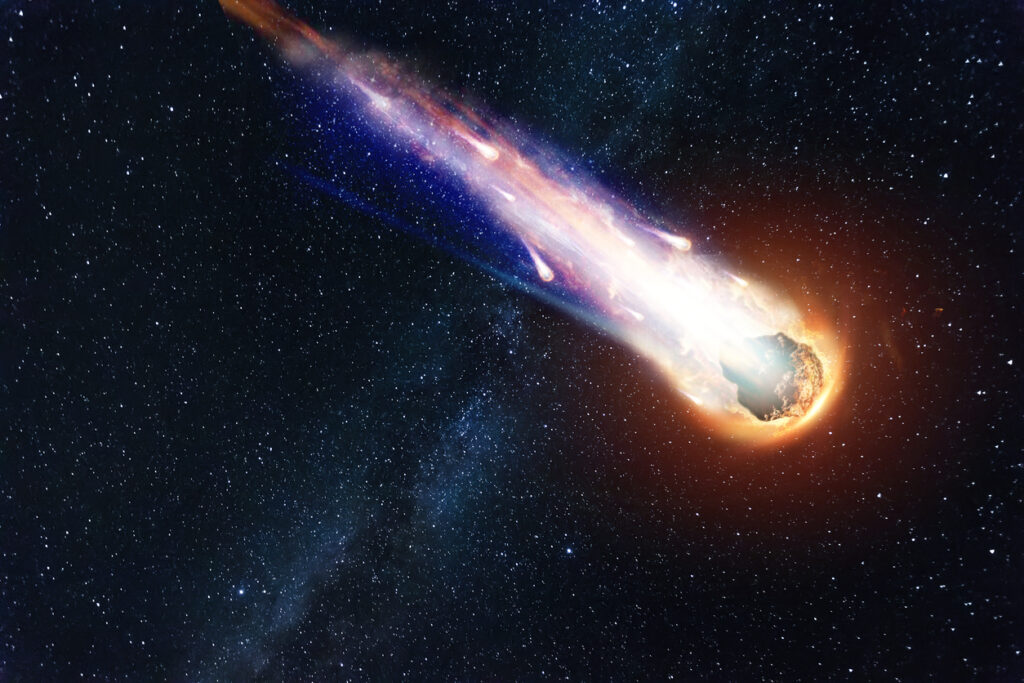
As the asteroid hits the upper atmosphere, friction superheats the air around it to tens of thousands of degrees, producing a fireball visible across hundreds of miles. The object itself begins breaking apart in many cases, and the pressure wave building in front of it is often more destructive than the impactor itself. Chelyabinsk released energy equivalent to around thirty times the Hiroshima bomb and injured over 1,500 people, almost entirely from shattered glass, without anything substantial even reaching the ground. A larger object wouldn’t be so forgiving.
The shockwave does the most immediate damage.
When an asteroid explodes in the atmosphere or strikes the surface, the pressure wave radiates outward at enormous speed. Buildings collapse, trees are flattened, and the overpressure alone is lethal within a certain radius. The 1908 Tunguska event, caused by an object estimated at around 50 metres, flattened over two thousand square kilometres of Siberian forest with no crater at all. Had it arrived over a populated area, the casualty figures would have been catastrophic. That’s the lower end of what we’re talking about.
A land strike sends debris into the stratosphere.
A major surface impact throws an enormous quantity of pulverised rock, dust, and vaporised material into the upper atmosphere. The largest impacts send enough material into the stratosphere to circle the globe and block sunlight for months or years. That cooling effect on surface temperatures is what drove the mass extinction 66 million years ago. The impact itself was devastating, but the prolonged darkness and collapse of plant life that followed is what made recovery so difficult. A modern equivalent would trigger immediate agricultural failure on a global scale.
An ocean impact creates a different kind of catastrophe.
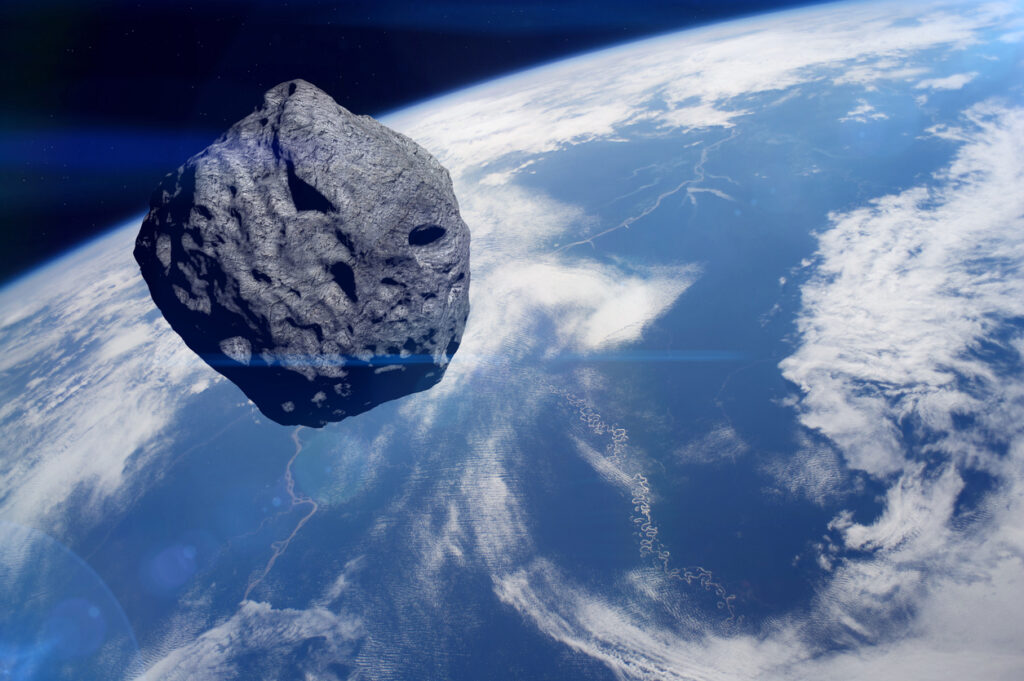
Around seventy percent of Earth’s surface is ocean, so statistically an ocean strike is more likely than a land one. A large impactor hitting deep water generates tsunamis on a scale that makes historical examples look modest, with waves potentially reaching hundreds of metres in height as they approach coastlines. Coastal populations would have very little time to evacuate, and the reach of those waves would extend far inland. Salt water thrown into the atmosphere also has huge effects on atmospheric chemistry and weather patterns in the aftermath.
Fires would break out across a vast area.
The thermal pulse from a major impact ignites fires across an enormous radius, and the ejecta raining back down through the atmosphere after a large strike heats the air enough to start fires across entire continents. The resulting firestorms would consume forests, cities, and agricultural land simultaneously, adding enormous quantities of smoke and soot to the atmospheric debris already blocking sunlight. The combination of dust and smoke is what researchers refer to as impact winter, and it’s the mechanism that makes large strikes an existential rather than merely regional threat.
Infrastructure collapse would follow almost immediately.
Even for a strike well short of civilisation-ending scale, the knock-on effects to infrastructure would be severe and fast. Power grids, communication networks, transport systems, and supply chains are all deeply interdependent, and a major regional impact would disrupt enough of those connections to cause cascading failures well beyond the impact zone. A city-destroying strike in the wrong location wouldn’t just destroy that city, it would send shockwaves through the global systems that billions of people depend on daily without even thinking about it.
The humanitarian response would be unlike anything ever attempted.
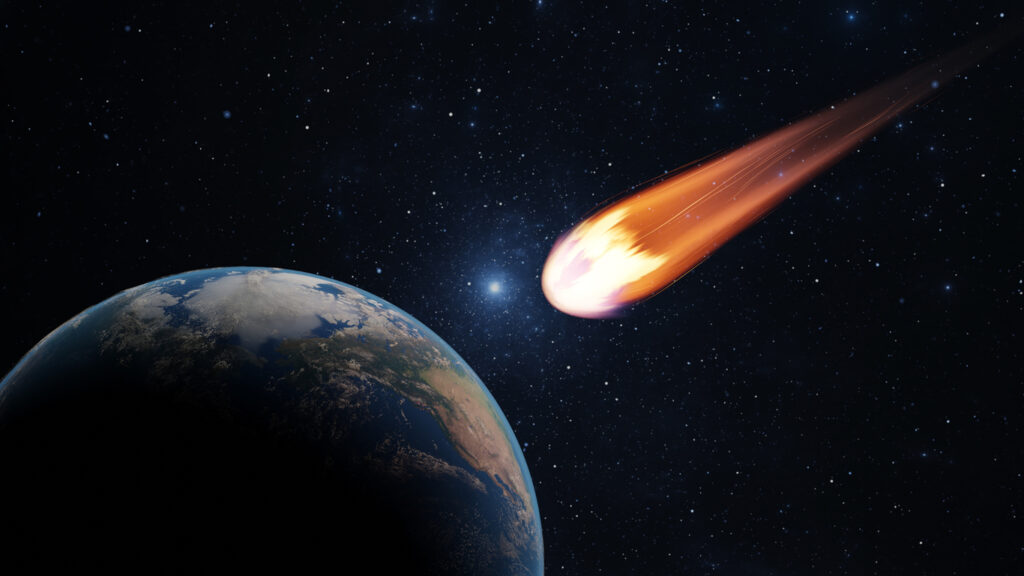
Emergency planning for natural disasters exists at national and international levels, but an asteroid strike of significant size would overwhelm every existing response framework simultaneously. Millions of displaced people, destroyed supply routes, contaminated water sources, and collapsed medical infrastructure would all require attention at the same moment. The coordination challenges alone would be staggering, and the psychological effects on the global population of watching something this large unfold in real time would be an additional complication that doesn’t feature in most disaster planning.
Disease would spread rapidly in the aftermath.
Displacement, contaminated water, destroyed sanitation, overwhelmed or absent medical services, and large numbers of people in crowded conditions—all of these are conditions in which infectious disease spreads quickly. The aftermath of a major impact would create exactly that environment across a potentially enormous area. Historical precedents for disease following natural disaster are well documented, but the scale here would be orders of magnitude larger than anything those records cover.
Recovery timelines would stretch across generations.
Even without the worst-case atmospheric effects, rebuilding after a major impact would take decades. The physical reconstruction of infrastructure, the restoration of agricultural systems, and the reestablishment of functioning economies and governance structures don’t happen quickly under normal circumstances, and the circumstances wouldn’t be normal. Societies that have experienced huge asteroid impacts in the historical record don’t exist, which means modern civilisation has no actual template for what recovery looks like.
Planetary defence is a real and active field.
NASA’s DART mission in 2022 successfully altered the orbit of a small asteroid by deliberately crashing a spacecraft into it, proving that deflection is at least theoretically possible with enough warning. Several programmes now track near-Earth objects and assess their risk, and international protocols for coordinating a response are being developed. The honest position is that we’re better prepared than we were twenty years ago, and nowhere near as prepared as we’d want to be if something major were actually inbound.
The most dangerous scenario involves the least warning.
The objects most likely to catch us genuinely off guard are the mid-range impactors large enough to cause regional or continental devastation, but small enough to be missed by current survey programmes until they’re relatively close. A surprise strike on a densely populated area with no evacuation time is the scenario that keeps planetary defence researchers most focused. It’s not a question of whether Earth will be struck again. It’s a question of size, location, timing, and whether we spot it coming.