We’ve likely all heard the old cliches about elephants, but the reality goes much deeper than just one species. There are birds that can remember thousands of different hiding spots for their food, and sea creatures that recognise faces they haven’t seen in years. These animals haven’t just got a good memory, though; they’ve evolved a level of recall that’s vital for their survival, often outperforming us in ways that feel almost like a magic trick.
Chimpanzees
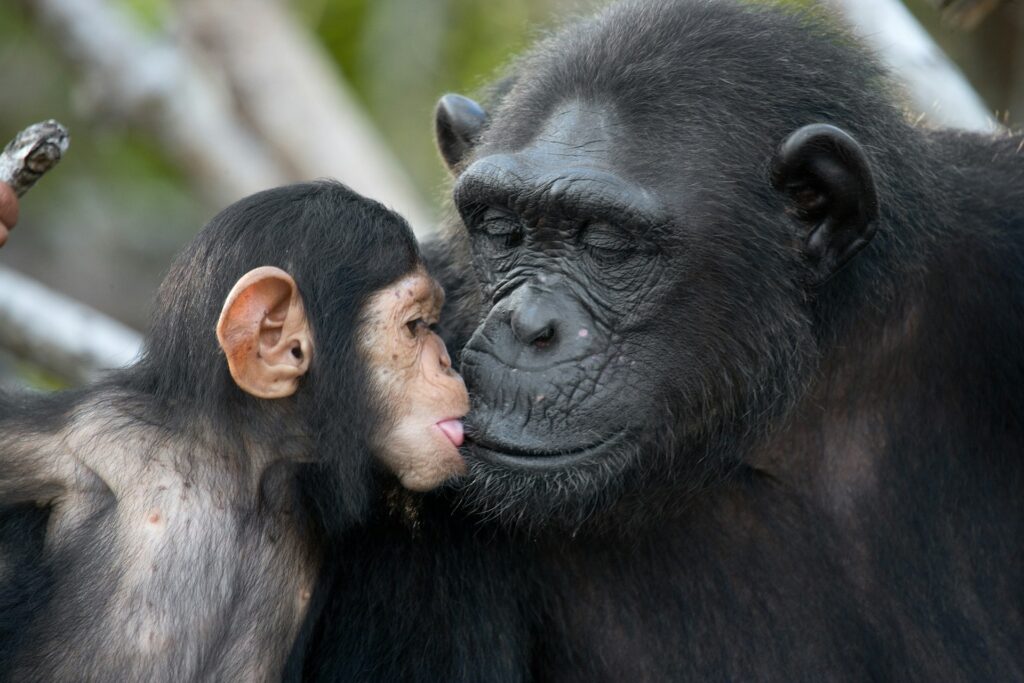
Chimpanzees have demonstrated a short-term photographic memory that humans simply can’t match. In studies at Kyoto University, young chimps were able to memorise the position of numbers on a screen in a fraction of a second and recall them accurately, and that’s a task that adult humans consistently failed at. Their working memory for visual information is faster and more precise than ours, which challenges a lot of assumptions about the relationship between intelligence and memory. It’s thought this ability may have been more useful to our common ancestors than the verbal memory skills humans developed instead.
Elephants
The phrase “an elephant never forgets” turns out to be grounded in something real. Elephants can remember the locations of water sources across enormous territories they haven’t visited in years, and they recognise individual humans and other elephants after decades apart. Matriarch elephants carry spatial and social knowledge accumulated over sixty or more years and use it to guide their herds through drought and danger. When a matriarch dies, her group demonstrably loses access to that stored knowledge, which has real consequences for their survival.
@dolphinquest With highly developed brains, dolphins can remember complex cues and stay engaged, even with a delay between the request and the green light to go! In this game, Wait and Go, Ipo hears the cue. He remembers it. And he’s holding it – waiting each time in a sequence of ever‑more complex memory challenges when the signal finally comes. Stay tuned, next week we’ll show you HOW we train this concept behavior! #animaltraining #dolphin #animalsoftiktok #animallover #cute #cutebaby #cuteanimals ♬ original sound – Dolphin Quest
Dolphins
Dolphins have the longest social memory of any non-human animal studied so far. Research published in 2013 found that bottlenose dolphins could recognise the signature whistles of former companions after more than twenty years of separation, responding to them distinctly compared to unfamiliar dolphins. Given that they live in fluid social groups where individuals come and go over long periods, maintaining that kind of long-term recognition makes practical sense. The sophistication of what they’re retaining goes well beyond simple familiarity.
Clark’s nutcrackers
This North American bird buries up to 100,000 individual seed caches across a territory covering many square miles every autumn, then retrieves the vast majority of them months later under snow. It does this using spatial memory of a precision that genuinely staggers researchers. Humans given equivalent tasks perform far worse, and the nutcracker’s hippocampus (the brain region associated with spatial memory) is proportionally enlarged compared to related bird species that don’t cache food. The memory isn’t incidental to survival, it is survival.
Octopuses
Octopuses have demonstrated the ability to remember solutions to problems, recognise individual human faces, and recall which foraging routes have been productive over extended periods. What makes this particularly striking is that their memory doesn’t work the way vertebrate memory does, as much of their neural processing happens in their arms rather than a centralised brain. They’ve essentially evolved a completely different architecture for storing and using information, and it works remarkably well. An octopus that has been treated poorly by a particular keeper will remember that and respond accordingly, sometimes for months.
@natgeoThey’re clever, mysterious, and full of surprises—discover five facts about ravens that’ll amaze you.♬ original sound – National Geographic
Ravens
Ravens have episodic-like memory, meaning they can recall specific past events in a way that goes beyond simple conditioning. They remember which individuals cheated them in food-sharing experiments and adjust their behaviour with those individuals in future interactions. They also plan ahead, hiding food from competitors they know are watching, and returning later to move caches they believe have been observed. The combination of remembering past social events and using that memory to shape future strategy puts ravens in very select company cognitively.
Squirrels
Grey squirrels can remember the locations of thousands of individual food caches buried across their territory and retrieve them months later with impressive accuracy. They also engage in deliberate deception; if they notice another animal watching them cache food, they’ll perform a fake burial before moving to hide the food somewhere else. That behaviour requires not just spatial memory, but the ability to recall that a specific individual was present and factor that into a plan. It’s a level of social and strategic memory that most people wouldn’t associate with a creature that small.
Bees
Honeybees can remember the location and quality of food sources, the route back to the hive, and the time of day at which particular flowers produce nectar, all simultaneously, with a brain containing roughly one million neurons. Humans have around 86 billion. Bees also demonstrate a form of long-term memory for landmarks, and can recall a reliable food source after several weeks away from it. Their ability to communicate spatial information to other bees through the waggle dance depends on the accuracy of that stored knowledge, which has to be precise enough for another bee to navigate from it.
Sea lions
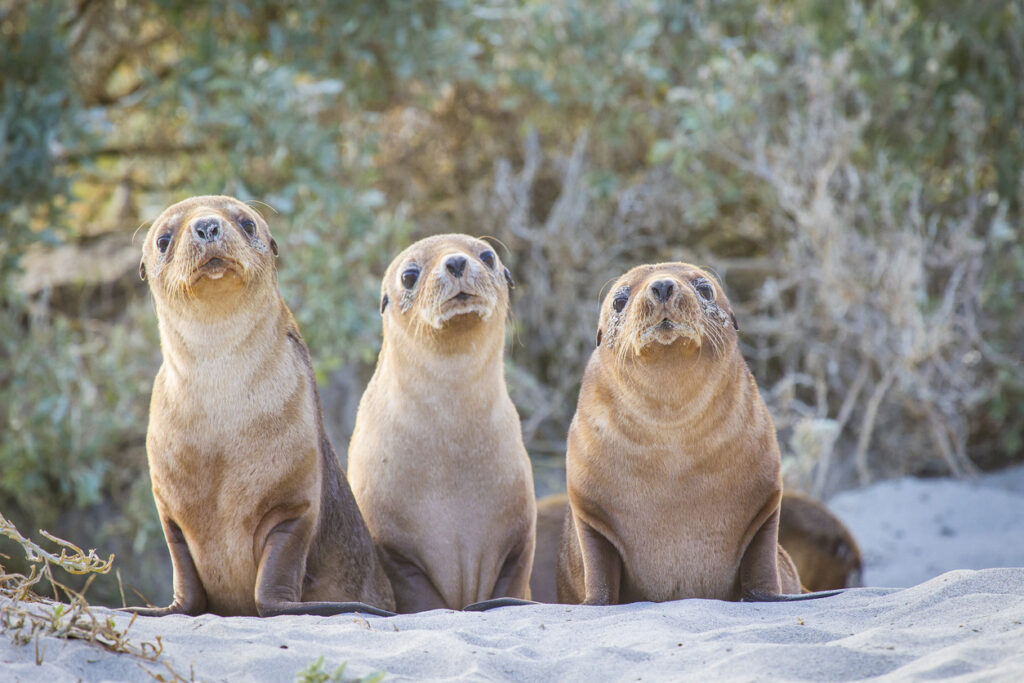
California sea lions have shown an ability to understand and apply logical relationships—if A equals B and B equals C, then A equals C—and to hold those abstract rules in memory over extended periods. One sea lion named Rio demonstrated retention of a learned concept after a ten-year gap with no reinforcement, which is the kind of result that surprises even researchers who study animal cognition professionally. Their memory for sequences and patterns is particularly strong, which may relate to the complex social structures and acoustic environments they navigate in the wild.
Crows
Crows remember human faces with unsettling accuracy and hold grudges for years. Studies at the University of Washington found that crows captured and banded by researchers in particular masks continued to scold and mob people wearing those same masks years later, even passing the association on to their offspring who had never experienced the original event. That kind of transgenerational social information transfer through observation and memory is rare in the animal kingdom. The fact that it’s happening in birds is something researchers are still working to fully understand.
Cats
Cats get underestimated here largely because they’re less motivated than dogs to demonstrate what they know on demand. But their long-term memory for people, places, and negative experiences is considerable. Cats that experienced something frightening or painful in a particular context will remember and avoid it years later, and they retain recognition of familiar humans after long separations. Their episodic memory, specifically their ability to recall specific past experiences rather than just learned behaviours, is thought to be stronger than most people assume, particularly for events with emotional significance.
Dogs
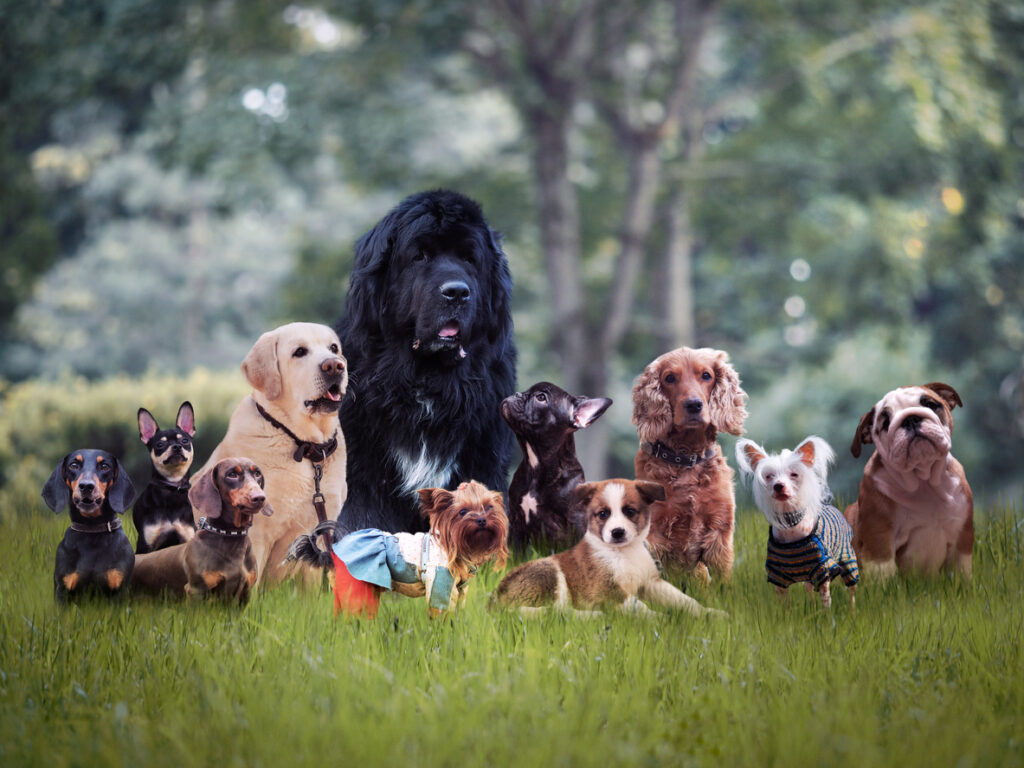
Dogs have an impressive capacity for episodic memory as well. Border collies have been shown to remember the names of over a thousand objects and retrieve them accurately long after initial learning. Dogs also demonstrate a phenomenon called “do as I do,” where they watch a human perform an action and replicate it later from memory without being trained to do so. Their social memory for humans is long-lasting and emotionally nuanced in ways that go beyond simple recognition.
Archerfish
Archerfish hunt by shooting precise jets of water at insects above the surface, and they remember human faces with an accuracy that surprised researchers considerably when it was first demonstrated. In studies where fish were trained to spit at a target face, they continued to correctly identify that face when it was presented alongside up to forty-four new faces, even when clothing, hair, and other cues were removed. The finding was unexpected, partly because archerfish lack the neocortex that most animals with face recognition ability rely on, which suggests their brain has found a completely different solution to the same memory problem.