Autumn transforms British woodlands into a fungi wonderland.
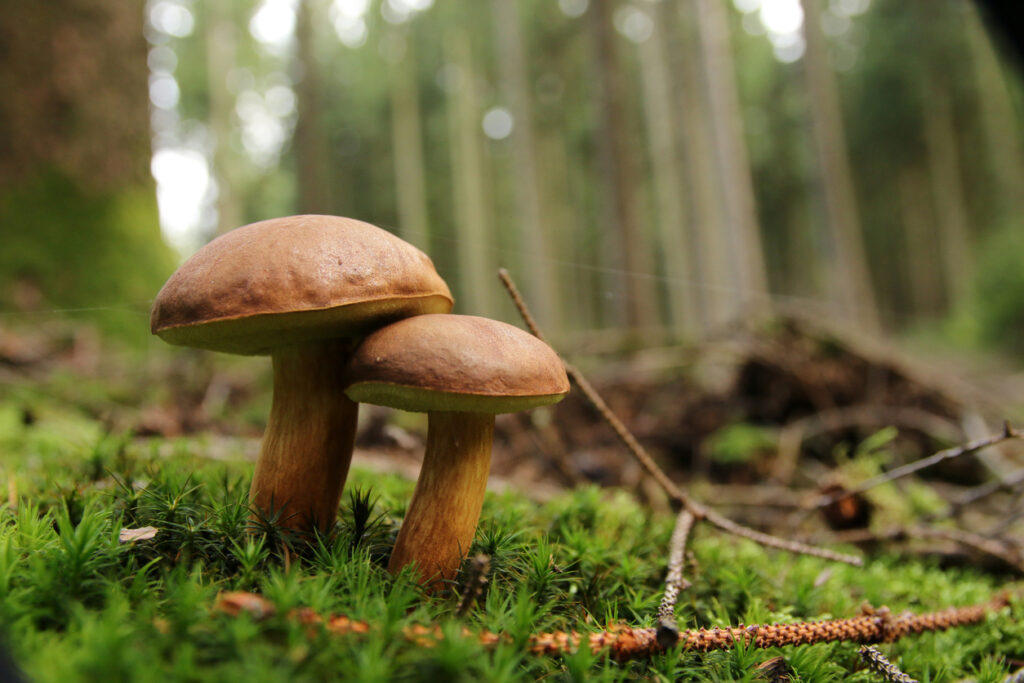
Certain mushrooms only emerge during these cooler, damper months, appearing almost overnight after rain. These seasonal species have been waiting underground all year for the perfect conditions to fruit. If you’re a fungi fanatic, as many people are, you’ll want to keep your eyes peel (or actively seek out) these incredible varieties.
1. Fly agaric
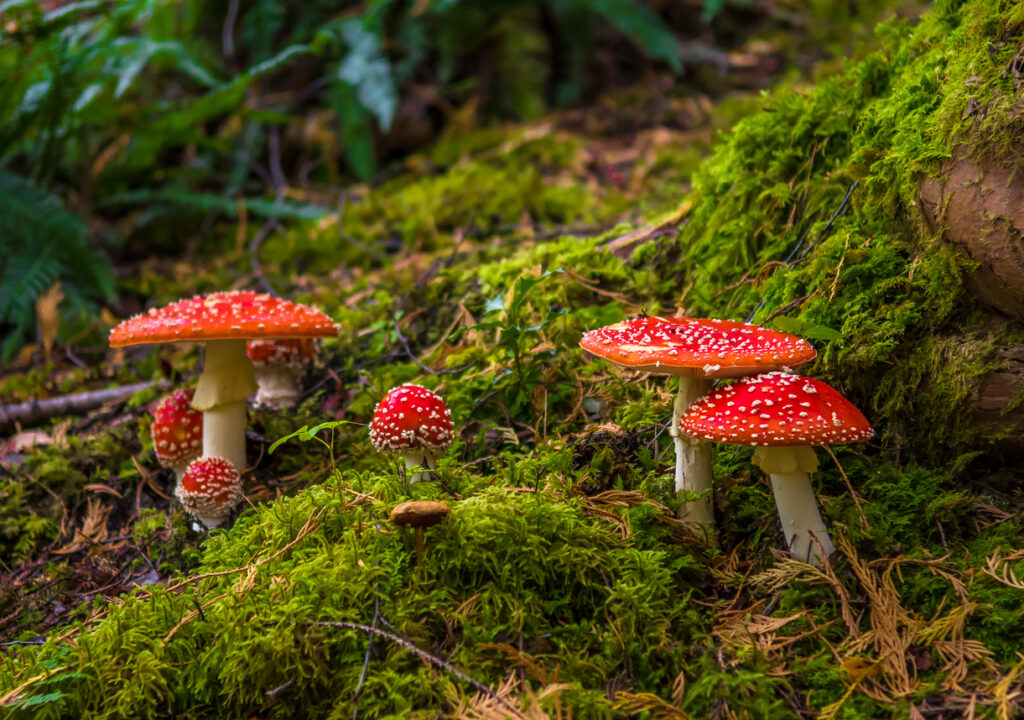
This is the classic fairy tale mushroom with a bright red cap covered in white spots. It grows under birch and pine trees from September through November. You’ll spot it easily because nothing else in British woods looks quite this vibrant and magical.
Despite its storybook appearance, it’s poisonous and causes hallucinations if eaten. The name comes from people using it to kill flies by mixing it with milk. Look, but definitely don’t touch or taste. It’s one of autumn’s most photographed fungi for good reason.
2. Chanterelles
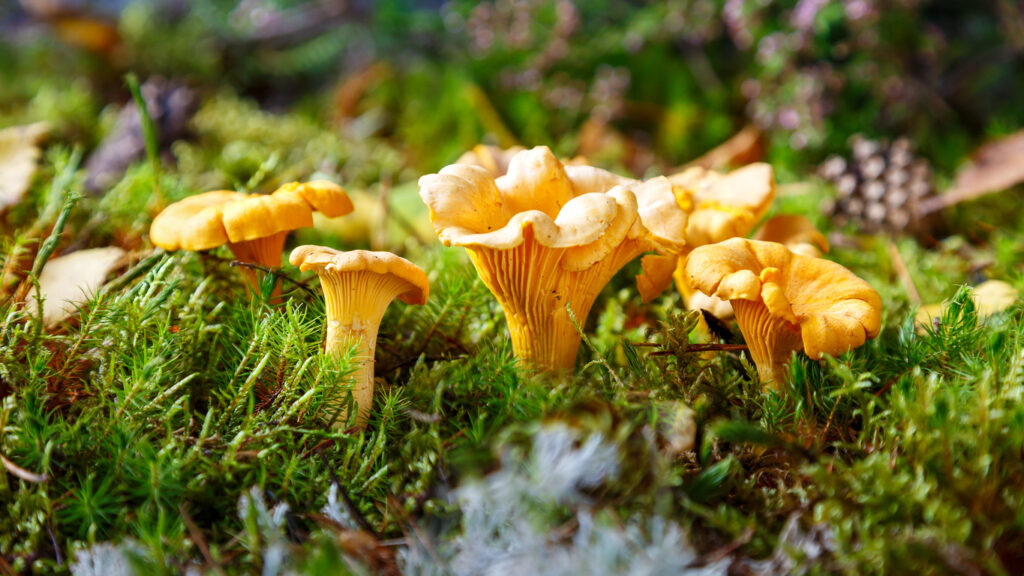
These golden yellow mushrooms smell faintly of apricots and grow in mossy areas under oak and beech trees. They’re funnel-shaped with ridges rather than gills underneath. Chanterelles appear from late summer through autumn and are highly prized by foragers and chefs.
They’re edible and delicious but easily confused with toxic false chanterelles, so never pick them unless you’re absolutely certain. Real chanterelles have irregular ridges and solid stems. They’re one of the few wild mushrooms worth hunting for if you know what you’re doing.
3. Penny bun or cep
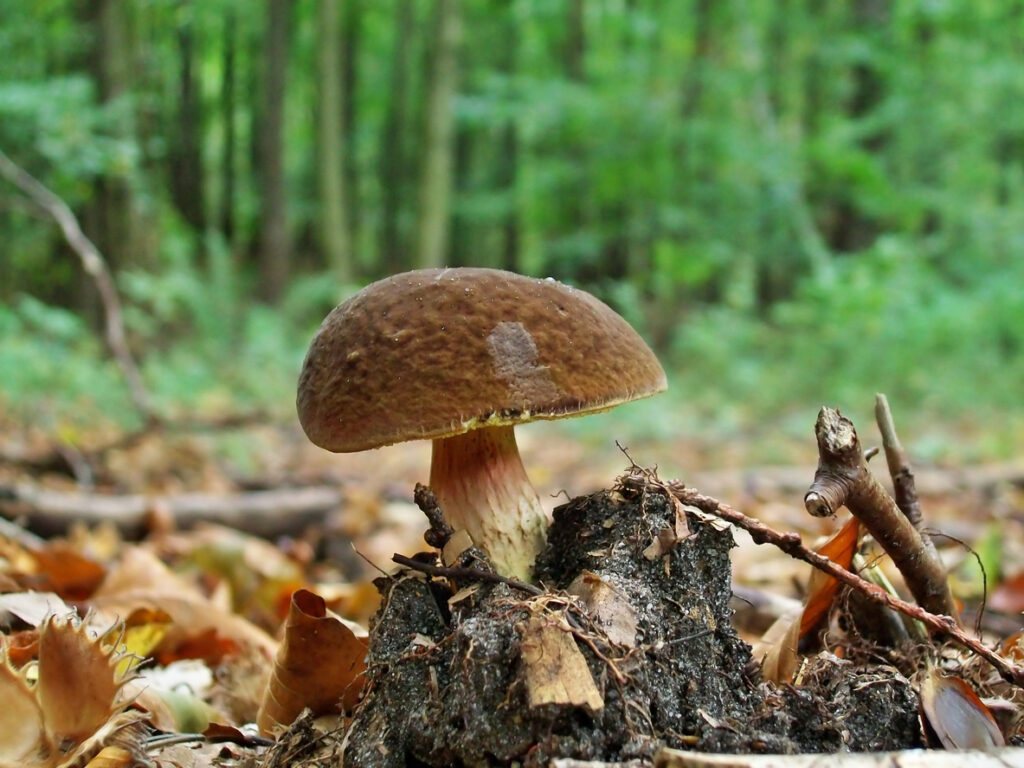
Also called porcini, these chunky brown mushrooms have thick white stems and spongy undersides instead of gills. They grow near oak, beech, and pine from August through October. Fresh ones have a distinctive nutty smell that’s quite pleasant and strong.
They’re excellent eating and highly sought after by mushroom hunters. The problem is that they’re popular with insects too, so check for maggots before collecting. Young, firm specimens are best. Older ones get slimy and less appealing, but are still identifiable by their bulk.
4. Amethyst deceiver
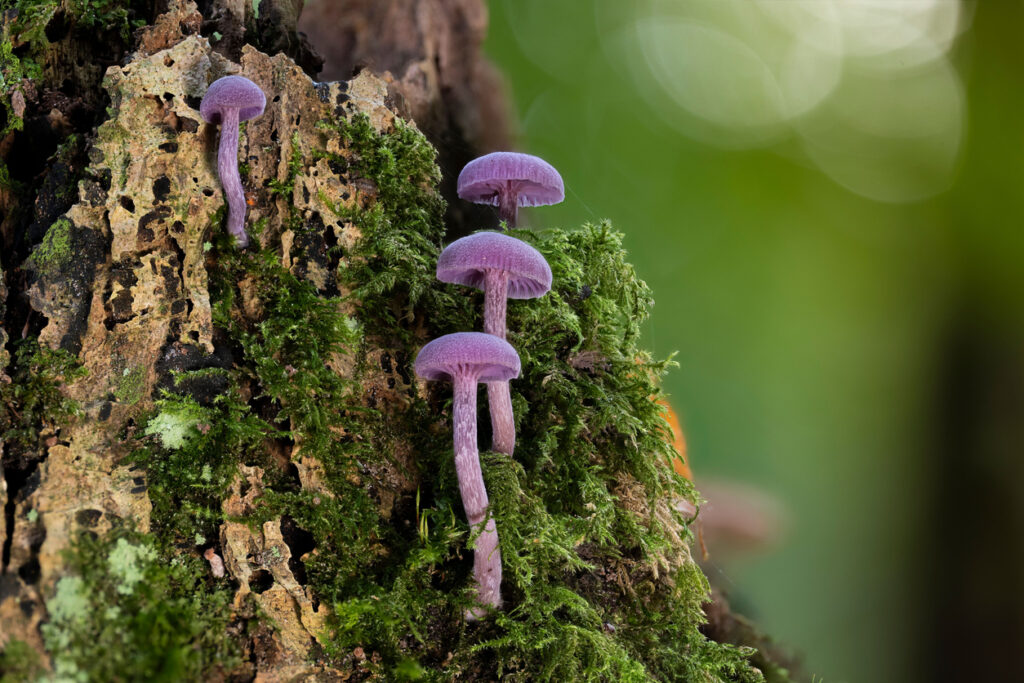
These small mushrooms are a stunning purple colour when young, fading to lilac or brownish as they age. They grow in groups under deciduous and coniferous trees throughout autumn. The colour is so unusual it doesn’t look real, more like something painted or artificial.
They’re edible but not particularly tasty, and the “deceiver” name comes from how much their appearance changes with age. When faded, they’re easy to mistake for other species. They’re more interesting to photograph than eat, but they’re harmless if you do fancy trying them.
5. Shaggy ink cap
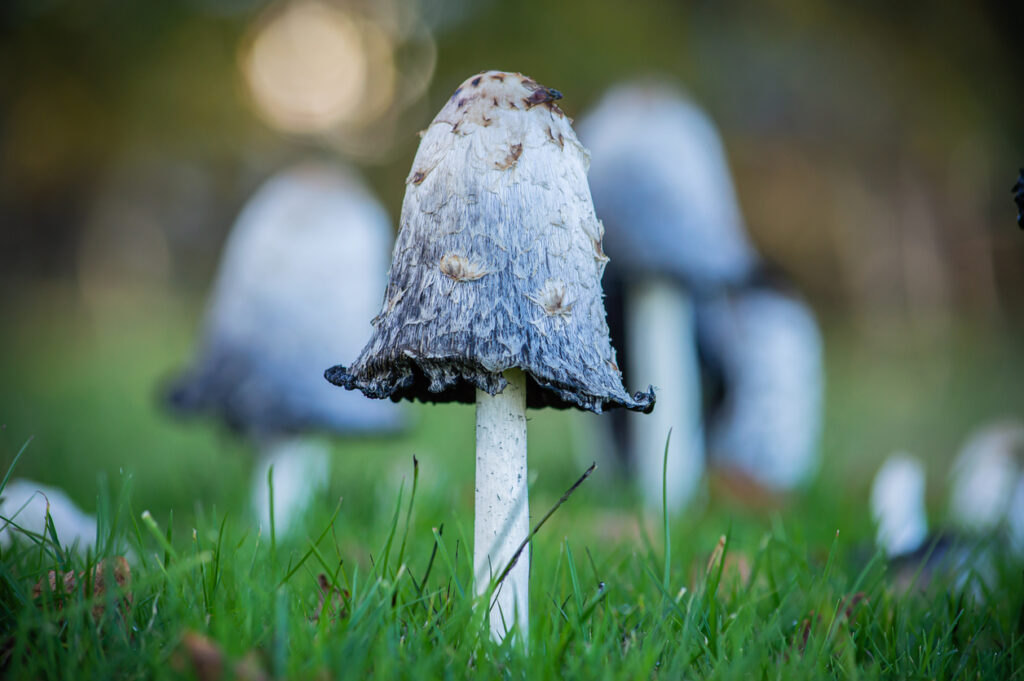
These distinctive white cylindrical mushrooms have shaggy scales and grow in grass, paths, and disturbed ground. They’re one of the easiest to identify safely. Within days, they dissolve into black ink from the bottom up, which is fascinating to watch happen.
They’re edible when young and white, but you must cook them immediately after picking. Never drink alcohol with them or for a few days after, as they cause a toxic reaction with booze. The auto-digestion into ink is their spore-spreading method.
6. Honey fungus
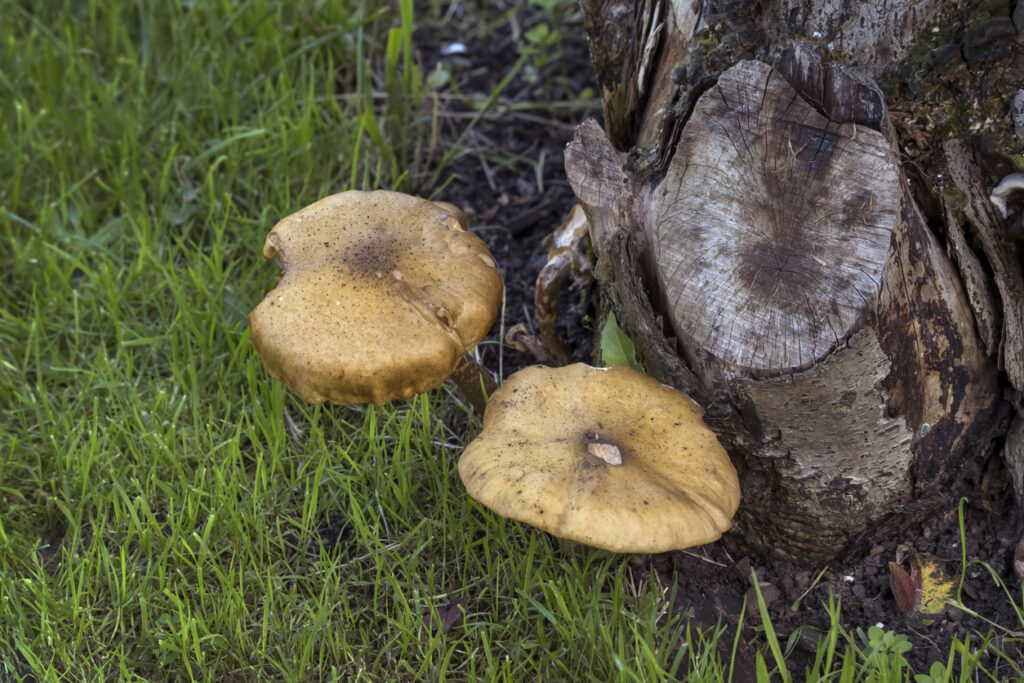
These honey-coloured mushrooms grow in dense clusters on tree stumps, roots, and around the base of living trees. They appear in huge numbers during autumn, often glowing slightly at night. While they look appealing, they’re actually parasitic and kill the trees they grow on.
Some species are technically edible but can cause stomach upsets in many people, so they’re best avoided. Gardeners hate them because they spread underground via black bootlace-like rhizomorphs. If you’ve got them, your trees might be in trouble over time.
7. Jelly ear fungus
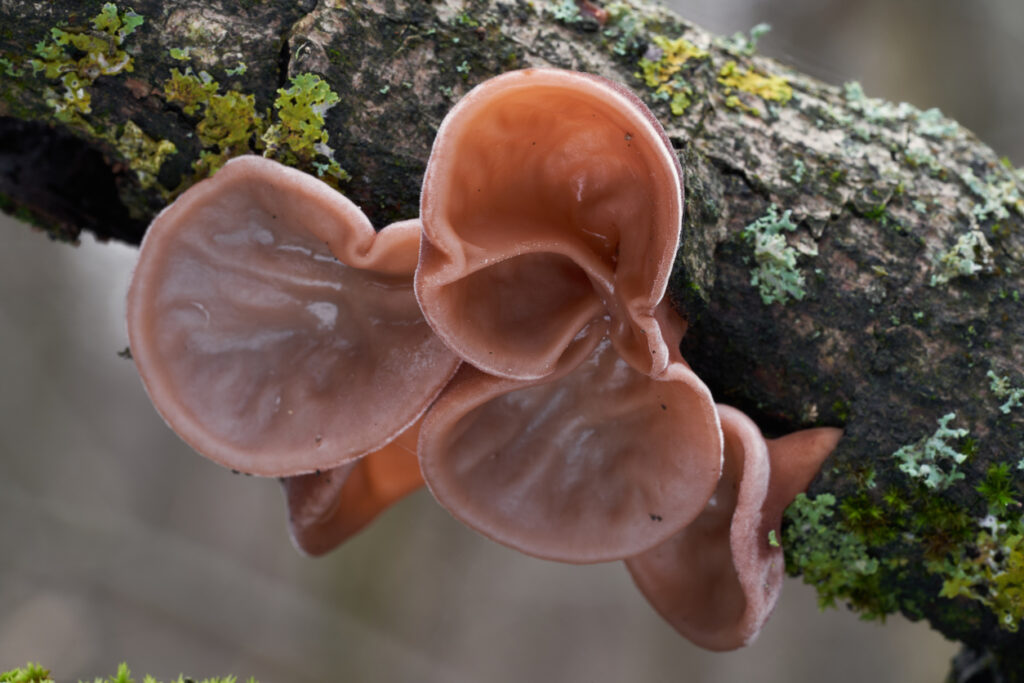
This bizarre brown fungus looks exactly like a human ear growing on dead elder wood. It’s gelatinous and rubbery to touch, which is quite unsettling. It appears year-round, but is most abundant in autumn and winter when conditions are damp enough.
It’s edible and commonly used in Asian cuisine, though it’s pretty tasteless and valued more for texture. You’ll find it on dead elder branches almost exclusively. Once you’ve seen one, you’ll start spotting them everywhere because they’re surprisingly common in British woods.
8. Beefsteak fungus
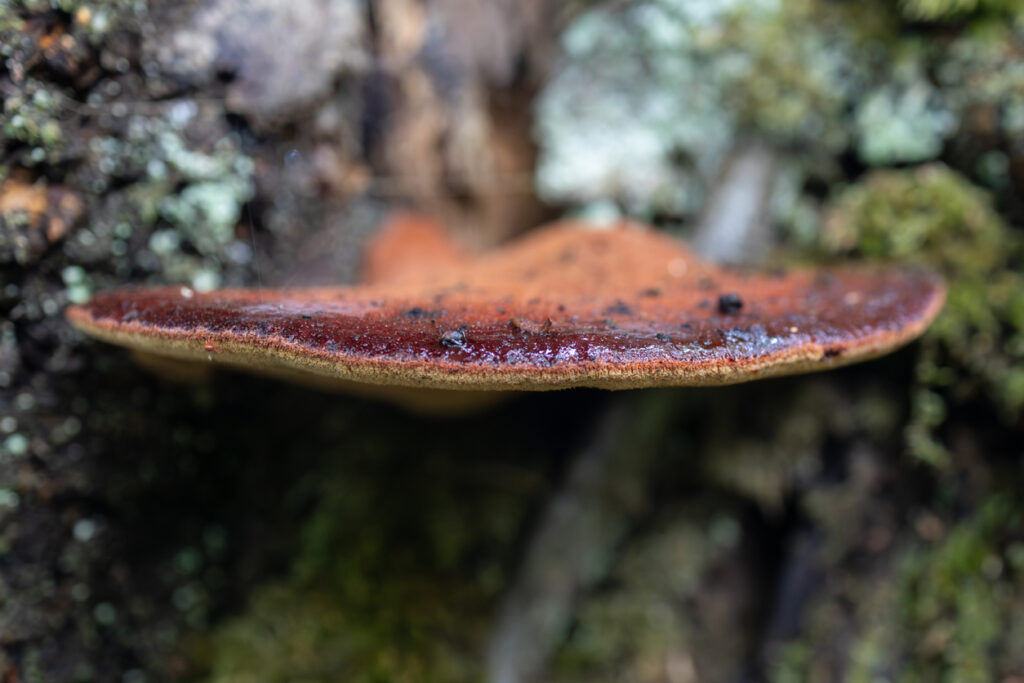
This bizarre fungus grows on oak trees and looks disturbingly like raw meat. It’s reddish-brown, tongue-shaped, and even oozes red juice when cut. It appears in autumn and can grow quite large, sometimes weighing several kilograms when fully developed.
It’s technically edible but extremely sour, requiring lots of preparation to be palatable. Some people use it as a meat substitute, but it’s an acquired taste. The resemblance to steak is uncanny, though, and it’s always shocking to spot one on a tree trunk.
9. Earthstar fungi
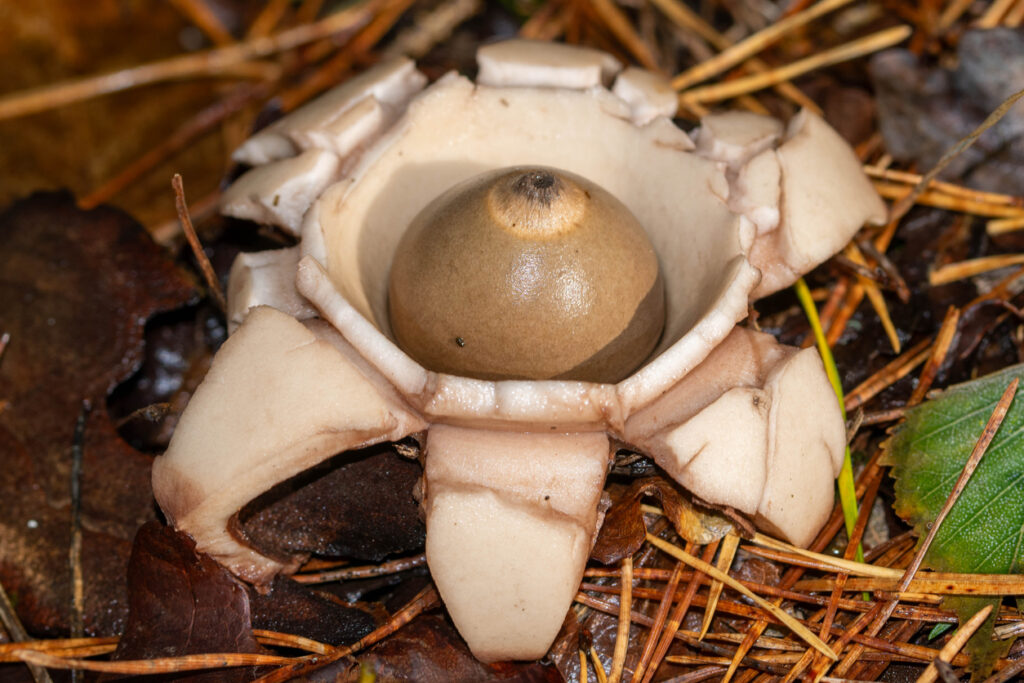
These look like something from another planet. They start as round balls that split open into star shapes, revealing a spore sac in the centre. They’re found on woodland floors from late summer through autumn. Several species grow in Britain, all equally weird-looking.
They’re not edible, but they’re not toxic either, just fascinating to observe. When mature, the central sac releases spores when raindrops hit it. They’re quite small and easy to miss, but once you spot one, you’ll want to find more.
10. Wood blewit
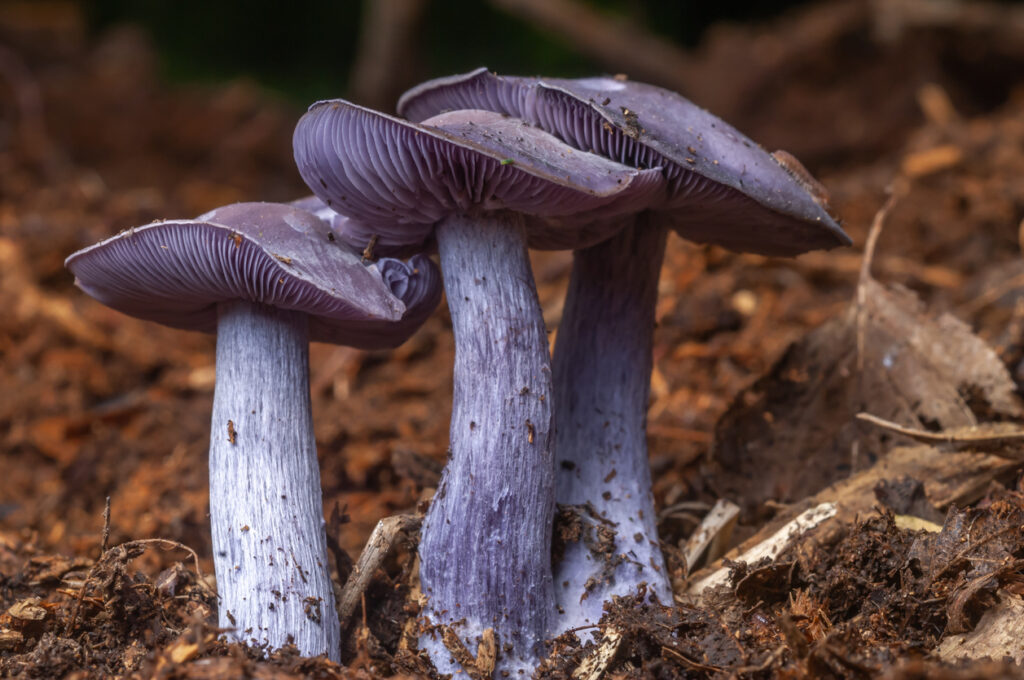
These have distinctive purple-blue gills and stems with pinkish-brown caps. They grow in leaf litter, compost heaps, and woodland edges from October through December. They’re one of the last edible species to appear before winter proper arrives.
They’re edible and tasty with a slightly perfumed flavour, but some people have allergic reactions, so try a small amount first. Never eat them raw as they can cause stomach problems. They’re quite common and relatively easy to identify for beginners learning about fungi.
11. Orange peel fungus
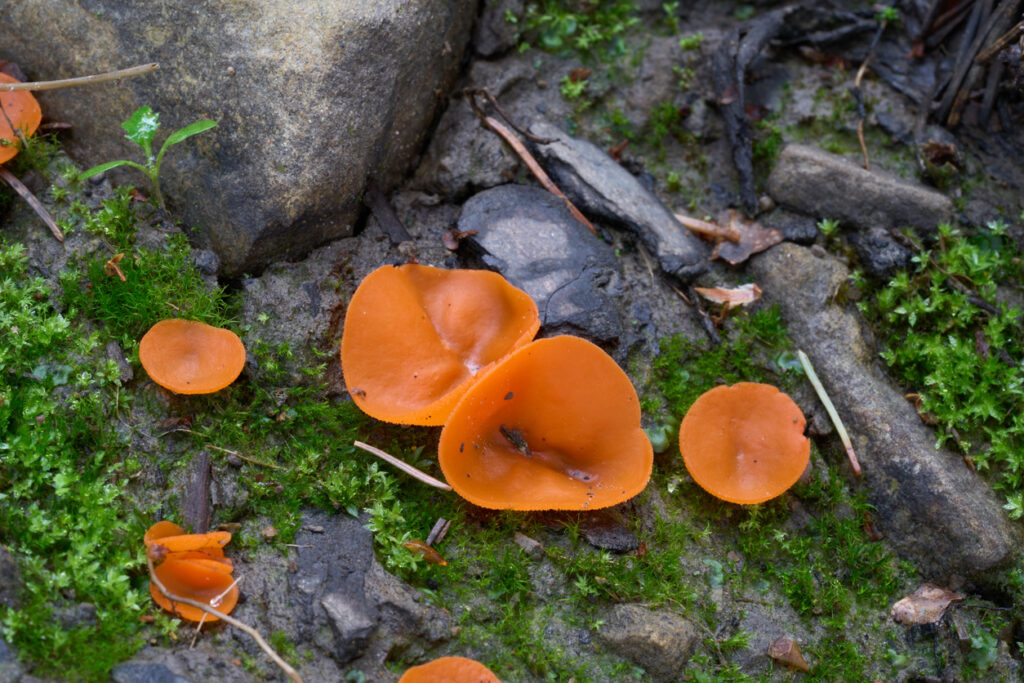
These bright orange cup-shaped fungi look exactly like discarded orange peel on the woodland floor. They grow on bare soil, paths, and disturbed ground throughout autumn. They’re surprisingly easy to overlook despite the bright colour because they blend with fallen leaves.
They’re edible but completely tasteless, so there’s no real point eating them. They’re more interesting to look at than consume. The vivid orange colour is caused by carotenoid pigments, the same compounds that make carrots orange and vibrant.
12. Stinkhorn
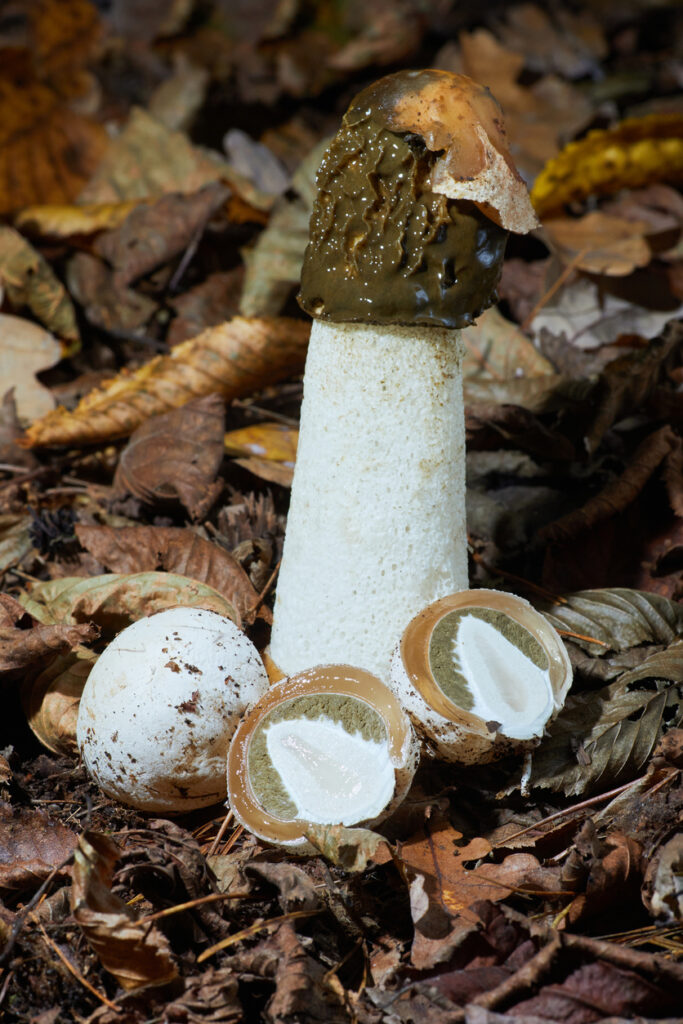
These are impossible to miss because they smell absolutely disgusting, like rotting meat. They emerge from white eggs and develop into phallic-shaped structures covered in smelly slime. The odour attracts flies, which spread the spores embedded in the slime.
They appear in late summer through autumn in woods and gardens. Despite the revolting smell and appearance, they’re technically edible when still in the egg stage. Some cultures consider them a delicacy. Most people just hold their noses and photograph them from a distance, though.
13. Candlesnuff fungus

These small black and white fungi grow on dead beech wood throughout autumn and winter. They look like tiny candles that have been snuffed out, with white tips on black stalks. They often appear in large groups covering fallen branches and logs completely.
They’re not edible, but also not harmful if touched. They’re quite beautiful up close and one of the easier species to identify confidently. The contrast between black and white makes them distinctive. They’re often overlooked because they’re small and grow on dead wood.