Space is one of those topics that never stops fuelling the imagination.
It’s vast, mysterious, and far beyond our everyday experience, which makes it a breeding ground for half-truths and myths that refuse to die. Some come from old films, others from childhood science lessons that stuck in slightly garbled form, and some are just too good a story to give up. These are just some of the most common space myths people still believe, and what the science actually says.
1. Space is completely silent.
We’ve all heard the line “in space, no one can hear you scream,” and while it’s catchy, it’s not the full story. Space is a vacuum, so sound doesn’t travel the way it does here on Earth. You won’t hear music, voices, or explosions echoing through the void. However, that doesn’t mean it’s silent in an absolute sense.
Out there are enormous clouds of plasma and thin gases, and those can vibrate. Scientists with sensitive equipment have picked up strange, eerie sounds, such as rippling waves from black holes, or the plasma oscillations around planets. NASA has even released recordings that sound like an unsettling cosmic soundtrack. To human ears floating outside a spacecraft? Silence. But with the right instruments, the universe hums.
2. The Great Wall of China is visible from space.

It’s one of the most repeated “facts” about space travel: that astronauts can easily see the Great Wall from orbit. In truth, the Wall is narrow, built in colours that blend into the natural landscape, and nearly impossible to spot without zoom lenses or specific conditions.
Astronauts on the International Space Station have said cities, airports, and motorways are far easier to see than the Wall. At night, sprawling city lights trace out continents more clearly than any single man-made structure. The Wall may be long, but from orbit, it’s far from obvious.
3. Astronauts float because there’s no gravity.
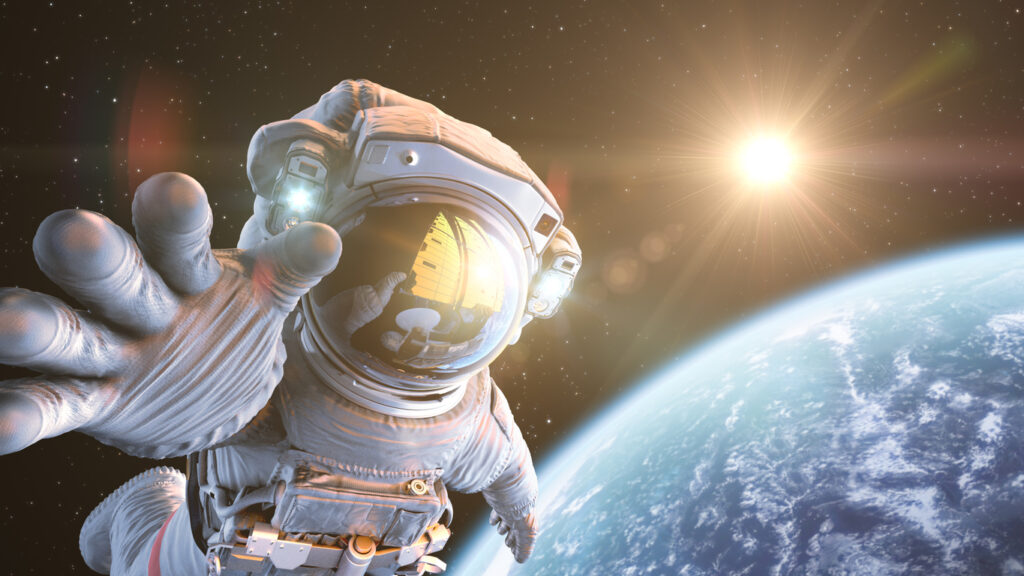
This one feels intuitive. You see astronauts drifting about, and you think gravity must be gone. However, gravity at the ISS is still around 90% as strong as it is on Earth’s surface. Astronauts float because they and their spacecraft are in continuous free-fall.
The trick is speed. The station is moving so fast sideways that as it falls, it keeps missing the Earth. That’s what an orbit is: falling around the planet instead of into it. Everything inside falls at the same rate, which is why astronauts look weightless. It’s not the absence of gravity; it’s the perfect balance of motion and pull.
4. The Moon’s dark side is always dark.

The phrase “dark side of the Moon” has misled people for decades (and gave Pink Floyd a great album title). The far side of the Moon isn’t shrouded in eternal darkness. It gets just as much sunlight as the side we see from Earth.
What’s really happening is tidal locking. The Moon rotates once for every orbit around Earth, so the same face always points towards us. That means we only ever see one side from the ground, but both hemispheres go through regular day and night cycles. The “dark side” is really just the hidden side.
5. Black holes suck everything like hoovers.
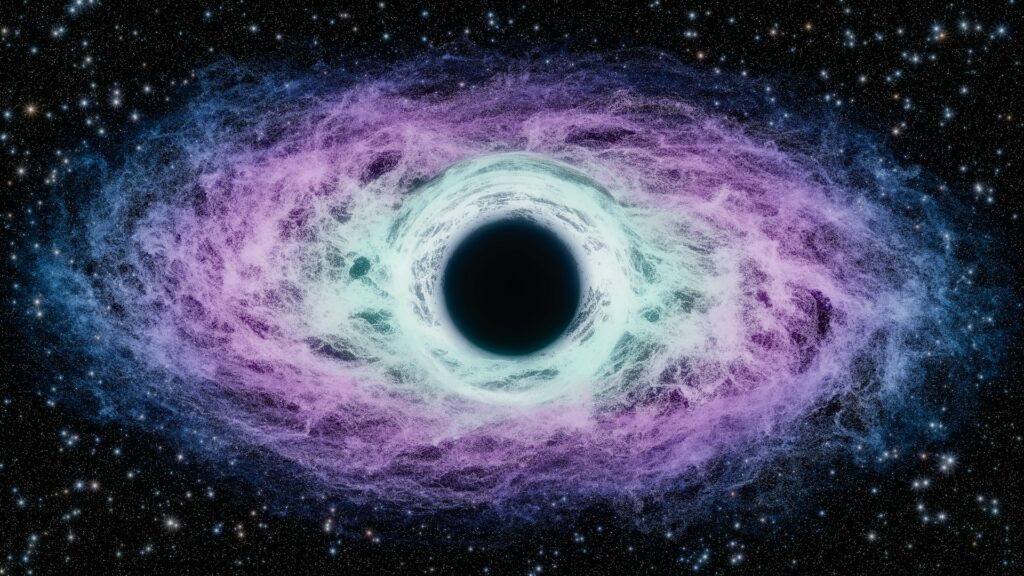
Films love to show black holes gobbling up entire galaxies, but the reality is more nuanced. Black holes don’t suck like vacuum cleaners. Their gravity acts just like any other massive object. If our Sun were swapped for a black hole of equal mass, Earth would keep orbiting in almost exactly the same way.
It’s only when you get very close that things become extreme. Cross the event horizon, and escape becomes impossible. However, at a safe distance, black holes aren’t cosmic hoovers hoovering up everything in sight. They’re just dense centres of gravity.
6. Space travel instantly freezes you.
Pop culture often shows unlucky astronauts turning into ice statues the moment they’re exposed to space. In reality, though, space doesn’t conduct heat away like air or water does. Without air, heat leaves the body mainly by radiation, which is far slower.
The real danger is lack of pressure and oxygen. Within seconds, you’d lose consciousness, and swelling would occur, but freezing takes time. In fact, sunlight could even heat your skin. Hollywood likes a dramatic frozen corpse, but the actual science is scarier in its own quiet way.
7. The Sun is a ball of fire.
It looks like a flaming ball in the sky, so it makes sense people think of the Sun as fire. However, fire, as we know it, requires oxygen, and there’s none in space. The Sun’s glow comes from nuclear fusion.
Deep in its core, hydrogen atoms fuse into helium under crushing pressure and blistering heat, releasing vast amounts of energy. That energy eventually radiates out as the light and warmth we depend on. The Sun isn’t burning like a campfire; it’s more like a colossal nuclear reactor.
8. Meteors are hot when they land.
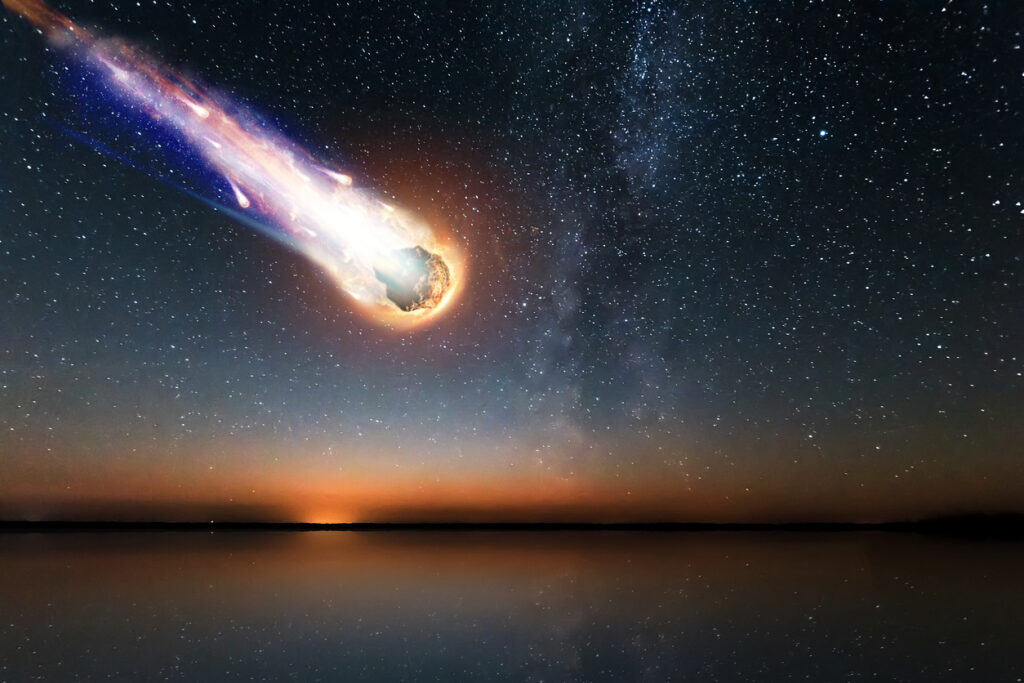
Films often show meteors crashing into Earth as glowing, molten rocks. While they blaze during entry, most of that heat burns off quickly. By the time a meteorite lands, its outer layer has cooled, and the inside often remains at the icy temperatures of space.
Collectors regularly describe freshly fallen meteorites as cool to the touch. The fireball happens miles up in the atmosphere; the stone that makes it to the ground is usually just a cold, battered rock.
9. You’d explode in space without a suit.
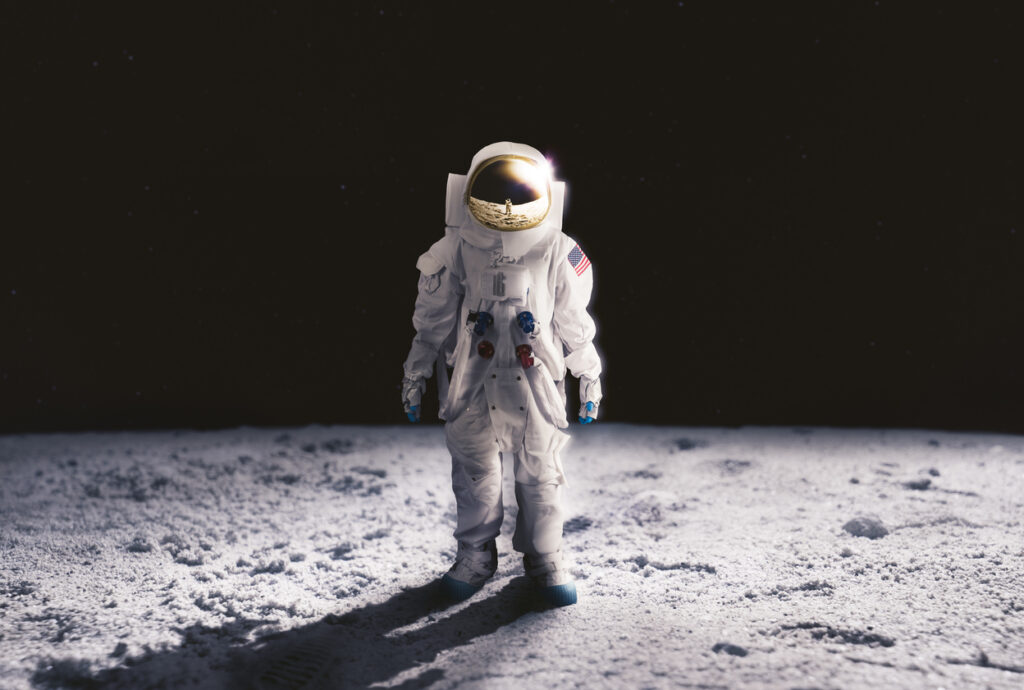
This is another one Hollywood loves: the astronaut who bursts apart the moment a helmet cracks. In reality, your skin is tougher than that. You wouldn’t explode. You’d swell slightly, lose consciousness within seconds, and die from oxygen deprivation soon after.
It’s still fatal, but far less dramatic than a gory movie scene. Your body would stay intact, though unprotected eyes and fluids would start to boil in the vacuum. Grim, yes, but not an explosion.
10. Stars never change their positions.
The constellations look timeless, which makes it easy to assume they’re permanent. However, the truth is that stars are constantly moving. It’s just that they’re so far away that the changes are imperceptible in a human lifetime.
Given thousands of years, familiar patterns like Orion will twist and distort. Astronomers use precise measurements to track this slow drift, proving that even the seemingly eternal sky is in flux.
11. The Earth is closer to the Sun in summer.
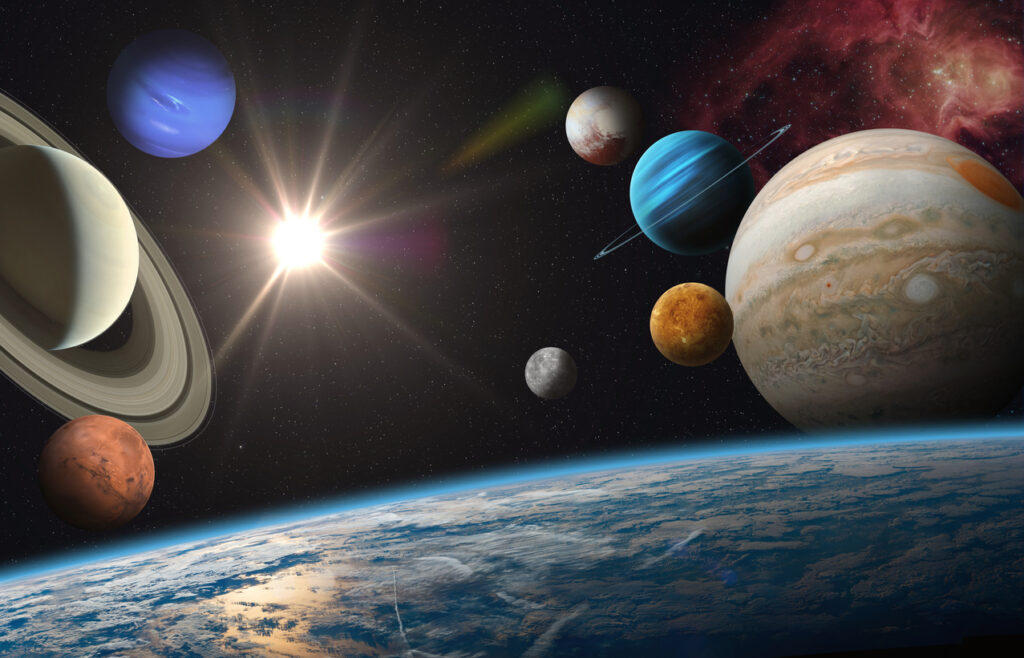
Many people assume summer happens because Earth is nearer the Sun. But Earth’s orbit is only slightly elliptical, and distance has little to do with it. Seasons come from the tilt of Earth’s axis.
That’s why Europe has summer when Australia has winter. The tilt changes the angle of sunlight, making it stronger in one hemisphere while the other cools. If distance were the cause, both halves of the globe would heat and chill together, which clearly doesn’t happen.
12. Space is crowded with stars you’d see everywhere.
Films often show spacecraft zipping through a glittering backdrop of stars. In reality, stars are so far apart that the view is often surprisingly empty. Astronauts describe deep blackness, dotted with occasional points of light.
Our eyes can’t pick out faint stars when there’s glare from the Moon, Earth, or the Sun. That’s why the view from orbit is often more stark than cinematic. Space feels vast and dark, with fewer twinkling lights than most people expect.
13. Rockets push against air to launch.
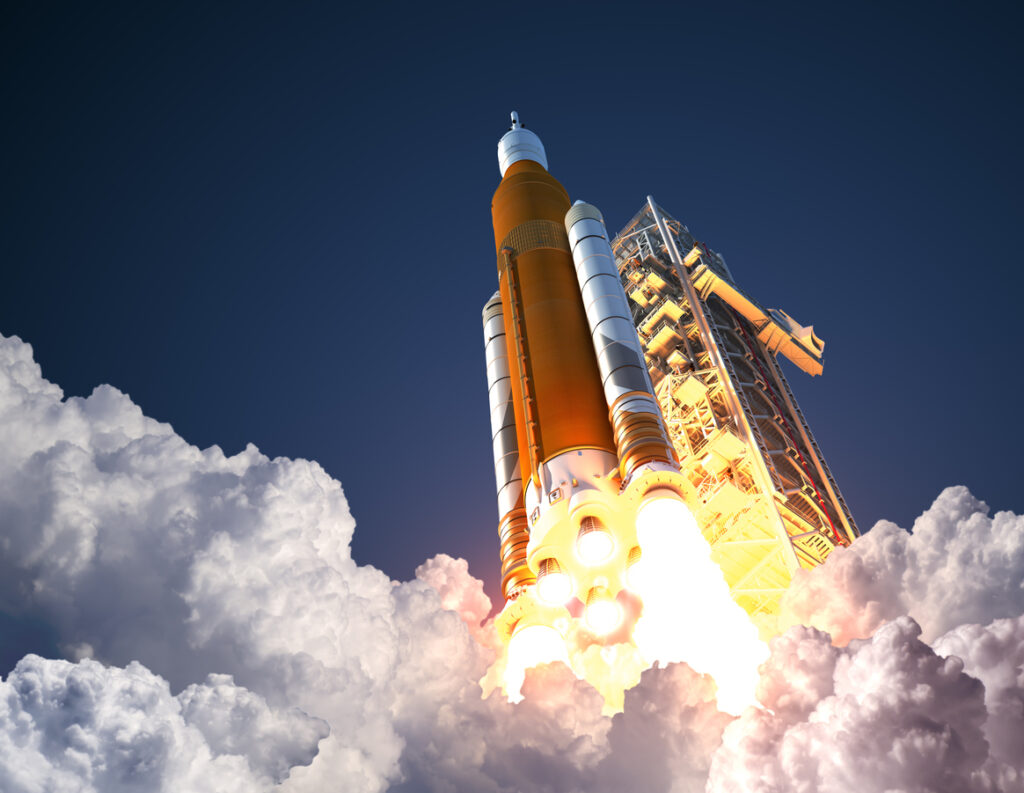
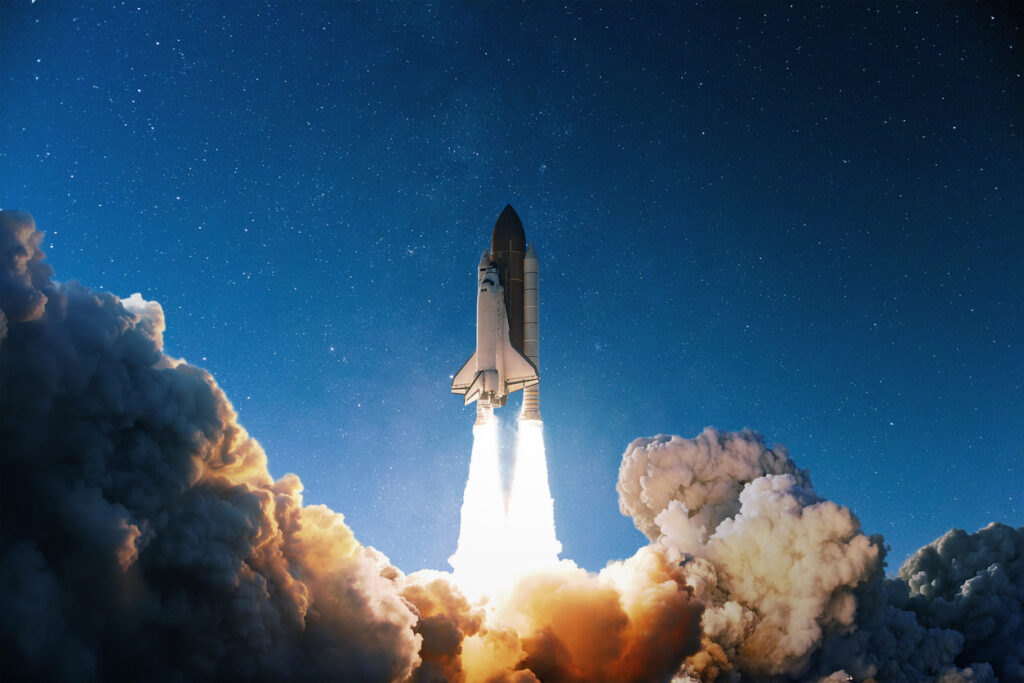
A common misconception is that rockets need air to “push against,” like an aeroplane wing. The reality is that rockets work in a vacuum. They create thrust by ejecting exhaust gases at high speed, and the reaction force propels them forward.
It’s the same principle as firing a gun: the bullet goes one way, the recoil pushes the gun the other. Rockets don’t need air, which is why they keep firing just fine in space.
14. Space exploration is mostly astronauts.

Ask most people about space exploration, and they picture astronauts floating on the ISS. But human spaceflight is just one small slice of the story. The vast bulk of exploration has been done by probes, rovers, and telescopes.
Think about the Voyager probes, still sending data from interstellar space, or the James Webb Space Telescope revealing galaxies from the dawn of time. Robots are the real workhorses of space science. Astronauts inspire us and grab headlines, but much of what we know has come from machines quietly doing their jobs millions of miles away.