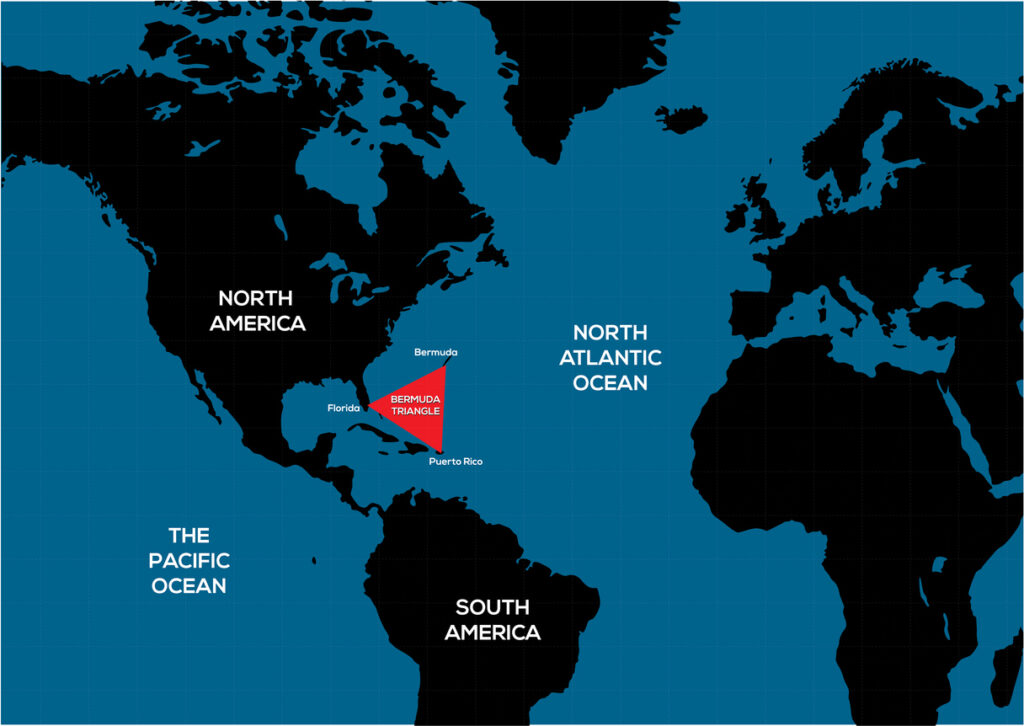
The Bermuda Triangle has been blamed for everything from disappearing ships to vanishing aircraft, often with whispers of sea monsters, alien abductions, or portals to another world. But is it actually more dangerous than any other stretch of ocean—or have we just turned it into a mystery because we love a good story? Here’s a closer look at what’s really going on in this infamous patch of water, and whether it truly deserves its eerie reputation.
The basic geography isn’t that strange.
The Bermuda Triangle isn’t marked on any official map, but it’s commonly described as the area between Miami, Bermuda, and Puerto Rico. That’s a busy stretch of the Atlantic, regularly crossed by commercial shipping, cruise liners, and aircraft. Given how much traffic moves through this area every day, it’s not all that surprising that accidents occasionally happen. It’s not a hidden corner of the world. It’s actually one of the most travelled regions of ocean on the planet.
The weather is genuinely rough.
This part of the Atlantic is known for sudden storms, intense waterspouts, and fast-forming tropical cyclones. Storms here can appear quickly and escalate even faster, which could explain many historical disappearances. Older ships and aircraft caught in these conditions may not have had the technology to navigate out or even communicate distress signals. It’s not about paranormal forces—it’s just bad weather and bad luck combining in the worst way.
Magnetic anomalies aren’t as mysterious as they sound.
Some theories suggest the Triangle messes with navigational instruments, leading to disorientation and crashes. While magnetic variation can happen, it’s not unique to this region. In fact, similar fluctuations occur in other parts of the world without sparking mystery.
Modern GPS has mostly solved the issue, but older compasses could have given inaccurate readings, especially if the crew wasn’t trained to correct for magnetic drift. That’s an issue of human error, not supernatural interference.
Methane gas might play a small role.
One scientific theory proposes that large methane hydrate deposits on the ocean floor could release gas bubbles that reduce the density of water, causing ships to lose buoyancy and sink quickly. It sounds dramatic, but there’s limited evidence linking this directly to Bermuda Triangle incidents.
Even if it is possible, methane releases aren’t common enough to explain the dozens of reported disappearances. It’s more of a long-shot possibility than a catch-all explanation.
Human error is often overlooked.
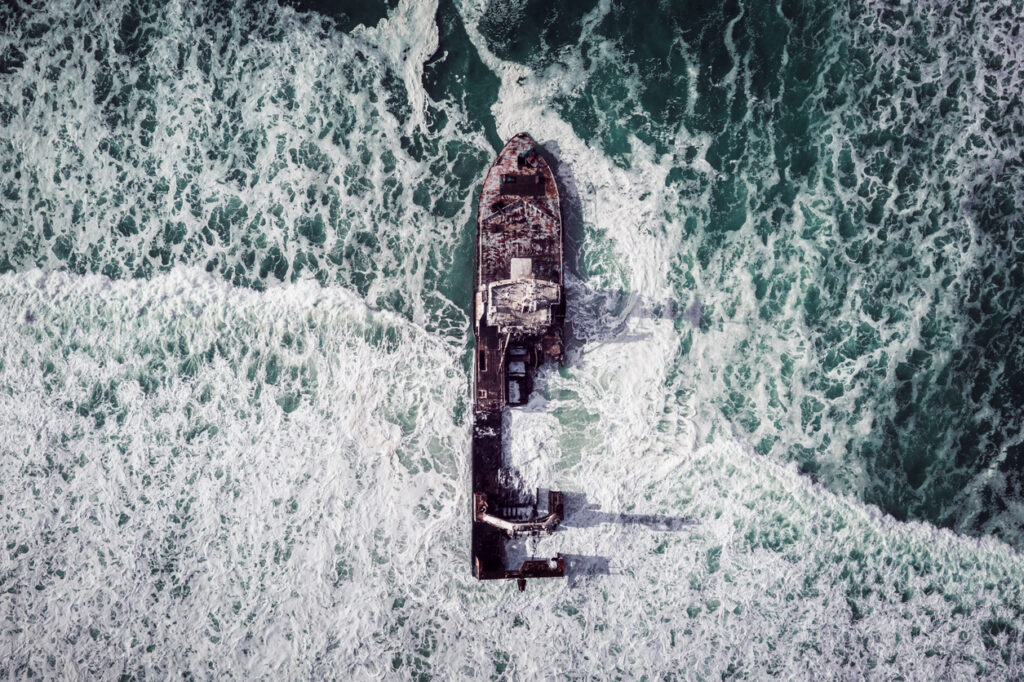
A huge number of cases linked to the Bermuda Triangle involve navigational mistakes, poor maintenance, or miscommunication, especially in earlier decades when technology was limited and weather forecasts were less accurate. In high-traffic, high-risk areas, even small mistakes can turn into disasters. It’s not a satisfying explanation for conspiracy theorists, but statistically, it’s the most likely cause in many cases.
Some famous disappearances are exaggerated.
One of the most talked-about stories is Flight 19, a group of US Navy planes that vanished in 1945. While it’s dramatic, official reports suggest the pilots became disoriented, ran out of fuel, and ditched into rough seas. Other cases often cited—like the USS Cyclops or the Carroll A. Deering—also have logical explanations, like mechanical failure or severe weather. As time has gone on, the mystery has been inflated with speculation more than fact.
Other oceans are statistically more dangerous.
The Pacific Ocean, the Southern Ocean, and even the North Sea see far more shipwrecks, sinkings, and disappearances than the Bermuda Triangle. These areas have colder water, harsher storms, and even higher risks of grounding or collision. If we judged other parts of the world with the same intensity, we’d probably have dozens of “mystery triangles.” But they don’t have the same media buzz, and that makes a difference.
Insurance companies aren’t worried.
If the Bermuda Triangle were truly a hotspot for unexplainable disaster, marine insurers would take note. However, they don’t treat it any differently from other areas of open sea when calculating risk. Shipping companies, airlines, and cruise liners operate through the Triangle every day without issue, and without sky-high premiums. That alone tells you how seriously the experts take the threat.
It’s become a pop culture myth.
Books, documentaries, and TV shows have leaned into the mystery for decades. From alien abductions to time warps, the stories have only got more outrageous over time because they sell. Mystery brings attention, and attention fuels more mystery. Once a story reaches a certain level of fame, it becomes hard to untangle fact from fiction. And the Bermuda Triangle crossed that line long ago. It’s now more cultural icon than legitimate mystery.
It’s not actually recognised as a danger zone.
No official maritime or aviation authority lists the Bermuda Triangle as a place of heightened risk. It’s not flagged on maps, not listed in danger notices, and not mentioned in any real-world training as a hazardous region. That doesn’t mean nothing bad has ever happened there, but it does mean it’s not statistically different from other open-ocean environments with similar traffic and weather patterns.
We’re more aware of it, so we notice it more.
This is a case of cognitive bias. Because the Bermuda Triangle has a reputation, people pay more attention to incidents there and less to identical events in less-famous areas. It creates the illusion that it’s uniquely dangerous. In reality, plenty of places around the world experience unexplained losses—but without the triangle branding, they don’t get the same attention or theories. The mystery sticks simply because we expect it to.
The mystery keeps evolving online.
Social media and internet culture have breathed new life into old Bermuda Triangle stories. TikToks, Reddit threads, and YouTube explainers keep the buzz going, often without much fact-checking involved. It’s entertaining, and sometimes spooky—but most of what’s shared is based on recycled myths, misunderstood science, or cherry-picked examples. Still, it proves that even a half-century-old legend can thrive if the storytelling’s strong enough.