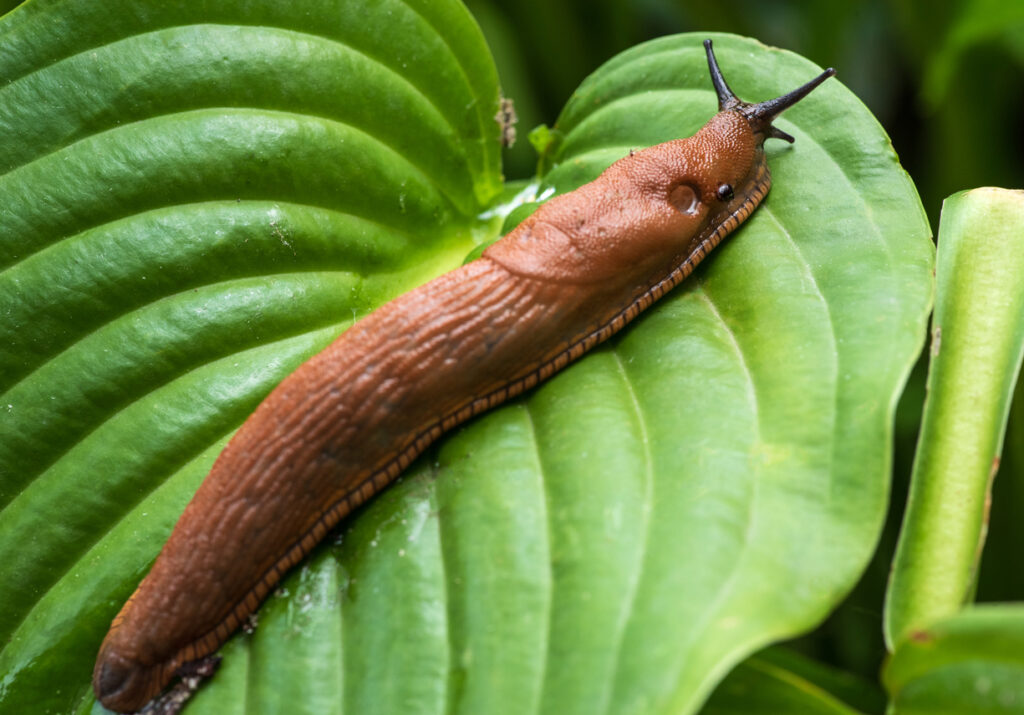
They eat your lettuce, leave silver trails across the patio, and generally get a terrible press. However, slugs are doing a surprising amount of useful work in your garden, and getting rid of them entirely would cause more problems than it solves.
They break down dead and decaying matter.
This is probably the most valuable thing slugs do and the least appreciated. They feed heavily on rotting leaves, decomposing plant material and dead organic matter, breaking it down into smaller pieces that soil organisms and bacteria can then process further. That process returns nutrients to the soil in a form that plants can actually use.
Without decomposers doing this work, dead material would pile up and the nutrient cycle that keeps your garden alive would slow down considerably. Slugs aren’t glamorous about it, but they’re quietly essential to the whole system functioning properly.
They contribute to soil structure.
As slugs move through soil and consume organic material, they leave behind waste that’s rich in nutrients and beneficial to soil health. Their movement also creates small channels and disturbances that help with aeration and drainage, particularly in the upper layers, where a lot of root activity happens.
Healthy soil isn’t just about what’s in it chemically. It’s about structure and texture too, and the activity of creatures like slugs plays a small but real part in maintaining that. Gardens with more diverse invertebrate populations, slugs included, tend to have better soil quality overall.
They’re a critical food source for wildlife.
Hedgehogs, frogs, toads, slow worms, ground beetles, song thrushes and a range of other birds all eat slugs regularly. If you want any of those animals visiting or living in your garden (and most gardeners do) you need a slug population to support them. Remove slugs entirely, and you remove a significant part of the food web that everything else depends on.
The thrush hammering something on your garden path is almost certainly dealing with a slug, and that thrush needs to eat reliably to survive. Slugs are a link in a chain that connects soil health all the way up to the birds you enjoy watching.
They spread fungi and help it establish.
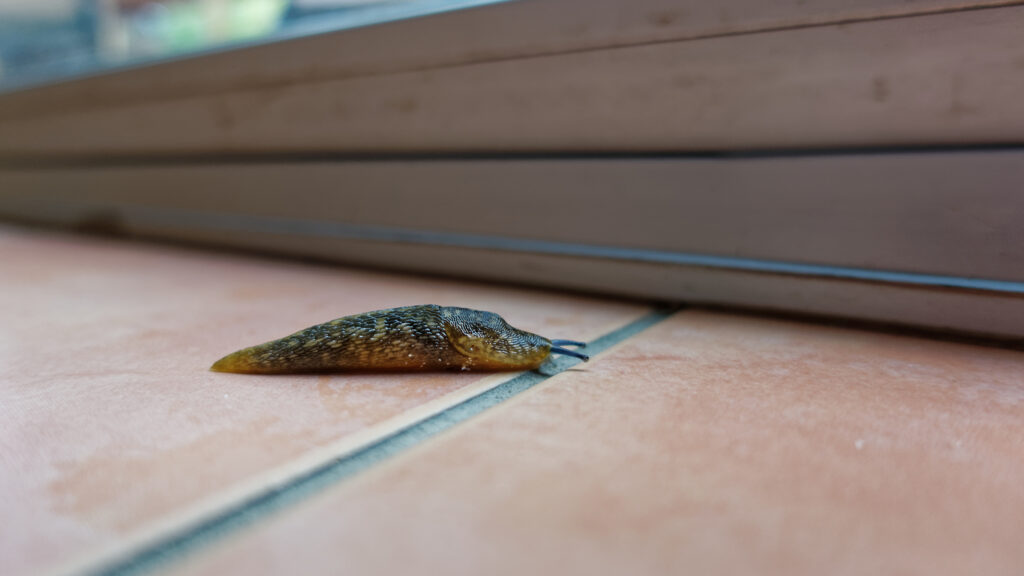
Slugs eat fungi and carry fungal spores in their digestive systems, depositing them as they move around the garden. This helps fungi spread and establish in new areas, which matters more than it might sound. Fungi play a central role in breaking down organic matter and in the underground networks that connect plant root systems to nutrients in the soil. Many plants depend on fungal relationships to thrive, and slugs are one of the mechanisms by which those fungi get distributed across a garden. It’s an unglamorous delivery service but an effective one.
They eat other slugs and eggs.
Not all slugs are after your hostas. Several species, including the large black slug that looks the most alarming, actually prefer decaying matter and will also eat the eggs and smaller individuals of other slug species. So the big slug you find under a pot and immediately panic about may well be doing crowd control on the rest of the population.
Blanket slug removal disrupts this natural regulation and can sometimes make the problem worse by eliminating the species that were keeping numbers in check while leaving the more destructive plant-feeding species to fill the gap.
They help cycle nutrients back into the soil.
Beyond just breaking down dead matter, slugs actively contribute to nutrient cycling in ways that have measurable effects on soil fertility. Their waste products, combined with their own bodies when they die, return nitrogen, phosphorus and other compounds to the soil.
In a garden that’s managed with some restraint around pesticide use, this contribution is part of a broader system of natural fertility that reduces the need for added feeds and amendments. It’s a slow, undramatic process, but it’s happening constantly under the surface of any reasonably healthy garden.
They clean up rotting fruit and vegetables.
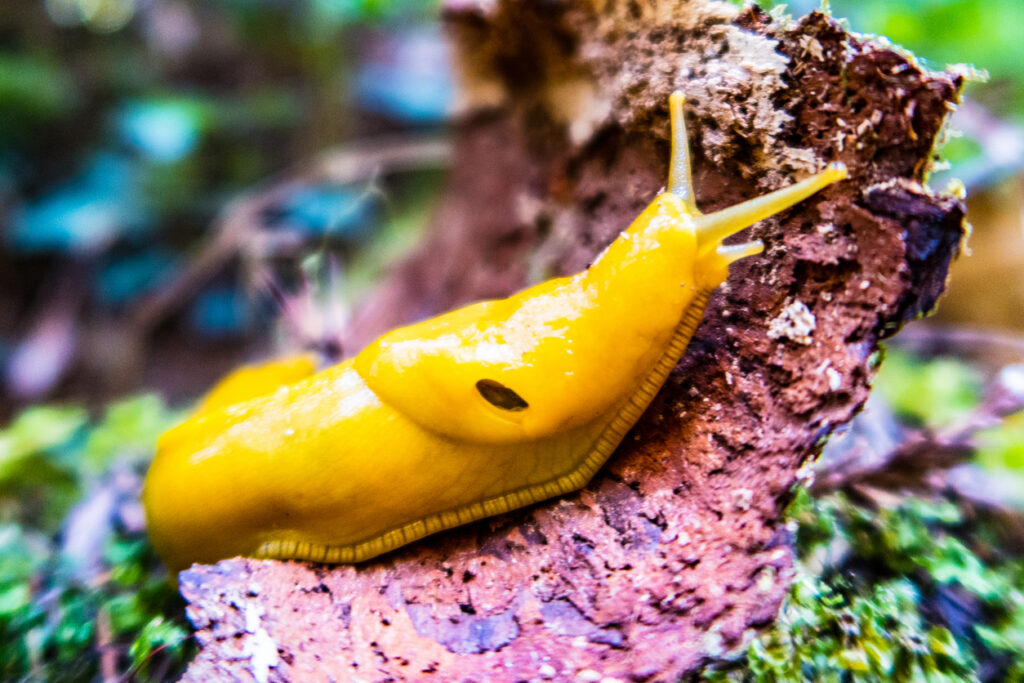
Fallen fruit, overripe vegetables left in the ground, and the outer leaves that get pulled off brassicas are things slugs deal with efficiently. Left to accumulate, decaying plant material can harbour disease, attract pests and generally make a mess.
Slugs act as a clean-up crew for the things that would otherwise just sit and rot. In a kitchen garden particularly, where there’s always something going over or being discarded, having a population of slugs working through that waste is genuinely useful rather than something to fight against.
They indicate soil health.
The presence of slugs, along with worms, beetles and other invertebrates, is generally a sign that your soil is biologically active and reasonably healthy. Heavily compacted, chemically treated or nutrient-depleted soil tends to support fewer of these creatures.
Gardeners who regularly see a diverse range of invertebrates, even the unpopular ones, are usually working with soil that has good organic matter content and a functioning ecosystem. In that sense, slugs aren’t just contributing to soil health. They’re a useful indicator of it.
They aerate and turn the upper layers of soil.
Slugs spend a lot of time moving through the top few centimetres of soil, particularly in damp conditions. That movement disturbs and loosens the upper layers in a small but consistent way that complements what earthworms do deeper down.
In a garden that isn’t being mechanically dug, the activity of soil-dwelling invertebrates is the main thing keeping the upper profile from compacting solid. Slugs contribute to that physical turnover quietly and continuously, particularly through autumn and winter, when they’re most active just below the surface.
Working with them is more effective than fighting them.
The most slug-damaged gardens are often the ones where gardeners have tried hardest to eliminate them because that approach disrupts the natural predator population and the soil ecosystem at the same time.
Encouraging hedgehogs, frogs and ground beetles, growing plants that slugs don’t favour, using physical barriers around genuinely vulnerable plants, and accepting that some damage is simply part of gardening—these approaches tend to produce better long-term results than reaching for pellets. Slugs have been in gardens far longer than gardeners have, and they’re not going anywhere. Working with that reality is considerably more sustainable than fighting it.