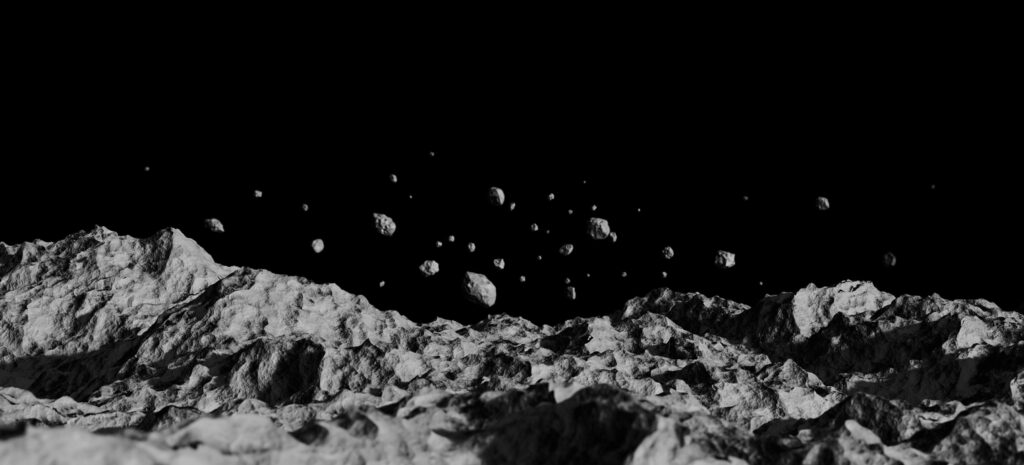
For decades, we’ve treated the moon like a giant, frozen time capsule, but the rocks brought back by astronauts and robotic probes are finally starting to tell a much messier story. It turns out that those grey, dusty stones hold the secrets to everything from how the Earth survived its early years to why the moon has two completely different faces.
Recent breakthroughs in 2026 have even settled long-standing rows about the moon’s magnetic field, proving it wasn’t just a dead rock but had brief, powerful “heartbeats” of magnetism. By poking and prodding these samples, scientists have moved past the old idea of a simple, boring satellite and started uncovering a history filled with massive collisions, hidden volcanic activity, and even the potential to build future homes out of lunar dust.
They confirmed how the Moon was formed.
Before Apollo missions brought back physical samples, the origin of the Moon was genuinely contested. Several competing theories existed and none could be properly tested. The rocks changed that. Their chemical composition turned out to be remarkably similar to Earth’s mantle, but with key differences that pointed clearly towards one explanation: a massive object, roughly the size of Mars, collided with the early Earth around 4.5 billion years ago, and the debris from that impact eventually coalesced into the Moon. Without the rocks, that theory would have remained one possibility among several rather than the accepted explanation it is today.
They told us the Moon was once covered in molten rock.
Among the samples brought back were minerals called anorthosites, pale-coloured rocks that only form in very specific conditions. Their presence indicated that the early Moon was almost entirely molten, covered in what scientists now call a magma ocean that gradually cooled and solidified over millions of years. The lighter minerals floated to the surface as it cooled, which is why the lunar highlands look the way they do. That finding reshaped understanding of how rocky planets and moons develop in their earliest stages.
They gave us a reliable clock for the solar system.

Moon rocks are extraordinarily useful for dating purposes because the Moon has no weather, no tectonic activity and no liquid water to destroy or alter them. They preserve their original chemical signatures in a way that rocks on Earth simply don’t. By measuring the decay of radioactive elements within the samples, scientists were able to establish precise ages for different lunar features and use those dates to calibrate timelines for events across the entire solar system. Impact craters on the Moon became a kind of geological reference point for understanding bombardment history elsewhere.
They revealed a period of intense bombardment.
Analysis of the ages of impact melts in the samples pointed to a period around 3.9 billion years ago when the inner solar system was pelted by an unusually high number of large objects. This event, now called the Late Heavy Bombardment, left its mark on the Moon, Mercury, Mars, and Earth.
Because the Moon preserves that record so well, the rocks were crucial in establishing that this period actually happened and roughly when. It also raised significant questions about what conditions on early Earth would have been like during the same period, including what that meant for the emergence of life.
They showed the Moon is essentially dry, but not entirely.
Early analysis of Apollo samples found them to be extraordinarily dry compared to rocks on Earth, which reinforced the idea that the Moon had no water to speak of. That picture has gradually become more complicated. Later, more sensitive analysis of the same and additional samples detected trace amounts of water locked inside volcanic glass beads, suggesting that the Moon’s interior isn’t quite as dry as originally thought. Combined with observations of water ice in permanently shadowed craters at the poles, the story of water on the Moon has turned out to be considerably more nuanced than the first samples suggested.
They helped explain why the two sides of the Moon look so different.
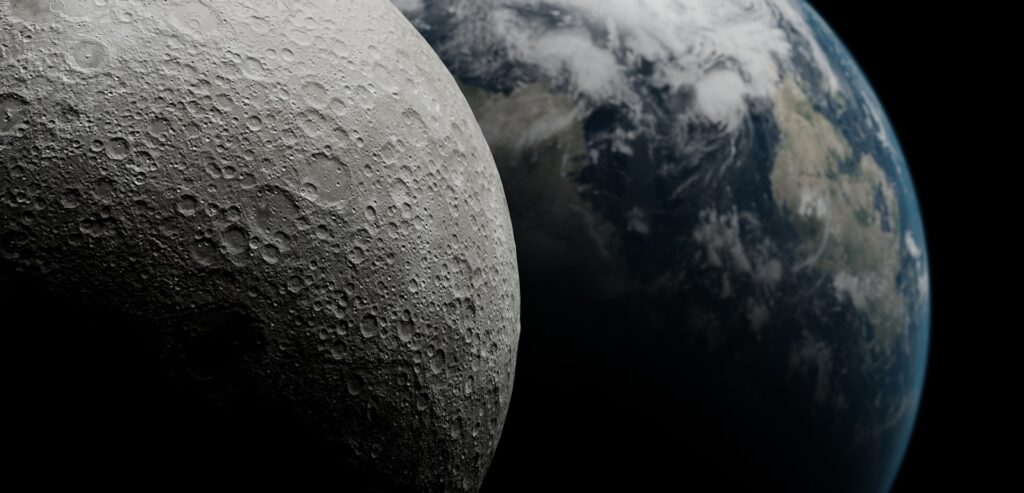
The near side of the Moon, the one that always faces Earth, is covered in large dark plains called maria, formed by ancient volcanic lava flows. The far side is more heavily cratered and has far fewer of these features. The rocks helped explain this asymmetry by revealing differences in the thickness of the crust between the two hemispheres and in the distribution of heat-producing elements beneath the surface. The volcanic activity that created the maria was concentrated on the near side because the underlying conditions were different, and the samples provided the chemical evidence to support that conclusion.
They contain a record of solar activity going back billions of years.
Because the Moon has no magnetic field and no atmosphere to shield it, the surface is bombarded directly by particles from the Sun. Over billions of years, those particles have become embedded in the outermost layers of lunar rocks and soil. Studying that trapped material gives scientists a record of how the Sun has behaved over geological time, including changes in solar wind intensity and composition that no Earth-based record could provide. It’s essentially a long-term archive of our star’s history sitting on the surface of our nearest neighbour.
They changed what we know about volcanic activity on the Moon.
The dark maria covering parts of the near side are the result of ancient volcanic eruptions, and the rocks collected from those regions gave scientists a detailed picture of when and how that activity occurred. Most of it happened between about 3 and 3.5 billion years ago, though some evidence suggests volcanic activity continued in a reduced form much more recently than that. The composition of the basaltic rocks from these regions also revealed details about conditions deep within the lunar interior, information that would be impossible to obtain any other way.
They’ve informed how we think about other planets.

The techniques and frameworks developed to study Moon rocks have been applied far beyond the Moon itself. Understanding how to read the geological history of a body with no atmosphere or active geology became a template for interpreting data from Mars, Mercury and various moons and asteroids across the solar system. In that sense, the scientific value of the lunar samples extends well beyond what they tell us about the Moon specifically. They essentially provided the training ground for planetary geology as a discipline.
They’re still giving up new information today.
A significant portion of the material brought back from the Moon has never been opened. Samples were deliberately set aside in storage for future scientists with better tools and techniques than were available at the time of collection. That foresight has paid off. Advances in analytical technology have allowed researchers to extract information from the existing samples that simply wasn’t detectable decades ago, and sealed containers opened in recent years have yielded findings that add new layers to what was already known. The Apollo samples alone are likely to keep producing new science for generations, which makes them one of the most enduringly valuable collections of material ever assembled.