
Most plants sit quietly and wait for sunlight, water and nutrients. Carnivorous plants do something far stranger. They still use photosynthesis like any other plant, but they’ve evolved clever ways to trap and digest insects, and sometimes even small animals, to survive in poor soil. Here are ten that have turned the tables.
The Venus flytrap and its snap shut trap
The Venus flytrap is probably the most famous meat-eating plant. Its leaves form two hinged lobes lined with tiny trigger hairs. When an insect brushes those hairs more than once within seconds, the trap snaps shut in a fraction of a second. It’s not random. The plant “counts” touches to avoid wasting energy on raindrops or debris.
Once closed, the edges seal tightly and digestive enzymes break down the prey over several days. The plant absorbs nutrients like nitrogen and phosphorus, which are often scarce in the boggy soil where it grows. After digestion, the trap reopens, leaving behind only the indigestible bits.
Pitcher plants and their slippery death cups
Pitcher plants grow leaves shaped like deep tubes or cups filled with digestive liquid. Insects are drawn in by nectar and bright colours near the rim. The inner walls are often waxy and extremely slippery, so once prey falls in, climbing out is nearly impossible.
Some species even have downward pointing hairs that guide insects deeper into the trap. The trapped prey eventually drowns in the fluid at the bottom, where enzymes and bacteria break it down. The plant then absorbs the nutrients through the liquid.
Sundews and their sticky tentacles
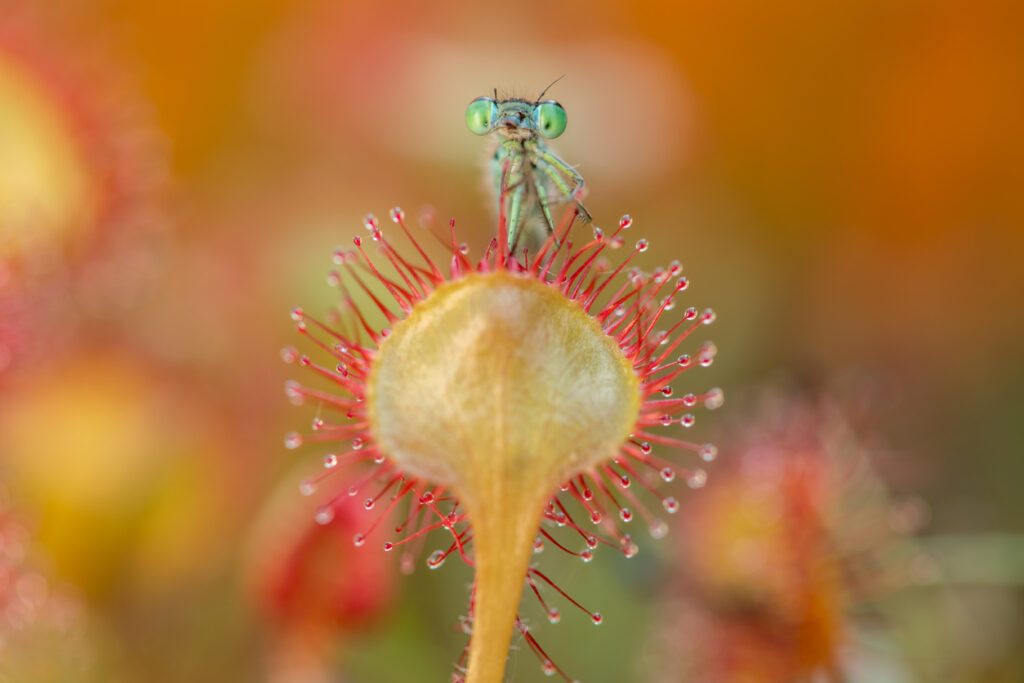
Sundews look delicate, with leaves covered in tiny red tentacles tipped with sparkling droplets. Those droplets are sticky mucilage that glistens like dew in the sun. When an insect lands, it becomes stuck almost instantly. The surrounding tentacles slowly bend inward, wrapping the prey in a sticky embrace. Over hours, the leaf may curl further around it. Digestive enzymes are released, and the plant absorbs the nutrients once the insect is broken down.
Butterworts and their glue coated leaves.
Butterworts have flat, bright-green leaves coated in a greasy looking film. That surface is actually covered in sticky glands that trap small insects like gnats and flies. Unlike snap traps, butterworts rely on stillness and patience. When prey sticks, the leaf edges may curl slightly inward to increase contact. The glands release enzymes to digest the insect right on the leaf surface. It’s a simple but effective strategy for plants growing in nutrient-poor soil.
Bladderworts and their underwater suction traps
Bladderworts live in water or very wet soil and use tiny bladder-like traps to capture microscopic prey. These bladders create a vacuum inside by pumping out water. Each trap has a small trigger hair near its entrance.
When tiny aquatic organisms touch the trigger, the trapdoor opens and sucks them in within milliseconds. The door then shuts behind them. The plant digests its prey inside the bladder and absorbs the nutrients, making it one of the fastest plant movements known.
Cobra lilies and their confusing tunnels
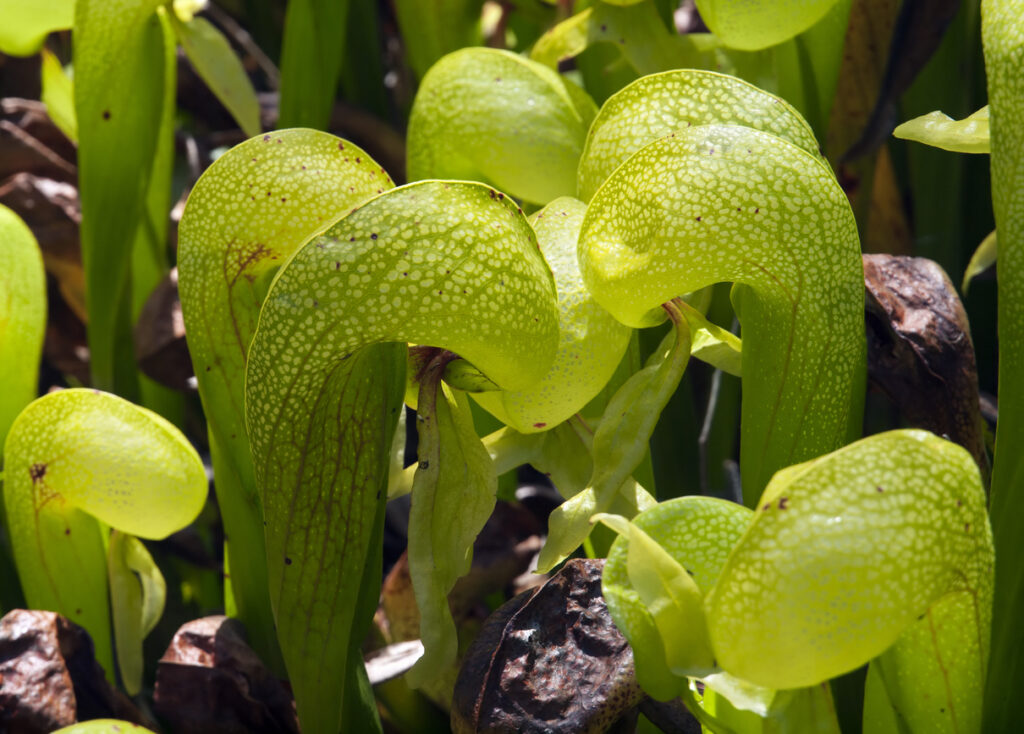
Cobra lilies have tubular leaves shaped like a striking snake, complete with translucent patches near the top. Insects are lured inside by nectar and scent. Once inside, the plant’s design becomes disorienting. Light shining through the translucent areas confuses insects, making them fly toward what they think is an exit. Instead, they exhaust themselves and eventually fall into the lower chamber, where digestion takes place.
Tropical pitcher plants and their large-scale traps
Some tropical pitcher plants grow large enough to trap not only insects but also small frogs, rodents, or lizards. Their pitchers can hold significant amounts of fluid and produce strong scents to attract prey. The rim of the pitcher can become extremely slippery when wet. Once prey falls inside, escape is nearly impossible. These plants rely heavily on captured nutrients to thrive in thin rainforest soils.
The Albany pitcher plant and its side entrance trap
The Albany pitcher plant has a unique side opening rather than a top lid. Insects crawl inside, attracted by nectar. Once in, they struggle to find their way back out because the interior is lined with downward pointing hairs. Unlike some pitcher plants, it does not fill with liquid. Instead, insects become trapped and die inside, where the plant digests them slowly. Its unusual structure makes it one of the more specialised carnivorous plants.
Rainbow plants and their sticky shimmer
Rainbow plants are covered in tiny glandular hairs that sparkle in sunlight. The shine attracts insects, which land and become stuck to the sticky surface. As time goes on, the plant releases enzymes that break down the trapped insects. Although less well known, rainbow plants use a similar glue-based strategy to sundews but with a different structure and appearance.
Waterwheel plants and their underwater snap traps
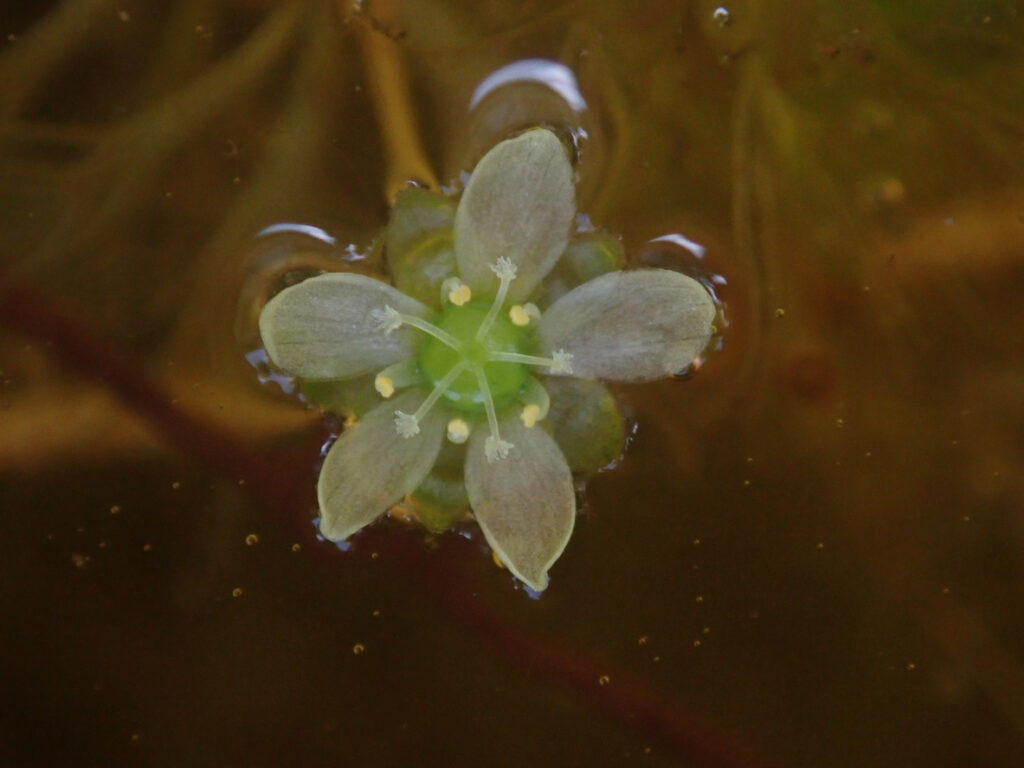
The waterwheel plant uses a trap similar to the Venus flytraps, but underwater. Its small snap traps float freely in water and close quickly when trigger hairs are touched. These traps capture tiny aquatic animals and digest them inside the sealed leaf lobes. Like its famous land relative, it must sense repeated stimulation before fully closing, conserving energy for real prey rather than random movement.
Carnivorous plants evolved because they live in soil that lacks key nutrients. By catching insects and other small creatures, they make up for what their roots cannot find. It is not about aggression. It is about survival in tough environments where ordinary plants would struggle.