We spend most of our lives looking at a world that fits into a fairly predictable palette of greens, blues, and browns.
Every now and then, though, you come across a landscape that looks like it’s been put through a heavy saturation filter or plucked straight out of a surrealist painting. It’s the kind of thing that makes you squint and wonder if your eyes are playing tricks on you because nature generally isn’t supposed to look that vibrant or that odd.
These places often feel like they belong on another planet entirely. Whether it is a lake that looks like a pool of pink milkshake or mountains that appear to have been hand-painted with every colour of the rainbow, the reality is that these aren’t special effects or clever lighting. It usually comes down to some very specific chemistry, unique mineral deposits, or rare bacteria that have decided to turn the local environment into a masterpiece. These locations around the globe prove that the natural world has a much weirder and more brilliant imagination than we give it credit for.
Peru’s Rainbow Mountain looks hand-painted.
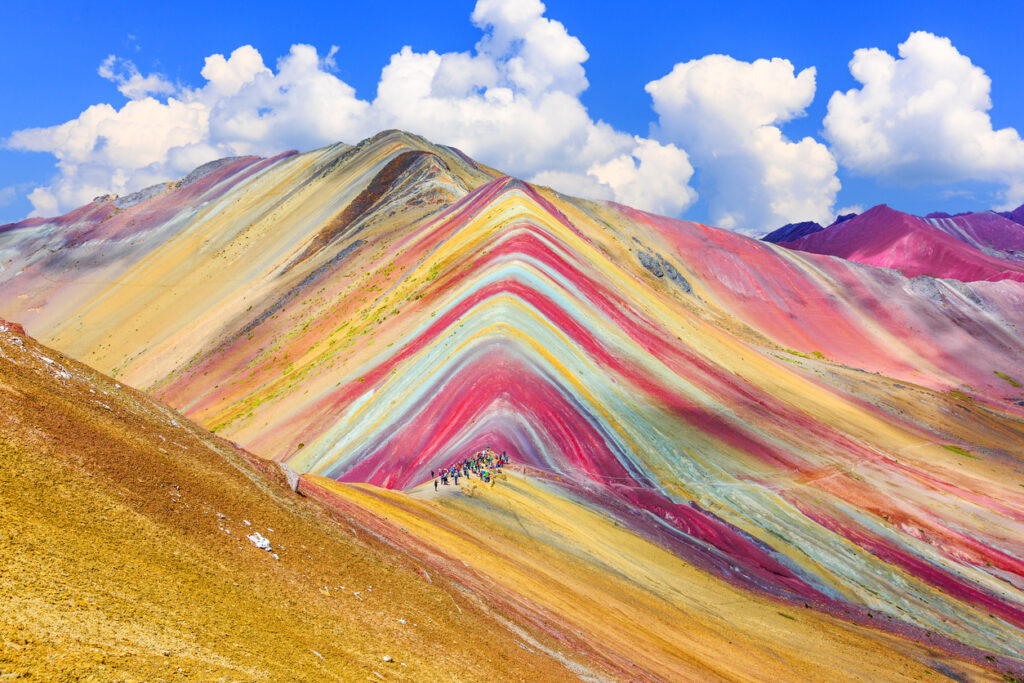
Vinicunca sits over 5,000 metres above sea level in the Peruvian Andes and wasn’t even visible until 2013 when glaciers melted to reveal the multicoloured stripes beneath. The bands of red, turquoise, yellow, and maroon come from different minerals layered over millions of years. Iron creates the rusty reds, copper sulphate produces the greens, and sulphur gives you the golds. The mountain’s position at such high altitude makes the colours appear even more saturated than they would at lower elevations, whilst weathering processes have enhanced the vividness over thousands of years.
China’s Rainbow Mountains resemble spray-painted hills.
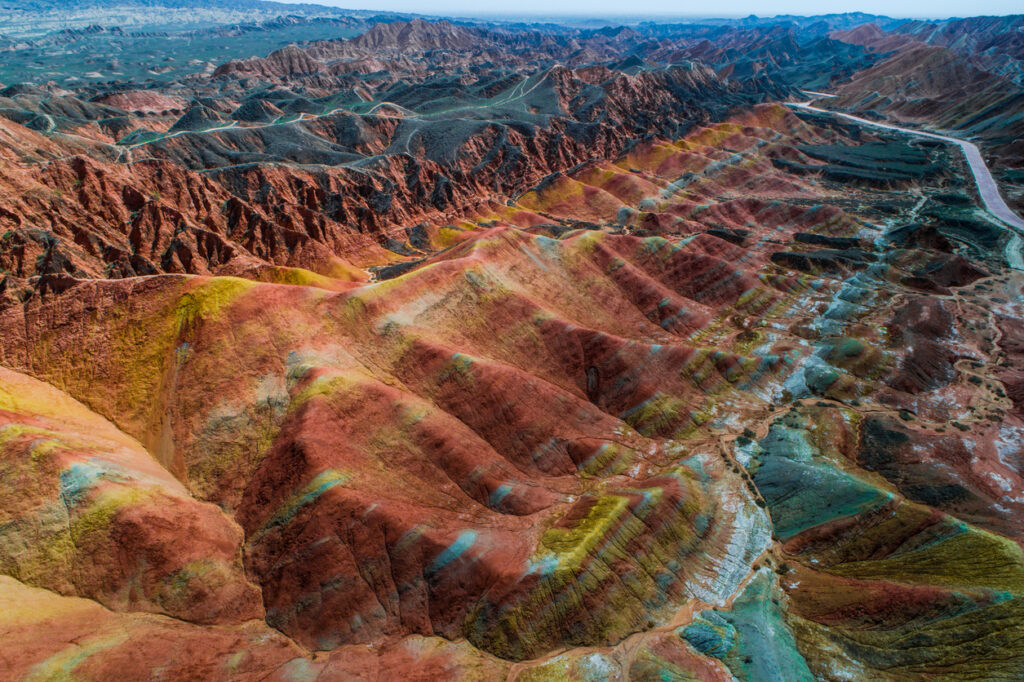
The Zhangye Danxia landforms in Gansu Province look completely unreal with their vivid stripes of orange, red, yellow, and blue cutting across the landscape. These aren’t painted, they’re mineral-rich layers of sandstone and siltstone compressed together over 24 million years. Rainfall intensifies the colours, so they’re most brilliant right after a storm. The formations stretch across roughly 20 miles of the park, and viewing platforms keep tourists from walking directly on them to preserve the colours.
Lake Hillier stays bubble-gum pink permanently.
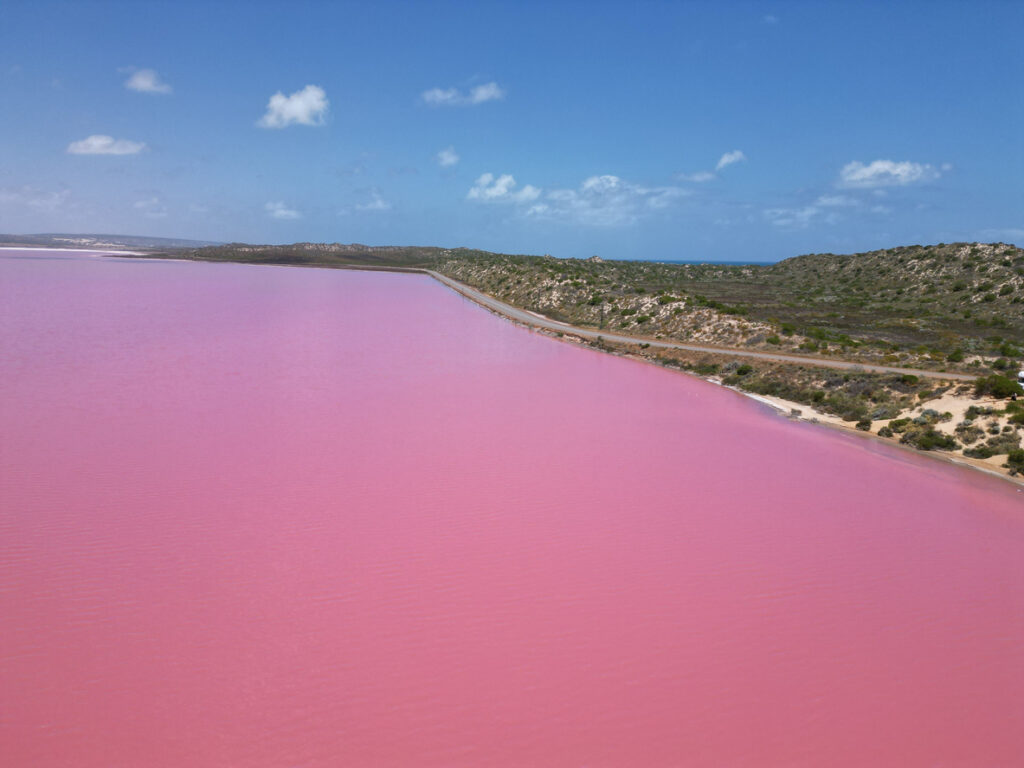
This Australian lake on Middle Island looks like someone dumped pink food colouring into it, but the colour never changes regardless of season or depth. Scientists believe the pink comes from Dunaliella salina algae combined with the lake’s extremely high salt content. What’s wild is that even when you scoop the water into a container, it stays pink rather than turning clear. The lake is surrounded by white sand and sits right next to the turquoise Southern Ocean, creating a surreal colour contrast that looks fake from above.
Yellowstone’s Grand Prismatic Spring contains nearly every rainbow colour.
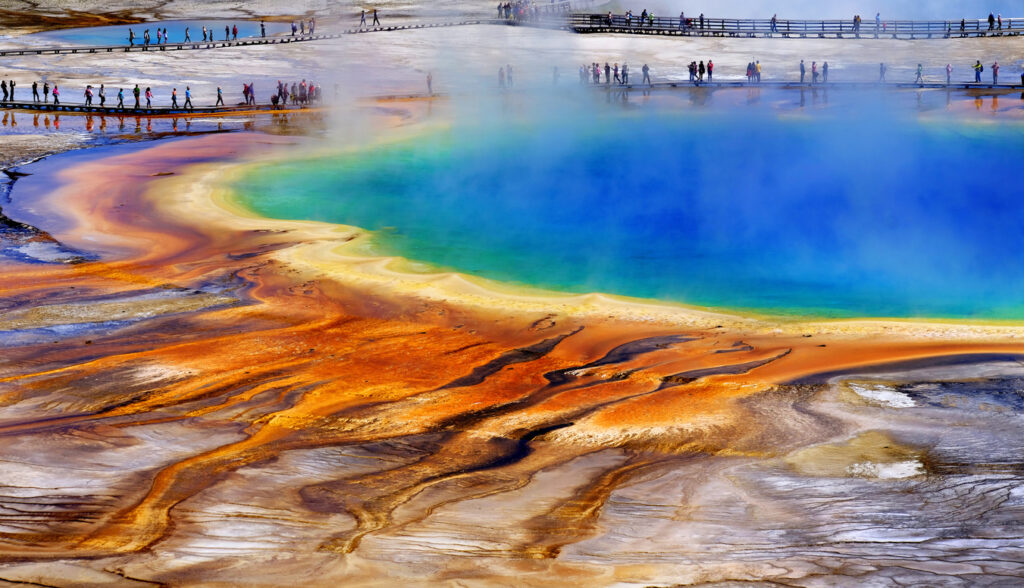
The largest hot spring in the United States is also one of the most technicolour water bodies on Earth. The centre is a deep, brilliant blue caused by how light scatters in the extremely deep water, whilst the edges ring with bands of orange, yellow, green, and red. These outer colours come from thermophilic bacteria forming mats that thrive at different temperatures in various parts of the spring. The bacteria produce different pigments depending on how hot the water is, creating this natural rainbow effect that’s about 370 feet in diameter.
Waitomo Caves glow blue from thousands of living lights.
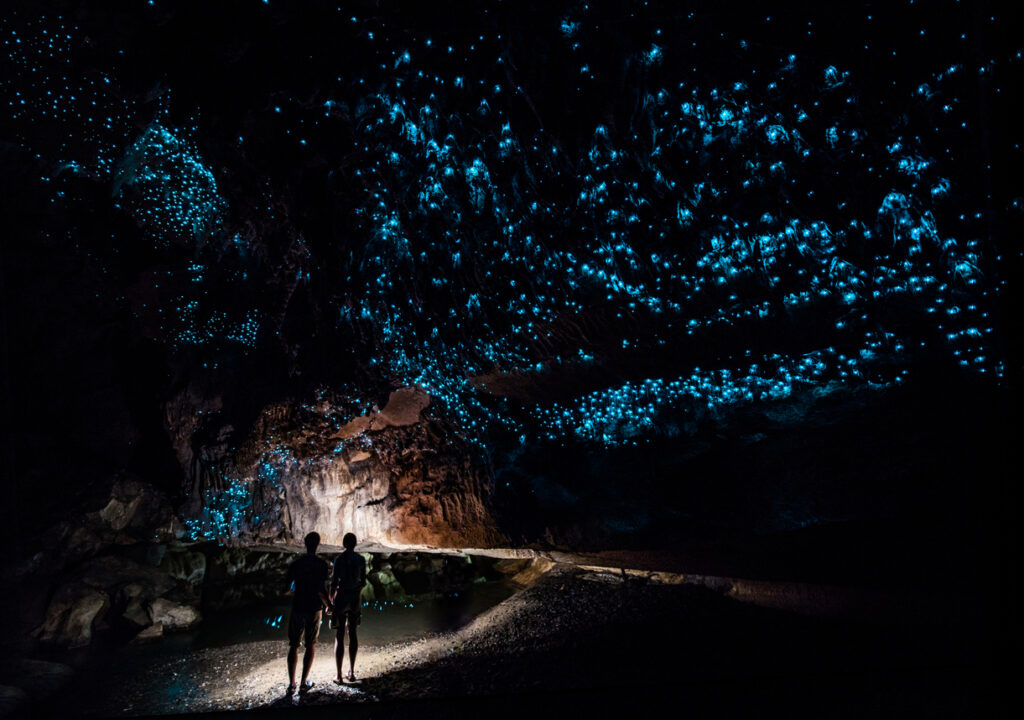
In New Zealand’s limestone caves, the ceiling lights up with blue-green bioluminescent dots that look exactly like stars in the night sky. These aren’t actually worms, but the larvae of fungus gnats called Arachnocampa luminosa, which only exist in New Zealand. The larvae hang sticky threads from the cave ceiling and glow to attract prey, creating a constellation effect when thousands of them cluster together. Visitors float through on boats in complete darkness except for the glowworms, which makes it feel like drifting through space.
Iceland’s Blue Lagoon gets its colour from silica minerals.
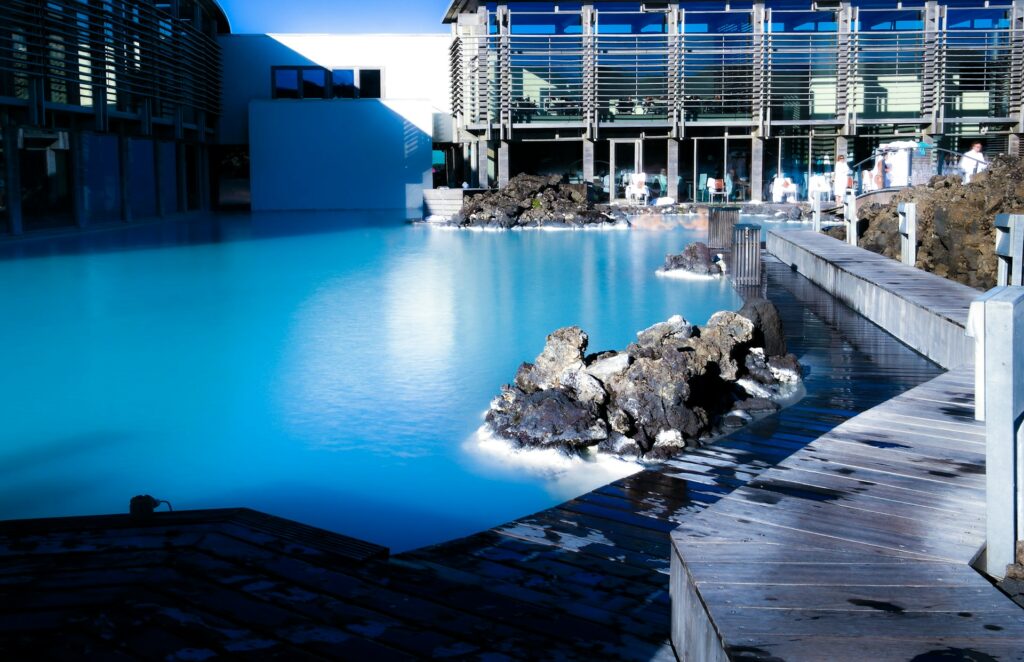
This geothermal spa looks artificially dyed with its milky, sky-blue water sitting in the middle of a dark lava field. The colour comes from silica and other minerals suspended in the geothermal water, which also happens to provide therapeutic benefits for skin conditions. The stark contrast between the bright blue water and the barren black volcanic rock around it makes the whole scene look photoshopped. Despite being a popular tourist destination, the colour is entirely natural and caused by the mineral content rather than any treatment.
Bolivia’s Laguna Colorada is blood-red with pink flamingos.
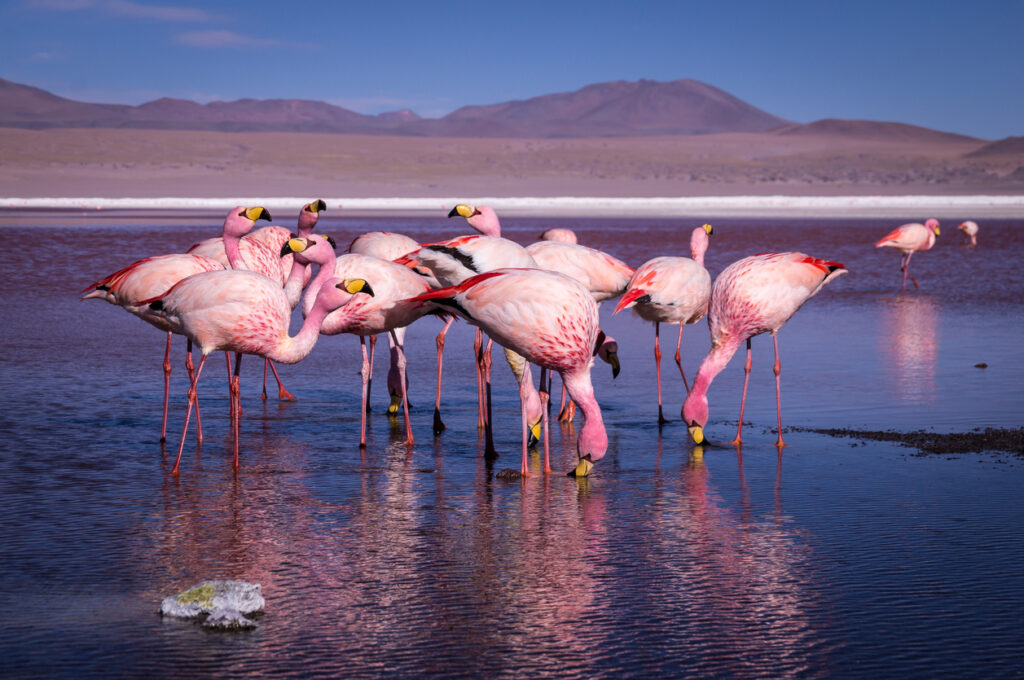
This shallow salt lake looks like it’s filled with rust-coloured water, earning its name, which translates to “Red Lagoon.” The colour comes from red algae and mineral deposits in the brackish water. What makes it even more surreal is that it’s home to three species of flamingos who feed on the algae, so you’ve got a red lake dotted with pink birds. White borax deposits scatter across the surface, creating unexpected bright patches against all that red.
Oregon’s Painted Hills display bands of red, gold, and black.
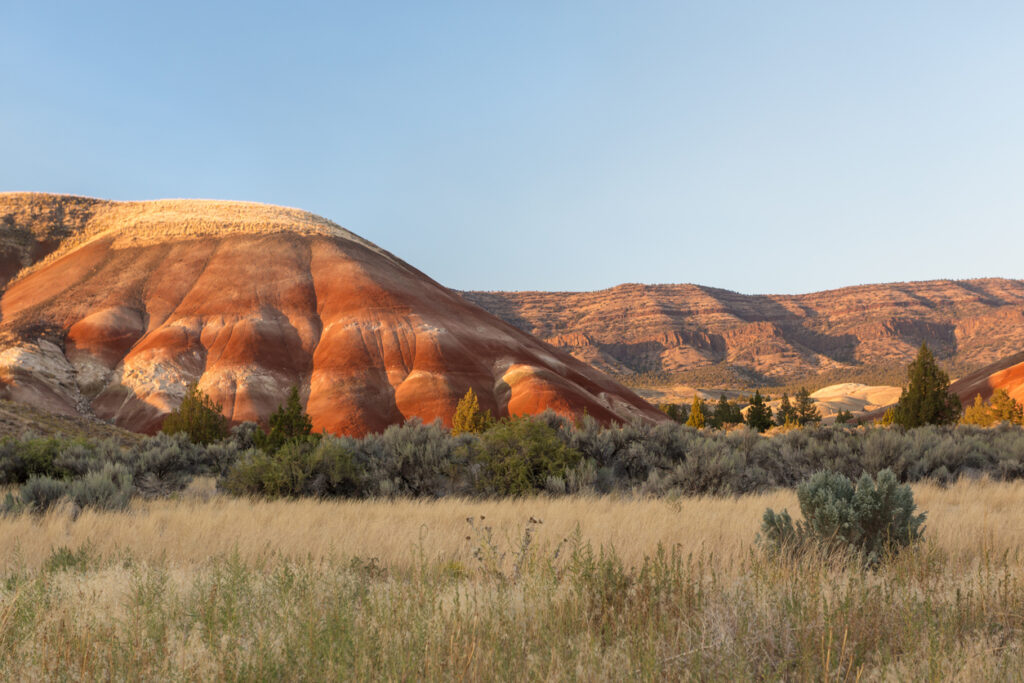
Part of the John Day Fossil Beds National Monument, these hills showcase vivid layers created by climate changes over millions of years. Each coloured band represents a different era, with reds indicating warm periods, golds showing drier times, and blacks marking periods of rapid vegetation growth. The mineral and rock deposits have been dramatically separated by erosion, creating this painted effect across the landscape. The colours shift throughout the day depending on light and weather conditions.
Lake Pukaki in New Zealand is an impossible shade of turquoise.
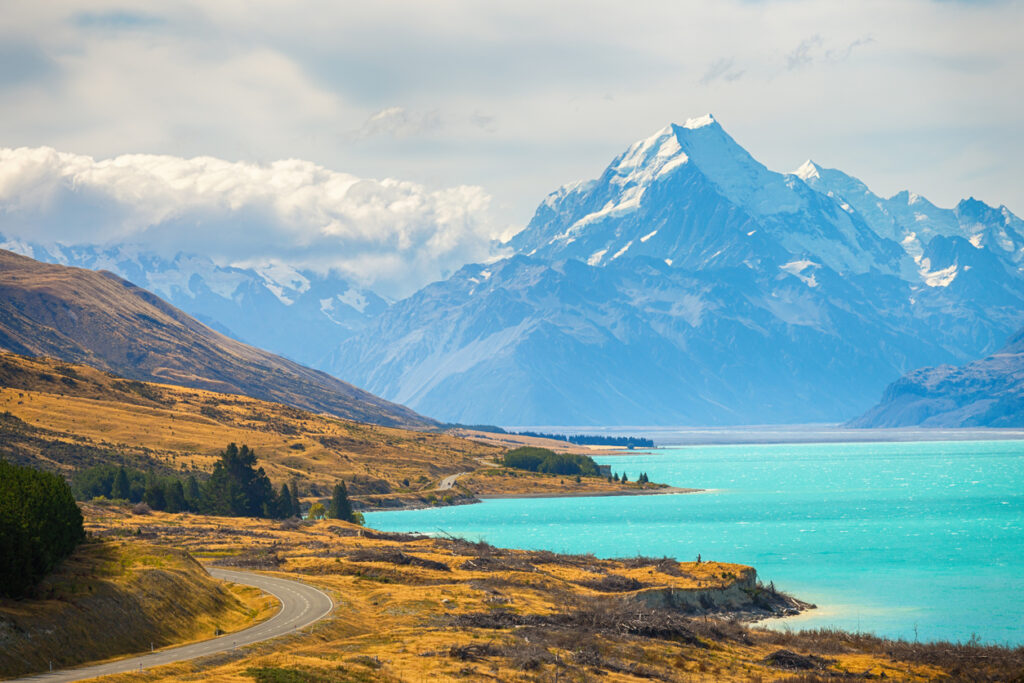
This glacial lake maintains such a striking blue colour that it looks artificially enhanced, but it’s caused by glacial flour suspended in the water. These are tiny rock particles ground down by glaciers that reflect light in a way that creates this brilliant turquoise hue. The colour can vary slightly depending on weather and lighting, but it consistently stays this vivid shade that looks photoshopped against the backdrop of the Southern Alps. It’s the fine sediment that makes all the difference in creating this unnatural-looking natural colour.
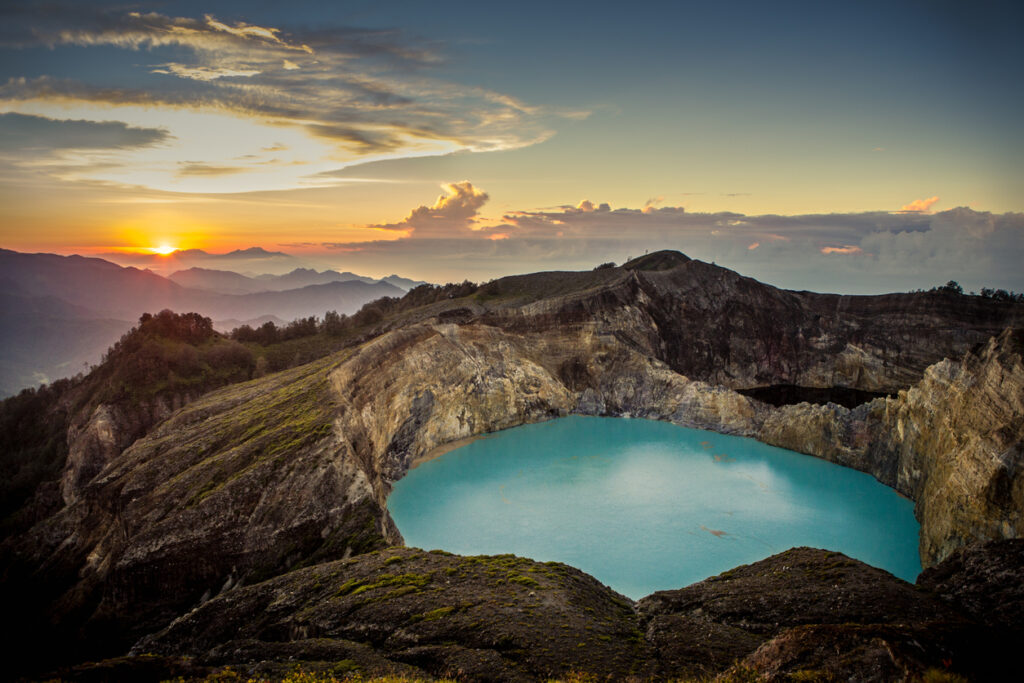
Indonesia’s Kelimutu Volcano has three different-coloured crater lakes.
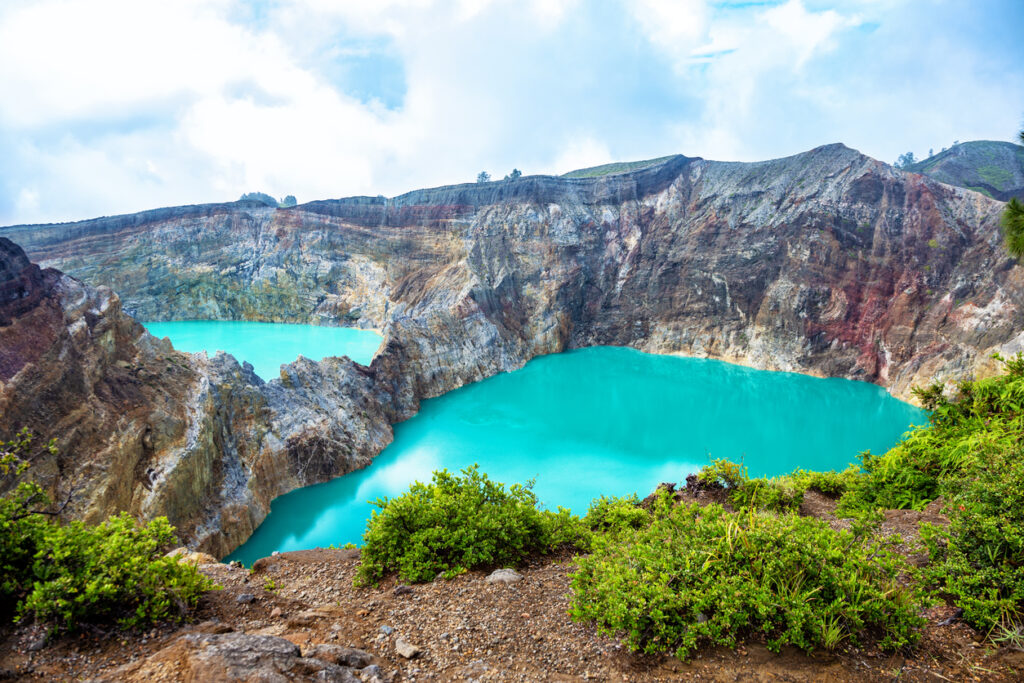
Three summit craters sit at the top of this volcano, each containing a lake that’s a completely different colour from the others. One’s blue, one’s green, and one’s red, and these colours can change over time due to volcanic activity altering the chemical composition of each lake. The lakes sit right next to each other but maintain completely distinct hues because of differences in mineral content and gas emissions. Locals have legends explaining the colours, but the scientific reality is just as fascinating as the folklore.