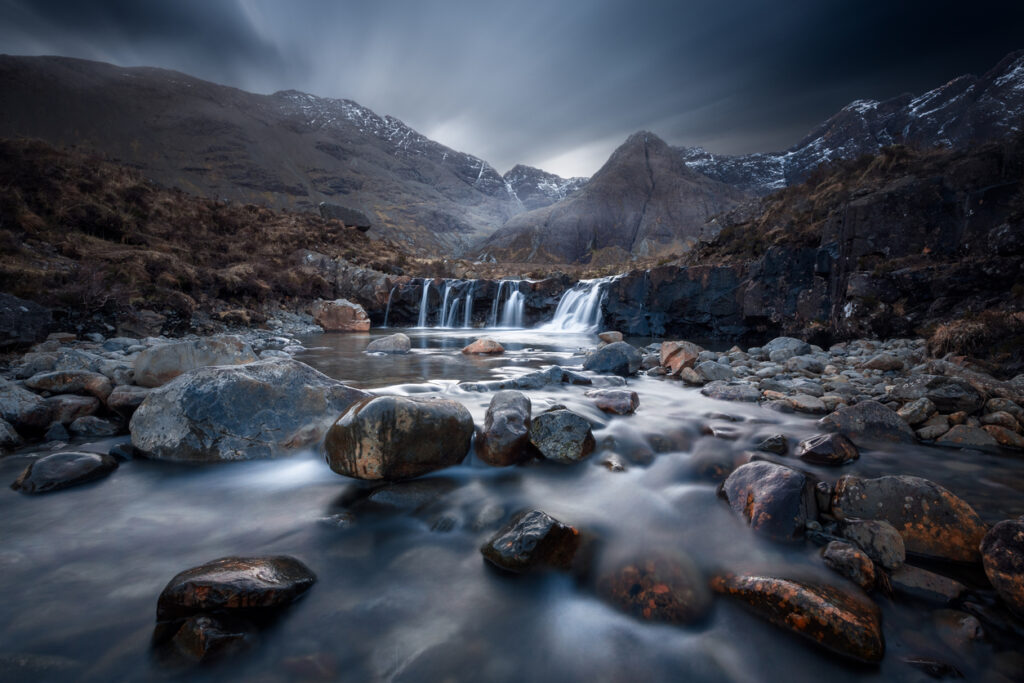
The Isle of Skye is the kind of place that looks like it was designed for a high-budget fantasy film rather than being a real part of the British Isles. From the jagged spikes of the Old Man of Storr to the massive, slipping cliffs of the Quiraing, the landscape has a jagged, restless energy to it that feels completely different from the rolling hills you find elsewhere. It isn’t just a bit of rugged scenery; it’s a place that looks like it has been through a massive, violent struggle, and as it turns out, that’s exactly what happened.
The “broken” look of the island isn’t just down to a bit of wind and rain over the years. The story of Skye is one of massive volcanic eruptions, continents tearing themselves apart, and some of the largest landslides the earth has ever seen. It is a geological crime scene where the evidence is laid out in plain sight, showing how layers of heavy rock literally buckled and snapped under their own weight. These 12 facts about how Skye was formed explain why the island looks so beautifully wrecked and why it’s still moving today.
Skye sits on the scars of an ancient volcanic hotspot.
Around 60 million years ago, Skye was right above one of the most active volcanic regions Europe has ever seen. This wasn’t a single eruption but repeated outpourings of lava that spread across the land, cooled, cracked, and were buried again by fresh molten rock. Layer after layer built up, creating thick stacks of basalt that still dominate the island today.
Those eruptions didn’t just add material. They warped the ground beneath them. Pressure from below forced rock upward, fractured it, and left weaknesses that would later be torn open by erosion. What looks dramatic today started as raw violence underground.
@niamhmackinnon A LOCAL’S GUIDE TO THE ISLE OF SKYE IS OUT NOW 🤍 link in bio 🥹🏴 #travelguide #isleofskye #scottishhighlands #sustainabletravel #localguide #skye #scotland #visitscotland ♬ The Gael – Dougie MacLean
The land was pulled apart as continents moved.
Skye’s chaos isn’t only volcanic. It also comes from being stretched. As the Atlantic Ocean began to form, the land that would become Scotland was slowly pulled away from North America. That stretching cracked the crust like dry clay. Faults opened, blocks of land shifted, and entire sections dropped or tilted. The island’s uneven levels and sudden drops are physical evidence of the ground being pulled in opposite directions over millions of years.
Lava cooled unevenly and cracked into columns.
Basalt doesn’t cool smoothly. As it hardens, it contracts and fractures, often forming vertical columns. These cracks create natural lines of weakness that erosion later exploits. On Skye, those columns were stacked thick and tall. When weather and ice got to work, they broke along those lines, leaving sheer cliffs, stepped slopes, and sharp edges that feel unnatural because they sort of are.
Glaciers carved the island like blunt instruments.
During the last ice ages, massive glaciers sat over Skye, grinding everything beneath them. Ice didn’t just smooth the land. It tore chunks out, deepened valleys, and dragged rock downhill like sandpaper with teeth. As the ice advanced and retreated, it widened cracks and exploited every weakness left behind by volcanism. That’s why Skye’s valleys feel oversized and its cliffs look freshly ripped open.
Landslides reshaped whole hillsides.
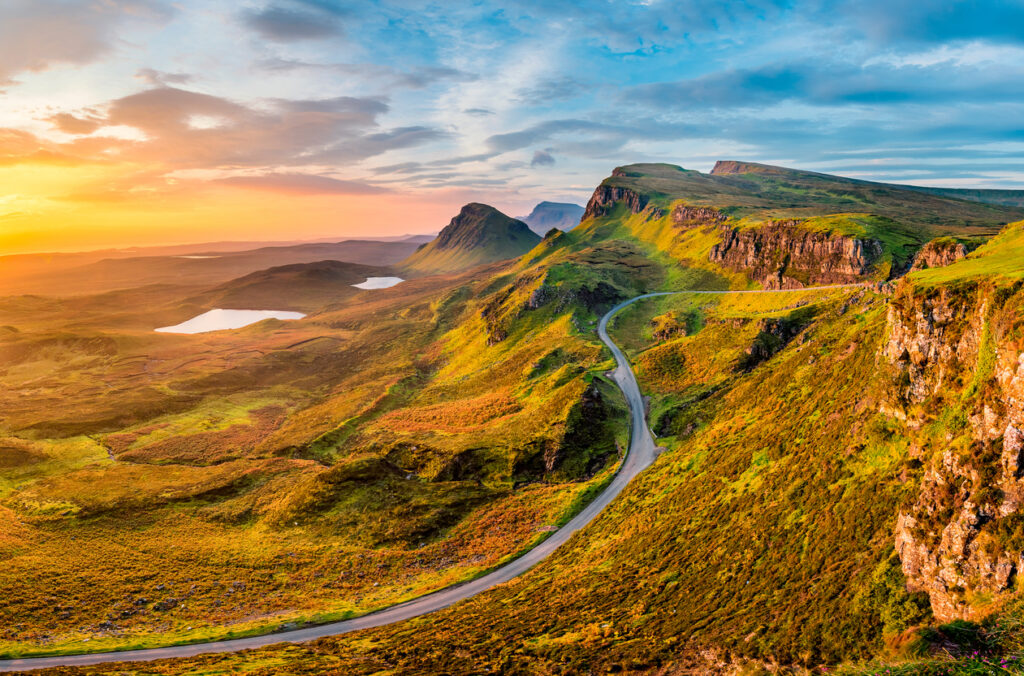
Some of Skye’s strangest features aren’t carved at all. They slid. Areas like the Quiraing are the result of massive landslips where entire sections of land detached and slowly collapsed outward. This happened because hard basalt sits on softer rock underneath. When water gets in, the lower layers weaken and the heavy rock above begins to move. The result is terrain that looks warped, folded, and half-fallen.
Softer rock eroded faster than harder layers.
Skye isn’t made of one uniform material. It’s a messy stack of different rock types, some tough, some fragile. Wind, rain, frost, and salt air attacked the weaker layers first. As softer rock vanished, harder rock was left standing in awkward shapes. That uneven erosion is why Skye looks jagged rather than rounded, like something was stripped away instead of gently worn down.
The Cuillin were never meant to look friendly.
The Cuillin mountains are made mostly of gabbro and peridotite, dark volcanic rocks that weather into sharp edges rather than smooth slopes. These rocks break into blocks and blades, not soft curves. That’s why the Cuillin look aggressive even from a distance. Their broken ridges and knife-like peaks are a direct result of the rock itself resisting erosion in ugly, angular ways.
Weather never stops working the damage.
Skye’s climate finishes what geology started. Constant rain seeps into cracks. Freezing temperatures expand them. Wind scours exposed edges. Salt from the sea eats into rock faces. Nothing gets a rest. Even today, cliffs crumble, slopes shift, and paths change. The island’s broken look isn’t just ancient history. It’s still actively happening.
@castlesofscotland The Isle of Skye 🏴 The locations in order as they appear – 1. Old Man of Storr is a 160-foot pinnacle rock formation situated atop Trotternish Ridge—a peninsula in the northeastern region of the Isle of Skye, created as the result of a colossal landslip. The Storr, which refers to the group of looming outcrops that include and surround the Old Man, is a title derived from the Norse word for “Great Man.” Legend has it that the Old Man of Storr was a giant who resided on the Trotternish Ridge. When he was laid to rest upon his death, his thumb—the “Old Man”—remained partially above ground. 2. The Quiraing is a series of dramatic linear peaks and valleys along the eastern escarpment of the Trotternish peninsular on the Isle of Skye. Local legends also speak of some of the rock formations once being real people that were turned to stone through magic. These include the Prince Storr and the Princess Catriona. Other stories tell of the Lord Quiraing and the lost pot of gold hidden in the valley of echoes; how the area used to be the home of dragons that guarded the island from invaders; and the Table plateau being the meeting place of fairy folk. 3. Sligachan Old Bridge was built in the early 1800s from a design by the engineer Thomas Telford, who was working on various buildings in the Scottish Highlands during this time. 4. Duntulm Castle was originally an Iron Age broch, however the earliest written record of Duntulm Castle comes when King James V visited in 1540 and was said to have been impressed by the castle's strength and the hospitality he was shown here. 5. Armadale Castle was home to the MacDonalds, or Clan Donald, who were Lords of the Isles, and their kingdom covered a vast area of western Scotland. The Clan played a pivotal role in the history of the Highlands, from clan warfare to the Jacobite Rising, and the eventual breakdown of the traditional clan system. Perhaps the most famous visitor to the old mansion house at Armadale was Flora MacDonald, known for her role in helping Bonnie Prince Charlie escape capture. She was married at Armadale Castle in 1750. 6. The Fairy Glen, hidden in the hills of Uig. Described by some as a mini-Quiraing, this small and magical feature of the Island, dotted with gnarled rowan trees, was formed over 100,000 years ago by post-Glacier landslides, while years of erosion and the elements sculpted the Torridonian sandstone into unusual patterns of cone-shaped craggy hillocks, random boulders, tranquil lochans and even a basalt castle. #isleofskye #Scotland #mythology #beautifuldestinations #skye #castle #traveltiktok #explore #outlander #isleofskyescotland #island #scottishtiktok #scotlandtiktok #fyp #landscape #oldmanofstorr #nature ♬ original sound – tarahowleymusic
The sea keeps biting into the edges.
Wave action along Skye’s coast undercuts cliffs relentlessly. Over time, entire faces collapse into the water, retreating the coastline and leaving sheer drops behind. Sea erosion exaggerates the island’s drama. Inland damage looks violent. Coastal damage looks abrupt. Together, they make the island feel unfinished and unstable.
Skye shows what happens when land never fully settles.
Some landscapes feel old and calm, like they’ve accepted their shape. Skye doesn’t. It looks like a place frozen mid-collapse because, in many ways, it is. Volcanoes tore it open. Ice ripped through it. Gravity dragged it downhill. Weather keeps picking at the wounds. What you see today isn’t a single event. It’s the result of millions of years of stress layered on top of stress, with no final smoothing stage to make it polite.