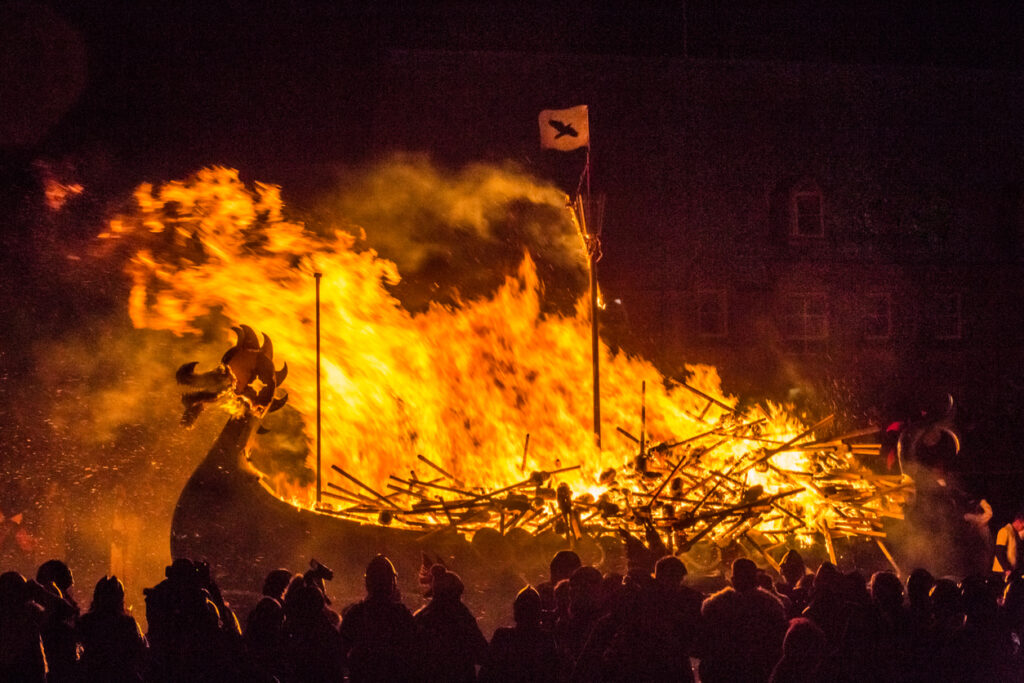
If you’ve ever seen photos of Up Helly Aa, you’ve probably seen the iconic image of a crowd of people dressed as Vikings standing around a wooden longship while holding flaming torches. It looks like a scene pulled straight out of a history book, an ancient ritual that has been passed down through the generations in the Shetland Islands since the days of the Norse invaders. It is a massive, fiery celebration that draws people from all over the world, but the version of the story most people are told is actually a bit of a myth.
The real history of how this festival came to be is a lot weirder and more chaotic than the polished “Viking” image suggests. It isn’t a tradition that has existed since the Middle Ages; it actually started as a way for local young men to blow off steam and cause a bit of havoc in the streets of Lerwick. The Viking costumes and the burning of the galley were actually much later additions to what was originally a pretty rowdy and messy winter street party. These 12 facts reveal the strange, surprising, and often hilarious truth about how Up Helly Aa actually started and why it’s not as ancient as it looks.
Up Helly Aa isn’t ancient at all, it’s a Victorian invention from 1876.
Despite all the Viking costumes and Norse themes, the festival in its current form is younger than the Eiffel Tower and was created during Queen Victoria’s reign. The modern torchlit procession we see today only started in the late 1800s, so anyone telling you this is some sacred ritual handed down from the Vikings is completely wrong. The Vikings did live in Shetland centuries ago, but they had nothing to do with starting this particular celebration.
@rhomejilli Not a Movie, This Is Scotland’s Real Fire Festival #UpHellyAa #VikingFestival #FireFestival #Scotland #LearnOnTikTok ♬ original sound – Planet WTF
It was started by the Total Abstinence Society to stop blokes getting drunk.
The festival was literally invented by temperance campaigners trying to give young men something to do instead of drinking themselves silly every January. Victorian do-gooders in the 1870s were fed up with the chaos and wanted to channel all that energy into something more organised and less destructive. The irony is that nowadays the celebration involves quite a lot of drinking at the halls after the galley burning, though officially some halls still claim to be dry.
Before Up Helly Aa, young men dragged burning tar barrels through the streets.
They’d set barrels of tar on fire, drag them through town on sledges causing absolute chaos, and sometimes leave them on the doorsteps of people they didn’t like as a sort of fiery revenge. This practice, called tar barrelling, was basically organised mayhem where gangs of young lads would wreak havoc across Lerwick. The whole thing was incredibly dangerous and regularly got completely out of hand.
The police had to be called in regularly to stop gun-wielding drunks.
Special constables were brought in to curb trigger-happy blokes firing guns in the air during the celebrations, which is why authorities were desperate to change things. The combination of blazing tar, alcohol, and firearms was obviously a disaster waiting to happen. Concern over public safety and levels of drunkenness eventually led to tar barrelling being abolished around 1874 to 1880.
Bored soldiers returning from the Napoleonic Wars started the whole mess.
The catalyst for the tar barrel madness was young men coming home from fighting abroad and wanting to recreate the spectacles they’d seen in other countries. They’d experienced exciting celebrations during their time away and Shetland felt boring by comparison, so they decided to create their own version. According to the Shetland Museum, this boredom after returning from war was what kicked off the whole tradition of chaotic fire-based celebrations.
The Viking theme came from a book written in 1894, not ancient tradition.
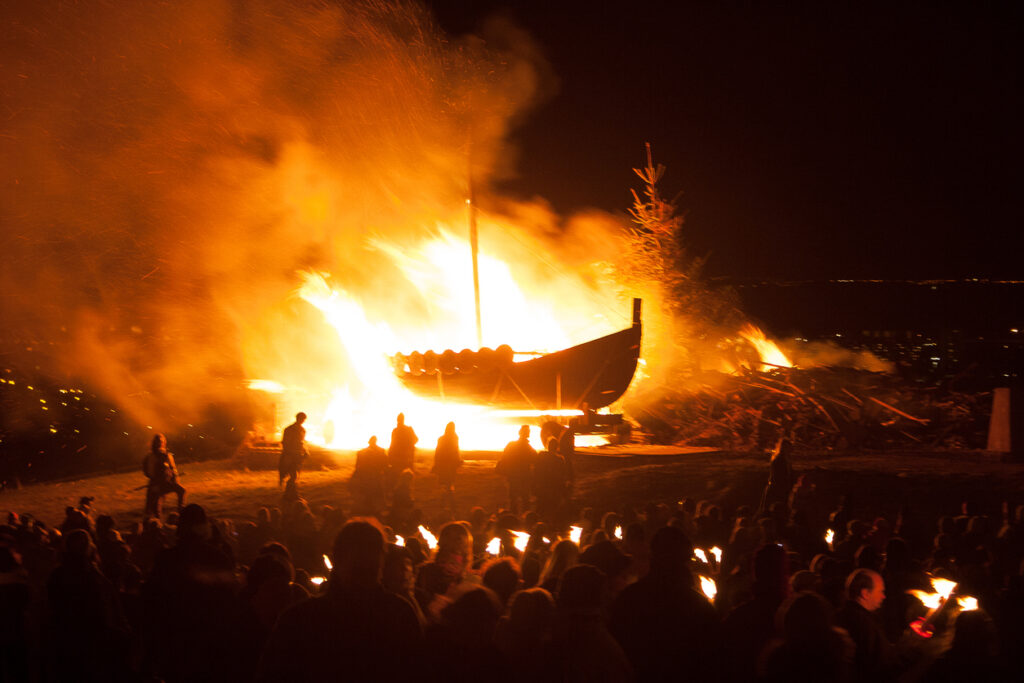
Author Haldane Burgess wrote “The Viking Path” which created the Norse theme we see today, and he also wrote the Up Helly Aa Song that’s still sung at the burning. Before Burgess came along, the celebration didn’t really have a coherent Viking identity. The honorary role of the Jarl, which is now central to the whole thing, was only introduced in the early twentieth century.
Women were completely banned from the main festival until 2023.
The Lerwick festival was men-only for over a century, though some brave women snuck into the 1901 march disguised in costumes and got away with it. Smaller rural festivals started including women earlier, with the South Mainland Up Helly Aa even appointing a female Jarl back in 2015. Starting from the 2023 festival, restrictions on women’s participation within squads in Lerwick were finally removed after more than 140 years.
The name has nothing to do with Vikings, it’s from lowland Scots.
Up Helly Aa comes from Upholiday, the lowland Scots word for Twelfth Day, which was brought to Shetland by Scottish settlers in the 19th century. The word “up” is used in the sense of something being at an end and derives from Old Norse, while “helly” refers to a holy day or festival. So while there are Norse linguistic roots, the actual name isn’t some ancient Viking battle cry.
@clairesfootstep UP HELLY AA SHETLAND 🔥 Have you heard of Up Helly Aa in Shetland? It's a fascinating fire festival with Viking influences and is definitely one of the best things to do in Shetland! #shetland #bressay #uphellyaa ♬ original sound – Claire: travel blogger 🌏
You have to live in Shetland for five years before you can carry a torch.
The festival is open to visitors to watch, but if you want to actually participate in the procession, you need to have been a resident for at least five years. This rule keeps the festival firmly rooted in the local community and prevents random tourists from just rocking up and joining in. Nearly 1,000 torch-bearers take part each year, and every single one of them has earned their place through years of living on the islands.
Only the Jarl Squad wears Viking dress, everyone else wears ridiculous costumes.
While the lead squad rocks the Norse warrior look with helmets and armour, the rest of the nearly 1,000 torch-bearers dress in costumes ranging from sublime to absolutely mental. The themes change every year and squads spend months preparing their outfits, which can be anything from movie characters to political satire. The variety is part of what makes the procession so visually spectacular, even if it’s not particularly historically accurate.