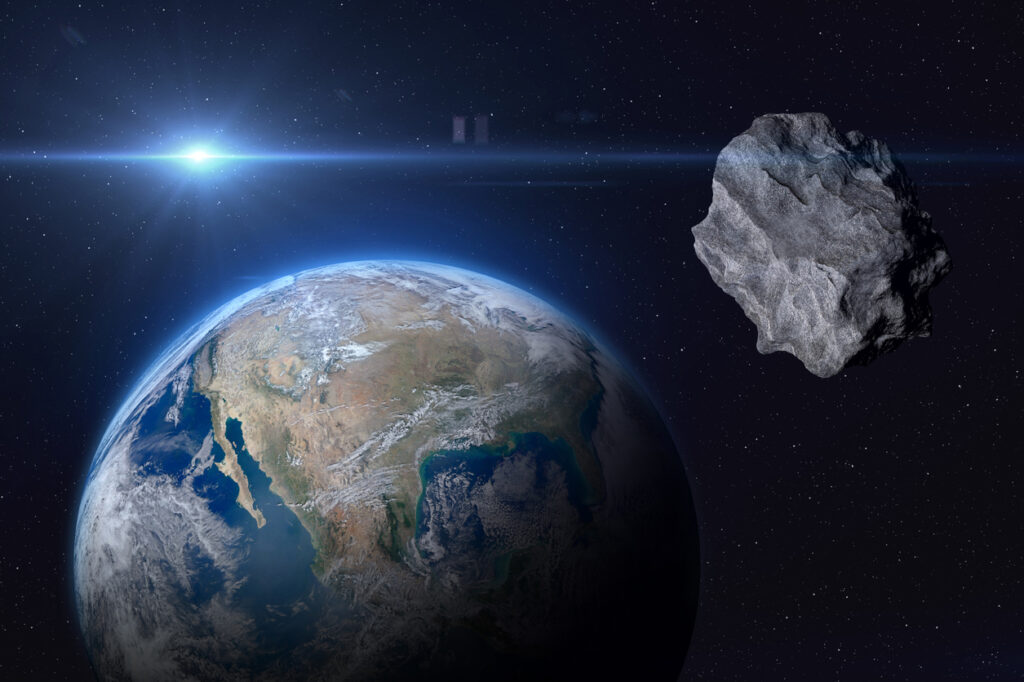
In a remarkable scientific breakthrough, NASA has confirmed that samples returned from asteroid Bennu contain all five nucleobases used to build DNA and RNA, alongside 14 amino acids essential for life as we know it. These findings, published in peer-reviewed journals including Nature and Nature Astronomy, add weight to the theory that the basic ingredients of life may have formed in space and arrived on Earth via ancient asteroids. As NASA reported, the OSIRIS-REx mission collected these samples during its close encounter with Bennu in 2020, and they were returned to Earth in 2023.
The building blocks of life, specifically adenine, guanine, cytosine, uracil, and thymine, were identified inside briny mineral deposits in the asteroid’s dust and rocks. This suggests Bennu, or its ancient parent body, once hosted small bodies of water. According to NASA’s own findings, these liquid environments may have supported the kind of prebiotic chemistry that eventually sparked life on Earth. What makes the discovery even more intriguing is that these same organic molecules are unevenly distributed in meteorites found on Earth, meaning Bennu’s untouched samples provide a much clearer record of what space was like four billion years ago.
Bennu is a time capsule, and it’s rewriting what we know about life’s origins.

Bennu is no ordinary space rock. It’s a carbon-rich asteroid, roughly 500 metres in diameter, thought to be more than 4.5 billion years old. Scientists believe it broke off from a larger parent body and has remained largely unchanged since the early solar system. The OSIRIS-REx mission (short for Origins, Spectral Interpretation, Resource Identification, and Security–Regolith Explorer) was launched in 2016 with the goal of bringing back pristine material from such an ancient source.
When the spacecraft returned in September 2023, researchers had high hopes, but few expected just how biologically interesting the sample would be. The discovery of ammonia and formaldehyde compounds, both useful in amino acid formation, along with signs of salt and evaporite minerals, paints a picture of Bennu’s past as a chemically rich environment. It was likely one where ingredients for life could not only form, but potentially mix and evolve in liquid conditions.
Even more fascinating is the presence of both left- and right-handed amino acids. Earth-based life almost exclusively uses left-handed versions, but Bennu’s samples show a 50/50 mix. That balance suggests the bias toward left-handed molecules happened after these materials arrived on Earth, offering fresh insight into one of the long-standing questions about biology’s origins.
This strengthens theories of panspermia or “pseudo-panspermia,” where the ingredients for life may have formed elsewhere in space and were delivered to planets via asteroid and comet impacts. The European Space Agency and numerous astrobiologists have studied this idea for decades, and Bennu’s contents now give it some of its strongest physical support yet.
There are undoubtedly more secrets still to come.
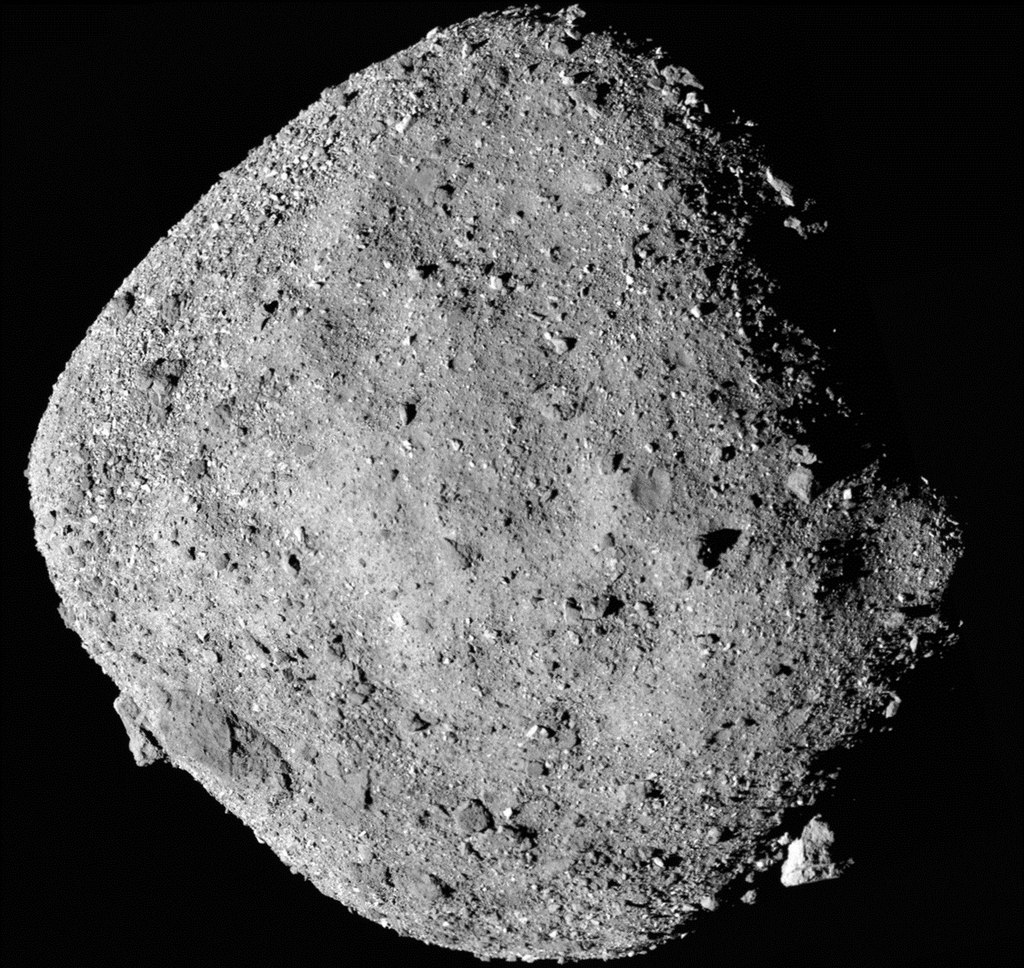
So far, scientists have analysed only about 25% of the total sample collected from Bennu. The rest will be carefully stored for future generations of researchers equipped with better tools and new ideas. As Jason Dworkin, a senior scientist at NASA’s Goddard Space Flight Center, put it, “This is a gift to the future.” As reported by the Wall Street Journal, the remaining sample may hold even more unexpected insights into planetary chemistry.
This is not just a triumph for the OSIRIS-REx team, but for planetary science as a whole. It proves that sample return missions can uncover data we simply can’t gather from Earth or remote sensing. The next stop? The spacecraft, now renamed OSIRIS-APEX, is on its way to study another asteroid, Apophis, in hopes of unlocking even more secrets from the solar system’s past.
As NASA summarised, the Bennu mission is reshaping what we thought we knew about how life may have originated, not just here on Earth, but potentially throughout the universe. And if these building blocks are widespread in the solar system, it raises the tantalising possibility that Earth is far from unique.
For now, one thing’s clear: Bennu has delivered more than a payload. It’s handed scientists the clearest window yet into the ingredients that made life possible, and it’s giving us a new way to think about where, and how, life might emerge.