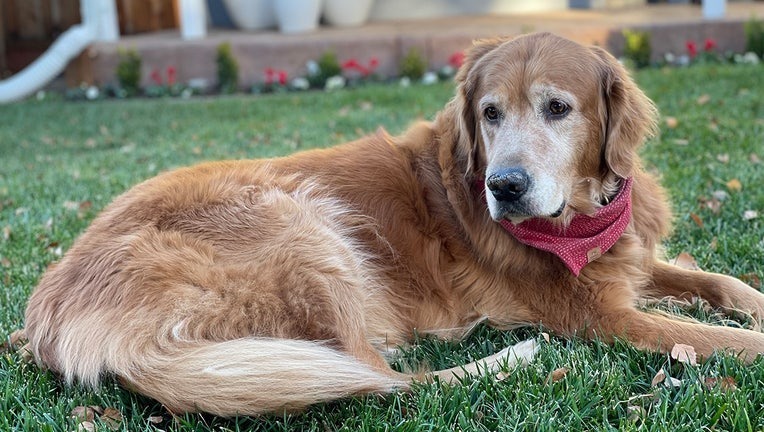
Meet Lola, a nine-year-old golden retriever given a grim prognosis after being diagnosed with oral melanoma that had spread to her lungs. When vets at UC Davis first assessed her, they told her owners she likely had less than six months left. However, Lola isn’t just defying expectations. In fact, thanks to a clinical trial involving inhaled immunotherapy, she now appears to be cancer-free. Fox 29 explains how a novel treatment trial changed everything for this brave dog.
The treatment involved a drug called IL-15 delivered by inhalation. It’s an immunotherapy designed to stimulate the body’s immune system to recognise and fight cancer cells. Initially, Lola didn’t respond well, as her tumours seemed to grow even after starting the treatment, a phase the researchers refer to as “pseudoprogression.” Her owners were preparing for life without her when something remarkable happened: after radiation therapy was added, follow-up scans revealed all tumours in her lungs had vanished. Now, two years later, she remains cancer-free with none of the lung tumours returning.
The science behind Lola’s comeback
Lola was enrolled in what scientists call the “Intravenous Doxorubicin and Inhaled IL-15 Immunotherapy for Treatment of Lung Metastases” trial, run by UC Davis’ Veterinary Medical Teaching Hospital. The idea was to combine chemotherapy with the inhaled immunotherapy to enhance response in dogs whose cancer had metastasised to the lungs. In Lola’s case, she had already been through palliative radiation to shrink the oral tumour, but once the lung metastases were evident, options were limited. Most dogs in her condition don’t survive long past that point.
IL-15 is designed to stoke the immune system, helping it to identify and destroy cancer cells more aggressively. For many patients, immunotherapies can first cause inflammation, making tumours appear larger before they shrink, hence the pseudoprogression seen in Lola. When that initial therapy didn’t seem to work, radiation helped reduce the oral tumour, and over time the lung nodules receded. The success isn’t just medical fortunate luck; part of it comes from adapting treatment, persistence, and careful monitoring.
Lola’s case isn’t just a win for her. It’s proof of concept. This trial involved multiple dogs; not all responded so well. But Lola is a standout, showing how inhaled immunotherapy can succeed even when the odds are stacked. Researchers are now looking deeper into what made her one of the responders, as in what genetic, immune or environmental factors helped her body turn the corner.
What this could mean for pets, and people

Stories like Lola’s carry significance beyond veterinary medicine. Dogs and humans share many similarities in how cancers grow and how immune systems respond. Trials like this feed into broader cancer research, including for humans. Understanding why some dogs respond dramatically well to immunotherapy could help design better human treatments in future.
For pet owners, there are hopeful lessons. Clinical trials aren’t always accessible, and treatment costs can be high. However, Lola’s success demonstrates that even with a dire diagnosis, newer treatment modalities like inhaled immunotherapy may offer paths previously unseen. Radiation, chemotherapy, and immunotherapy aren’t exclusive; a combination can sometimes be the difference.
That said, caution is still needed. One successful case doesn’t guarantee a general cure. Most dogs in the trial didn’t achieve full remission. The science still has to answer which dogs are likely to respond, whether early intervention matters, and how to balance treatment side effects with quality of life. For families considering treatment options, knowing risks, being part of clinical trials, and choosing experienced veterinary oncologists matter.
Why Lola is just the beginning
Lola’s story leaps beyond personal triumph. It underscores the power of innovation in veterinary medicine and the importance of ongoing research. If you’ve ever doubted how much impact medical trials can have, this case shows how persistence, even in the face of discouraging odds, can shift outcomes.
It also reminds us that giving up isn’t always the only choice when a tough diagnosis lands. Medical science, and immunotherapy in particular, is still pushing boundaries. For animals, that means more hope for cancer treatments that go beyond palliative care. For humans, insights from these trials may flow both ways, strengthening understanding and treatment strategies.
Finally, for Lola’s family, the experience is deeply personal. Her owner, Allison Roth, has spoken about gratitude for every extra day, every clear scan. She tells how she was drawn to UC Davis because of its reputation, and how the staff there treated Lola not just as a patient but as a member of the family. Regular check-ups continue, not out of fear, but out of cautious optimism.