It sounds impossible, but some animals have figured out how to do what humans can’t: walk on water.
They don’t use gadgets or illusions; it’s all down to clever physics and evolution. These creatures have adapted to glide, skip, or sprint across the surface without sinking, turning a natural barrier into part of their environment.
From tiny insects to reptiles, a surprising range of species can pull off this feat. Each one has its own method, relying on unique body structures and surface tension to stay afloat. It’s one of those rare examples of nature blending science and survival in a way that still feels a bit magical.
Basilisk lizard
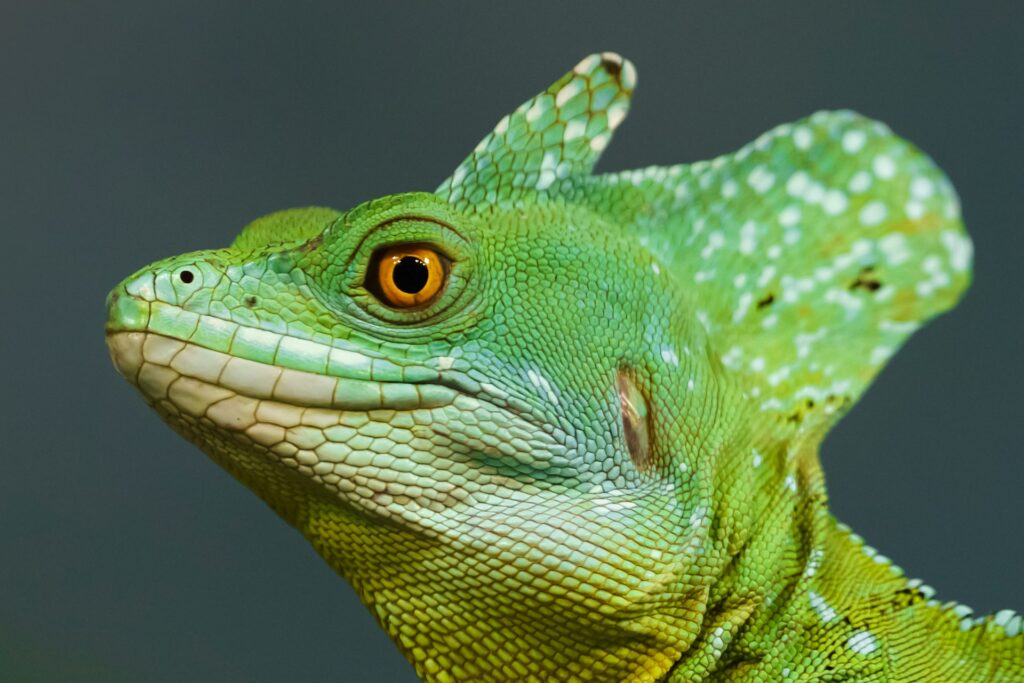
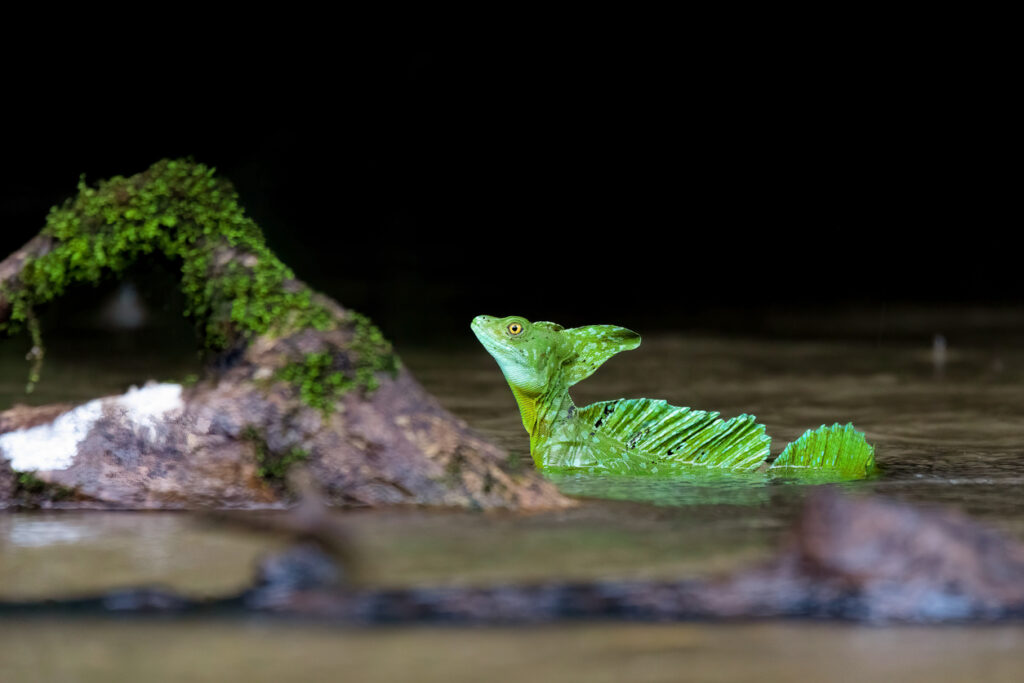
The basilisk lizard is also called the Jesus Christ lizard, and once you see it run across water at full speed, you’ll understand why. It doesn’t float or swim. It literally sprints across the surface using a combination of speed, specially adapted feet, and physics that shouldn’t work but somehow does. When threatened, it drops from trees or vegetation directly onto water and just keeps running, sometimes covering 15 metres or more before it starts to sink.
The trick is in its feet and its speed. Basilisk lizards have long toes with fringes of skin that unfurl when they hit the water, creating a larger surface area that slaps down hard enough to create an air pocket. They’re moving so fast that they pull their foot back up before the air pocket collapses, and they start to sink. They need to take about 20 steps per second to maintain this, slapping the water with enough force to create temporary support. The moment they slow down, physics catches up, and they drop straight into the water and have to swim like any other lizard.
Water strider
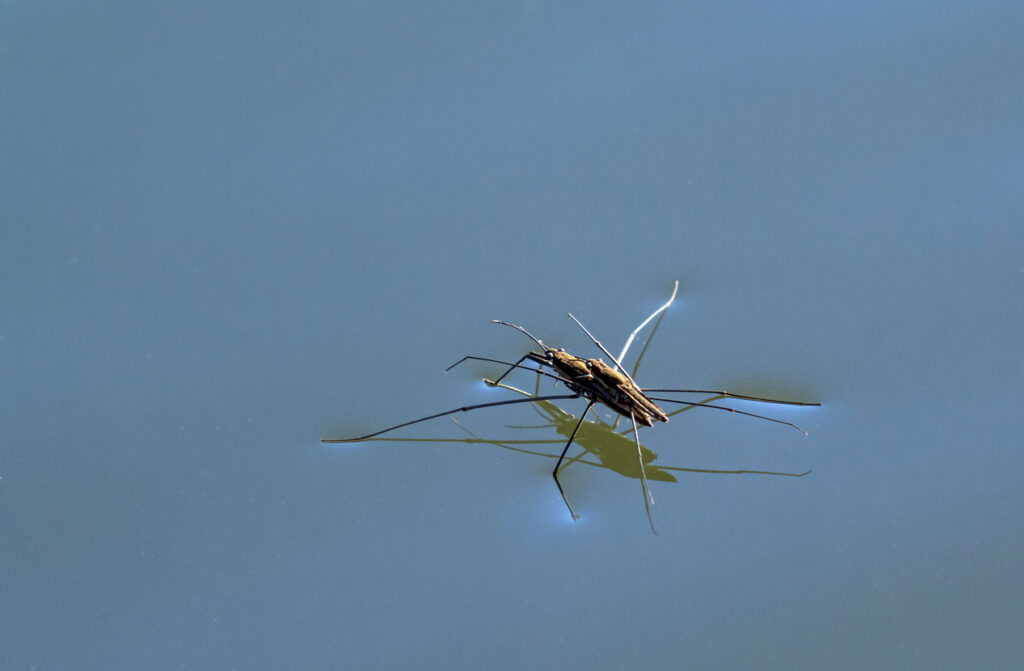
Water striders are insects that spend their entire lives skating across the surface of ponds and streams, and they’re so perfectly adapted to it that they can’t actually survive underwater. Their legs are covered in thousands of tiny hairs that trap air and repel water, making them naturally waterproof. When they stand on water, the surface tension creates tiny dimples under each foot but never breaks, and they can sense vibrations through these dimples to detect prey or threats.
What makes them even more remarkable is how they move. They don’t paddle or swim. They push off the water surface using their middle legs like oars, while their back legs steer and their front legs grab prey. The water’s surface tension is strong enough to support them because they’re so light and their weight is distributed across multiple points. If you put detergent in the water and break the surface tension, water striders immediately sink. They’re entirely dependent on that invisible molecular force holding the water together.
Fisher spider
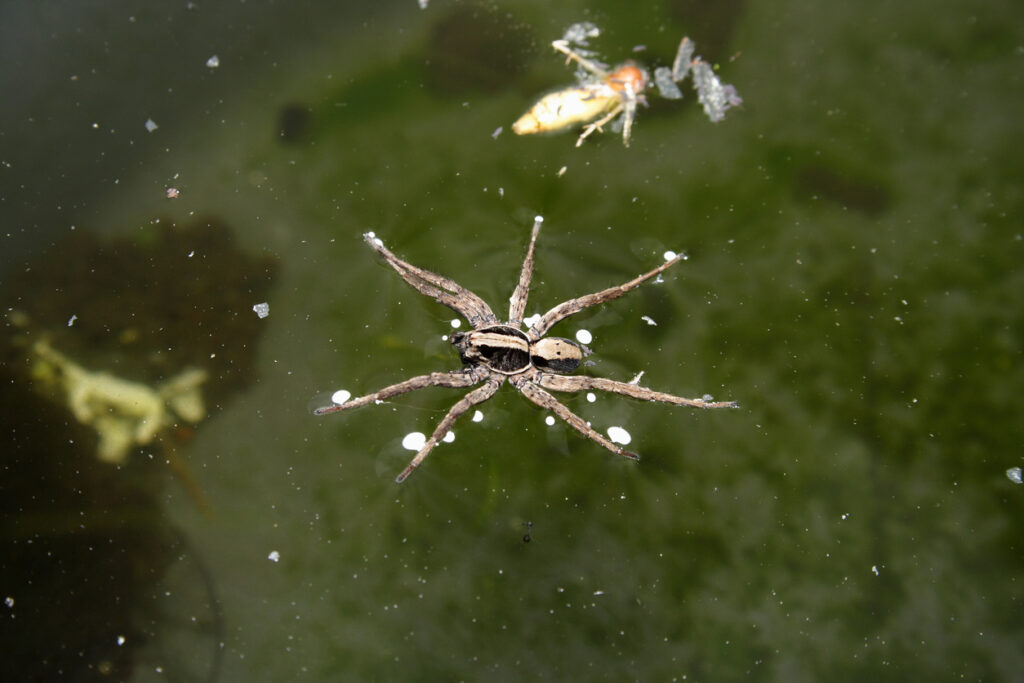
Fisher spiders look too heavy to walk on water, but they manage it anyway using the same surface tension principles as water striders, just scaled up. They’re large hunting spiders that can span the size of your hand, and they actively hunt on the water surface, skating across ponds to ambush insects, tadpoles, and even small fish. Their legs have hydrophobic hairs that repel water and distribute their weight across eight points of contact.
Unlike water striders that live permanently on the surface, fisher spiders can also dive underwater when hunting or escaping predators. They trap air bubbles in their body hair that work like a temporary oxygen supply, letting them stay submerged for up to 30 minutes. When they’re done hunting underwater, they just climb back up onto the surface and continue walking around like nothing happened. They’re equally comfortable above and below the water line, which gives them a hunting advantage most predators don’t have.
Western grebe
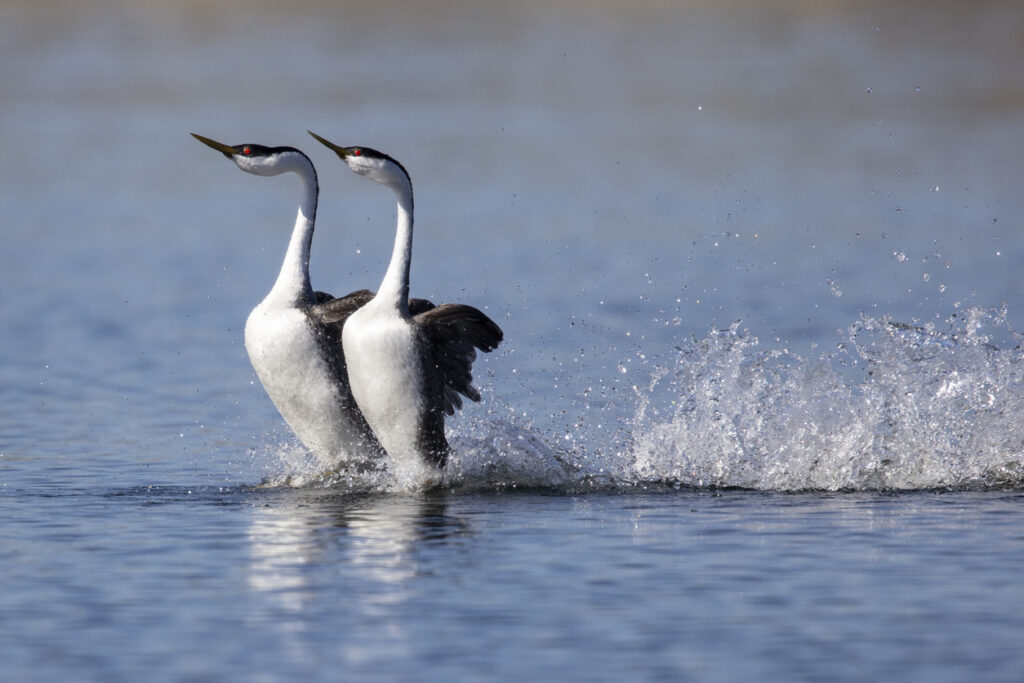
Western grebes are water birds that perform one of the most spectacular courtship displays in nature, and it involves both birds sprinting across the water surface side by side in perfect synchronisation. They’re not light enough to rely on surface tension alone. Instead, they use raw power and speed, slapping the water so hard and so fast with their feet that they stay on top through sheer momentum.
This rushing ceremony can last several seconds and cover over 20 metres, with both birds running upright on the water in what looks physically impossible for something their size. They need to maintain a precise speed and rhythm, or they’ll immediately sink, and somehow they do this while staying perfectly aligned with their partner. Once the display is over, they stop running and drop back into the water to swim normally. It’s not a survival skill, it’s purely for showing off, which makes it even more impressive that they’ve evolved to do something so energetically expensive just for courtship.
Pygmy gecko

Pygmy geckos are tiny lizards that live in tropical forests where water collects on leaves, and they’ve evolved to walk on water films without breaking through. They’re small enough that surface tension can support them, but they’ve also got specialised toe pads covered in microscopic structures that interact with water in unusual ways. When they step on water, the surface dimples but doesn’t break, and they can walk across puddles or water-covered leaves as if they were solid.
What’s remarkable is how they switch between walking on water and walking on wet leaves without any adjustment. Their feet work on both surfaces because the same structures that let them grip smooth leaves also distribute their weight on water. They’re so light that even a thin water film will support them, and they use this ability to hunt insects on rain-soaked vegetation where heavier predators can’t follow. It’s water-walking at the smallest possible scale, using physics that only works because of how tiny they are.
Storm petrel
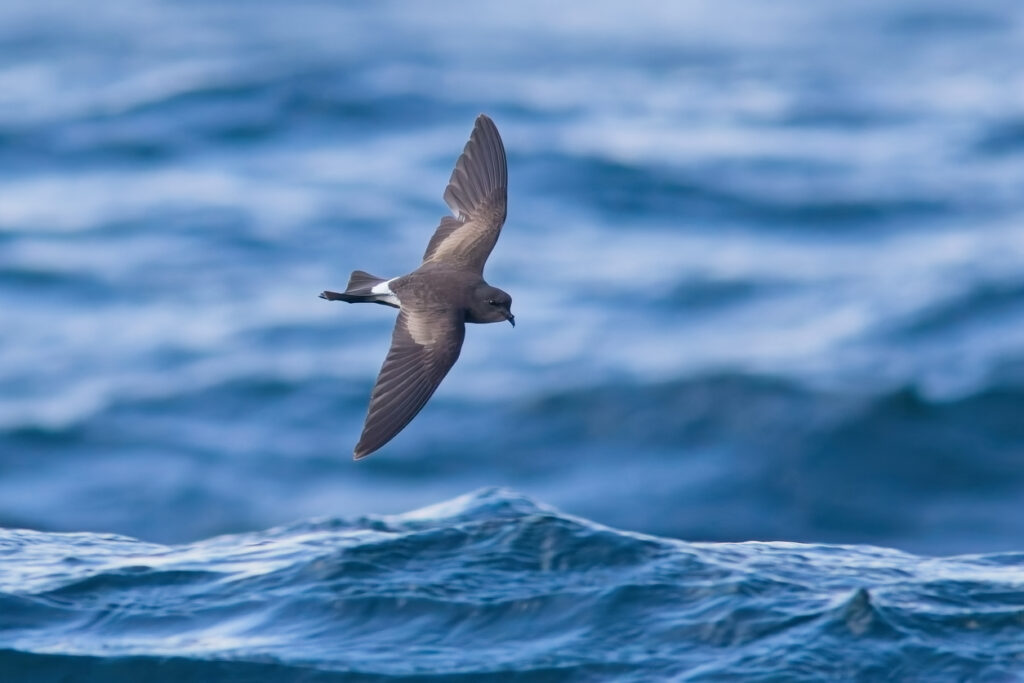
Storm petrels are seabirds that appear to walk on ocean waves, and early sailors thought they were miraculous because they seemed to be treading on water during storms. The reality is slightly less magical but still impressive. They hover just above the wave surface using their wings for lift while their feet patter rapidly on the water, creating the illusion that they’re walking. They’re not really supporting their weight with their feet alone, but they are making contact with the water while staying airborne.
This pattering behaviour helps them hunt. By touching the water surface repeatedly, they disturb small fish and plankton that come up to investigate, and then the petrels snatch them up while hovering. They can do this in rough seas where most birds would struggle to fish at all, and the constant foot contact gives them stability and precision that pure hovering wouldn’t provide. It’s technically cheating since they’re using their wings for most of the support, but watching them dance across storm waves makes it feel like water-walking regardless.
Midge larva
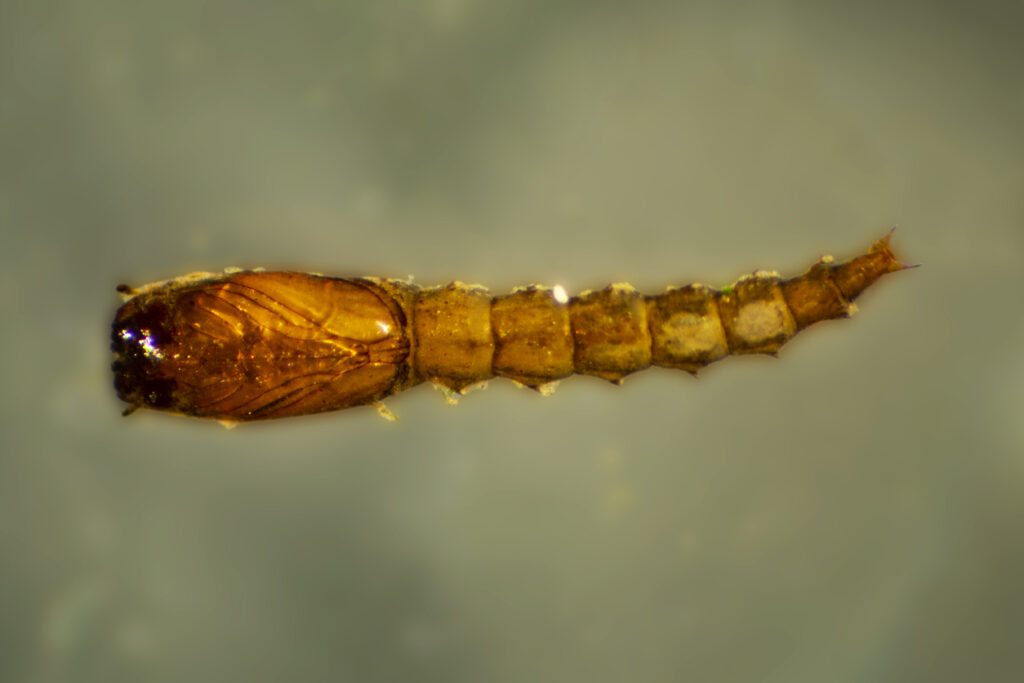
Midge larvae are aquatic insects that live underwater, but when they need to cross between puddles or avoid predators, some species can wriggle across the water surface without sinking. They’re essentially swimming on top of the water rather than through it, using surface tension to stay afloat while thrashing their bodies in a way that propels them forward. They’re not graceful, but they’re effective.
The larvae coat themselves in a waxy secretion that makes them hydrophobic, and their small size means surface tension can support their weight. When they wriggle, they create ripples that push them across the surface in short bursts. It looks chaotic and desperate, and it probably is, but it works well enough to let them travel between isolated pools of water or escape from aquatic predators that can’t follow them onto the surface. Once they reach their destination, they drop back underwater and continue developing into adult midges.
Dolomedes spider
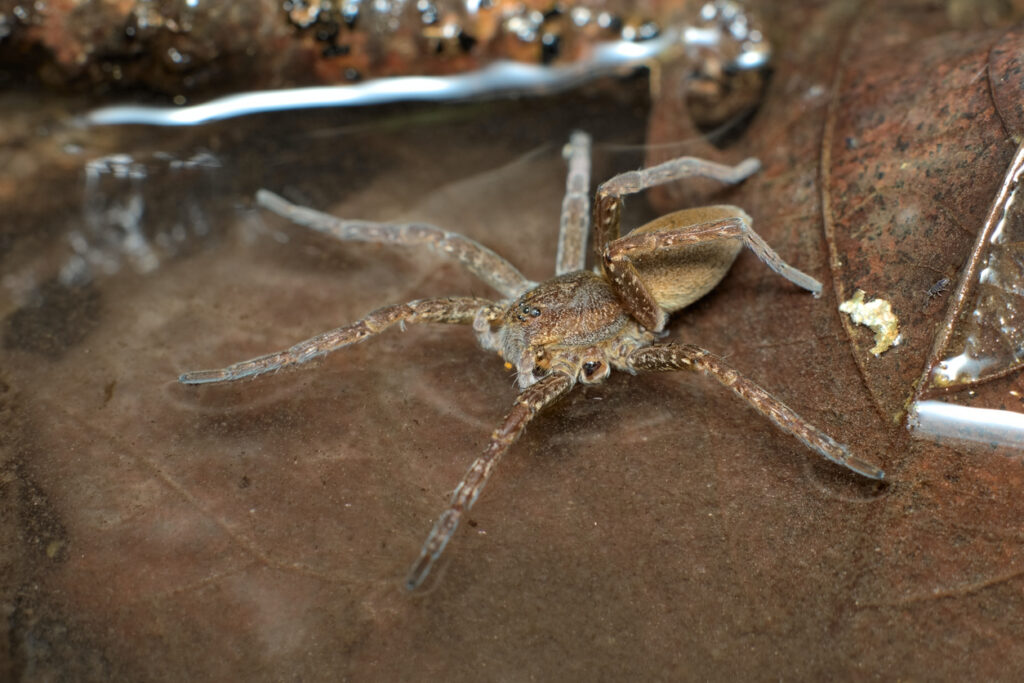
Dolomedes spiders are large semiaquatic hunting spiders found across Europe and Asia, and they’re built specifically for life on and around water. Like fisher spiders, they use hydrophobic leg hairs to walk on the surface, but Dolomedes species are even more aquatic in their behaviour. They spend most of their time sitting on the water surface waiting to detect vibrations from drowning insects or small fish swimming below.
When they detect prey, they can run across the water at surprising speed, pounce, and drag their catch back to shore or a floating leaf. They can also submerge completely and stay underwater for extended periods by trapping air bubbles in their dense body hair. Some species have been observed catching fish larger than themselves by sensing the fish’s movement through water surface tension, then diving down to grab it. They’re proper amphibious hunters that treat the water surface as their primary hunting ground, switching between walking on it and diving through it depending on where their prey is.
Water snail
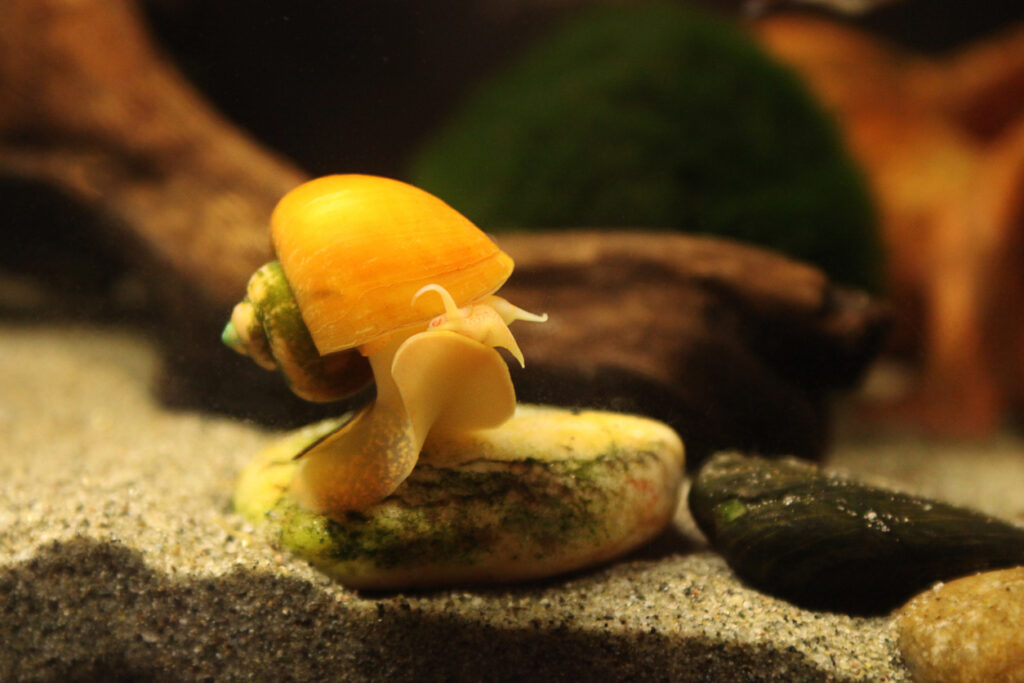
Some species of freshwater snails can glide upside-down along the underside of the water surface, which is technically walking on water from the opposite direction. They use surface tension to stay attached to the underside of the film, and they move along it by secreting mucus and using their muscular foot to crawl. From their perspective, they’re walking on a ceiling made of water, and from below, they look like they’re floating.
This upside-down crawling lets them feed on algae and microorganisms that collect at the air-water interface, which is a food source most aquatic animals can’t easily access. They breathe air through a siphon that they poke through the surface, so they’re suspended between two worlds, technically underwater but breathing air and feeding at the surface boundary. If the surface tension breaks, they sink back down into the water and have to crawl back up to resume their upside-down water-walking. It’s one of the stranger ways animals have adapted to exploit that thin boundary between air and water.