Camels are famous for their humps, and most people grow up believing they’re full of water.

The truth is a bit different, and even more interesting. Those humps aren’t built for storing liquid at all. In fact, they’re for something else entirely that helps camels survive in some of the toughest environments on Earth.
Their humps are a key part of what makes camels so well adapted to desert life. They allow these animals to go for long stretches without food or water, travel across extreme heat, and stay steady when conditions would defeat most other creatures. Understanding what’s really inside them gives you a whole new appreciation for how remarkable camels actually are.
The humps store fat, not water.
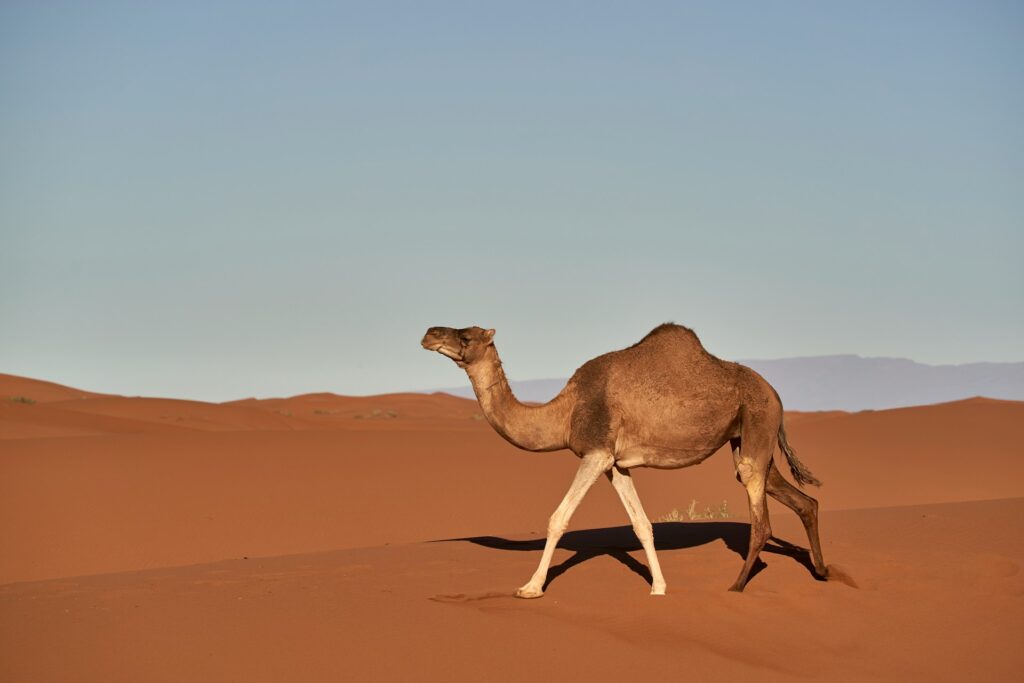
Camel humps are pure fat, concentrated energy reserves that can weigh up to 35 kilograms in a healthy animal. This isn’t insulation fat spread across the body like in most mammals. It’s deliberately concentrated in one or two humps depending on the species, which seems bizarre until you understand the strategy. By storing all their fat in one place, camels keep the rest of their body lean, which helps them regulate temperature more efficiently in extreme heat.
When camels go without food, they metabolise this fat for energy, and their humps gradually shrink and flop to one side. A camel with a collapsed hump is basically running on empty, though it can still survive for a surprisingly long time. The fat also produces metabolic water as it breaks down, about a litre of water for every kilogram of fat metabolised, but that’s a bonus side effect rather than the primary purpose. The humps exist for energy storage first, and water production is just chemistry doing its thing.
They actually store water in their blood.
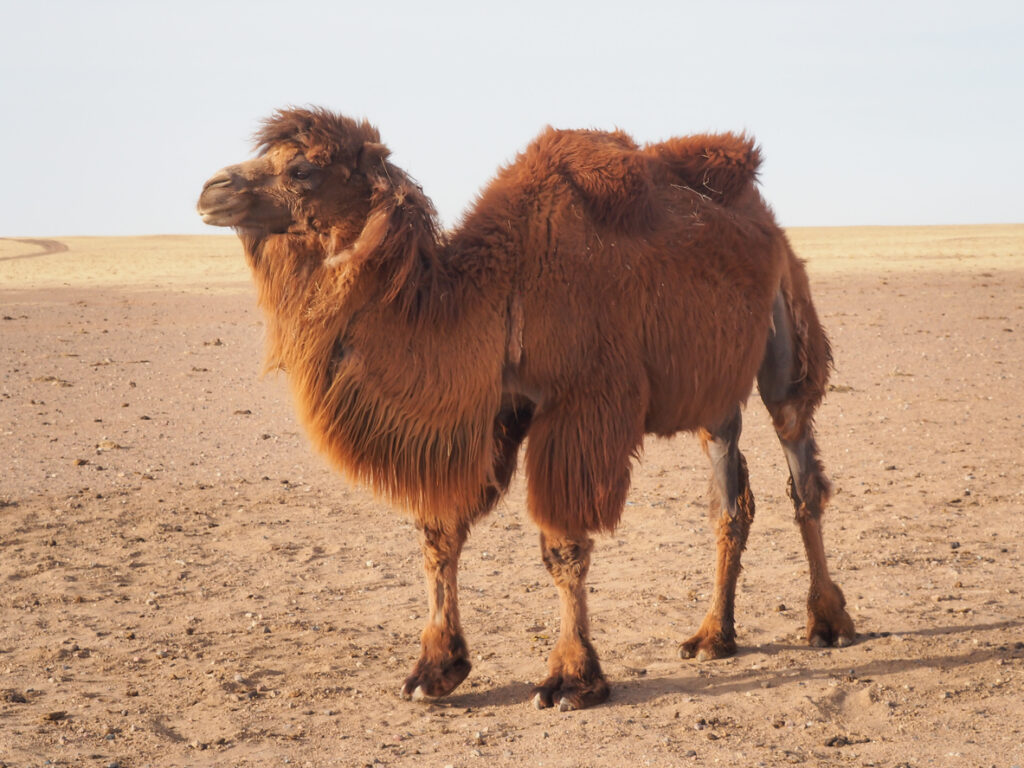
Camels do store water, just not where you’d expect. Their blood plasma can hold enormous amounts of water, and their red blood cells are oval-shaped rather than round, which lets them remain functional even when the blood thickens dramatically during dehydration. A camel can lose up to 25% of its body weight through water loss without going into shock, whereas most mammals would die after losing 15%.
When a dehydrated camel finally finds water, it can drink up to 130 litres in about 10 minutes, rehydrating so quickly that it would kill most other animals through water intoxication. Their bodies are designed to absorb and distribute water rapidly through their bloodstream without overwhelming their organs. The blood acts as a massive reservoir that releases water slowly to the rest of the body as needed, which is far more efficient than storing it in a static container like a hump would be.
Their kidneys are incredibly efficient.
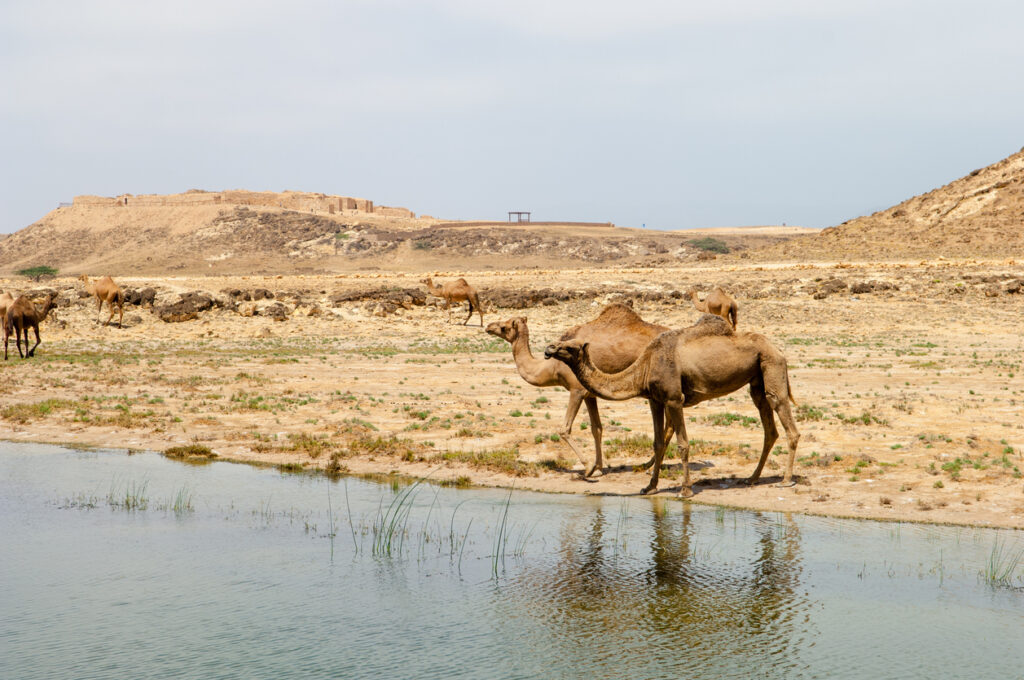
Camel kidneys can concentrate urine to the point where it’s almost syrup, extracting every possible drop of water before excretion. Their urine is so concentrated that the urea crystallises almost immediately when it hits the ground, and they produce very little of it compared to other mammals of similar size. This means they’re recycling water internally at a rate most animals can’t match.
Their droppings are equally dry, little pellets with almost no moisture content because their intestines have absorbed every bit of water from their food. Between hyperefficient kidneys and intestines that wring out every drop, camels lose almost no water through waste. They’re not storing massive amounts of water so much as refusing to waste any of it, which is a more sustainable strategy for desert survival than carrying around a heavy reservoir.
They don’t sweat until it’s absolutely necessary.
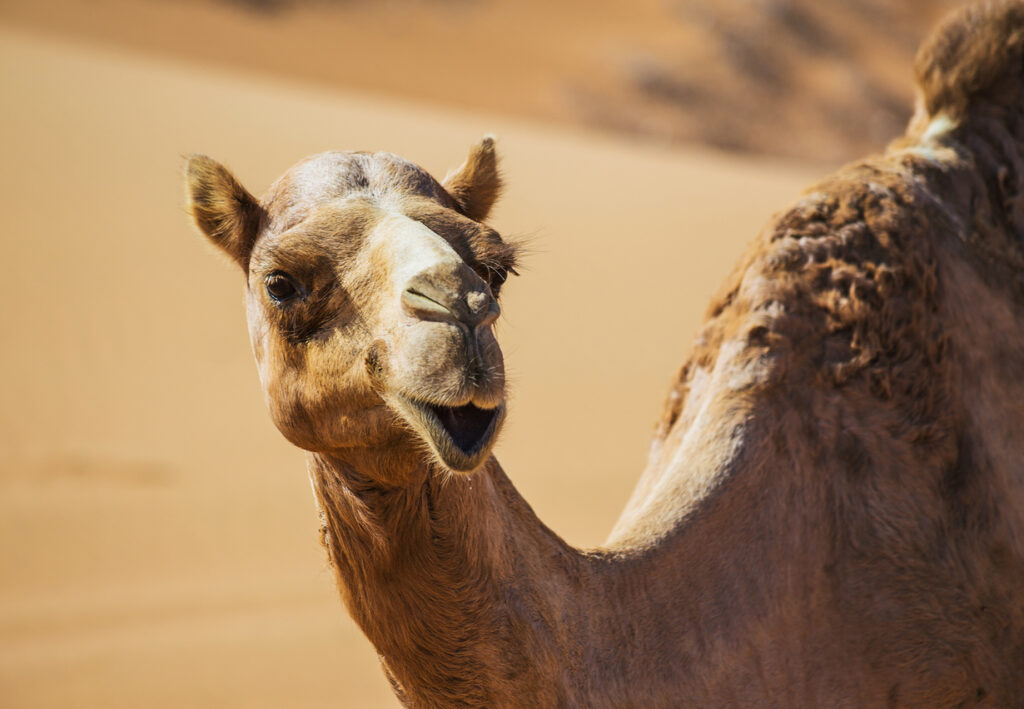
Most mammals start sweating when their body temperature rises even slightly, but camels let their temperature fluctuate by up to six degrees Celsius throughout the day without breaking a sweat. They can tolerate body temperatures that would cause brain damage in humans, and they only start sweating when they reach the absolute upper limit of what they can handle, usually around 41 degrees Celsius.
By postponing sweating as long as possible, they conserve enormous amounts of water. When they do finally sweat, it evaporates from their skin surface rather than soaking into their fur, which maximises the cooling effect. At night, their body temperature drops back down naturally as the desert cools, and they essentially reset for the next day’s heat without having wasted water on unnecessary temperature regulation. It’s a strategy that only works because they can safely tolerate those extreme temperature swings.
Their nose recycles water from breath.
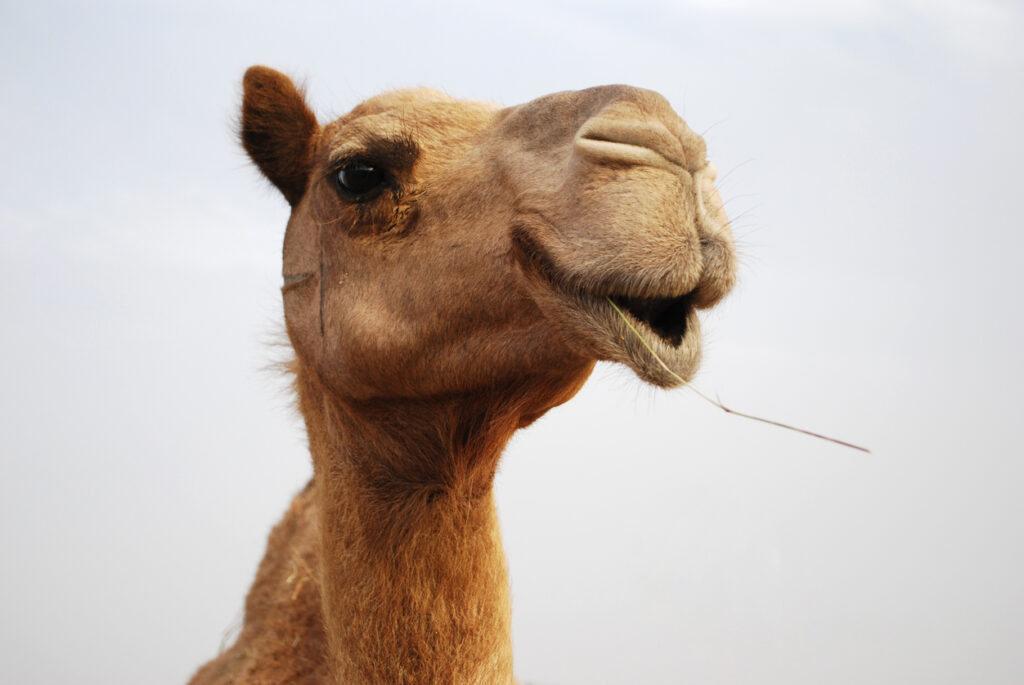
Camels have extremely complex nasal passages that trap moisture from exhaled air and reabsorb it before it leaves the body. When they breathe out, the moisture condenses on the cool surfaces inside their nose and drips back down into their system rather than being lost to the atmosphere. Their nostrils can also close completely during sandstorms, and even when open, they’re designed to minimise water loss with every breath.
For an animal living in an environment where every drop matters, losing water through respiration is a massive waste. Camels have evolved nasal structures that function like organic dehumidifiers, capturing water vapour that other animals would simply breathe away. Over the course of a day in the desert, this moisture recovery adds up to litres of water saved, which compounds over weeks to make the difference between survival and death.
They can eat plants other animals can’t touch.
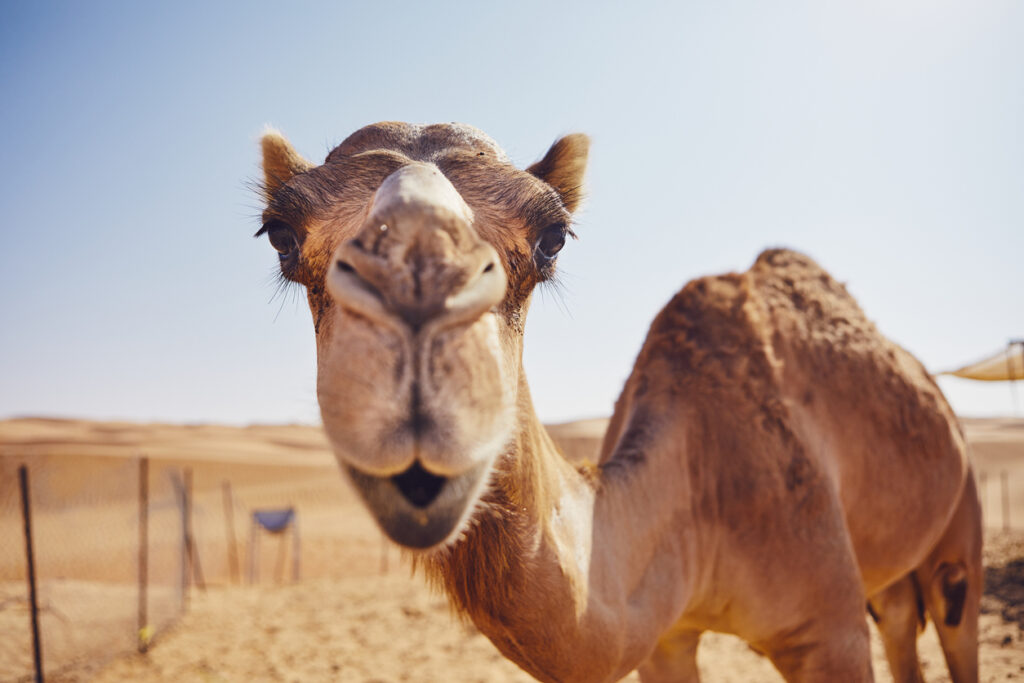
Camels can eat thorny, toxic, and salt-laden plants that would poison or injure other herbivores, which gives them access to food sources with high moisture content that competitors can’t reach. Their mouths are lined with thick, leathery tissue that lets them chew through acacia thorns and other viciously spiky desert plants without injury. Some of these plants are up to 80% water, which means camels are constantly topping up their hydration while eating.
They can also tolerate plants with such high salt content that they’d dehydrate other animals through osmosis. Camels process the excess salt through their kidneys and actually benefit from the water content in these plants despite the salinity. This ability to exploit food sources other desert animals avoid means they’re not competing for the same limited resources, and they’re getting passive hydration from vegetation that would be useless or harmful to most herbivores.
Their red blood cells keep working when dehydrated.
Most mammals have round red blood cells that become rigid and clump together when blood thickens during dehydration, which leads to circulation problems and eventually organ failure. Camel red blood cells are oval and remain flexible even when their blood is thick as paste. This means blood continues flowing properly to vital organs even when the camel is severely dehydrated, buying them extra time to find water.
The oval shape also allows the cells to swell dramatically when the camel rehydrates without bursting, which is why they can drink so much so quickly without suffering the cellular damage that would kill other animals. It’s a cellular adaptation that makes their entire survival strategy possible because without blood cells that function in both extreme dehydration and rapid rehydration, none of their other water-saving tricks would matter. They’d still die before reaching the next water source.
They have a slow metabolism compared to other mammals.
Camels have metabolic rates significantly lower than you’d expect for their size, which means they need less food and water to maintain basic functions. A slower metabolism produces less heat and requires less energy, both of which reduce water demands. They’re essentially running their bodies in economy mode all the time, doing more with less because the desert doesn’t offer abundance.
This slow metabolism also means they can survive on poor-quality food that wouldn’t sustain other large mammals. Combined with their ability to go weeks without water, they’re optimised for an environment where resources appear unpredictably and briefly. When food and water are available, they gorge and store fat in their humps. When resources disappear, they switch to low-power mode and survive on stored fat while conserving every drop of water their body contains. The humps are part of this system, but they’re the battery pack, not the water tank.