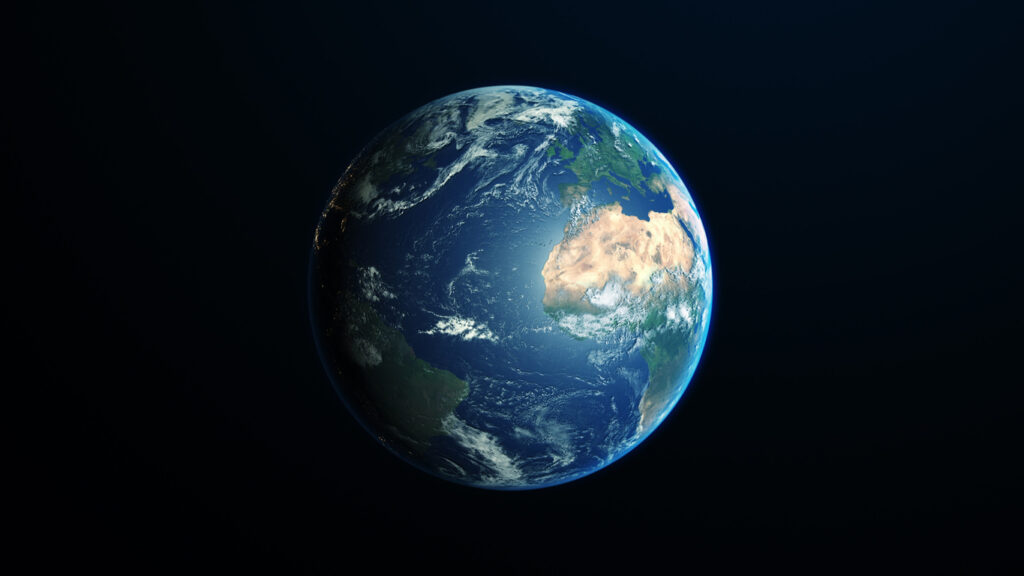
Earth spins at about 1,000 miles per hour at the equator, and everything on the surface moves with it. If it suddenly stopped for just sixty seconds, the consequences would be absolutely catastrophic in ways you probably haven’t imagined. In other words, we really, REALLY don’t want this to happen.
Everything would keep moving at 1,000 mph.
When Earth stopped spinning, you and everything not firmly attached to the ground would continue moving eastward at whatever speed the Earth was spinning at your latitude. At the equator, that’s 1,000 mph, which is faster than the speed of sound.
You’d be flung eastward instantly at this incredible speed, along with cars, buildings, trees, and everything else on the surface. It would be like the planet hit an invisible wall, but everything on it kept going. Nothing would survive the initial impact of suddenly moving that fast.
The atmosphere would become a supersonic wind.
The air around us is also spinning with Earth. If the planet stopped, but the atmosphere didn’t, we’d experience winds of 1,000 mph at the equator. That’s five times stronger than the worst hurricanes ever recorded, essentially a worldwide supersonic blast.
These winds would scour the surface clean, obliterating everything not made of solid rock. Even if you somehow survived being flung eastward, the wind would finish the job immediately. The atmosphere would literally sandblast the planet’s surface into oblivion within seconds of stopping.
The oceans would keep moving too.
Earth’s oceans contain massive amounts of water that are currently spinning with the planet. If Earth stopped, all that water would continue moving eastward at tremendous speed, creating tsunami waves potentially kilometres high that would sweep across continents and drown everything.
These mega tsunamis would be unlike anything in recorded history. They’d crash over mountains, flood entire continents, and basically reshape coastlines completely. The oceanic devastation alone would be enough to end most life on Earth, even if everything else somehow survived the initial stopping.
Most buildings and structures would collapse immediately.
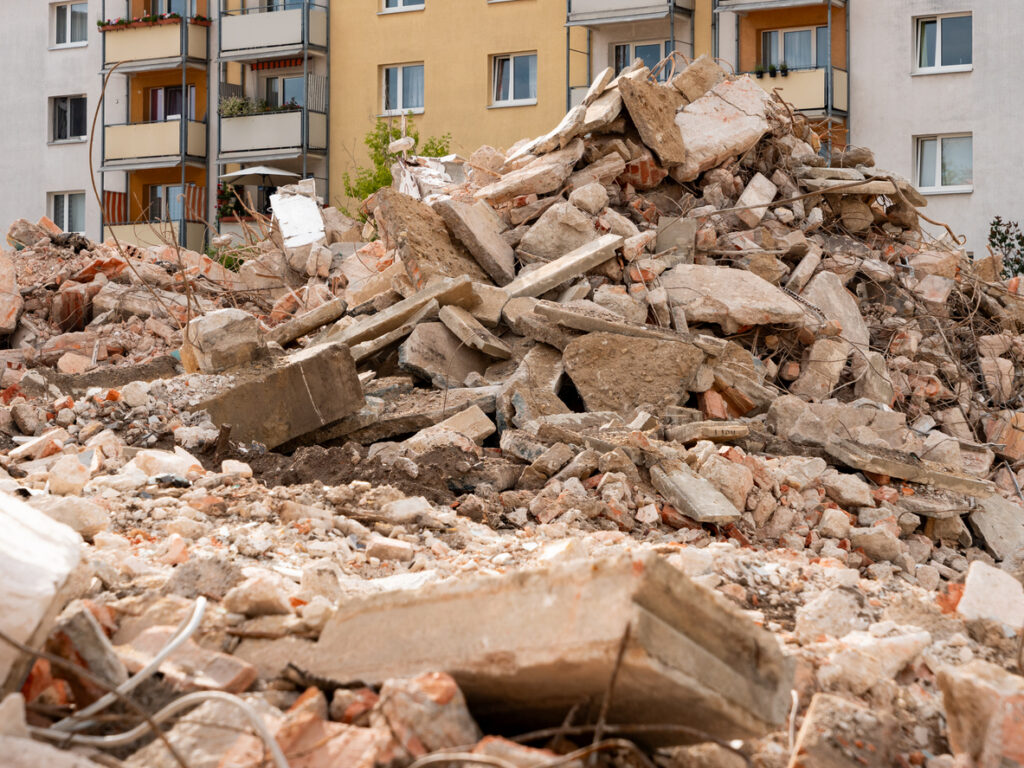
Buildings aren’t designed to withstand sudden forces equivalent to being in a car crash at unimaginably high speeds. The momentum would shear them off their foundations, and they’d tumble eastward as rubble. Even the sturdiest skyscrapers would crumble like sandcastles hit by a wave, basically.
Infrastructure would be instantly destroyed worldwide. Bridges, roads, power lines, everything humanity has built would be wrecked in seconds. The only structures that might survive would be solid rock formations, and even those would be heavily damaged by the forces involved in stopping.
Earthquakes would devastate the entire planet.
The sudden stop would create enormous stresses in Earth’s crust, triggering earthquakes of unprecedented magnitude everywhere simultaneously. The tectonic plates would shift violently, and the ground itself would ripple like water, opening massive fissures and causing worldwide geological chaos instantly.
These wouldn’t be localised earthquakes, the entire planet would be shaking at once. Volcanic eruptions would probably trigger globally as the crust fractured. The geological damage would fundamentally reshape continents and change the face of the planet beyond recognition in minutes.
You’d experience impossible G forces.
The deceleration from 1,000 mph to zero in an instant would subject everything to G forces far beyond what the human body can survive. Fighter pilots black out at around 9 Gs, but this would be hundreds of Gs. You’d pretty much be liquefied, crushed by your own inertia.
Even if you were somehow strapped down securely, the G forces would kill you instantly. Your internal organs would be pulverised, your skeleton would shatter, and you’d be turned into mush before you even realised what was happening. There’s no surviving that level of deceleration.
The magnetic field would probably collapse.
Earth’s magnetic field is generated by the rotation of its molten iron core. If the planet stopped spinning, even briefly, the magnetic field would be disrupted or possibly collapse entirely. Without it, we’d lose our protection from solar radiation and cosmic rays immediately.
A collapsed magnetic field would mean the Sun’s radiation would strip away our atmosphere over time. Even if the spinning resumed after a minute, the damage to the magnetic field might be permanent. We’d be exposed to lethal radiation levels that would make the surface uninhabitable long term.
Anything in orbit would be fine, oddly enough.
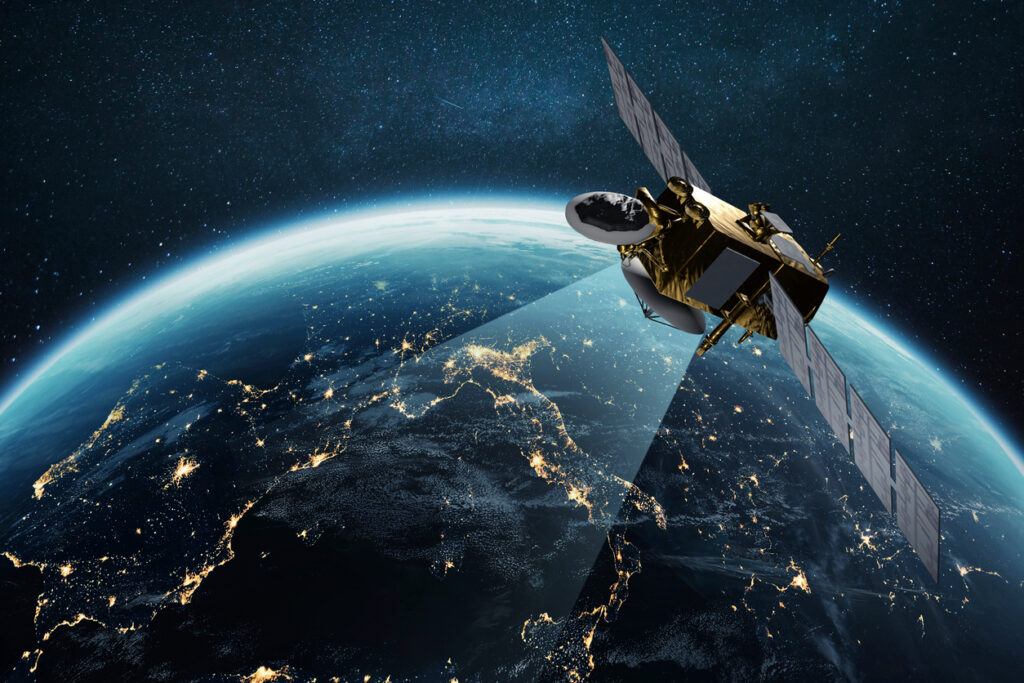
Satellites and the International Space Station wouldn’t be directly affected by Earth stopping because they’re in orbit, not connected to the planet’s rotation. They’d continue orbiting normally, though they’d have a very confusing view of the disaster happening below them on the surface.
Astronauts in space would be the only survivors of the initial catastrophe. They’d watch the entire planet get scoured clean from orbit, safe in their spacecraft. Though they’d have nowhere to return to and limited supplies, so their survival would only be temporary, realistically speaking.
The Sun would appear to move backwards briefly.
If Earth stopped for exactly one minute then resumed spinning, from the surface it would look like the Sun suddenly shot backwards across the sky, then continued normally. Though realistically, nobody would be alive to witness this because of everything else happening simultaneously on the ground.
This backwards movement would be the least of your worries, obviously, but it demonstrates how our perception of the Sun’s movement is actually Earth’s rotation. If you somehow survived everything else, seeing the Sun reverse direction would be absolutely mind-bending and surreal.
Restarting the spin would cause it all again.
When Earth started spinning again after the minute was up, everything would experience the same catastrophic forces in reverse. Anything that somehow survived the stop would be destroyed by the restart. The whiplash effect of stopping and starting would ensure absolutely nothing remained intact.
You can’t gently restart a planet spinning. The acceleration back to 1,000 mph would be just as violent as the deceleration, subjecting whatever remained to another round of impossible forces. The restart would finish off anything the initial stop somehow missed completely.
The aftermath would be an unrecognisable wasteland.

After everything settled, Earth would be a barren, cratered wasteland with no atmosphere, no oceans in their original places, no life, and a completely reshaped surface. The planet would look more like Mars than Earth, stripped of everything that makes it habitable currently.
Any potential for life to recover would be essentially zero. The atmosphere would be gone, water would be scattered or frozen, and the magnetic field might be permanently damaged. Earth would be a dead rock, fundamentally uninhabitable. One minute of stopped spinning would essentially kill the planet forever.
This could never actually happen, though.
Fortunately, there’s no force in the universe that could stop Earth’s rotation like this. The amount of energy required would be incomprehensibly vast, and there’s no mechanism that could apply it. Angular momentum ensures Earth keeps spinning, and nothing short of something impossibly massive could change that.
Even a planet sized asteroid impact wouldn’t stop Earth’s spin, it might alter it slightly but not stop it. The scenario is purely hypothetical, which is good because it’s genuinely one of the most catastrophic things that could theoretically happen. We can all sleep easier knowing physics prevents this nightmare.