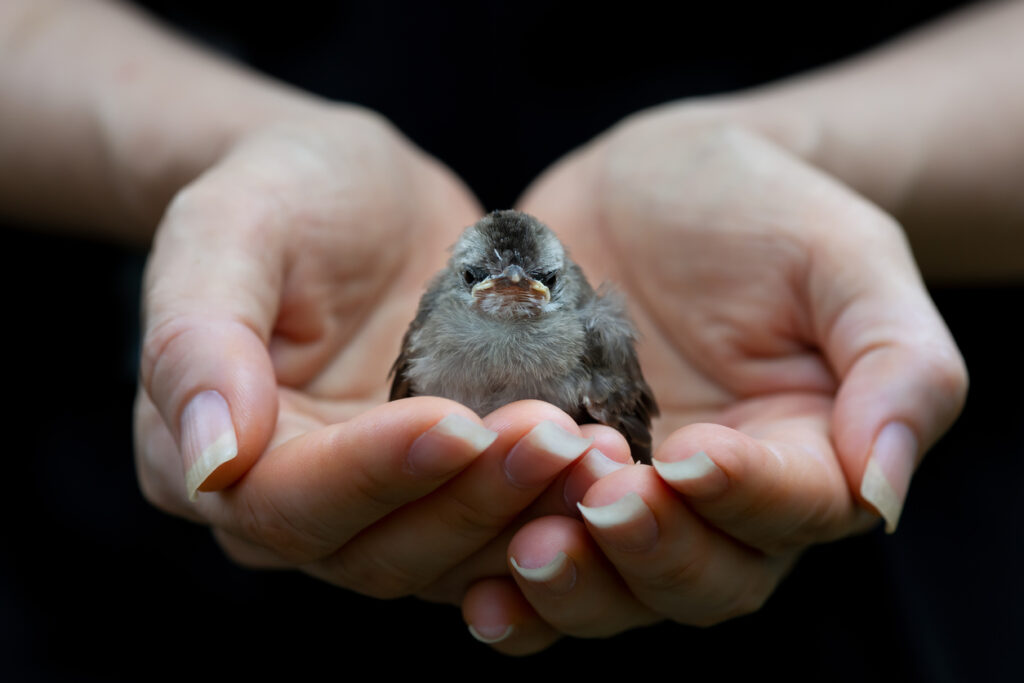
It’s one of those things most of us heard as kids: if you touch a baby bird, its mum will smell your scent and abandon it forever. It sounds dramatic enough to stick, but is it actually true? The short answer is no, birds aren’t that fussed about human scent. But the full story is a bit more nuanced. Here’s what really happens when you touch a baby bird, why it might be on the ground in the first place, and how to help without making things worse.
Birds have a terrible sense of smell.
Most birds don’t rely heavily on their noses, especially when it comes to recognising their young. Unlike mammals, who often use scent as a bonding cue, birds are more tuned into sight and sound. That means they’re not going to abandon their chick just because it smells faintly like human hands.
So if you’ve gently scooped up a baby bird thinking you’ve doomed it to a life of rejection, you probably haven’t. In fact, many parent birds are fiercely dedicated and will continue caring for their chick even after it’s been touched or moved.
Fledglings on the ground are often supposed to be there.
People often panic when they see a baby bird on the ground, assuming it’s fallen or been abandoned. But if the bird has feathers and is hopping about, it’s probably a fledgling, and fledglings naturally leave the nest before they can fly well. This stage lasts a few days, during which the parents are still feeding and protecting the young bird while it learns essential survival skills. Picking it up or moving it can sometimes do more harm than good, even if you’re trying to help.
Nestlings are a different story.
If the bird has no feathers or is clearly too young to be out of the nest, it’s likely a nestling, and that’s when human intervention might actually help. In many cases, you can carefully put it back in the nest if you know where it came from. Bird parents don’t mind if you do this, and they won’t abandon the baby just because it’s been handled. The key is to act quickly, gently, and keep an eye out to make sure the adults return. Most of the time, they do.
The real risk is human interference, not rejection.
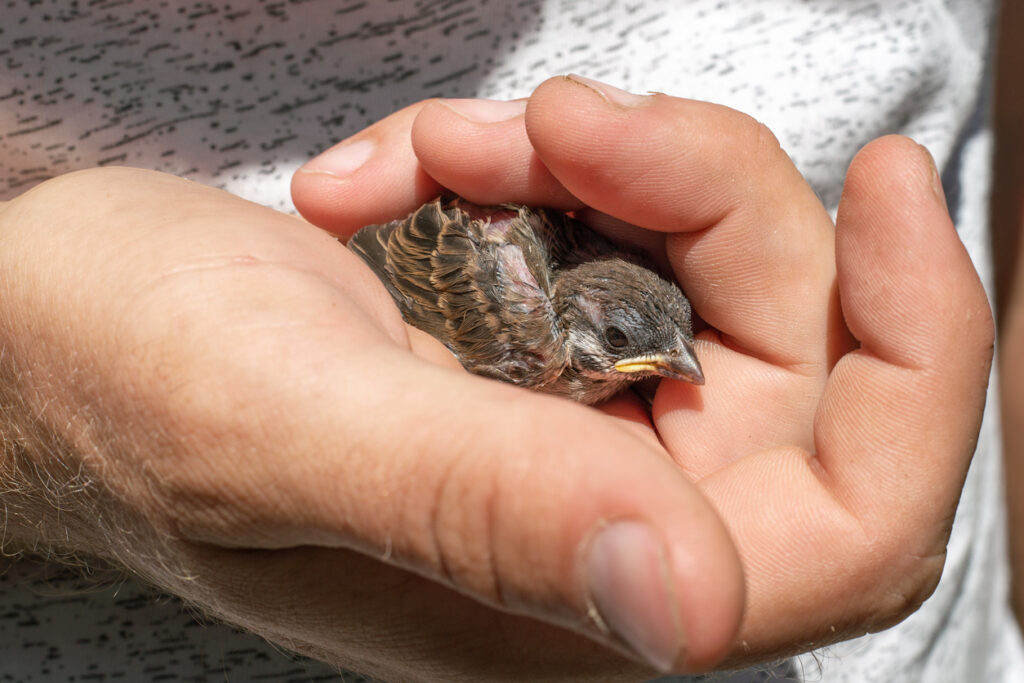
While the scent thing is mostly a myth, that doesn’t mean we should go around picking up every bird we see. Too much human contact can stress wildlife or accidentally separate chicks from their parents for longer than necessary.
If you’re unsure what to do, the safest bet is to observe from a distance. If the bird is injured, has no feathers, or is in immediate danger (like near a cat or road), it’s okay to step in, but with care, and ideally with advice from a local wildlife rescue.
Parent birds are often watching from nearby.
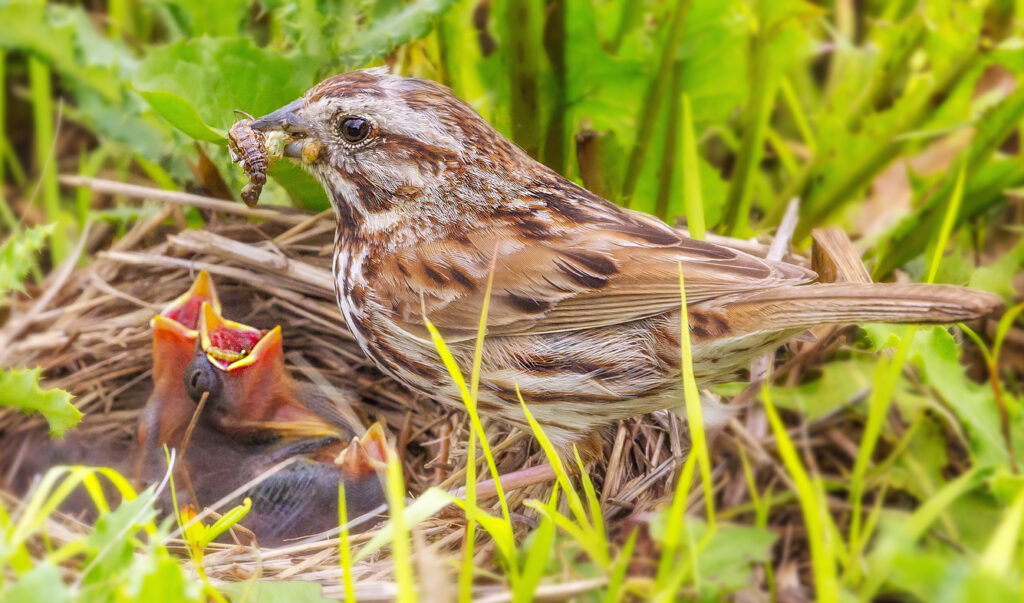
Even if you don’t see the adult bird, chances are it’s close by, waiting for you to leave. Many species will keep their distance when humans are near, only swooping in to feed or defend once the coast is clear. This is why it’s important not to assume a baby bird is abandoned just because it looks alone. It’s likely being watched, fed, and protected from a nearby branch. The best thing you can do in most cases is give it space.
Wildlife rescues are there for the tricky calls.
Sometimes it’s hard to know if a bird needs help. If the baby bird is cold, bleeding, or has closed eyes and no feathers, it probably does. However, if it’s alert, feathered, and hopping around, it may just be in the fledgling phase. If you’re genuinely unsure, calling a local wildlife rescue centre can help you make the right choice. They’ll often walk you through what to do, or not do, based on the bird’s age, condition, and behaviour. Better that than acting on an old myth.
There are things you can do if the nest is unreachable.
If you’ve found a nestling and can’t reach the nest safely, you can sometimes place the bird in a shallow makeshift nest (like a small basket or tub with drainage holes) and secure it in a nearby bush or tree. The parents will usually still care for it there. Don’t keep the chick indoors or try to raise it yourself, especially since wild birds need specific care and diets that are hard to replicate without training. A simple act like creating a safe space nearby can give the parents a chance to step back in naturally.
In short, no, touching a baby bird won’t make its mum reject it
The old wives’ tale is just that: a tale. Bird parents don’t abandon their babies because they smell like you. In fact, they’re often more devoted than we give them credit for. What matters more is understanding the bird’s stage of development and acting accordingly.
If it’s a fledgling, leave it. If it’s a vulnerable nestling, try to return it to the nest or help it stay close by. And if in doubt, ask a rescue for help. Helping nature doesn’t mean staying completely hands-off, but it does mean knowing when to back away.