If you thought domestic kittens were small, wait until you meet the black-footed cat.

Native to southern Africa and weighing less than a bag of sugar, this wild feline is basically a pocket-sized predator with serious attitude. Don’t let the cuteness fool you, though. This mini menace is one of the most skilled hunters in the animal kingdom. Here’s why the black-footed cat might just be the most unexpectedly feral fluffball you’ve never heard of.
It’s the smallest wild cat in Africa.

Full-grown black-footed cats average around 1.5 kilograms. That’s lighter than most house cats, and in some cases, smaller than an adult rabbit. From a distance, you might even mistake one for a large kitten, but don’t try to pick it up like one. Their small size helps them stay hidden in the grasslands and semi-deserts they call home. Think of them as stealthy little ghosts that slink through the savannah, rarely seen but highly effective at what they do.
Despite the name, they’re not all that black.

Despite the name, black-footed cats aren’t completely black. They’ve got sandy-coloured fur with bold dark spots and stripes, and yes, the bottoms of their paws are black. That dark footpad helps protect them from the scorching African ground and gives them their slightly misleading name.
Visually, they’re a perfect blend of cute and fierce. Basically, imagine if a cheetah got shrunk in the wash and came out with attitude and eyeliner. They’ve got the look of a house cat but with serious wild flair.
They’re ridiculously efficient hunters.

These tiny cats are absolute machines when it comes to hunting. They succeed in about 60% of their attempts, which, in the wild cat world, is insanely high. For comparison, lions are lucky if they hit 25%. Sorry, Simba. Black-footed cats have to eat a lot to stay energised, sometimes over a dozen small animals in a single night. They’re fast, strategic, and never waste time. Basically, they hunt like their lives depend on it because they do.
They’re mostly nocturnal, and total loners.

These cats are nighttime prowlers. They sleep in burrows or termite mounds during the day and come alive under cover of darkness. They’re incredibly private, preferring to live and hunt alone, with zero interest in feline friendships. Even during mating season, they keep interaction short and to the point. No romantic lingering. Just meet, mate, and move along. They’re the introverts of the wild cat world: small, elusive, and not here for group chats.
They walk far for such tiny legs.
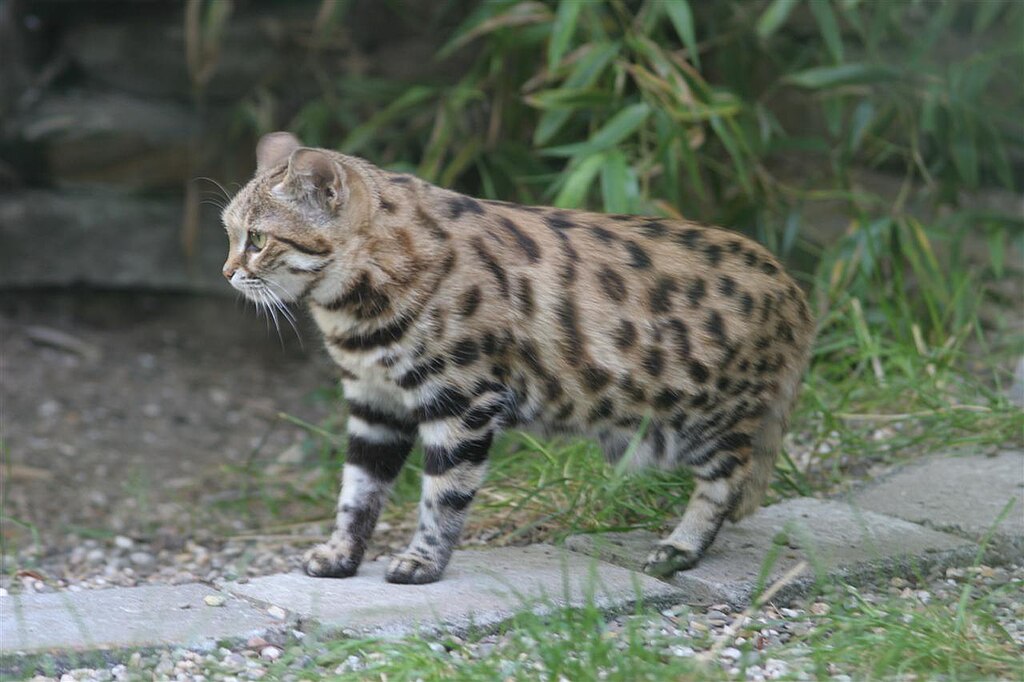
Despite their size, black-footed cats cover serious ground each night, sometimes up to 16 kilometres while hunting. That’s like you power-walking the entire length of Manhattan just to grab dinner (except your dinner’s still alive and running away). They do this using three main hunting techniques: fast pouncing, stalking, and a more casual “sit and wait” style. It all depends on the prey, the mood, and the level of sass that evening.
They’ve got a fierce reputation, and for good reason.
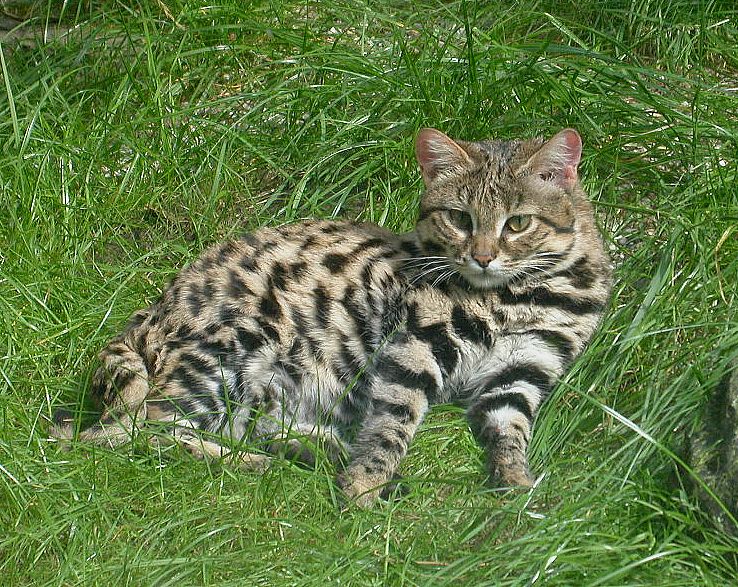
Local folklore sometimes paints the black-footed cat as a little demon. In some regions, they’re known as “ant hill tigers” because of how fierce they are despite their size. They’re not aggressive toward humans, but other small animals should be very afraid. They don’t roar or growl like big cats, but when cornered, they’ll hiss, spit, and swat like they’re ten times their size. And yes, they will stand their ground against animals much larger than them. Absolute main character energy.
Their kittens are miniature chaos gremlins.
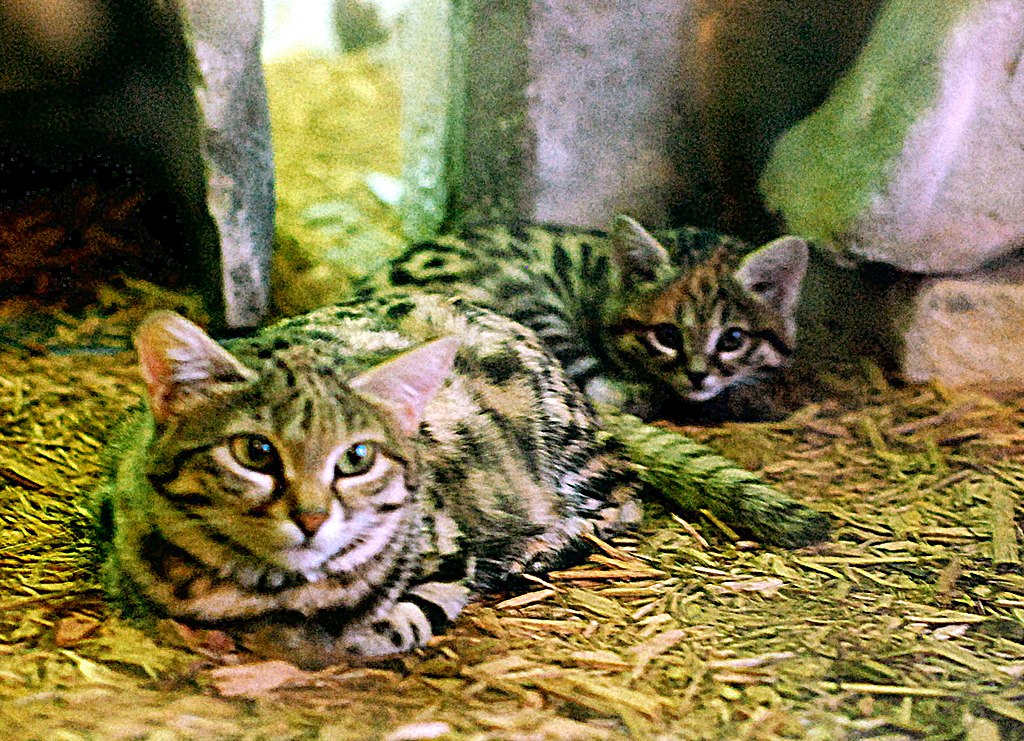
Black-footed cat litters usually have one to three kittens, and they grow up fast. But even in their earliest days, they’re bold. Play-fighting, pouncing, and developing their killer instincts from a young age are all part of the training montage. By three to four months, they’re already accompanying their mother on hunts. No lazy kitten phase here. If you’re born into this family, you’re expected to pull your weight and keep up or get left behind.
They’ve got supercharged senses.
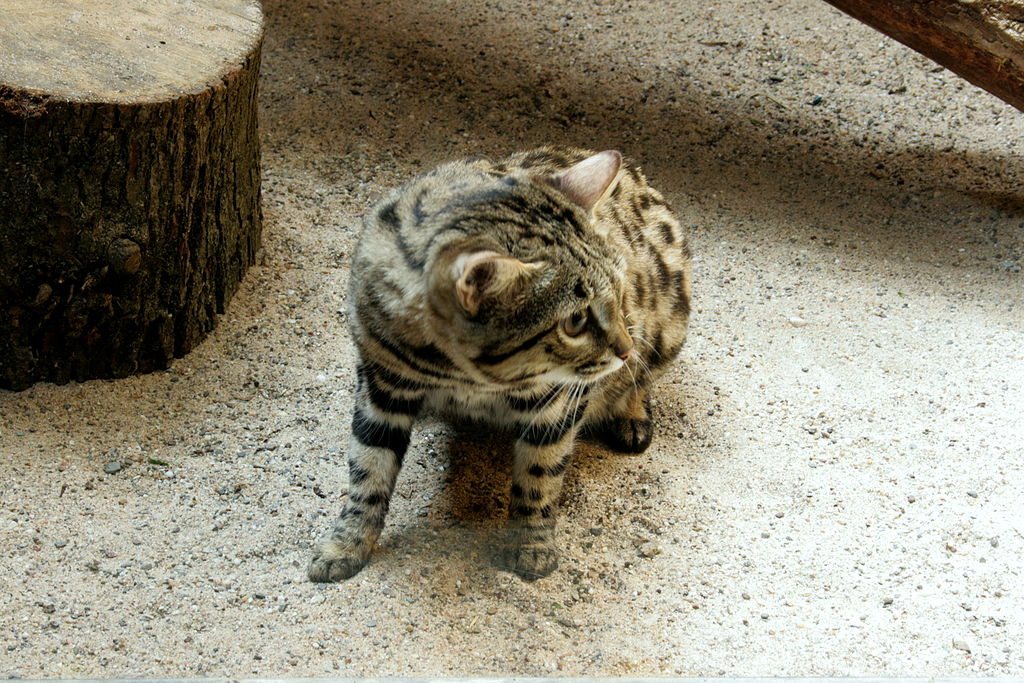
These cats rely on razor-sharp hearing and excellent night vision to survive. They can pick up the tiniest rustle in the grass and track down prey with eerie precision. It’s like they’ve got built-in motion sensors and night-vision goggles. They also communicate with a range of quiet meows, purrs, and growls, though they’re more likely to be heard by prey than people. They’re not big talkers, but they don’t need to be. They let their hunting skills do the talking.
They’re rarely seen in the wild.
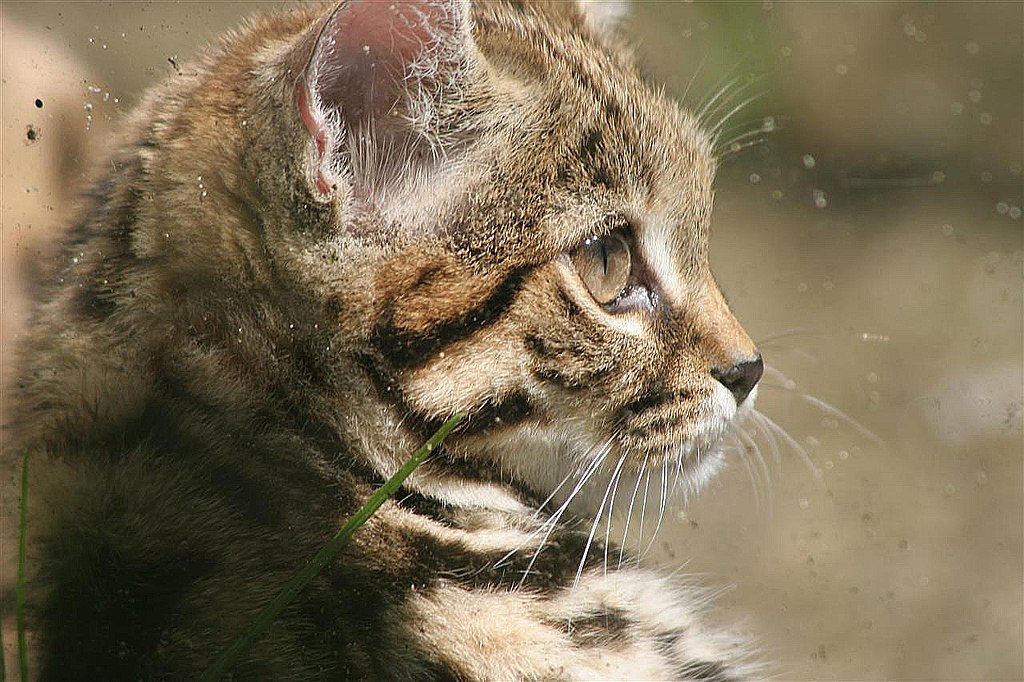
Despite being native to parts of Botswana, Namibia, and South Africa, black-footed cats are hard to spot. They’re secretive, small, and mostly nocturnal, which makes tracking them a serious challenge for researchers. Because they’re so elusive, most of what we know comes from collar tracking and hidden cameras. Seeing one in the wild is like spotting a wild unicorn… if that unicorn could kill a mouse in two seconds flat.
They’re vulnerable, and need protection.

Like a lot of small, specialised predators, black-footed cats are at risk due to habitat loss, rodenticides, and declining prey populations. They’re listed as “Vulnerable” by conservation groups, and their numbers are shrinking quietly and quickly. Because they live in harsh, arid regions and are naturally secretive, conservation is tricky. But they’re too unique (and too weirdly amazing) to lose. Every tiny tiger deserves a chance to keep causing mayhem in the wild.