Nature’s full of brilliant con artists that have evolved to look dangerous when they’re actually completely harmless.

Instead of having real venom or poison, they copy the colouring or behaviour of animals that do have the goods. Predators usually don’t take the risk, so the imitation works surprisingly well. It’s nature’s version of pretending you’ve got backup when you definitely don’t.
What’s interesting is how many species pull this trick. You’d never know just by looking because the whole point is to convince anything nearby that they’re dangerous. Once you learn which ones are just pretending, it changes the way you look at the animal world completely. These are the creatures that look like they could be deadly, but they truly pose no danger at all.
1. Hoverflies pretending to be wasps
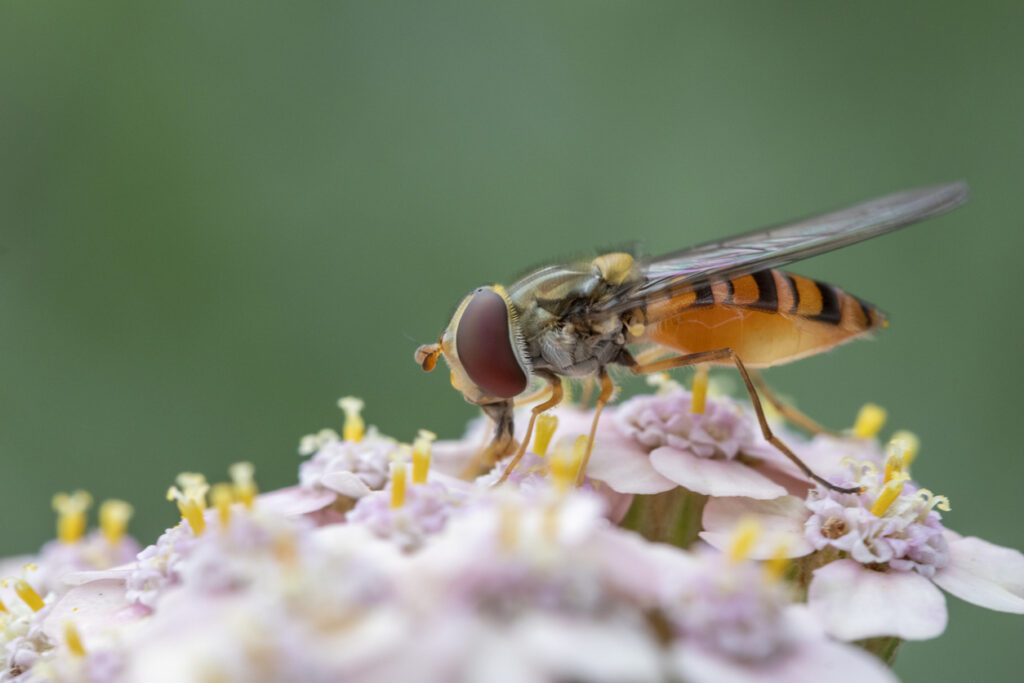
Hoverflies have evolved black and yellow stripes that make them look remarkably like wasps or bees, even though they’re completely harmless flies with no sting whatsoever. They’ve nailed the disguise so well that most people won’t go near them, thinking they’re about to get stung. The mimicry works brilliantly because birds and other predators also fall for it, leaving the hoverflies alone while they peacefully feed on nectar and pollen.
Some species even buzz in a threatening way and hover aggressively near your face to sell the deception. You can tell they’re fakes because they’ve got big fly eyes, shorter antennae and only two wings instead of four, but most creatures don’t look that closely before deciding to avoid them.
2. Milk snakes copying coral snakes

Milk snakes sport bright red, yellow, and black bands that closely resemble the deadly coral snake’s warning colours, even though milk snakes are completely harmless. The similarity is so convincing that many people kill milk snakes thinking they’re venomous, when really they’re gentle creatures that help control rodent populations. The old rhyme “red touches yellow, kill a fellow, red touches black, friend of Jack” helps tell them apart, referring to which colours sit next to each other in the banding pattern.
This mimicry works because predators learn to avoid anything with those bright warning bands after encountering actual coral snakes. The milk snake gets all the protection benefits without needing to produce expensive venom or risk dangerous confrontations.
3. Viceroy butterflies mimicking monarchs

Viceroy butterflies look almost identical to monarch butterflies, which are toxic from eating milkweed plants as caterpillars. The orange and black pattern signals to birds that eating them will cause vomiting and illness, so predators learn to avoid anything with that colouring. Viceroys are actually perfectly edible and not poisonous at all, but they’ve evolved to look so similar that birds can’t tell the difference and leave them alone.
The disguise is so effective that scientists initially thought viceroys were just harmless copycats, though recent research suggests they might have some toxicity of their own. Either way, the dramatic warning colours they share with monarchs keep them much safer than they’d be with different markings.
4. Scarlet kingsnakes imitating coral snakes

Scarlet kingsnakes are another harmless species that’s borrowed the coral snake’s red, yellow, and black warning pattern to avoid being eaten. They’re actually beneficial snakes that eat other snakes, lizards and small mammals, posing absolutely no threat to humans. The colour pattern varies slightly from true coral snakes, but it’s close enough to fool most predators into thinking they’re dealing with something venomous.
This mimicry is so successful that scarlet kingsnakes thrive throughout their range without needing any actual defences. They’re living proof that sometimes looking dangerous is just as effective as actually being dangerous.
5. False coral snakes in South America

Numerous harmless snake species across Central and South America have independently evolved red, yellow, and black banding that mimics various venomous coral snake species in their regions. These false coral snakes get protection from predators without the metabolic cost of producing venom or the risk of getting injured in defensive strikes. The pattern is so effective that multiple unrelated snake species have converged on similar colour schemes.
Each region has its own set of mimics copying the local venomous species, showing how powerful this survival strategy is. Predators can’t afford to test whether each striped snake is dangerous or not, so they avoid them all equally.
6. Drone flies looking like honeybees

Drone flies are harmless hoverflies that look incredibly similar to honeybees, complete with fuzzy bodies and similar colouring. They can’t sting and don’t produce honey, but the resemblance is close enough that most predators and people can’t tell them apart at a glance. The disguise lets them visit flowers for nectar without being bothered, while actual bees do the hard work of maintaining a reputation for being dangerous.
These flies are particularly clever because they’ve even matched their size and flight patterns to honeybees, making the illusion more convincing. Only a close look reveals they’re flies rather than bees, with different eyes, antennae, and wing structures.
7. Banded snake eels mimicking sea snakes

Banded snake eels have evolved black and white stripes that make them look remarkably similar to venomous sea snakes, even though the eels are completely harmless. They’ve even adopted similar swimming movements, undulating through the water in ways that enhance the resemblance. Predators that’ve learned to avoid deadly sea snakes also steer clear of these imitators, giving the eels protection without any actual venom.
The mimicry extends to behaviour as well, with the eels sometimes swimming near the surface and sticking their tails up like sea snakes coming up to breathe. It’s a comprehensive disguise that works because predators can’t afford to take chances with anything that looks like a sea snake.
8. Wasp beetles copying wasps

Wasp beetles have black and yellow stripes, long antennae that look like wasp legs, and jerky movements that mimic wasp behaviour, even though they’re harmless beetles with no sting. They’re often found on flowers in summer where they feed on pollen, looking convincingly wasp like enough that most predators avoid them. The disguise is so good that many people refuse to believe they’re actually beetles until they look very closely.
These beetles have even evolved to run around flowers in the same agitated way that wasps do, selling the deception through movement as well as appearance. It’s a brilliant example of how effective mimicry can be when multiple elements come together convincingly.
9. Mimic octopuses copying multiple species
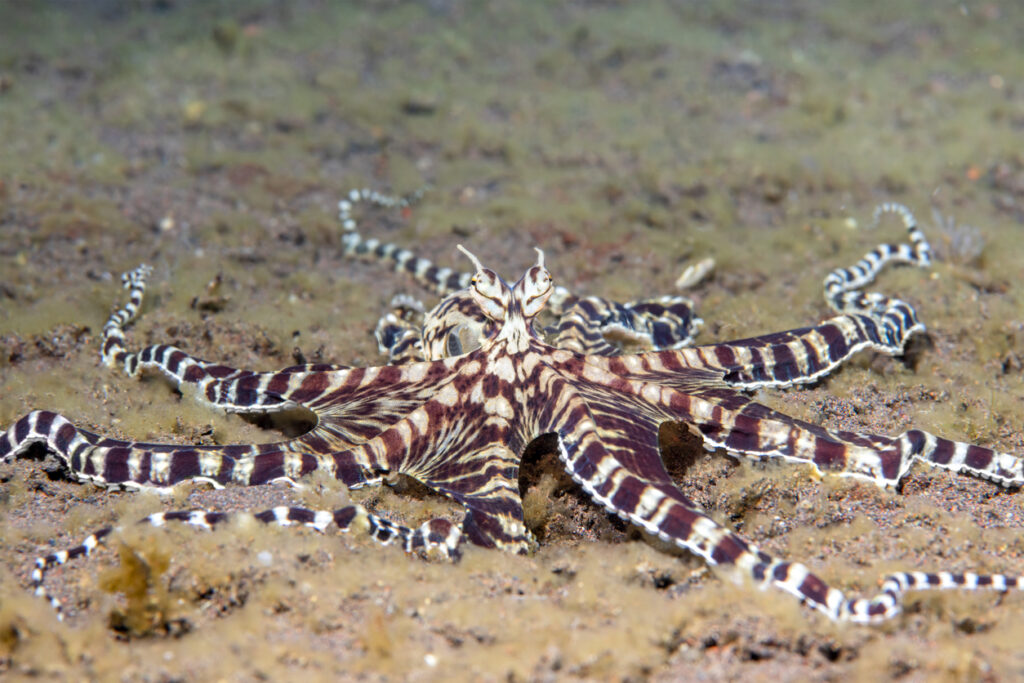
Mimic octopuses are extraordinary creatures that can impersonate several different venomous or dangerous animals depending on the situation. They’ve been observed mimicking lionfish, sea snakes, jellyfish, and flatfish by changing their colour, pattern, shape, and behaviour to match whichever species will best protect them from a particular predator. This flexibility makes them unique among mimics, as they’re not locked into copying just one dangerous species.
The octopus will assess the threat and choose the most appropriate disguise, sometimes even mimicking multiple species in sequence. It’s possibly the most sophisticated mimicry in the animal kingdom, showing that looking dangerous doesn’t always mean copying just one thing, but rather having a whole repertoire of threatening appearances to draw from.