Autumn doesn’t have to mean your garden is fading into gloom.
In fact, some plants save their best performance for this very season, standing tall and colourful just before everything retreats for winter. While it’s true that most need to be planted earlier in the year, they’re well worth the wait when they burst into life just as the days shorten. These are the UK favourites that prove the garden still has plenty to offer at the year’s end.
1. Japanese anemones
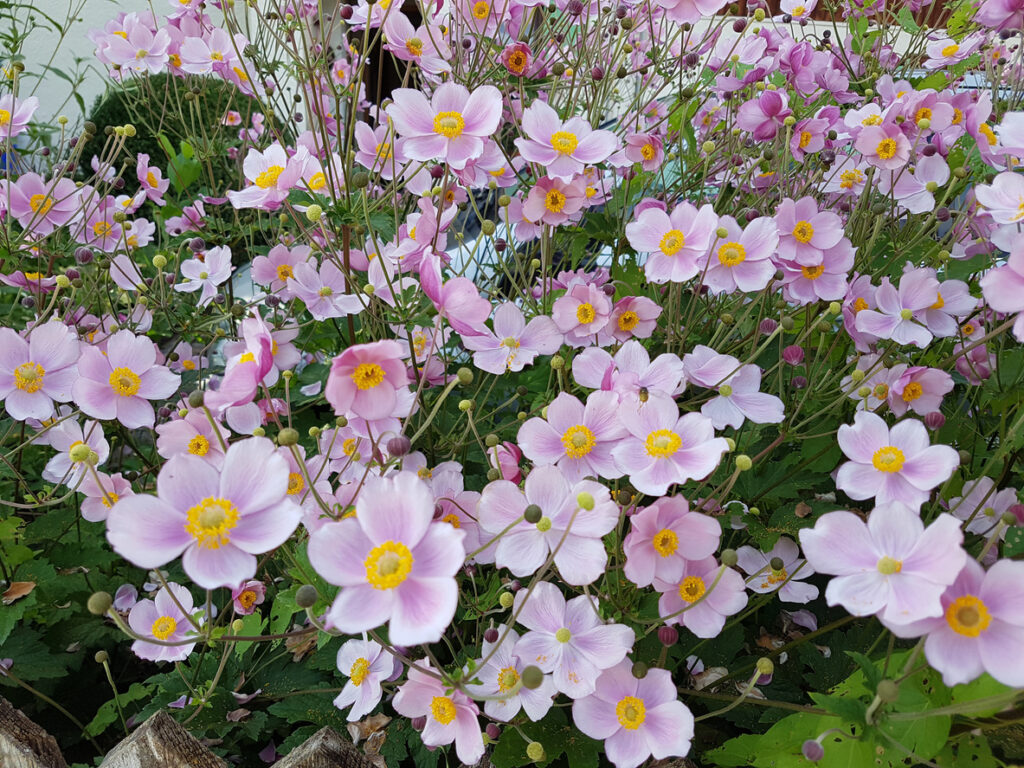
By late summer and into autumn, Japanese anemones reach their stride. Their tall, wiry stems rise above fading borders, carrying soft white or pink flowers with a golden centre. They’re especially good at lighting up shady corners where little else thrives at this point in the year, making them a reliable choice for longer-lasting colour.
When the first frosts hit, the foliage collapses and the stems vanish almost overnight, but the plant isn’t gone. Underground, its roots are quietly resting, ready to push through again the following summer. Gardeners love them not just for their graceful display but for the way they return, year after year, with almost no fuss.
2. Sedums
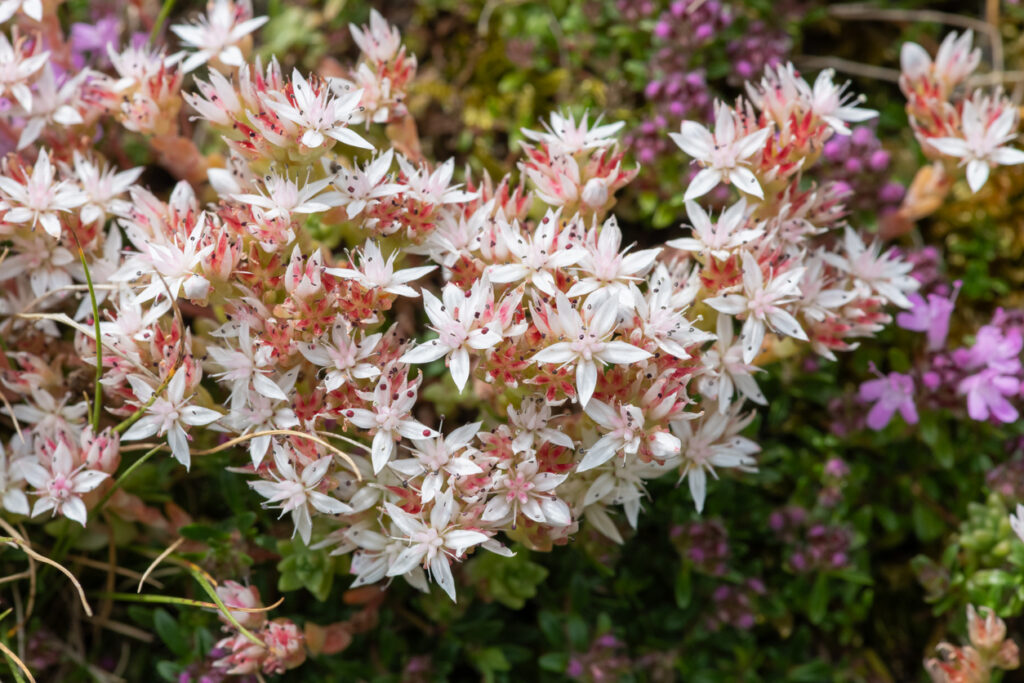
Sedums, often called “ice plants,” are one of the UK’s most dependable late performers. Their flower heads begin as pale green, transition to pink, and finally deepen into rich crimson. That gradual colour change stretches their display across weeks, and they’re a magnet for bees and butterflies still searching for nectar in the cooler months.
Once winter bites, the fleshy stems collapse, but many gardeners leave the seed heads standing for structure. On frosty mornings, the dried clusters catch the light beautifully. Come spring, a tidy trim at the base makes way for fresh new growth that will build into the same architectural clumps by summer.
3. Cyclamen hederifolium
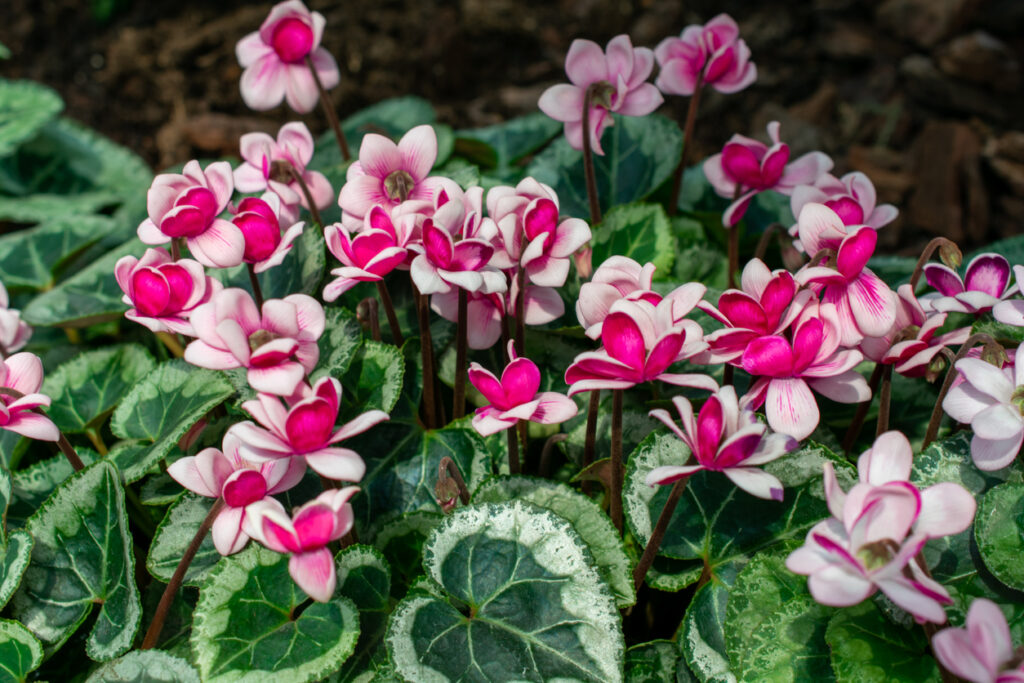
This hardy cyclamen is a little marvel in British gardens. Its delicate pink or white blooms often appear before the distinctive marbled leaves, spreading low across the soil just as many other plants are shutting down. The sight of them carpeting woodland edges or shady beds in autumn feels like a quiet surprise.
Unlike many autumn flowers, the show doesn’t end when the petals drop. Through winter, the attractive foliage remains, giving a fresh green lift to otherwise bare ground. By spring, it dies back completely, but the underground tubers endure. When the air cools again the following year, the cycle starts all over.
4. Nerines
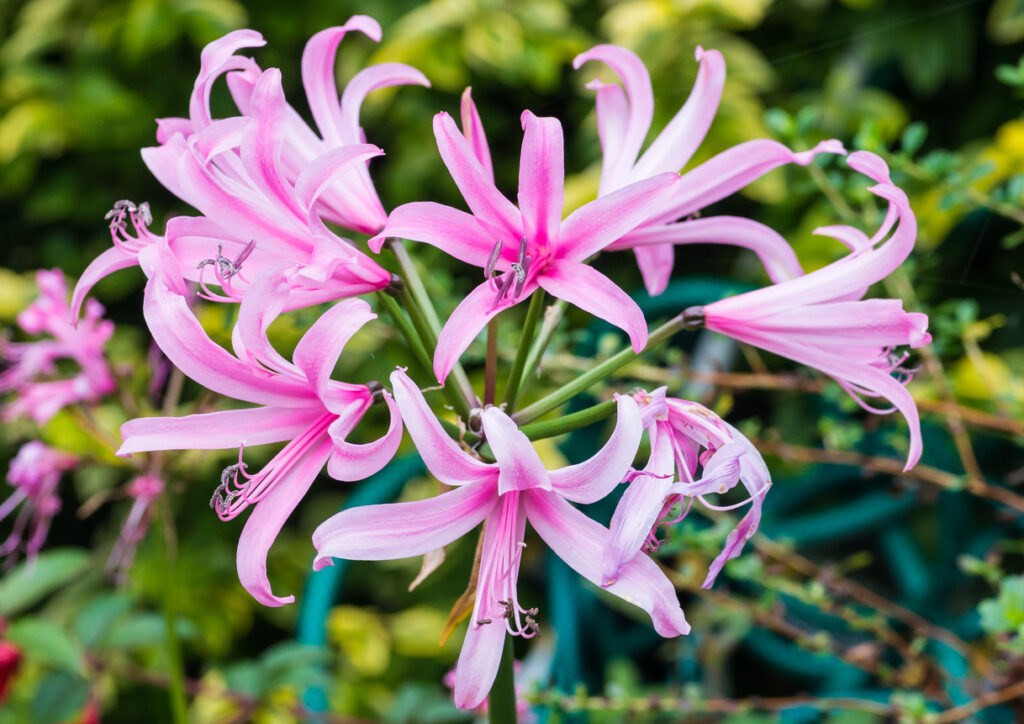
Nerines, often known as Guernsey lilies, hold off until very late in the season before bursting into flower. Their star-shaped blooms, usually in shades of shocking pink, stand out vividly against the fading greens of early autumn. They thrive in sunny, sheltered spots and will often carry on into October, long after many borders look tired.
Once flowering ends, their strappy leaves emerge briefly before also dying back. What’s left behind is nothing visible, but the bulbs underground are safe and sound. With the return of shorter days the following autumn, they send up the same striking blooms again, often stronger each year if left undisturbed.
5. Autumn crocuses
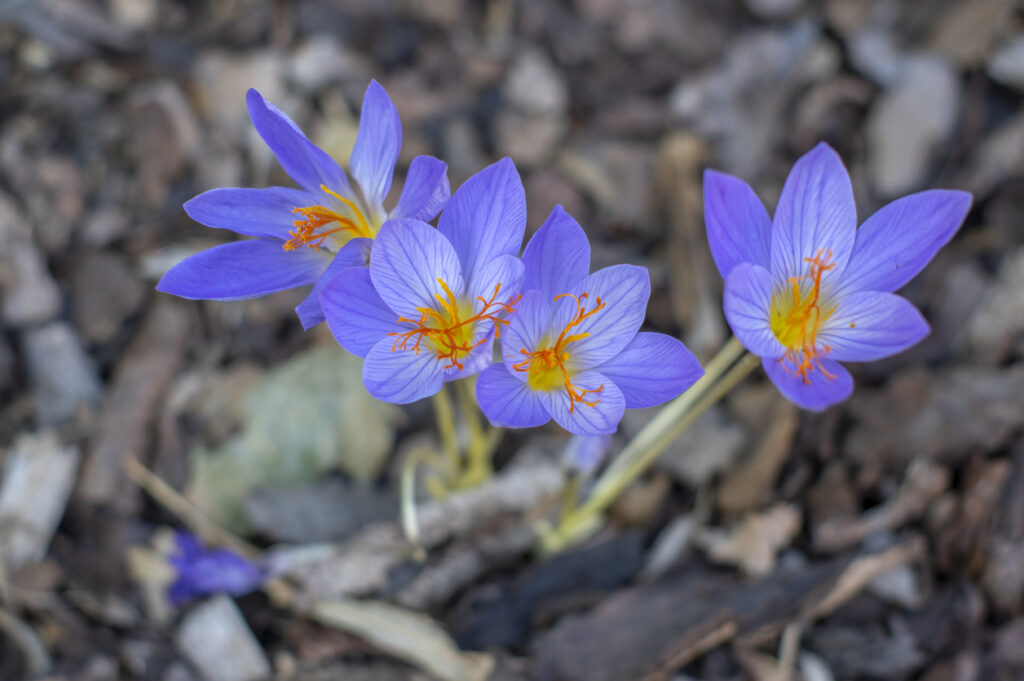
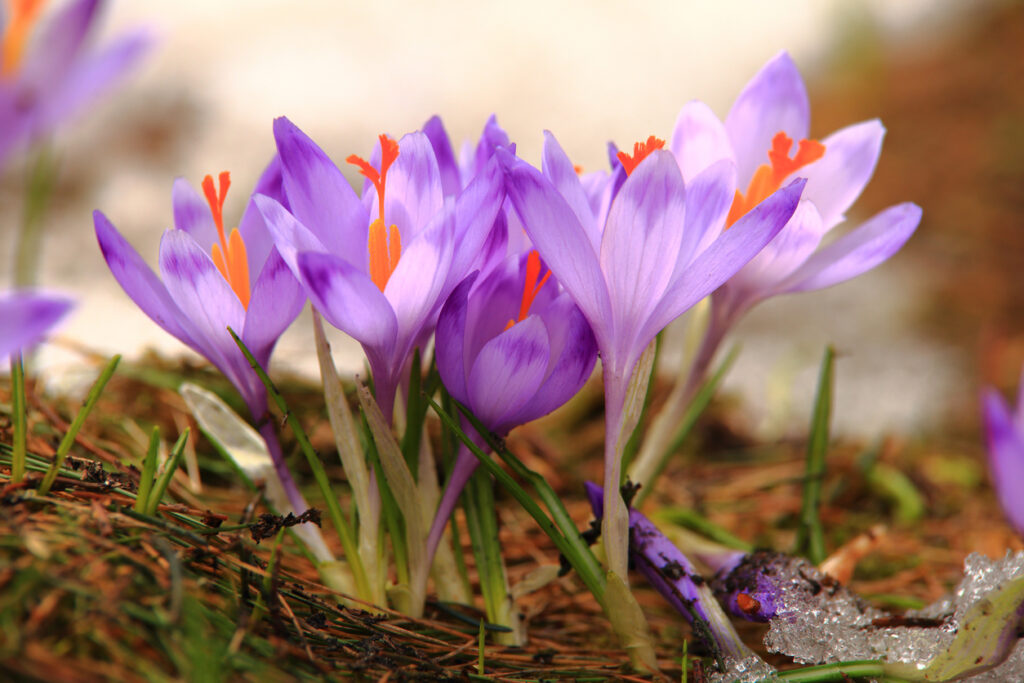
Colchicums, better known as autumn crocuses, are one of those plants that catch you off guard. Just as the garden seems to be emptying of colour, their lilac flowers suddenly appear, often pushing straight up through grass or bare soil. They can transform a dull patch almost overnight.
Their unusual rhythm adds to the charm. The flowers appear in autumn, but the leaves don’t show until spring, vanishing again by summer. By the time you’ve forgotten about them, the bulbs are quietly waiting underground for their dramatic re-entry the following autumn.
6. Asters
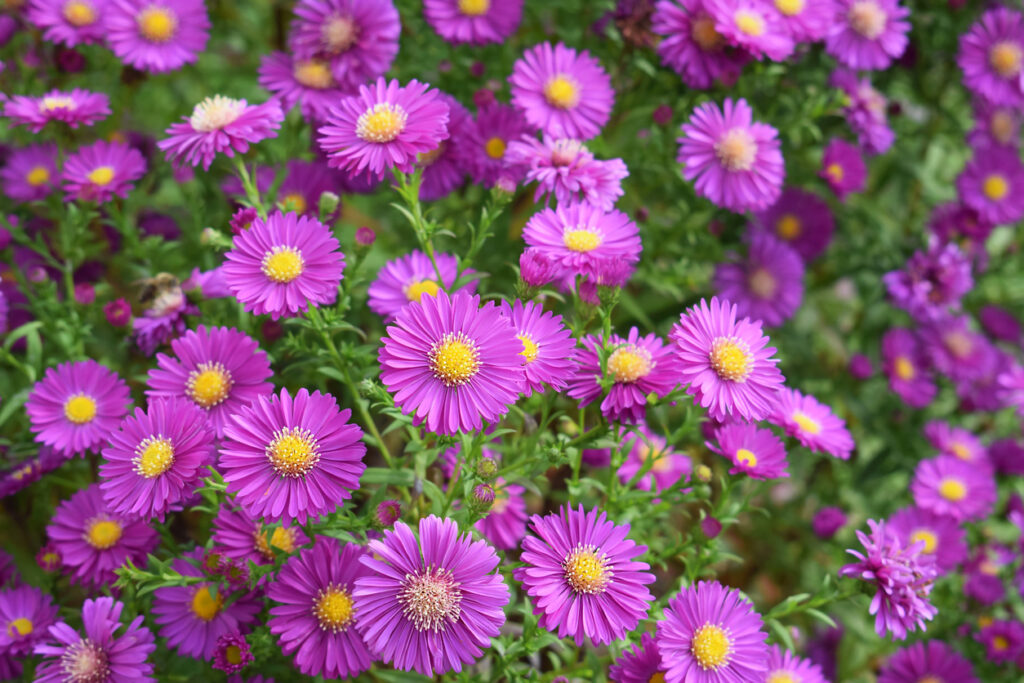
Michaelmas daisies, or asters, are a true classic for UK gardens. Their daisy-like flowers in shades of purple, pink, or white arrive right on time to carry borders into October. They’re especially valued because they’re still going strong when most perennials have packed up for the year.
After their long show, the plants collapse at the first frosts. Cutting them back keeps them tidy and encourages vigorous regrowth when spring returns. Many gardeners treasure asters because they’re generous, cheerful, and hardworking. That’s the kind of plant that never lets the season end too abruptly.
7. Heleniums
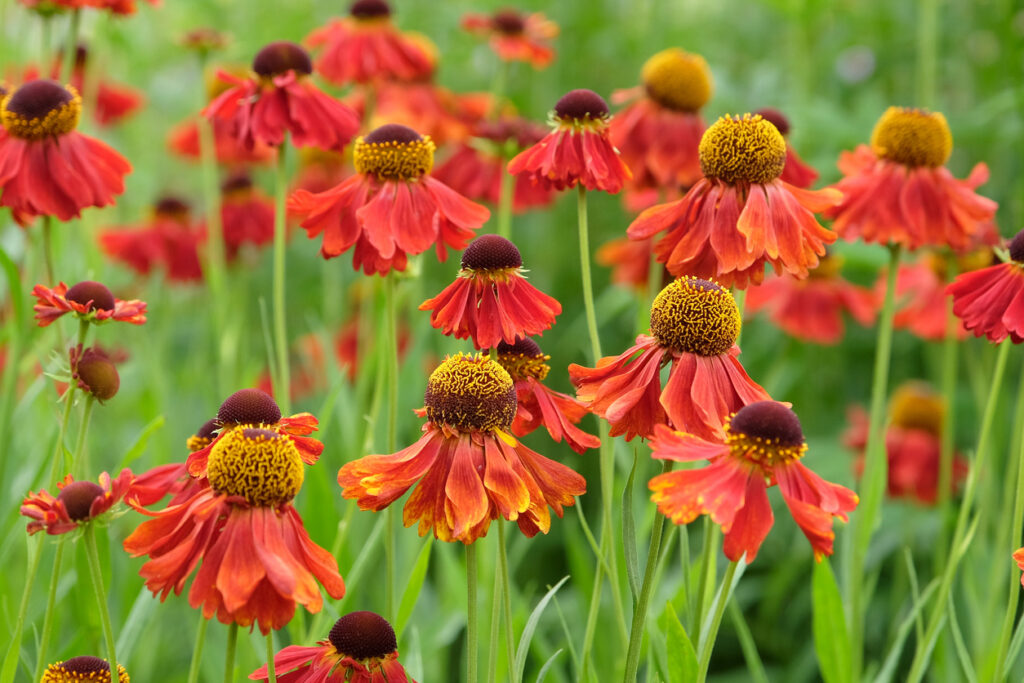
For fiery impact in late summer and autumn, heleniums are hard to beat. Their flowers come in blazing tones of orange, red, and yellow, creating warmth in borders just as evenings turn cooler. They peak in August and September but often keep flowering well into October, which makes them a reliable choice for bridging the seasons.
Once the show is over, the stems brown quickly and die back. Cutting them down in winter clears the way for fresh growth in spring. By late summer, the cycle builds again, bringing the same burst of fire to the garden when colour is most welcome.
8. Dahlias
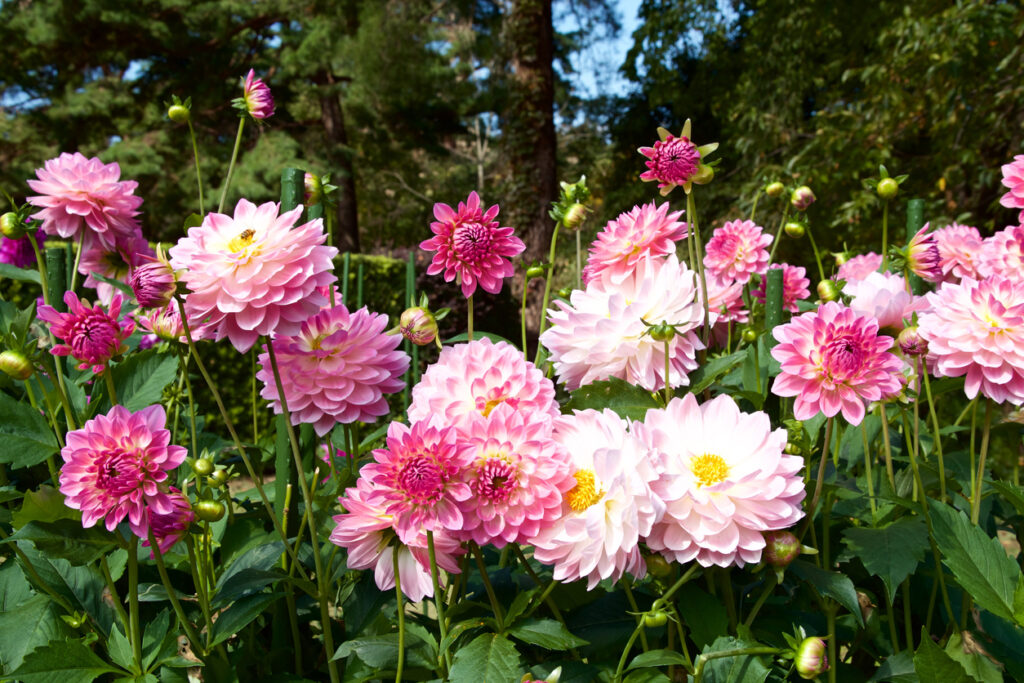
Few plants rival the drama of dahlias. Their flowers can be neat, round pompoms or enormous dinner-plate blooms, and their colours range from soft pastels to bold purples and reds. In many UK gardens, they provide the most flamboyant display of the year, often lasting until the first frosts bring them to a halt.
Dahlias need a little extra care compared to some perennials. In colder parts of the UK, gardeners lift and store the tubers after frost, while in milder areas they may be left in the ground under a thick mulch. Either way, they return with gusto, rewarding the effort with another round of extravagant flowers the following summer.
9. Rudbeckias

Rudbeckias, or black-eyed Susans, are staples of cottage gardens. Their golden-yellow petals and dark centres provide a warmth that feels especially comforting as autumn sets in. They’re brilliant for filling gaps in borders, and their cheerful look makes them one of the most uplifting late-season flowers.
When their season ends, the plants wither completely above ground. Cutting them back in spring encourages fresh, leafy growth, and by late summer they’re back, bringing their trademark glow to the garden once more.
10. Monkshood
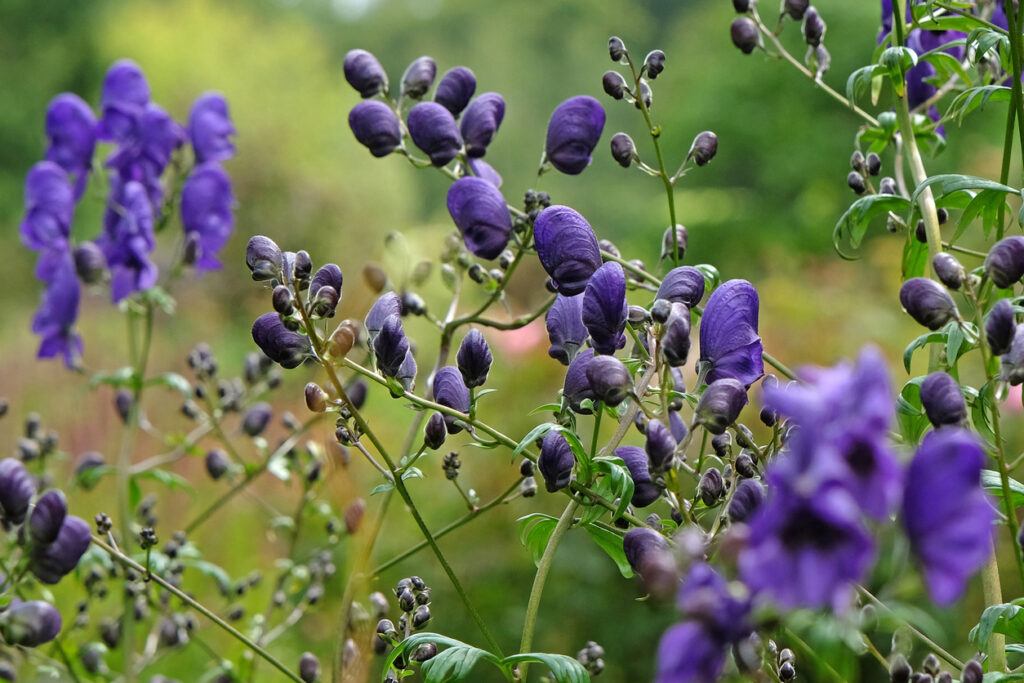
Monkshood, with its tall spikes of deep blue flowers, is another plant that saves its best for the end of the season. It’s particularly effective in shaded areas, where its rich colour creates intensity just as lighter summer flowers fade away.
As soon as winter sets in, it disappears underground. The roots bide their time until conditions are right again, pushing up fresh, strong stems the following year. It’s a perennial that rewards patience, reminding gardeners how beauty returns in cycles.
11. Hardy chrysanthemums
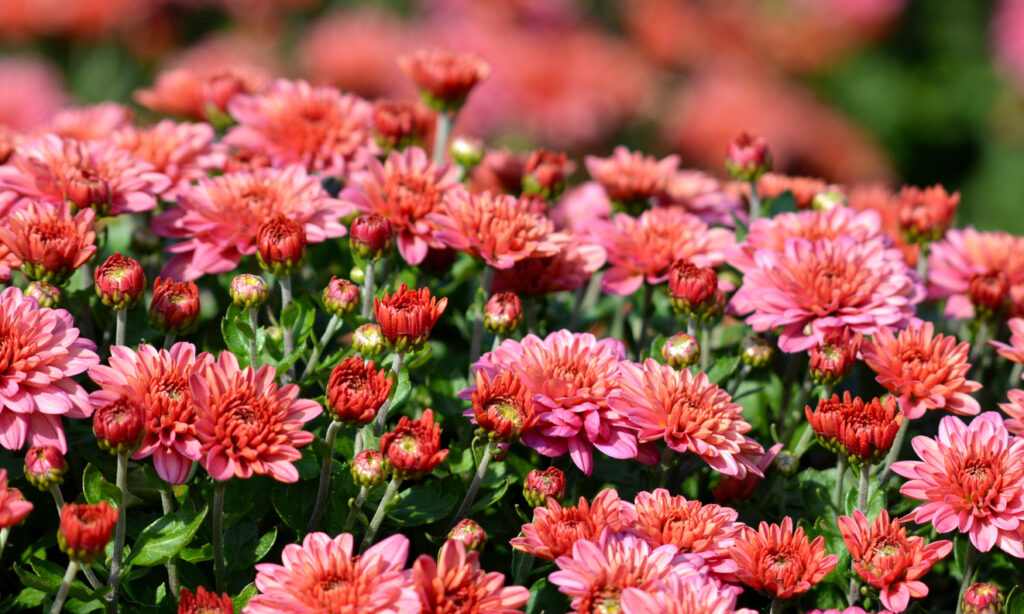
Not the fragile blooms you see in shops, but the hardy varieties bred for gardens in Britain. These chrysanthemums come into their own in late autumn, producing dense heads of flowers in reds, oranges, purples, and pinks. They often carry on through October and well into November, keeping borders alive almost until winter begins in earnest.
Once frost takes them down, a quick cut back and mulch helps protect the roots. Come the following year, they regrow into another generous clump, proving their toughness as well as their beauty.
12. Kaffir lilies
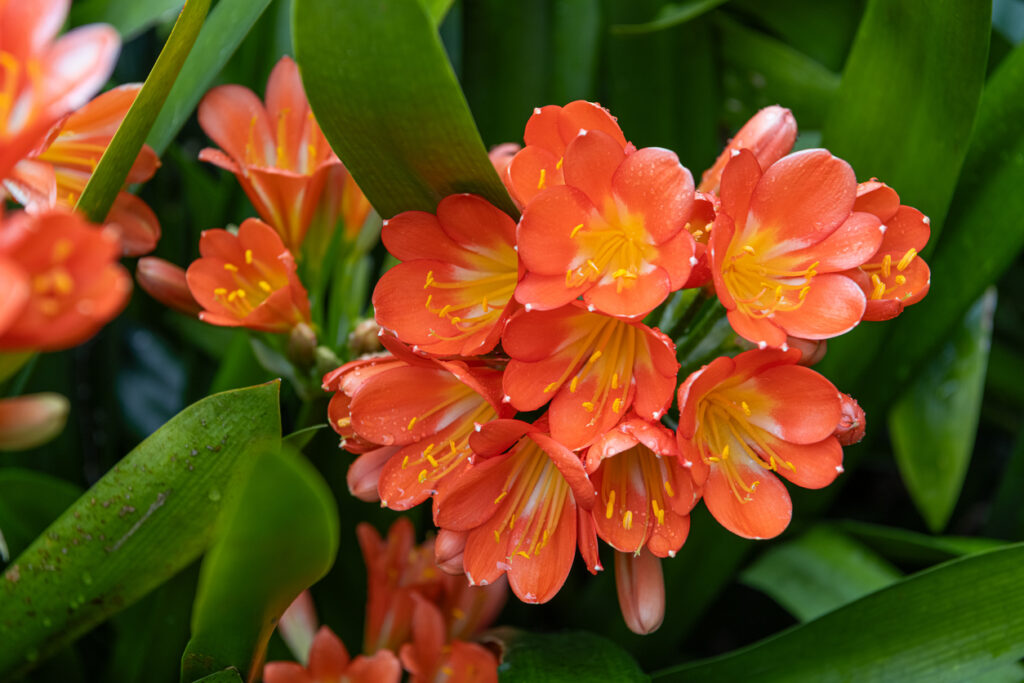
Kaffir lilies, also known as schizostylis, bring a flush of coral-pink flowers in September and October. They’re particularly good for damp areas of the garden, where they thrive happily while many other plants struggle. Their long-lasting blooms often continue right into late autumn, keeping colour alive when most borders are bare.
By winter, the foliage dies down, but the rhizomes underground remain strong. As soon as the conditions are right, new shoots push up again, ready to provide the same late-season display the following year. They’re a dependable way to make autumn feel less like an ending and more like another high point in the gardening calendar.