When it comes to bears, there’s one variety we don’t talk about enough.
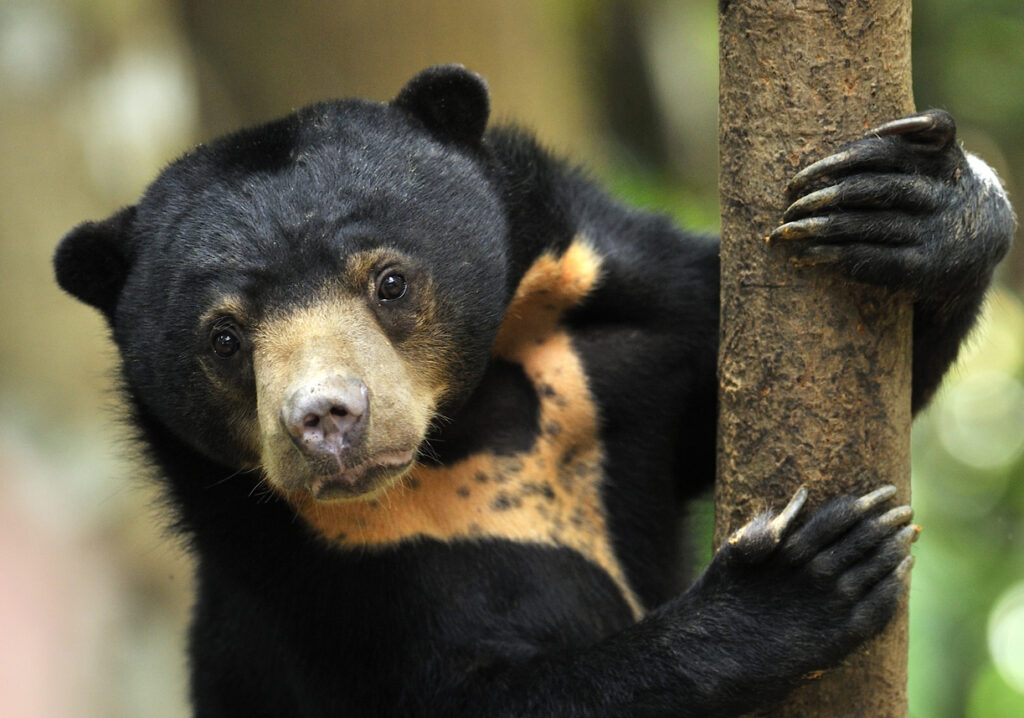
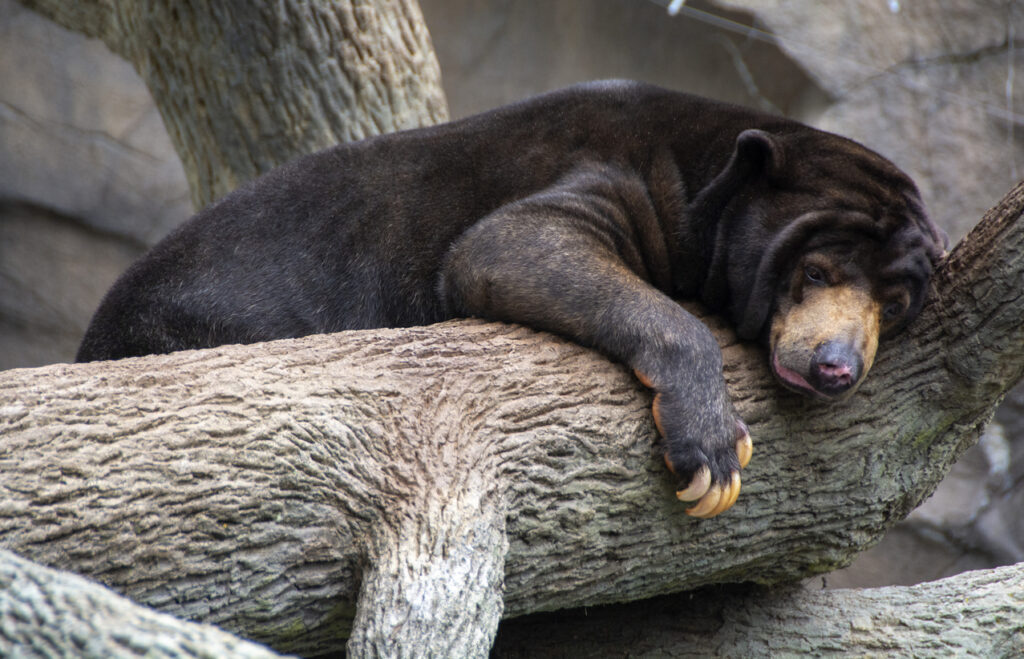
Sun bears look like someone tried to draw a bear from memory and got the proportions completely wrong. They’re proper odd little creatures that don’t quite fit what you’d expect from a bear, and the more you learn about them, the stranger they get. They also happen to be incredibly adorable and biologically fascinating, which is why we should all know a bit more about them.
They’re absolutely tiny for bears.
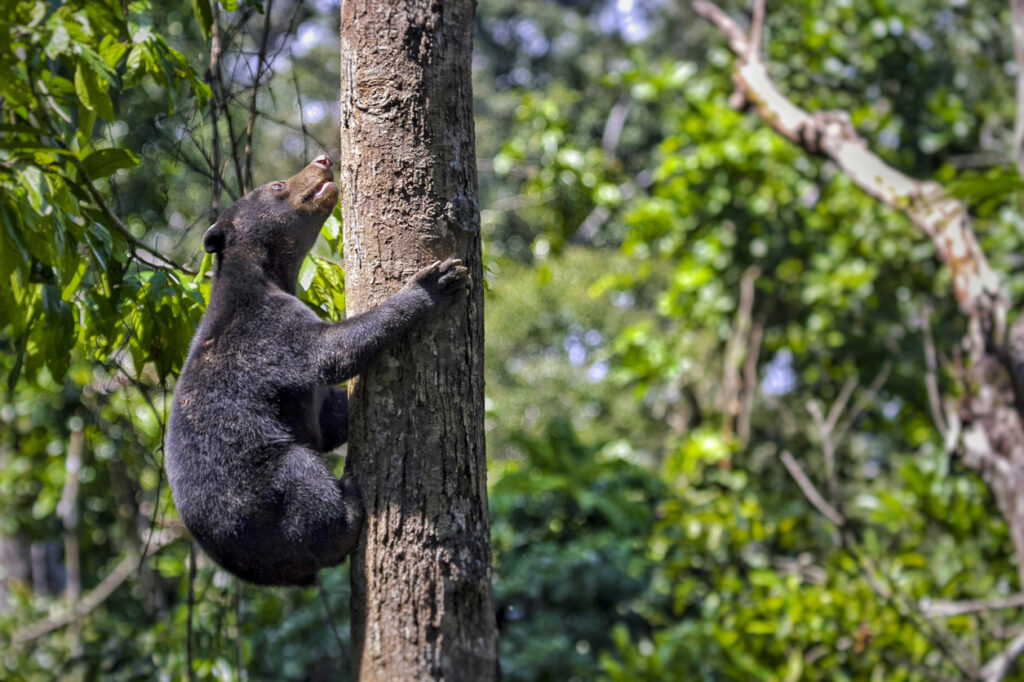
Sun bears are the smallest bear species in the world, weighing around 27 to 65 kilograms, which is about the size of a large dog, really. When you think bear, you picture something massive and intimidating, but sun bears are more like bear-sized teddy bears that somehow came to life.
Their small size makes them look almost comical next to other bears. A grizzly or polar bear could be ten times their weight easily. They’re so small that they’re often mistaken for something other than bears when people first see them in person.
Their tongues are ridiculously long.
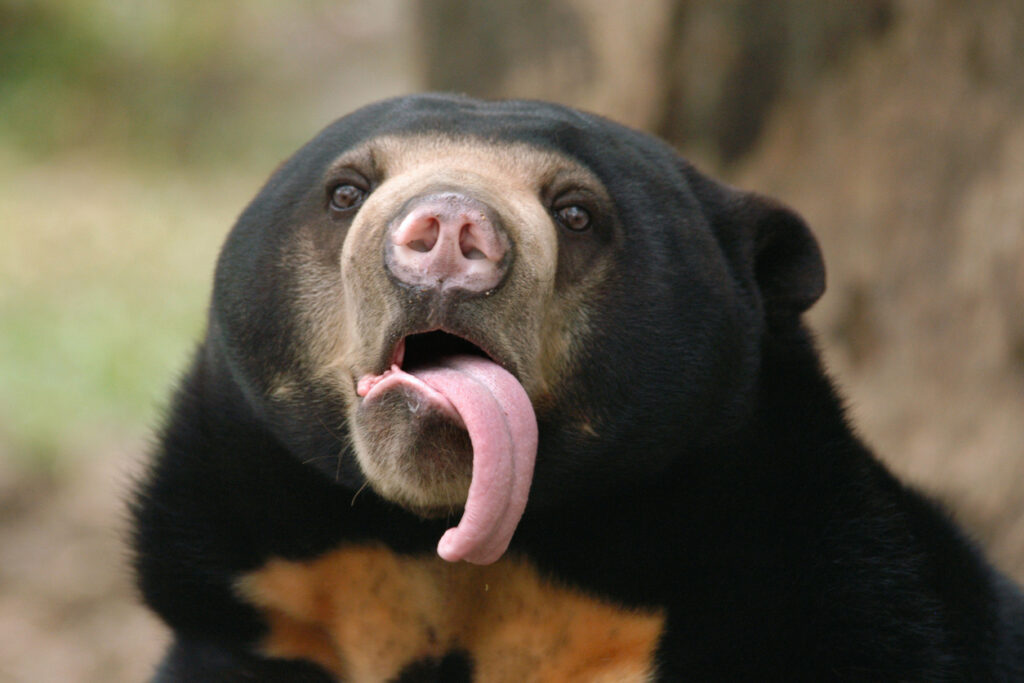
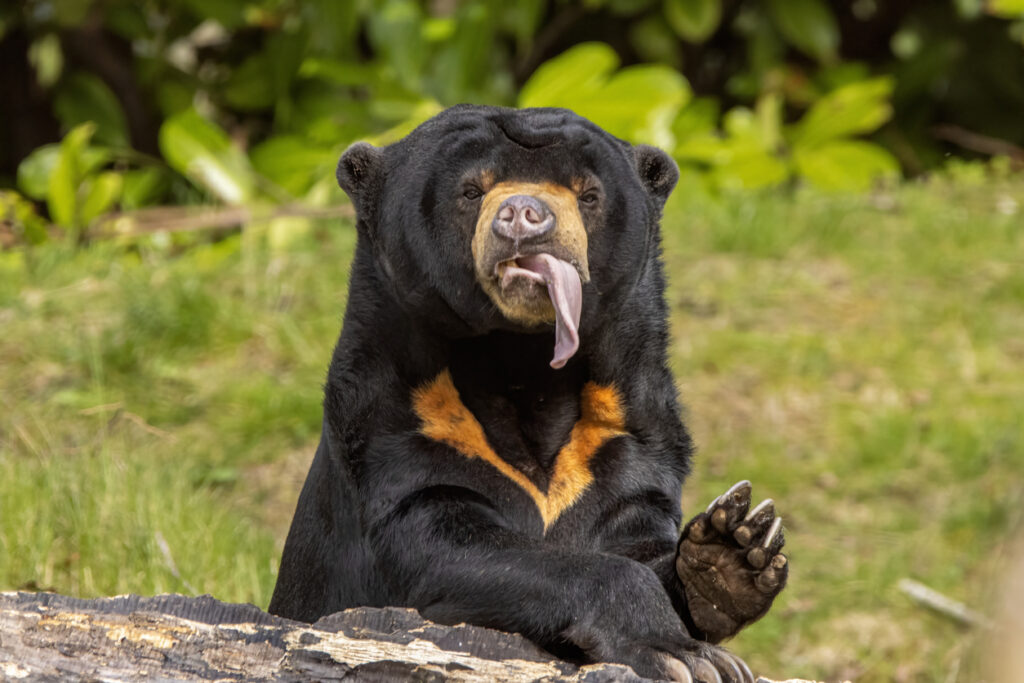
Sun bears have tongues that can reach up to 25 centimetres long, which is absolutely mental when you consider their body size. They use these massive tongues to reach deep into tree holes and extract honey, insects, and larvae from places other animals can’t access at all.
The tongue looks almost alien when you see it fully extended. It’s thin, incredibly flexible, and seems way too long for their heads. They can basically lick things that are impossibly far away, which is brilliant for their diet but looks absolutely bizarre in action.
They’ve got this weird chest marking.
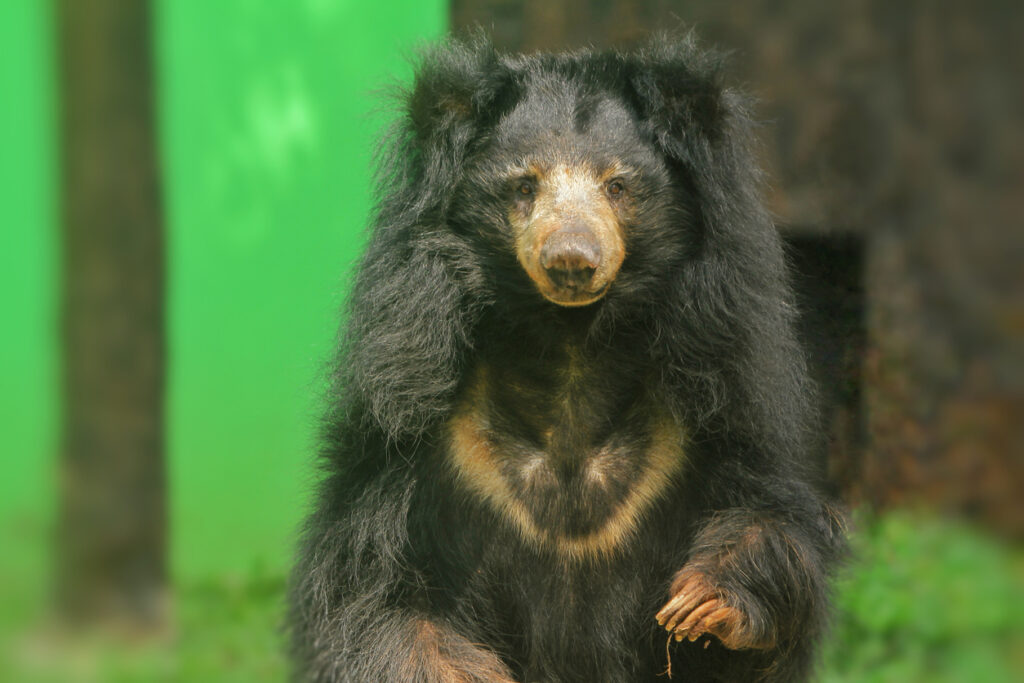
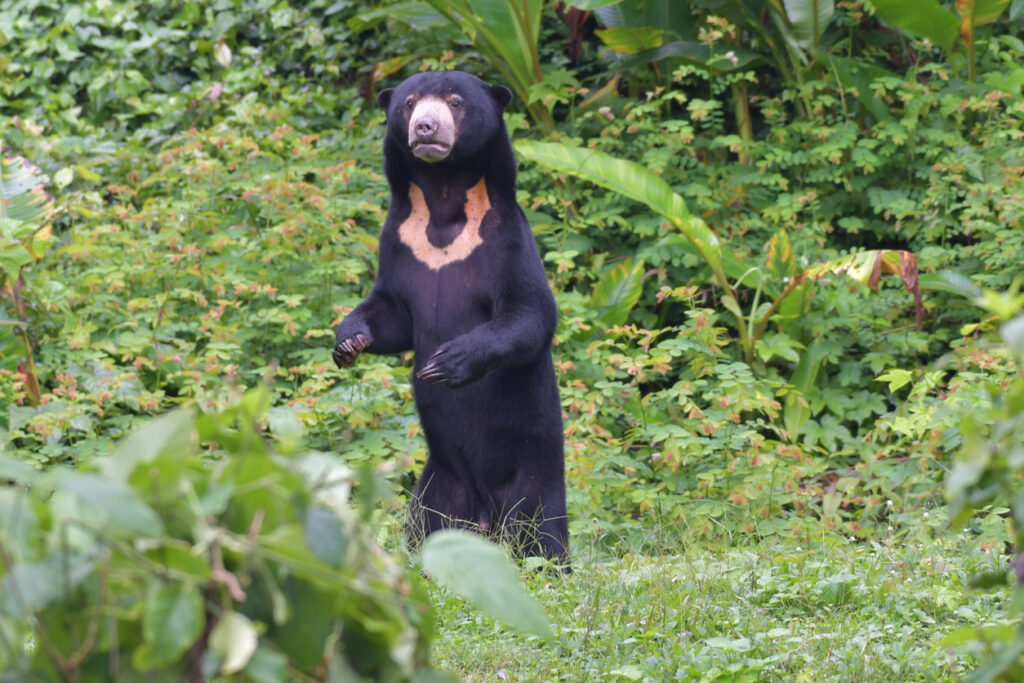
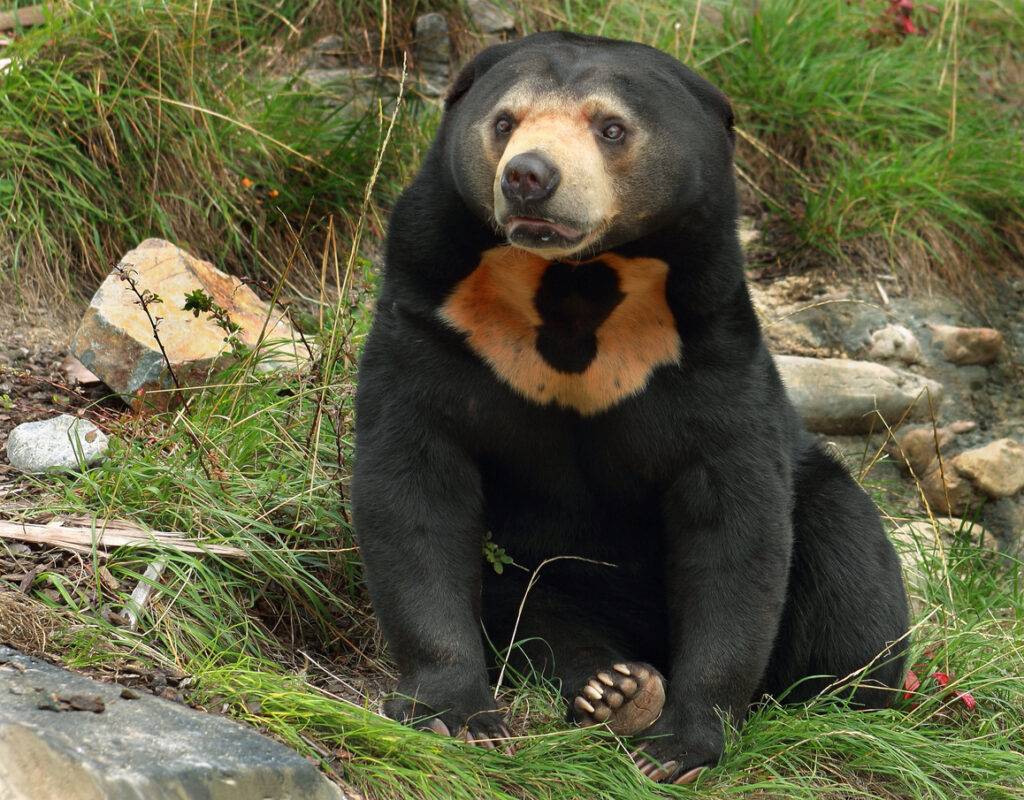
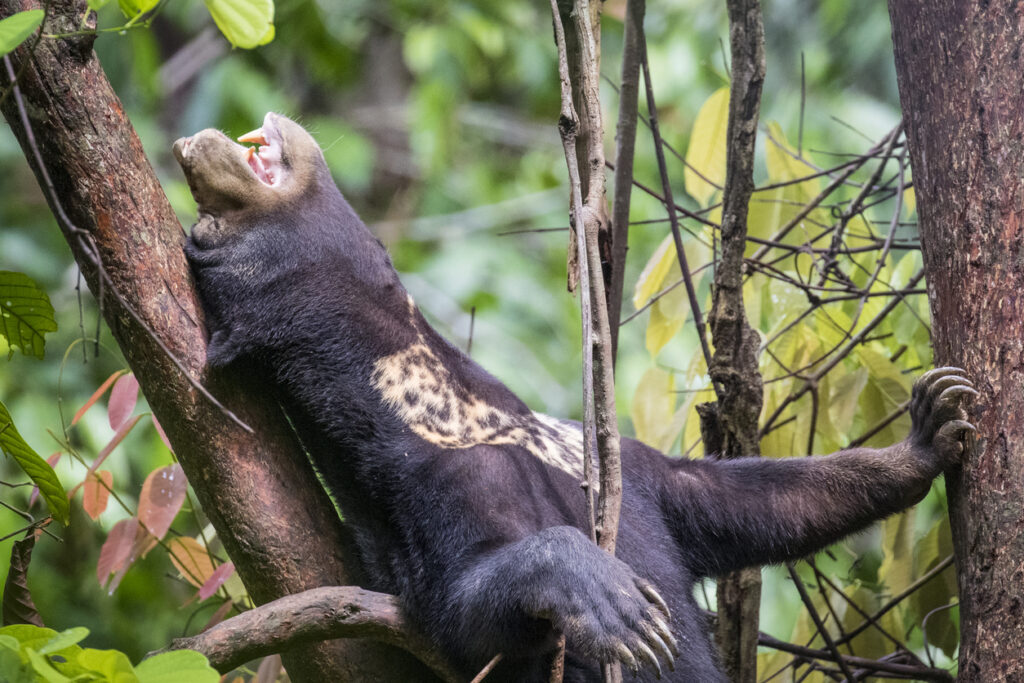
Most sun bears have a distinctive pale or golden patch on their chest that supposedly looks like a rising sun, which is where their name comes from. But the marking varies loads between individuals, so some have clear crescents while others have irregular splodges that don’t look sun like whatsoever.
No other bear species has this chest patch, and scientists aren’t entirely sure what purpose it serves. It might be for recognition between bears, or temperature regulation, or just a random marking. Either way, it makes them instantly recognisable and adds to their odd appearance.
Their fur is weirdly short and sleek.
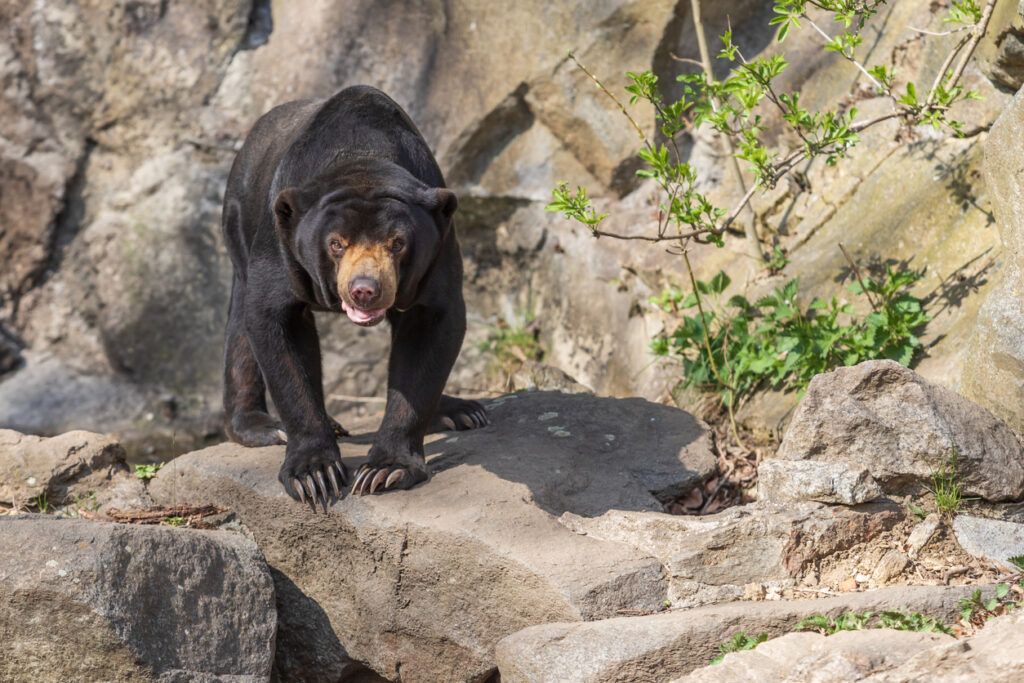
Unlike the thick, shaggy fur of most bears, sun bears have short, sleek coats that look almost oily. This makes sense because they live in hot, humid tropical forests where thick fur would be a nightmare, but it makes them look naked and vulnerable compared to fluffier bears.
The short fur shows off their body shape more, which emphasises how oddly proportioned they are. You can see their loose skin and how their bodies move, which isn’t something you notice with fluffier bears. They look like they’re wearing a suit that’s slightly too big.
They can rotate their paws inward.

Sun bears have exceptionally long, curved claws and can turn their front paws inward, which makes them incredible climbers. They can grip tree trunks and branches in ways other bears simply can’t, spending loads of time in trees despite being relatively heavy for their size.
This adaptation is brilliant for their forest lifestyle, where food is often up high. But watching them climb looks genuinely odd because their paws bend at angles that seem wrong. They move through trees more like oversized squirrels than bears, which is weird to witness.
They make the strangest vocalisations.
Sun bears don’t roar like you’d expect bears to. Instead, they make these bizarre huffing, grunting, and barking sounds that sound more like pigs or dogs than bears. When they’re content, they make soft cooing noises that are genuinely quite sweet but completely unexpected from something called a bear.
Their vocal range is surprisingly diverse for such a small bear. They can be quite loud when threatened, but their everyday sounds are just odd. If you heard them without seeing them, you’d never guess it was a bear making all that racket in the trees.
Their lips are incredibly flexible and mobile.
Sun bears can extend and manipulate their lips in ways that look almost like a primate. They use them to suck up insects, extract food from tight spaces, and generally manipulate their environment. Watching them eat is bizarre because their whole face seems more mobile than it should be.
This lip flexibility combined with their massive tongue gives them this weird, almost elastic face. They can make expressions and mouth movements that other bears simply can’t, which makes them look more intelligent and aware than you’d expect. It’s genuinely quite unsettling at times.
They’re surprisingly aggressive for their size.
Don’t let the small size fool you. Sun bears are known for being particularly fierce and unpredictable, especially when surprised or protecting cubs. Their reputation among people who work with them is that they’re far more aggressive than larger bear species, which seems backwards given how tiny they are.
That aggression probably evolved because being small in a forest full of tigers and other predators means you need attitude to survive. They’ll stand their ground rather than run, using their sharp claws and powerful jaws to defend themselves. Size definitely isn’t everything with these weird little bears.
They’re mostly active at night.
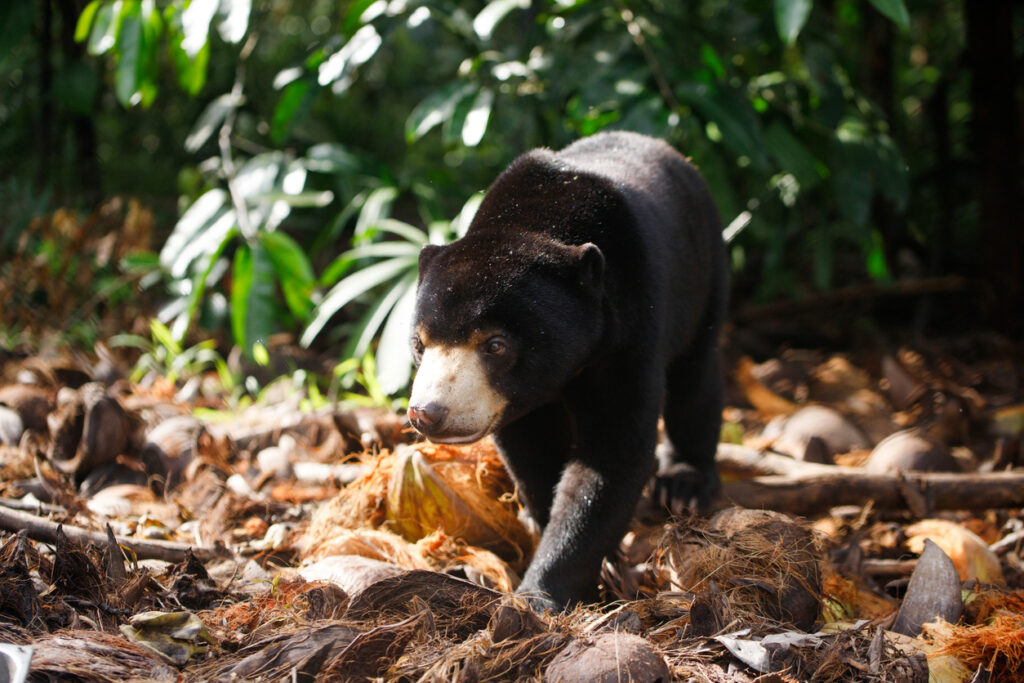
Unlike many bear species that are active during the day, sun bears are primarily nocturnal, which is odd given they’re called sun bears. The name comes from the chest marking, not their activity pattern, but it’s still confusing when the name suggests daytime and they’re actually night creatures.
Being nocturnal in dense tropical forest makes sense for avoiding heat and competition with other animals. But it means they’re rarely seen by humans, adding to their mysterious reputation. Even in zoos, they’re often sleeping during the day when visitors come, which is frustrating if you want to see them.
Their paws are completely hairless underneath.

Most bears have at least some fur on their paw pads, but sun bears have completely bare, dark paw pads. This gives them better grip for climbing and probably helps with heat regulation in tropical climates, but it makes their feet look oddly human when you see them up close.
The bare paws combined with those long curved claws give them an almost monstrous appearance when you focus on their feet alone. They don’t look like bear paws at all really, more like something from a creature feature film. It’s just another thing that makes them not quite bear-like.
They’re incredibly strong for their size.
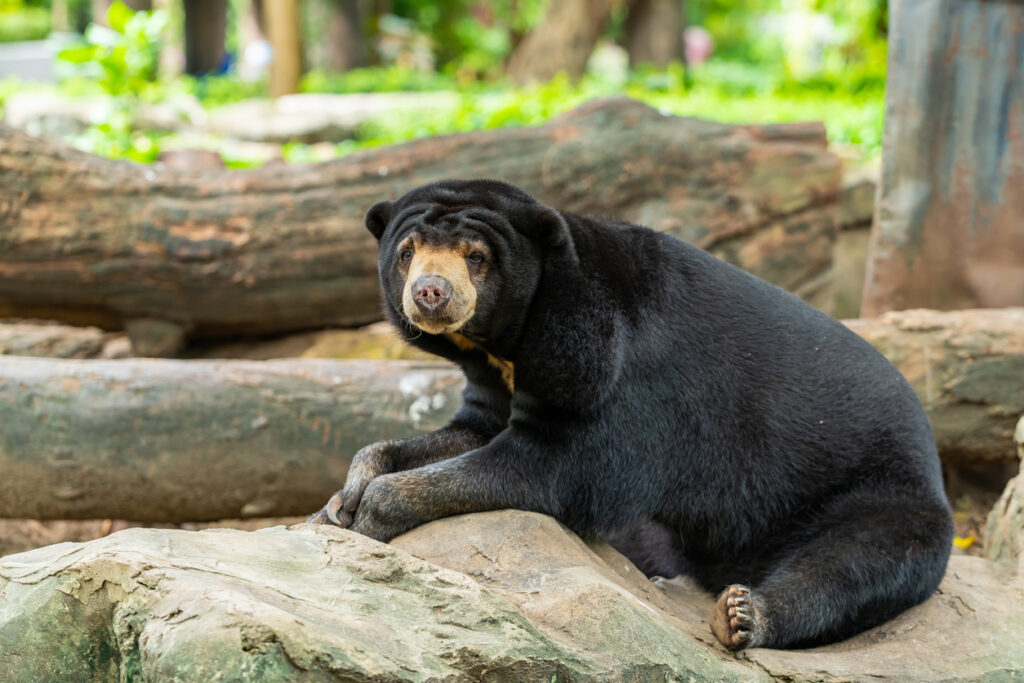
Sun bears can rip open tree bark, tear apart termite mounds, and break into beehives with surprising ease despite being small. Their strength to weight ratio is impressive, and they’ve got powerful jaws that can crunch through tough materials that seem impossible for something so relatively tiny to manage.
Watching them destroy a log to get at insects inside is genuinely impressive. They’re all muscle under that loose skin, and they don’t mess about when there’s food involved. The strength seems disproportionate to their size, which is both fascinating and slightly alarming to witness close up.
They build nests in trees to sleep.
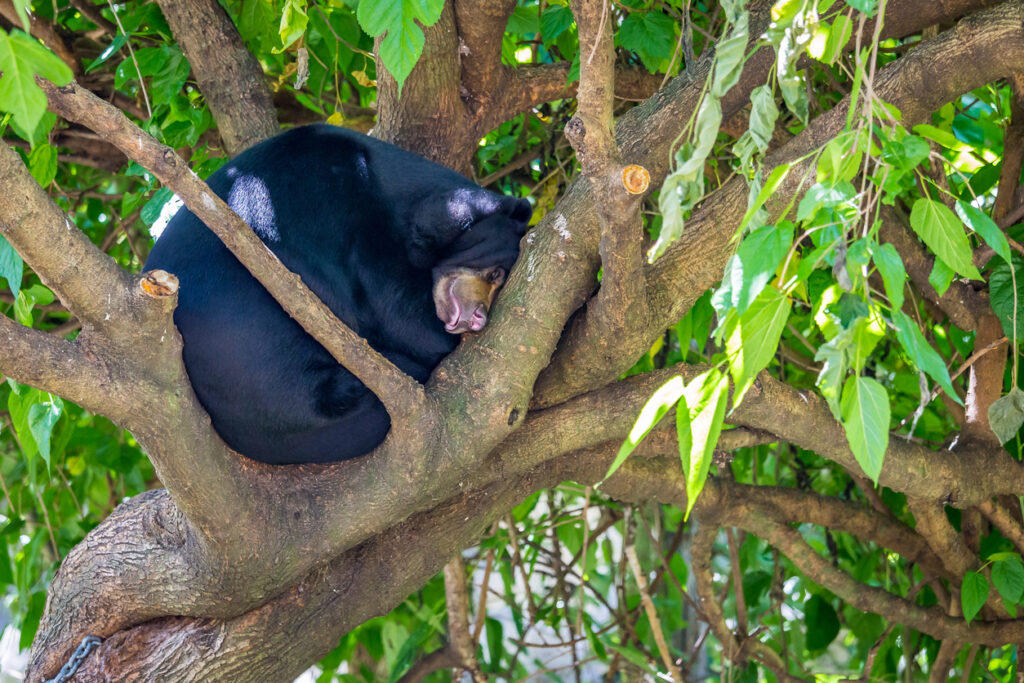
Sun bears actually construct sleeping platforms in trees by bending and breaking branches into a nest like structure. This behaviour is more associated with great apes than bears, and seeing a bear curled up in a homemade tree nest just looks wrong somehow, like nature’s got its wires crossed.
The nests are temporary, used for daytime sleeping, and they’ll build new ones as they move through their territory. It’s a brilliant adaptation for their arboreal lifestyle, but it’s yet another thing that makes them not behave like proper bears. They’re more like weird bear adjacent tree-dwelling creatures, honestly.
Their loose skin serves a clever purpose.
That baggy, ill-fitting skin isn’t just for show. If a predator grabs a sun bear, the loose skin allows them to twist around and fight back without sustaining serious injury. They’re wearing a protective suit that’s deliberately too big, giving them freedom of movement when they’re in danger.
This adaptation is brilliant but makes them look saggy and odd, especially when they’re moving. The skin ripples and shifts in ways that look uncomfortable but are actually incredibly functional. It’s another example of form following function, even if the result looks a bit ridiculous to us.
They’re critically endangered and barely studied.
Despite being so unusual, sun bears are one of the least studied bear species because they’re hard to find and track in dense forests. Their population is declining rapidly due to habitat loss and poaching, but we still don’t know basic things about their behaviour and ecology in the wild properly.
The fact that such a weird and unique bear is disappearing before we’ve really understood it is genuinely tragic. They’re amazing little creatures that deserve way more attention and protection than they’re currently getting. Losing them would mean losing one of nature’s strangest experiments in bear form.