If you think the UK already feels different to how it did 10 or 20 years ago, buckle up.

The changes coming over the next couple of decades aren’t subtle tweaks or background noise. They’re the kind of transformations you’ll notice in how towns look, how people live, what gets built, and what slowly but surely disappears. By 2040, the country won’t just feel updated. It’ll feel reshaped.
This isn’t all doom, and it’s not some sci-fi vision either. It’s a mix of environmental pressure, population changes, housing decisions, technology creeping into daily life, and the knock-on effects of choices already locked in. Some parts of the UK will barely resemble what they are now, while other areas will be dealing with challenges no one used to talk about. Whether people like it or not, the landscape is changing, and it’s happening faster than most realise.
Coastlines will retreat further inland.

Britain’s coastline has always eroded, but rising sea levels and stronger storm surges are speeding the process up. Cliffs are collapsing more often, beaches are narrowing, and soft coastlines are losing ground year after year. Places that once felt solid now come with warning signs and fencing.
In the next couple of decades, several coastal roads, footpaths, and even whole stretches of land will be gone. Some communities are already planning managed retreat rather than fighting a losing battle with the sea. That means the map itself will look different in parts of the country.
Farmland will change what it grows.

British farming has relied on fairly stable seasons for generations, but those patterns are breaking down. Warmer temperatures and unpredictable rainfall are pushing farmers to rethink crops that once thrived reliably. Some traditional staples are becoming harder to grow consistently.
You’ll see more heat-tolerant crops by 2040, along with different planting schedules, and land being repurposed altogether. Vineyards are already spreading, and other southern European-style crops are creeping north. The patchwork of British fields won’t disappear, but it will look noticeably different.
Floodplains will expand in everyday places.

Flooding used to be something certain towns planned around while others felt safe. That sense of certainty is fading. Surface water flooding from intense rainfall is hitting places with no history of river floods. As time goes on, flood defences, raised roads, and redesigned drainage will reshape towns and rural areas alike. Some land will be deliberately allowed to flood to protect homes elsewhere. What counts as usable land will change.
Woodlands will spread into unexpected areas.

Tree planting schemes are increasing across Britain, partly for climate resilience and partly for wildlife recovery. Fields that were once marginal for farming are being turned into new woodland. Some landowners are choosing trees over crops. In the near future, young forests will be a more common sight, especially in upland and edge-of-town areas. These won’t look like ancient woodland, but they will soften landscapes that were once open or heavily managed.
Towns will blend more into surrounding countryside.

Housing demand isn’t going away, but how towns expand is changing. Green buffers, tree-lined developments, and flood-aware design are becoming more common, even if imperfectly applied. This means the hard line between town and countryside will blur in places. You’ll see more green corridors running through urban areas and more semi-wild spaces at the edges of towns rather than neat boundaries.
Rivers will be reshaped, not just controlled.

For decades, Britain straightened and constrained rivers to protect farmland and property. That approach is being slowly reversed. Rewilding projects are letting rivers meander again to reduce flood risk naturally. By 2040, many rivers will look wider, slower, and more natural than they do now. Fields near waterways may be wetter, but downstream towns could be safer. The look of river valleys will change as a result.
Moorland and uplands will lose their bare look.

Large areas of Britain’s uplands were kept open for grazing and game management. As those practices decline or change, vegetation is returning. Shrubs, trees, and wetlands are reappearing where grass once dominated. This can only be a good thing for the natural world.
In the coming decades, some upland areas will look greener and more varied, with fewer wide, empty stretches. This change will transform views that people have considered timeless, even though they were shaped by human use.
Wildlife corridors will cut across the country.

Animals are moving in response to changing temperatures and habitats. To survive, many species need connected landscapes rather than isolated nature reserves. The UK is slowly stitching together wildlife corridors through hedgerows, riverbanks, and rewilded land. In the next couple of decades, these connections will shape how land is managed and how countryside feels when you move through it.
Coastal defences will become more visible.

Where retreat isn’t possible, defences are being reinforced. Sea walls are getting higher, dunes are being rebuilt, and natural barriers like salt marshes are being restored. This will change how coastal towns look and feel. Some beaches will sit behind obvious barriers, and access points will be carefully controlled. The romantic image of open coastlines will give way to more engineered landscapes.
Brownfield land will replace greenfield development.

Pressure to protect remaining green spaces is pushing development onto old industrial and unused land. Former factories, warehouses, and docks are being transformed into housing and mixed-use areas.
Soon, many places that once looked derelict will be dense, lived-in neighbourhoods. That will change urban skylines and reduce the spread of towns into surrounding countryside. However, it still doesn’t solve the issue of our dwindling green spaces, which are more important than ever before and must be protected.
Gardens will look less uniform.

Private gardens make up a huge portion of Britain’s green space. As water shortages and heat become more common, traditional lawns are becoming harder to maintain. In the not-too-distant future, gardens are likely to feature more drought-tolerant plants, gravel areas, ponds, and shade trees. The classic lawn-heavy look will feel dated in many areas.
National parks will look more managed, not wilder.
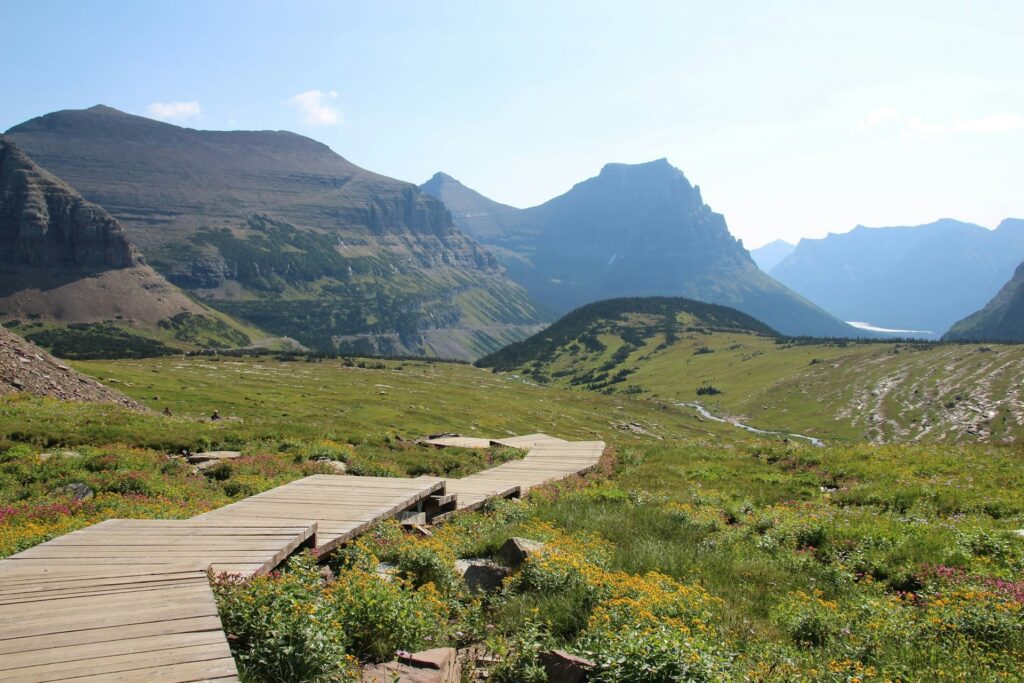
Despite the name, national parks are working landscapes. Climate pressure will force more visible intervention, from fire management to controlled grazing and tree planting. By 2040, visitors may notice more active land management rather than untouched scenery. The goal will be resilience, not preserving a frozen version of the past.
Infrastructure will reshape views.

Energy needs are changing how land is used. Wind farms, solar arrays, battery storage sites, and upgraded power lines are spreading across rural areas. These features will become a normal part of the landscape, rather than something controversial or unusual. Britain’s countryside will increasingly reflect how energy is produced as well as how food is grown.
Familiar views will still exist, but feel different.

Britain won’t suddenly stop looking like Britain. Rolling hills, villages, hedgerows, and coastlines will still be there. The change will be subtle but cumulative. In the next couple of decades, people will look at old photos and notice how much has shifted without realising at the time. The landscape won’t feel ruined, just altered by necessity, pressure, and adaptation.