Pigeons are a lot more than just the scruffy birds hanging around train stations waiting for a stray chip.

Most people write them off as a nuisance, but they’re actually some of the most capable navigators on the planet, with a mental map that puts our best GPS tech to shame. They’re not just fluttering about aimlessly; they can recognise individual human faces, tell the difference between art styles, and even pass self-awareness tests that most clever mammals fail. We’ve spent decades calling them bird-brained, but the reality is they’ve spent that time outsmarting the urban mess we’ve built around them.
They can recognise human faces.
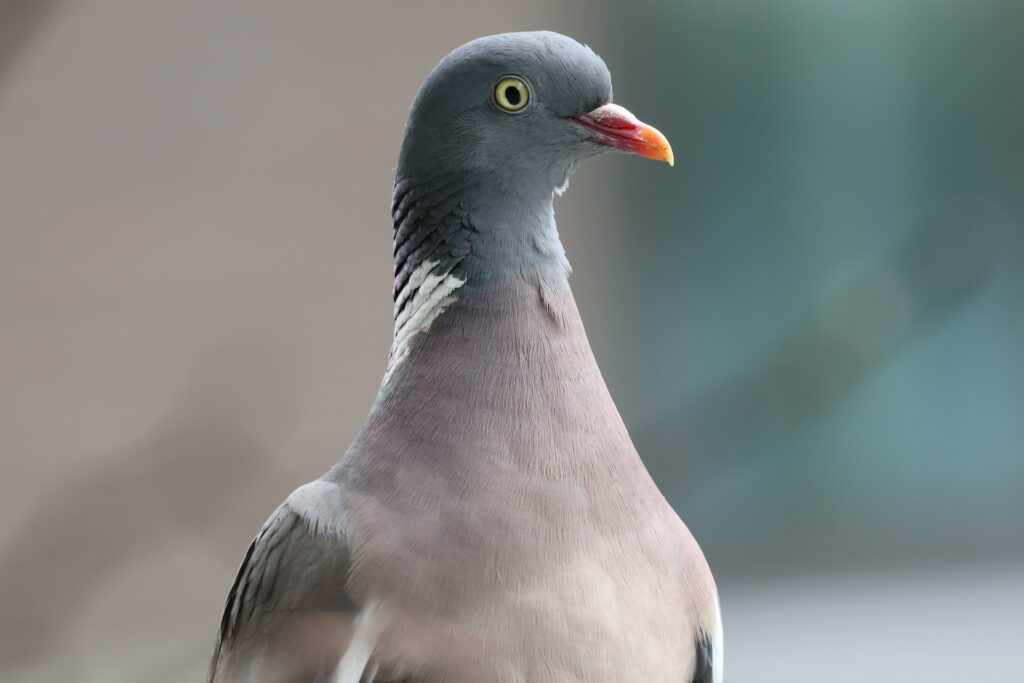
Pigeons have been shown in studies to recognise and remember individual human faces, and they can hold onto that recognition over long periods of time. Research conducted in Paris found that feral pigeons were able to distinguish between different people and reacted differently based on whether a person had been hostile or neutral toward them previously. They don’t just see a blur of humans; they’re picking out specific individuals and filing that information away. It’s a level of social awareness that most people wouldn’t expect from a bird pecking around a car park.
They passed the mirror test.
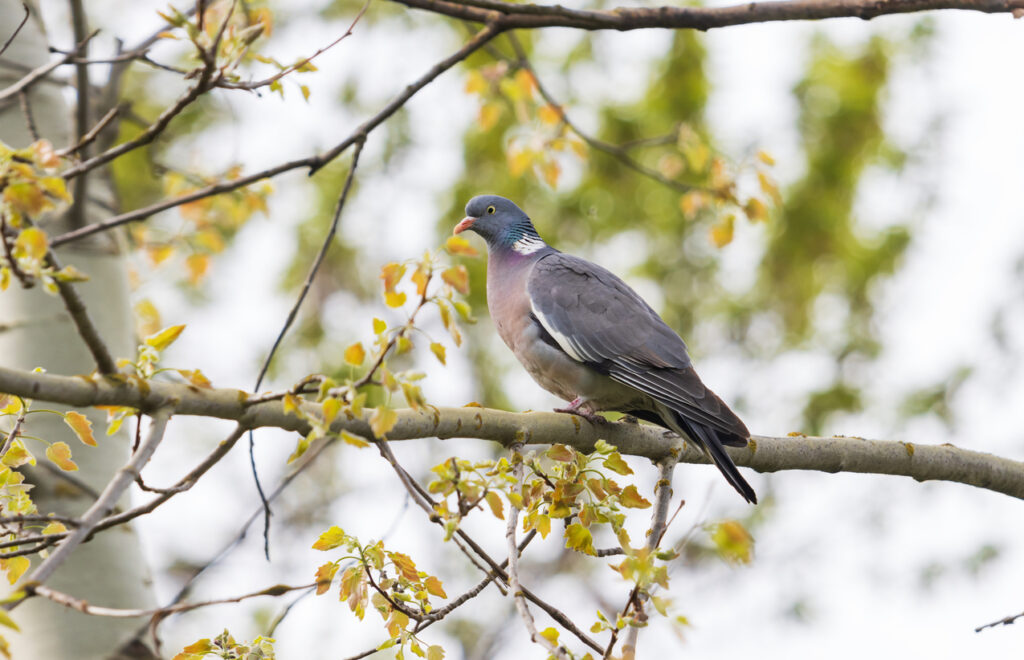
The mirror self-recognition test is considered one of the markers of higher cognitive function, and pigeons are one of very few animals to show signs of passing it. In controlled experiments, pigeons were able to use a mirror to locate marks on their own bodies that they couldn’t see directly. This suggests a degree of self-awareness that puts them in the company of dolphins, great apes, and elephants. It’s a finding that challenged a lot of assumptions about what kinds of minds are capable of that sort of self-directed thinking.
Their navigation abilities are extraordinary.

Homing pigeons can find their way back to their loft from hundreds of miles away across unfamiliar terrain, and scientists still don’t fully understand how they do it. They appear to use a combination of the Earth’s magnetic field, the position of the sun, and local landmarks to build and update mental maps as they travel. Each bird seems to develop its own navigational approach, refining it with experience over time. The precision involved is remarkable and consistently outperforms what any human could manage without instruments.
They can learn complex sequences.

In laboratory settings, pigeons have demonstrated the ability to memorise and reproduce sequences of up to 700 different images presented in a specific order. That’s not instinct or conditioning in the simple sense, it requires holding large amounts of information in working memory and applying it accurately. Some studies found that pigeons performed at a level comparable to rhesus monkeys on certain sequence learning tasks, which caused a fair amount of surprise among researchers who hadn’t expected the comparison to be that close.
They understand basic arithmetic concepts.

Research has shown that pigeons can learn to order groups of objects from smallest to largest, and can then apply that understanding to entirely new groups they haven’t seen before. That ability to abstract a rule and use it in a novel context is considered a sign of genuine numerical reasoning rather than rote learning. It’s the kind of cognitive flexibility that we tend to assume requires a large, complex brain, and pigeons demonstrate it reliably in controlled conditions.
They were genuinely life-saving during wartime.
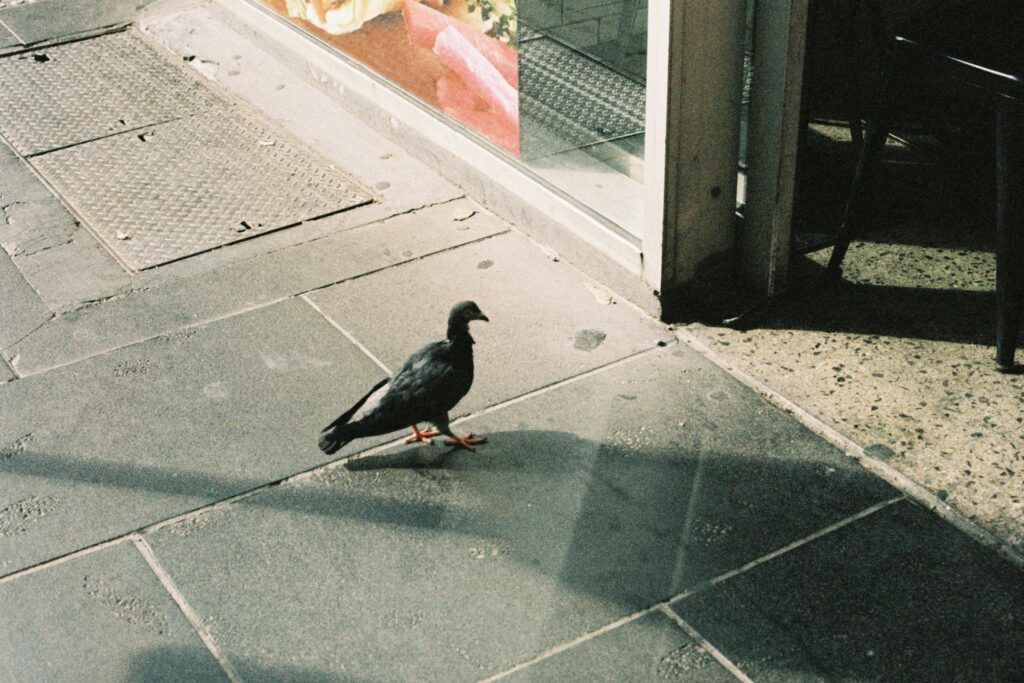
Carrier pigeons served in both World Wars and saved thousands of lives through their navigational accuracy and reliability under pressure. Cher Ami, a famous homing pigeon during World War One, delivered a critical message despite being shot through the chest, losing a leg, and being partially blinded. The message he carried saved nearly 200 trapped soldiers. Pigeons were used precisely because they were dependable in situations where other communication methods had failed, which says a great deal about how well their abilities were understood and trusted at the time.
They can detect cancer in medical images.

A study published in 2015 found that pigeons trained to look at medical scan images could identify cancerous tissue with an accuracy rate comparable to trained humans. They were shown microscope slides and mammogram images and learned to distinguish between benign and malignant tissue. The accuracy improved further when the judgements of multiple birds were pooled together. It wasn’t that they understood what cancer is, but their visual processing and pattern recognition were precise enough to pick up on the differences in a meaningful way.
They communicate in more sophisticated ways than we realise.

Pigeons use a range of vocalisations and physical displays to communicate with each other, and the signals carry specific social meaning within their groups. They establish hierarchies, maintain pair bonds, and use distinct calls in different social contexts. Researchers studying feral pigeon flocks have found that the birds are paying close attention to each other’s behaviour and adjusting their own responses accordingly. It’s not the rich language of some species, but it’s a genuine social communication system rather than simple noise.
They have excellent long-term memory.

Studies have found that pigeons can remember hundreds of images years after they first saw them, with recognition rates that remained high even after long gaps between learning and testing. Their memory for visual information is particularly strong, and it’s thought to be connected to the demands of navigation, where remembering landmarks over long distances and long periods of time is genuinely useful. The capacity is well beyond what most people would assume a pigeon is holding in its head on any given day.
They can tell the difference between art styles.

In a now famous series of experiments, pigeons were trained to distinguish between paintings by Monet and Picasso and could then correctly categorise paintings by those artists that they’d never seen before. They were also able to generalise that understanding to other Impressionist and Cubist works. It suggests they’re picking up on stylistic patterns rather than just memorising specific images, which involves a level of visual categorisation that’s more sophisticated than it might initially sound.
They’re emotionally sensitive to their environment.

Pigeons show measurable stress responses to environmental changes, social disruption, and separation from bonded partners. They form genuine attachments and behave differently when those attachments are disrupted. Studies into pigeon welfare have found that their emotional states affect their decision-making in ways that are consistent with how stress influences cognition in other animals, including humans. Dismissing them as emotionally blank creatures doesn’t hold up particularly well when you look at the evidence.
Young pigeons learn from their parents.

Juvenile pigeons don’t just develop navigation skills instinctively, they learn from experienced adults in their group. Studies tracking young pigeons flying alongside older birds found that they updated and improved their own routes based on what the adults did, incorporating that learned information into their own mental maps. That kind of social learning, where knowledge is actively transferred between generations rather than simply inherited, is considered a hallmark of more complex cognitive systems, and it’s happening in the birds most people shoo away without a second thought.