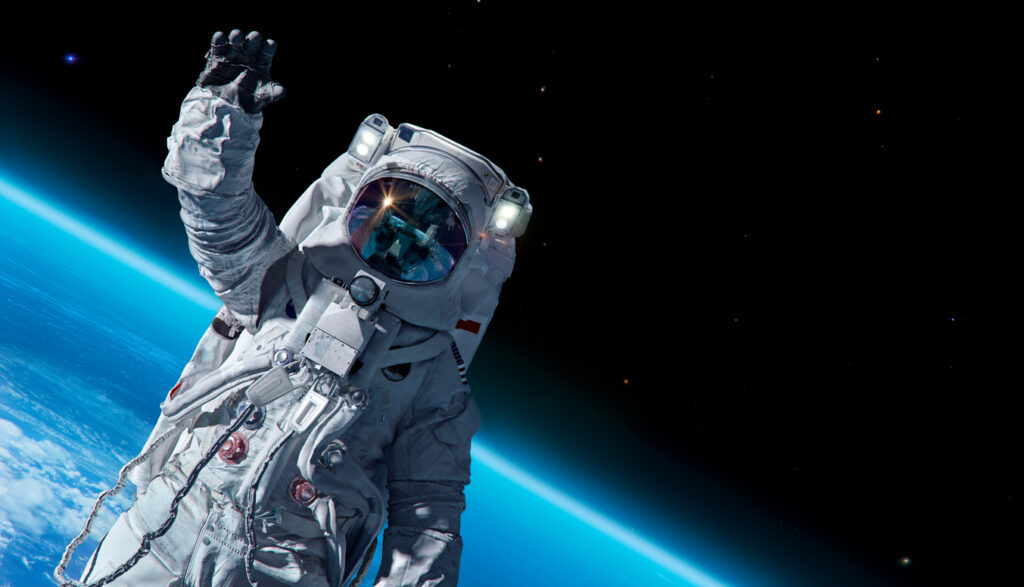
Space seems like it should be blazing hot with the Sun shining nonstop, yet astronauts and spacecraft deal with freezing cold. The reality is more complicated than distance alone because how heat travels in space works very differently than on Earth. Once you break it down, it makes sense why space feels so cold even when our star is right there, pouring out energy.
Heat travels through matter on Earth.
Here on Earth, warmth spreads through air, water, and solid surfaces. When the Sun shines, the ground warms, the air holds the heat, and everything around us begins to feel warmer because the energy is constantly moving between particles.
In space, there’s no air or water to carry this energy. Without molecules to transfer heat, the Sun’s warmth doesn’t spread in the same way. That’s why the vacuum feels cold, even though the light itself is still travelling through it.
Space is a vacuum.
Temperature is usually a measure of how quickly molecules move, yet in space there are almost no molecules at all. The emptiness means there’s nothing to warm up, so the environment feels like it’s frozen at the edge of nothingness.
The vacuum effect is the biggest reason why space is cold. The Sun’s rays pass through easily, but unless they hit something solid, they don’t have anything to heat, leaving the surrounding space feeling empty and frigid.
The Sun’s heat travels as radiation.
Unlike on Earth, where heat spreads by conduction and convection, in space the only option is radiation. The Sun sends energy as light and electromagnetic waves, but these only warm the objects that absorb them directly.
This explains why spacecraft, planets, and even your skin in sunlight can heat up, while the empty vacuum stays unaffected. Radiation is precise because it only changes what it hits, and everything else remains untouched.
Objects in shadow freeze fast.

Because there’s no atmosphere in space to trap heat, objects cool rapidly when they slip into shadow. The dark side of the Moon, for example, can plunge to hundreds of degrees below zero while the sunlit side bakes.
This leads to dramatic contrasts. A single astronaut’s suit or a satellite can have one surface scorching hot and another icy cold, depending entirely on exposure to sunlight, with nothing in between to balance the difference.
The Sun’s energy spreads thinly.
Even though the Sun is unimaginably powerful, its energy radiates outward in all directions. By the time it reaches Earth’s orbit, that energy is spread thinly across millions of kilometres, so it’s not as overwhelming as it looks from here.
That spreading explains why planets closer to the Sun, like Mercury, experience far higher temperatures. At Earth’s distance, the light still carries energy, but it isn’t enough to heat empty space, only solid objects that soak it up.
Atmospheres make the difference.
Earth feels warm and stable because our atmosphere catches and redistributes heat. It acts like a blanket, smoothing out extremes and holding warmth even after the Sun goes down, which is something space itself never does.
Without an atmosphere, temperatures swing violently. That’s why the Moon has no middle ground between boiling hot and freezing cold. Space is like the Moon but everywhere—a place where nothing holds onto heat once the light is gone.
Spacecraft need insulation.
These extreme conditions mean spacecraft have to be carefully engineered. A rocket or satellite can face one side at hundreds of degrees while the opposite side freezes. Without insulation, equipment would fail almost instantly.
Engineers solve this with reflective surfaces, insulating blankets, and special coatings that keep the internal environment steady. These protections make sure astronauts can survive and instruments keep working, even as space throws its most extreme conditions at them.
Astronaut suits do the same.
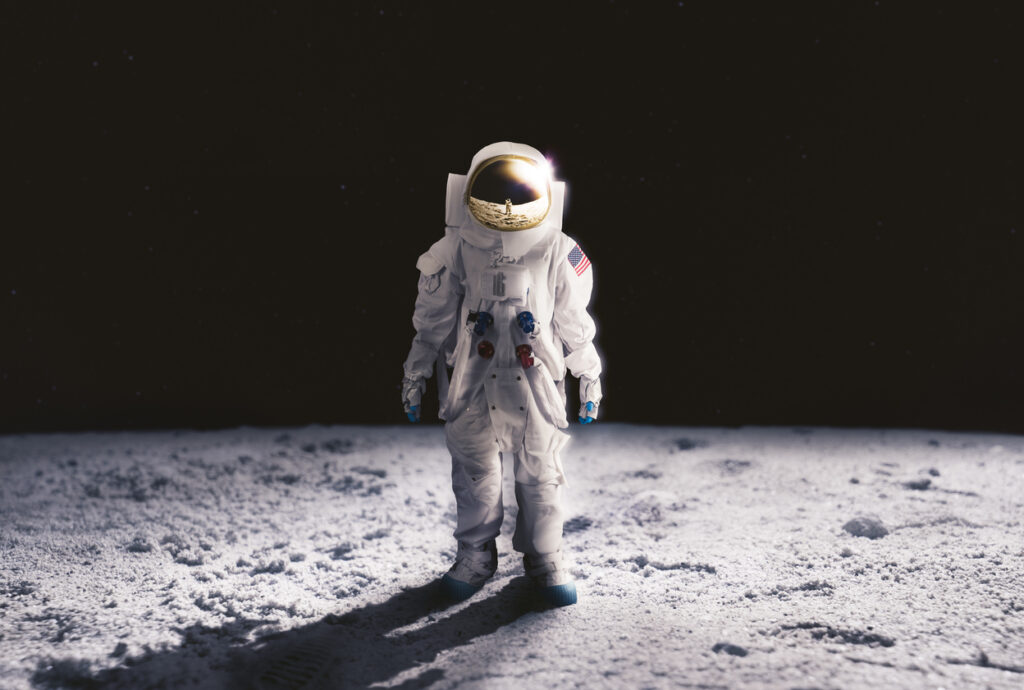
Astronauts face the same harsh extremes as spacecraft. Their suits are designed with multiple layers that reflect sunlight, insulate against cold, and circulate cooling fluids, creating an artificial atmosphere that their bodies can handle safely.
Without these systems, working in space would be impossible. The human body can’t cope with sudden swings from blistering heat to freezing cold, so the suit becomes a portable environment, keeping temperature under careful control.
The Sun isn’t as close as it looks.
Even though the Sun dominates the sky, it’s still about 150 million kilometres away. Its light feels strong on Earth, but by the time it arrives, the energy is far less concentrated than you might imagine when looking up.
That distance means the Sun can heat planets and surfaces, but it doesn’t make the whole void around them hot. The vast gulf between objects ensures that most of space remains untouched by its warmth.
Cosmic cold dominates the background.
Beyond the reach of direct sunlight, space sits at a background temperature just above absolute zero. That “cosmic microwave background” is leftover radiation from the birth of the universe, and it makes the natural baseline incredibly cold everywhere. The background chill is what objects in space sink toward when not heated directly. The Sun only changes conditions locally, while the greater universe constantly pulls temperatures back towards its icy default.
Temperature in space isn’t simple.
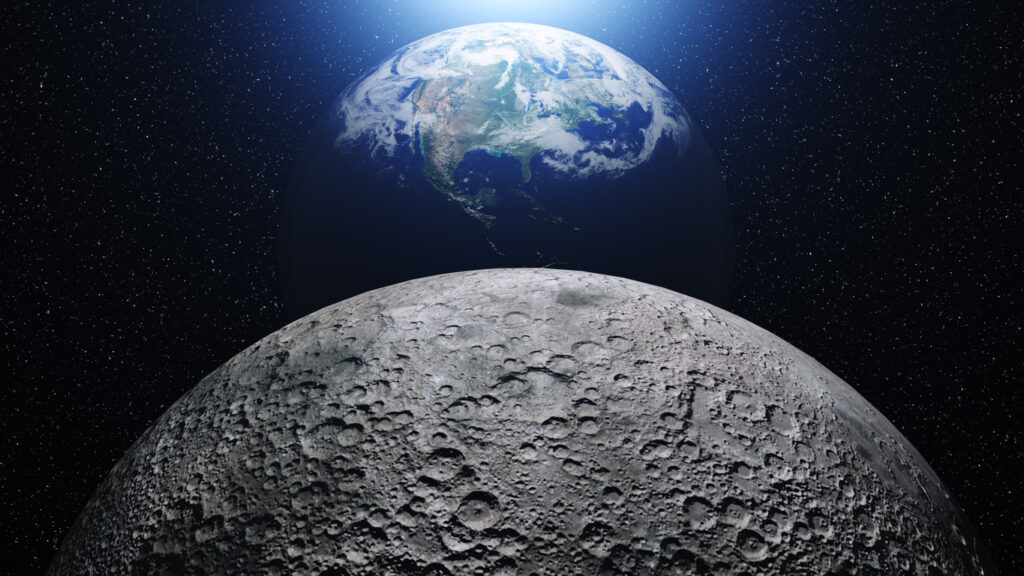
On Earth, we talk about a single air temperature, but in space, it depends entirely on context. Surfaces exposed to the Sun heat up dramatically, while shaded ones plummet, meaning two sides of the same object can have opposite extremes.
That’s why satellites and spacecraft spin slowly or use thermal controls. Evening out their exposure prevents damage from one part burning while another freezes, proving that in space, managing temperature is never straightforward.
Space stays cold because heat needs something to hold it.
Ultimately, space is cold because there’s nothing there to keep the heat in. On Earth, molecules in the air and water spread warmth around, but in space, emptiness rules, so heat just keeps moving until it hits something solid.
The Sun may blaze in the sky, yet it doesn’t change the vacuum itself. That’s why astronauts still need thick suits, spacecraft need heavy insulation, and space will always feel cold, no matter how bright the star looks from here.