
You sow the seeds, water the bed, wait patiently for those green feathery tops to grow… and then you finally pull them up only to find a handful of stumpy, skinny, underwhelming carrots. It’s disappointing, but it’s also fixable. Carrots are surprisingly picky, and just a few simple missteps can lead to poor growth. If your carrots always seem to fall short (literally), here are the most likely reasons why.
Your soil might be too heavy or compacted.
Carrots like loose, sandy, well-drained soil that lets their roots stretch straight down. If your soil is full of clay or too tightly packed, the roots will struggle to grow long and deep, often resulting in short, stubby carrots. You can fix this by mixing in sand or compost to loosen things up. Raised beds can also help, especially if you want to avoid battling with naturally compacted ground.
You didn’t thin out your seedlings
Carrots need space. If you leave too many seedlings crowded together, they’ll compete for room, light, and nutrients, and you’ll end up with a dense patch of tiny, twisted roots instead of full-sized carrots. It feels wasteful, but thinning is essential. Once your seedlings are a few centimetres tall, snip or pinch out the extras, leaving a couple of inches between each one. Your future harvest will thank you.
You sowed them too shallow or too deep.
If carrot seeds are buried too deep, they can struggle to germinate properly. If they’re too close to the surface, the root might dry out or grow in a wonky shape. A good rule of thumb is to sow them just under the surface, no more than about 1 cm deep. Cover lightly with fine soil or compost and keep the bed moist until they sprout.
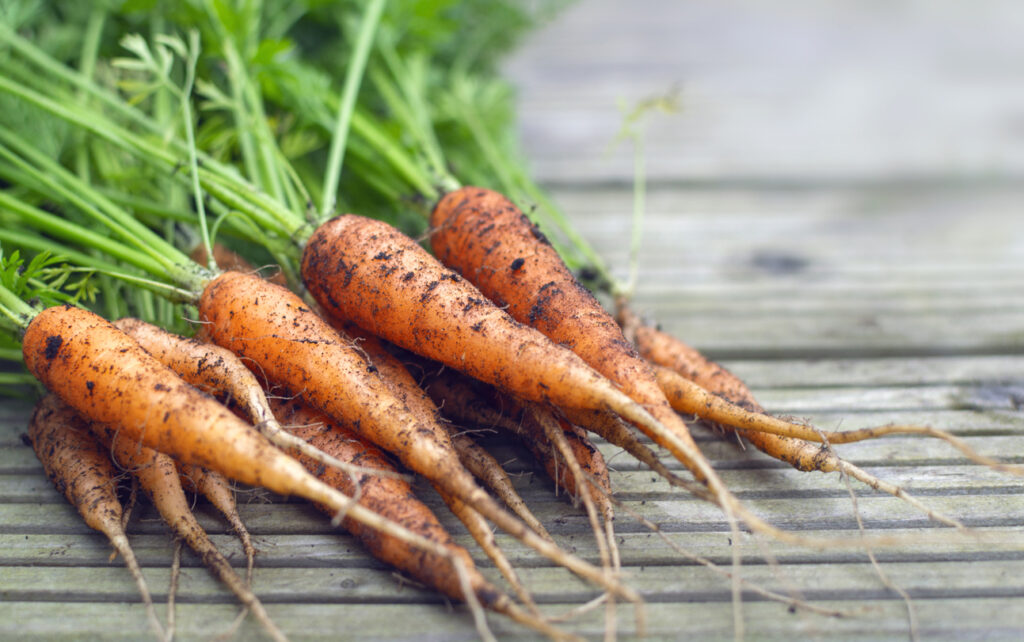
Your soil might be too rich.
It sounds backwards, but too many nutrients, especially nitrogen, can cause carrot tops to go wild while the roots stay stunted and small. Overfeeding leads to lush greenery and disappointing roots. Skip the manure or strong fertilisers. Carrots do better in poorer soils with a more balanced, low-nitrogen feed (or none at all if your soil is already healthy).
There might be too many stones in the way.
Carrot roots want a clear path. If they hit a rock, clump, or chunk of compost, they’ll often split, fork, or stop growing altogether. This leads to weird shapes, and small ones at that. Before planting, give your soil a proper rake-through and remove as many stones or lumps as possible. For long-rooted varieties especially, smooth soil makes all the difference.
The bed didn’t stay consistently moist.
Carrots don’t like to dry out. Inconsistent watering—too wet one week, bone dry the next—can cause them to stop growing, split, or go woody. It also encourages shallow roots. Try to keep the soil evenly moist, especially in the first few weeks after germination. Mulching can help hold water in if you’re planting during a hot spell or in sandy soil.
They didn’t get enough sunlight.
Carrots need plenty of sun to grow decent roots. If they’re planted in a shady part of the garden or are being overshadowed by other crops, they might never reach full size. Make sure they’re getting at least 6 hours of direct sun per day. If that’s not possible, try growing a smaller or rounder variety better suited to low-light conditions.
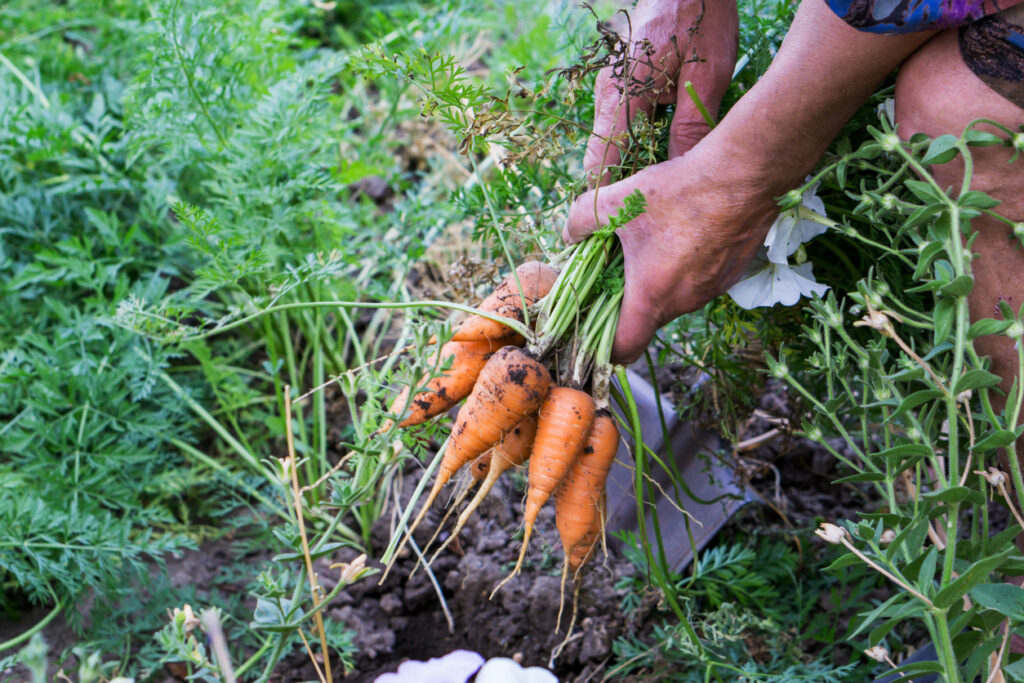
You might be harvesting too early.
Carrots take time. Some varieties are ready in 10–12 weeks, others take 4 months or more. Pulling them too soon is one of the most common reasons they seem small—because they just are. Check the seed packet for guidance, and if you’re unsure, gently lift one to check its size before committing to harvest the whole lot.
Pests might be interfering underground.
Carrot fly larvae and other soil-dwelling pests can damage the roots from below, leaving them misshapen or stunted. If something’s chewing on them, they won’t grow properly. Try using fine mesh to protect your beds, rotating crops each season, and avoiding bruising the foliage when thinning (as the smell attracts carrot flies).
You’re growing the wrong variety for your space.
Some carrot types are bred to be short and stubby—others need deep, open ground to perform well. If you’re planting long-rooted types in a shallow bed or poor soil, they’re unlikely to thrive. Try varieties like ‘Chantenay’ or ‘Paris Market’ if you’re working with pots, raised beds, or heavier soils. These compact types often do much better in awkward conditions.