
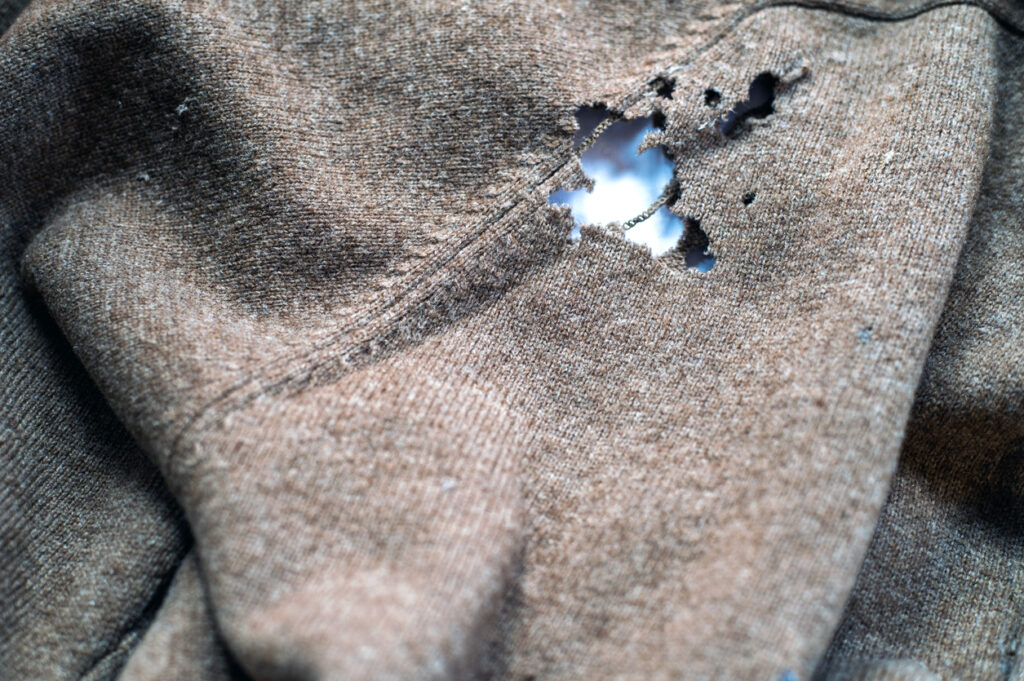
It feels personal when you pull out a jumper, and it’s got little holes in it, like a moth has declared war on your wardrobe. The annoying truth is moths aren’t doing it for fun, and the adult moth you see fluttering about usually isn’t the one doing the damage. It’s mostly the babies, and they’re basically looking for a very specific kind of food source you’ve accidentally stored in your drawers.
It’s not really the moth, it’s the moth larvae.
The first big thing people miss is that adult clothes moths don’t sit there munching your jumpers like a tiny goat. The adult’s main job is to mate and lay eggs, and in many cases they don’t even eat much at all. The real wardrobe vandals are the larvae, which are basically caterpillars, and they’re built for eating, growing, and hiding.
So, if you spot a moth flying around, it doesn’t automatically mean your clothes are being eaten right that second. It can still be a warning sign because adults lay eggs near food for the larvae. The stuff you want to look for is more like tiny webby threads, gritty little droppings, shed skins, or small cases stuck to fabric, especially in dark corners of wardrobes and drawers.
@macnjaccleaners Noticing small, unexplained holes in your clothes? This is often a sign of moth damage you didn’t realize was happening. Here’s what causes it and what to do next to prevent further damage. #mothdamage #ruinedclothes #drycleaning ♬ original sound – Mac n Jac Cleaners
Clothes moth larvae can digest natural fibres like wool and cashmere.
Clothes moth larvae aren’t attracted to all fabrics equally. They go for natural fibres, especially wool, cashmere, mohair, alpaca, feathers, felt, and sometimes silk. The reason is simple, those fibres contain keratin, which is a tough protein, and the larvae have the tools in their gut to break it down and use it to grow.
That’s why you can have a wardrobe full of cotton and polyester that’s totally untouched, but the one wool jumper looks like it’s been attacked with a hole punch. It’s not because the moth has taste, it’s because the larvae are basically on a protein hunt. If you want a quick check, the risk items tend to be anything animal-based, especially if it’s stored for months without being moved.
They’re extra attracted to your sweat, skin oils, and little stains.
This is the gross but useful part. Moth larvae don’t just want the fibre itself, they also love the stuff we leave behind on it. Sweat, body oils, food splashes, perfume residue, and even tiny bits of skin can make a garment more appealing. A perfectly clean wool jumper is still a target, but a worn one shoved in a drawer is basically a buffet.
That’s why the damage often shows up in places that touch you the most, like underarms, cuffs, collars, waistbands, and the fold lines where oils have built up. It’s also why people get confused when moths seem to ignore the new expensive jumper but destroy an older one. Clean before storage makes a huge difference, not because it scares moths, but because it removes the extra goodies that make larvae stick around and keep eating.
They love dark, still places because it keeps them safe.
Clothes moth larvae are not out here living loudly. They want quiet, dark, undisturbed spots where they can feed without being noticed. Wardrobes, under-bed storage, suit bags, drawers you barely open, spare rooms, loft boxes, and piles of clothes on a chair are all perfect. If something sits untouched, it’s like you’ve given them permission to settle in.
That’s why people can swear they never see moths, yet still get holes. You don’t need to catch them in the act for damage to happen, because larvae can stay hidden in seams, folds, and thick fabric. Movement matters more than people think. Just wearing, shaking out, or refolding woollens occasionally can interrupt the whole cosy set-up they’re trying to build.
Your home can accidentally provide the perfect temperature and humidity.
Larvae develop faster in warm conditions, and they do well in average indoor temps, especially in centrally heated homes. They also like a bit of humidity, which is why you might see more issues in homes with poor ventilation, cluttered storage, or rooms that feel slightly damp. It’s not that moths are seeking a tropical spa, it’s just that their life cycle speeds up when conditions are comfy.
If you’ve ever noticed moth problems seem worse in certain seasons or certain rooms, that’s usually why. It can also explain why some people get hammered with moth damage while their mate down the road never does. A dry, well-ventilated wardrobe where clothes get rotated is a harder place for larvae to thrive. A warm, packed wardrobe in a stuffy room is much easier for them.
@jeeves_ny Meet the culprit behind those mysterious moth holes: the case-bearing clothes moth!!! Their larvae feast on dirty wool, cashmere, and silk, especially if it’s sweaty or stained. Keep them out by storing clean sweaters in breathable bags and using natural repellents. #MothPrevention #SweaterSeason #WoolCare #ClothingTips #LaundryTips #mothholes #laundry #avoidmothholes #laundrytips #cashmeretips #cashmere ♬ original sound – clean freakz
They can hang around for ages, so damage builds slowly.
Moth damage often feels sudden because you only notice when you finally pull the item out. But larvae can feed for weeks or even months depending on conditions and what they’re eating. They’re not always making big dramatic holes right away. Sometimes they start with tiny grazed patches, thinning fabric, or little holes hidden under folds.
The slow creep is why the problem can feel mysterious. You might clean a wardrobe, feel relieved, then find another damaged item later and think it came out of nowhere. Often it was already in progress, or eggs were left behind somewhere you didn’t spot. The best way to catch it early is to check the high-risk items regularly, especially anything wool that sits at the back, and look for those subtle signs like webbing and grit.
Not all moths do it, but clothes moths are built for it.
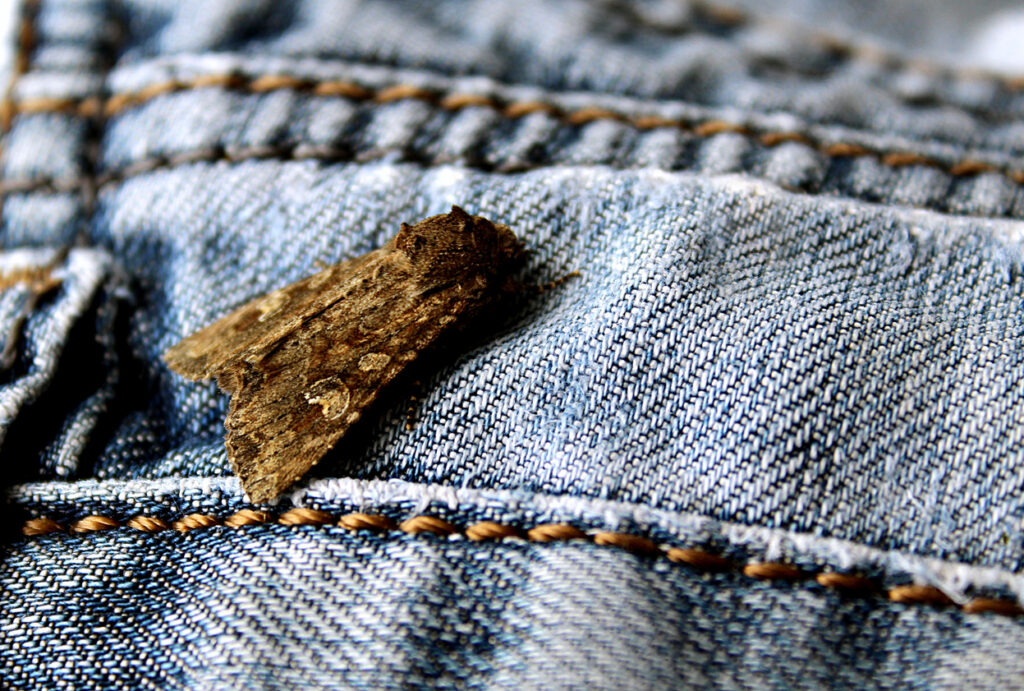
When people say moths eat clothes, they’re usually talking about the common clothes moth or the case-bearing clothes moth. Plenty of moths you see outdoors are harmless to your wardrobe, and some are more interested in plants, stored food, or just existing near lights. Clothes moths are smaller, more golden, and they avoid light, which is why you often don’t notice them until you already have a problem.
The annoying thing is that a single moth in the house doesn’t automatically mean you’ve got clothes moths, but it’s worth checking. Clothes moths tend to flutter in a slightly lazy way and hide when disturbed, rather than zooming around lights at night. If you see small moths in bedrooms, wardrobes, or near rugs and upholstery, that’s when it’s worth doing a proper look through the natural fibres in that area.
Carpets, rugs, and upholstery can be part of the story.
People focus on jumpers and forget the rest of the house. If you’ve got wool rugs, old carpets, felt underlay, upholstered furniture, or even pet bedding made from natural fibres, those can also feed larvae. Sometimes the main infestation is actually in a rug edge, under furniture, or along skirting boards where fluff and hair collect, and your clothes are just catching the fallout.
Because of this, moth problems can persist even when you bag up your jumpers and wash everything. If the larvae have another food source in the room, they keep going, and the adults keep laying eggs. Vacuuming edges, under beds, and inside cupboards really matters here, not in a dramatic clean freak way, but because it removes both larvae and the dust that helps them hide. If you’ve got a favourite wool rug, it’s worth checking the underside and the edges where they like to hang out.
They target stored clothes because storage creates a safe little ecosystem.
Storage habits are basically moth strategy, whether you mean to or not. When you pack away winter jumpers, store blankets, or keep suits in garment bags, you’re also creating still, dark spaces where larvae can feed undisturbed. Add a bit of dust, a bit of body oil, and a few months of nobody looking, and it becomes a pretty ideal set-up for them.
That’s why preventative storage is so effective. Washing or dry cleaning before packing away removes the oils and stains that make items more attractive. Airtight boxes or sealed garment bags reduce access for egg-laying adults. Even something as simple as rotating stored items and checking them every few weeks can break the cycle, because moth larvae love nothing more than being ignored for a long time.
The holes are a side effect of feeding, not a deliberate goal.
Moths aren’t sitting there thinking, let’s ruin her favourite cardigan. Larvae are eating for growth, and the holes just happen because the fibre is the food. They’ll often chew along folds, seams, and hidden areas because it’s safer, so the damage looks random until you realise it follows hiding spots. Sometimes they don’t even need to eat much to leave visible holes, especially on finer knits like cashmere.
If you want the most practical takeaway, it’s this, prevention is mostly about making clothes less inviting and less easy to hide in. Keep woollens clean, store them properly, vacuum and declutter the places they like to live, and move things around now and then so nothing becomes a long-term safe zone. It’s not glamorous, but it’s miles easier than discovering your best jumper has turned into Swiss cheese right when you actually need it.