The stars you see tonight won’t be in the same place a million years from now, and some familiar constellations will be completely unrecognisable—and that’s just the start of things. Here’s what’s going to change up there while we’re all long gone. While it’s impossible to know whether these things will actually come to pass, they’re certainly pretty likely, according to scientists.
The Big Dipper will look completely different.
That iconic saucepan shape everyone knows will be totally unrecognisable because stars move at different speeds in different directions. Some of the stars in it are moving towards us, some away, and some sideways, so the whole shape just falls apart over time.
The stars themselves will still be there, they’ll just be scattered about in ways that don’t form any recognisable pattern anymore. Future humans a million years from now will look at the sky and have absolutely no idea what we meant by the Big Dipper.
Some bright stars will have faded or disappeared entirely.
Stars don’t last forever, and some of the bright ones you see now will have burned out, exploded, or just faded away by then. Betelgeuse might’ve already gone supernova, which would’ve been visible during the day for weeks before fading away completely.
New bright stars will have appeared too as other stars move closer to Earth or as new ones form and brighten. The whole hierarchy of which stars are brightest will be shuffled around, so tonight’s famous stars might be barely visible specks.
The North Star won’t be north anymore.
Polaris is only our North Star because Earth’s axis happens to point towards it right now. However, Earth wobbles like a spinning top over thousands of years, so in a million years, our axis will point at a completely different star instead.
This wobble is called precession, and it means the whole coordinate system we use for the sky slowly rotates. Navigation by stars will need completely different reference points, and Polaris will just be some random star nowhere near the north celestial pole.
Constellations near the galactic plane will change the most.
Stars closer to the thick part of the Milky Way are packed tighter and moving faster relative to each other. So constellations in that area of the sky will distort faster than ones that are more spread out or in quieter parts of space.
Orion’s going to be especially messed up because those stars are at wildly different distances and moving in different directions. The belt might still be vaguely recognisable, but the whole hunter shape will be completely gone, just a random scattering of unrelated stars.
Some star clusters will have dispersed.
Open star clusters like the Pleiades are held together pretty loosely by gravity. Over a million years, gravitational interactions with passing objects will pull members away until the cluster’s spread out too thin to notice as a distinct group anymore.
The Pleiades might still have a few members visible together, but that tight little group of stars will have scattered. Some will be bright naked eye stars elsewhere in the sky, while others will have drifted off into obscurity far from their siblings.
New stars will have formed and brightened.
There are nebulae right now cooking up new stars that’ll be shining brightly in a million years. The night sky will have fresh bright stars that we can’t see yet because they haven’t properly ignited, or they’re still hidden in their birth clouds.
These new stars might form new patterns that future humans will name as their own constellations. They’ll look at the sky and see shapes we never saw because the stars forming those patterns literally didn’t exist or weren’t visible in our time.
Barnard’s Star will be much closer and brighter.
This fast-moving star is heading towards us at a decent clip, and in about 10,000 years it’ll be closer to Earth than any other star except the Sun. By a million years, it’ll have come close and then started moving away again, but it’ll still be way closer than it is now.
At its closest approach it might be visible to the naked eye when right now you need a telescope. The whole neighbourhood of nearby stars will have shuffled around as some move closer and others drift further away from our solar system.
The Milky Way will look slightly different.
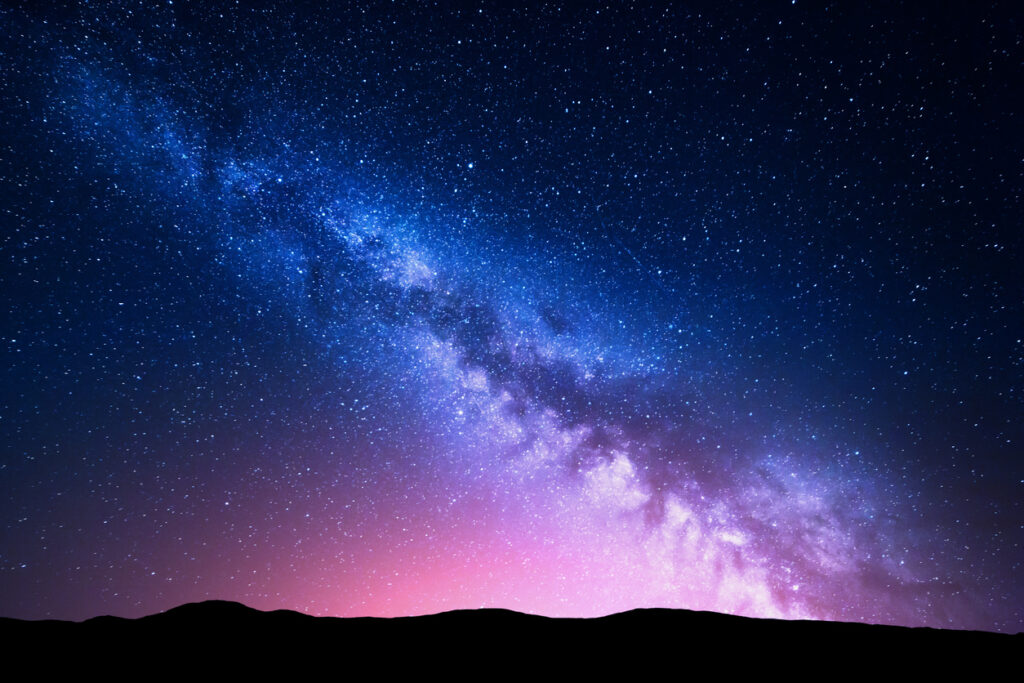
That band of light across the sky comes from looking through the disc of our galaxy. Over a million years, our solar system orbits the galactic centre and changes position, so we’ll be looking at the Milky Way from a slightly different angle and location.
The change won’t be dramatic, but there’ll be subtle differences in which parts appear brighter or darker. Some areas that are hidden behind dust clouds now might become visible, while others get obscured as we move around the galaxy.
Some stars will have moved between constellations.
Fast-moving stars near constellation boundaries will have crossed over into neighbouring constellations. There’ll be stars that were firmly in Taurus that are now in Orion, or ones that were in Leo that have wandered into Virgo over the millennia.
This makes the whole concept of constellations kind of temporary really. They’re just patterns we see from Earth at this specific moment in time, not permanent fixtures. The sky’s constantly rearranging itself, just too slowly for us to notice in our lifetimes.
Binary star systems will have changed.
Some binary stars orbit each other over hundreds of thousands of years. Their positions relative to each other will have changed significantly, changing how bright they appear or even making some that look like single stars now split into obvious pairs.
Other binaries that are obviously double now might look like single stars later if their orbit brings them close together from our viewpoint. The dynamic nature of stellar systems means the sky’s not just moving in two dimensions but in three dimensions constantly.
The Andromeda galaxy will look bigger.
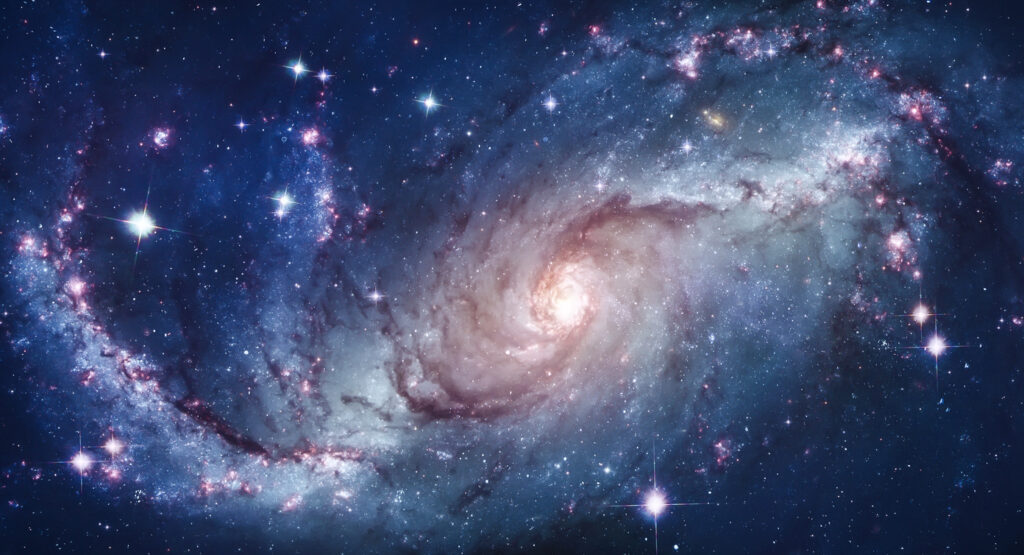
Andromeda’s heading towards us, and in a million years it’ll be noticeably closer than it is now. It won’t have collided with the Milky Way yet, but it’ll appear larger in the sky, maybe even becoming more obvious to the naked eye.
In a few billion years the two galaxies will merge, but in just a million years you’d mainly notice Andromeda taking up more of the sky. It’s already the most distant thing visible to the naked eye, and it’ll become even more prominent gradually.
Some stars will have gone supernova and left remnants.
Several candidates for supernovae that we’re watching now will have exploded by then. Where there was once a bright star, there’ll be a supernova remnant, maybe a neutron star or black hole, and possibly new stars forming from the ejected material.
These explosions would’ve been spectacular when they happened, potentially brighter than the Moon for weeks. By a million years later, the show’s over, but the remnants reshape that part of the sky permanently, adding new features future astronomers will study.
Our descendants will create entirely new constellation names.
The patterns won’t match our mythology anymore so future humans will make up their own constellation stories based on what they actually see. Our ancient Greek and Roman constellation names will be historical curiosities rather than useful sky guides.
It’s weird to think the constellations we grew up with are temporary, but they absolutely are. Every civilisation that looks at the stars for long enough gets a different sky, and ours is just one snapshot in the constantly changing cosmic view.