Narwhals are mysterious, elusive, and full of traits that make them stand apart from every other whale on the planet.

Found in some of the most inhospitable waters on Earth, they’ve adapted in remarkable ways to life beneath the Arctic ice. Their story combines myth, biology, and survival, and the more we learn about them, the more extraordinary they become. Here are some things you might not have known about them, but definitely should.
Their tusk is actually a tooth.
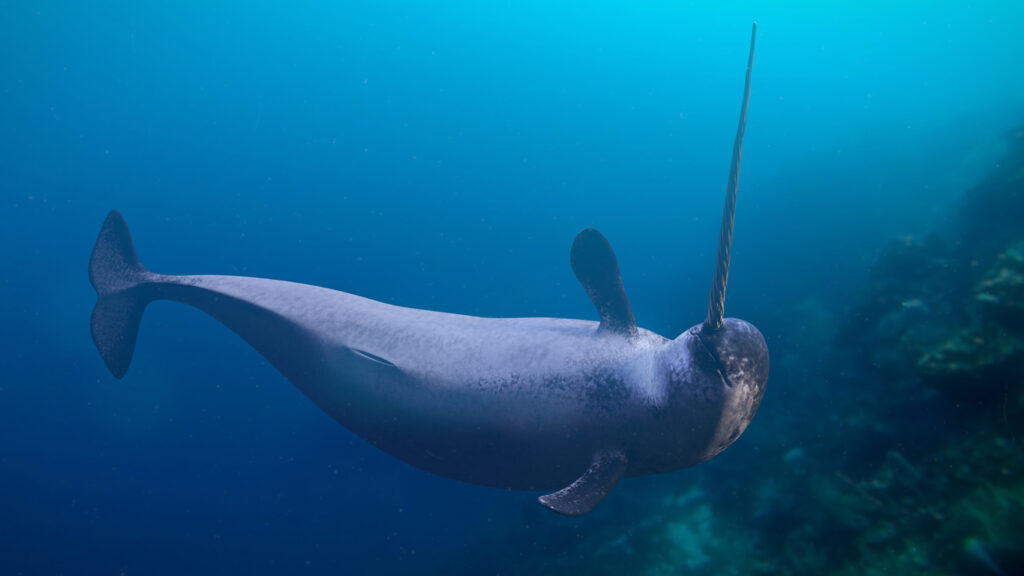
The narwhal’s famous “horn” isn’t a horn at all. It’s actually an elongated tooth that grows straight through the upper lip, spiralling as it extends. Most males grow one tusk, though occasionally females do too. It’s a striking feature, particularly because it can reach up to three metres long, which is almost the length of a small car.
Scientists once assumed it was purely decorative, a kind of underwater antler meant for showing off. But research now suggests it’s a complex sensory organ. The tusk is covered in millions of nerve endings, allowing narwhals to detect subtle changes in temperature, pressure, and even salinity in the water. It’s essentially a built-in environmental sensor, helping them survive in one of the harshest habitats on Earth.
They can actually grow two tusks.

While one tusk is standard, nature sometimes throws in a surprise. On rare occasions, a narwhal will grow two full tusks, one from each side of the upper jaw. These double-tusked narwhals are incredibly rare and have long added to the species’ mythical reputation.
Scientists aren’t sure if having two tusks offers any advantage, but it shows how adaptable narwhal genetics can be. Inuit hunters and Arctic researchers have recorded a handful of these double-tusked whales over the centuries, each one sparking fascination for just how extraordinary these animals can be when nature bends its own rules.
They live only in the Arctic.

Narwhals aren’t travellers in the way humpbacks or blue whales are. They stick to the freezing Arctic waters of Greenland, Canada, and Russia, where they’ve evolved to thrive under ice. Their thick blubber insulates them from sub-zero temperatures, and they time their movements with the seasonal melting and freezing of sea ice.
That narrow habitat, however, is what makes them so vulnerable. As climate change accelerates and ice melts earlier each year, narwhals lose not only their shelter but also access to their main food sources. Their loyalty to the Arctic is part of their beauty, and also part of their danger.
They can dive incredibly deep.

Narwhals are extraordinary divers, regularly plunging more than 1,500 metres below the surface in search of food. That’s deeper than most submarines travel during standard operations. They hold their breath for around 25 minutes at a time, conserving oxygen with a slow heartbeat and efficient use of stored oxygen in their muscles.
Scientists studying narwhal dives have discovered they make dozens of these descents every day. Down in the pitch black, they hunt fish and squid, completely at home in conditions that would crush most marine life. These dives are a reminder of just how finely tuned narwhals are to the deep Arctic world.
They use sound to navigate.

Because light barely reaches the depths they inhabit, narwhals rely on echolocation, sending out a series of rapid clicks and listening for the echoes that bounce back. This allows them to “see” their surroundings through sound, helping them locate prey, communicate, and steer clear of hazards.
Their clicking can reach hundreds of pulses per second, giving them a detailed picture of what lies ahead, even in total darkness. Echolocation is also crucial when navigating through heavy ice, where a single wrong turn could trap them. It’s a remarkable adaptation that keeps them safe in a constantly changing environment.
Their tusks inspired unicorn myths.

Long before scientists knew what narwhals were, their tusks were turning up in European markets as “unicorn horns.” During the Middle Ages and Renaissance, traders sold them for vast sums, claiming they could neutralise poison or bring good luck. Royals and nobles collected them as treasures, believing them to be proof that unicorns walked the earth.
In reality, those “magical” horns came from narwhals hunted by Arctic peoples and traded across continents. It wasn’t until centuries later that the truth became known. Even so, the myth stuck, and narwhals still carry the title of the sea’s unicorns today.
They change colour with age.
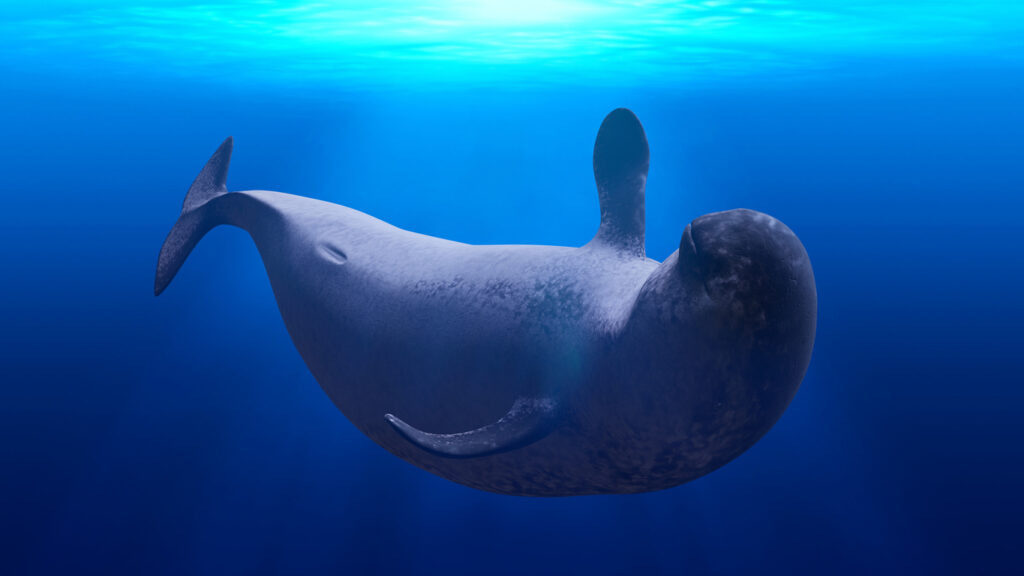
Narwhals go through a visible transformation as they age. Young calves start off a soft bluish-grey, blending easily with the icy water. As they grow older, their skin darkens and becomes mottled, eventually fading again into pale grey or almost white in their senior years.
Older narwhals are often nearly ghost-like in colour, gliding through the Arctic waters like pale spectres. This change in pigmentation is thought to be linked to age and health, giving researchers a way to roughly estimate how old a narwhal might be without invasive study.
They don’t survive well in captivity.

Every attempt to keep narwhals in captivity has ended in tragedy. Unlike dolphins or orcas, narwhals do not adapt to enclosed tanks or artificial feeding routines. Their needs are too specific, from water temperature to depth and space.
Their inability to thrive in captivity is one reason they remain so mysterious. Almost everything we know about them comes from field research and tracking in the wild. Their refusal to survive in aquariums is a reminder that some animals simply don’t belong anywhere but their natural habitat.
They have strong social bonds.

Narwhals are highly social animals, living in pods that typically contain 10 to 20 members, though sometimes hundreds gather during seasonal migrations. These groups provide protection and help coordinate movement through the constantly moving sea ice.
Within pods, narwhals maintain close ties, often staying with the same group for years. Mothers and calves are especially bonded, and vocal communication plays a big role in keeping groups together. Their sense of community is key to survival in a landscape that can change overnight.
Their main predators are orcas.

Even in the frozen Arctic, narwhals aren’t safe from predators. Orcas, also known as killer whales, are their primary threat. When orcas move into their territory, narwhals often flee into dense ice fields, using the frozen landscape as protection.
However, as the Arctic warms and ice cover shrinks, narwhals lose that defence. Open water leaves them exposed to faster, stronger predators. It’s one of the clearest examples of how climate change disrupts long-standing survival strategies in the wild.
They’re very picky eaters.

Narwhals have surprisingly narrow diets. They mainly hunt Greenland halibut, Arctic cod, and squid, focusing on deep-dwelling prey that they catch during their long dives. That specialisation makes them vulnerable to environmental changes. Basically, if their food sources decline, they struggle to adapt to alternatives.
Scientists have found that their feeding patterns shift slightly with ice cover, but not enough to make them truly flexible hunters. As the Arctic ecosystem changes, their survival depends heavily on the continued availability of their favourite foods.
Their population is sadly under threat.

There are an estimated 80,000 narwhals left in the wild, but that number hides growing challenges. Climate change is melting the ice they depend on. Increased shipping brings noise pollution that disrupts communication, while oil exploration risks contaminating their fragile environment.
Conservationists are now working with Indigenous communities and Arctic nations to monitor populations and protect key habitats. Narwhals can’t simply migrate south to escape; their world is the Arctic, and if it changes too much, they have nowhere else to go.
They’ve fascinated humans for centuries.

From Inuit legends that honour the narwhal as a sacred spirit to medieval tales of unicorns and magic, these whales have held a special place in human imagination for centuries. Even now, they appear in art, literature, and modern media as symbols of mystery and endurance.
What keeps people so captivated is their blend of truth and myth, a real animal so extraordinary it feels otherworldly. Narwhals remind us how much wonder still exists in nature, and how much we stand to lose if we don’t protect it.