Most of us have a rough picture of space in our heads, but that picture is usually based on films, school posters, and a few mind-blowing facts we half-remember.

We hear that space is huge, but our brains quietly turn that into something we can imagine, which is nowhere close to the real scale. When you start looking at actual distances, you realise our usual way of thinking about planets and stars barely scratches the surface. Even the “nearby” stuff is so far away it almost stops making sense.
What trips people up is that space isn’t just big, it’s built on numbers our brains aren’t designed to process. Astronomers measure distance in terms we’d never use in normal life, and every time you learn something new, the universe seems to stretch even further. The result is a lot of misunderstandings about what’s close, what’s far and what’s practically unreachable. The next part breaks down the common assumptions and why they sell the universe short.
The solar system is mostly empty space.
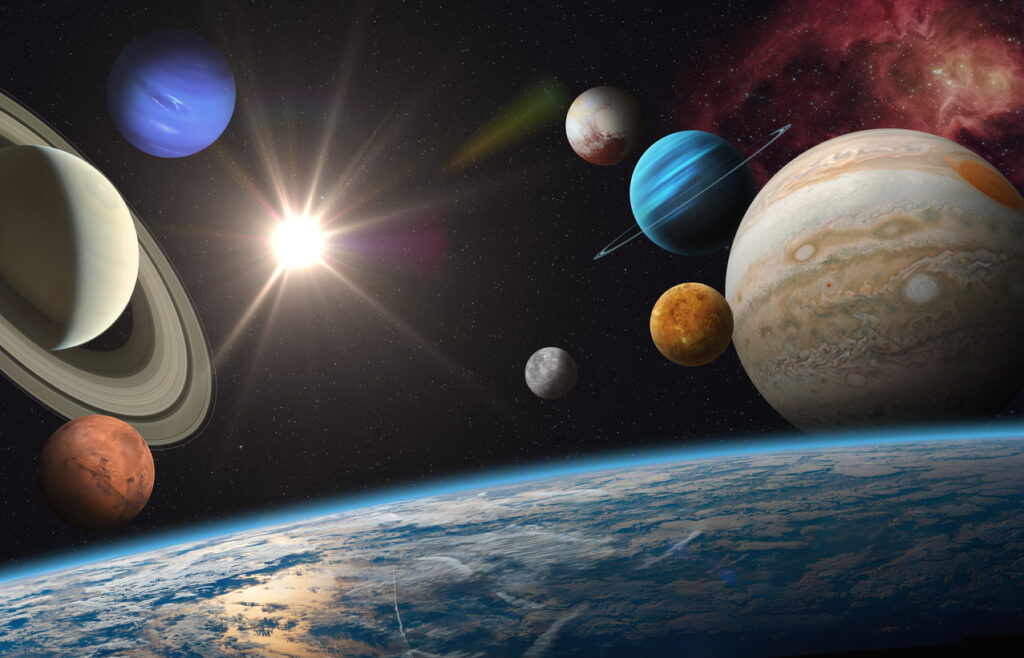
You’ve seen diagrams of the solar system with all the planets lined up nicely. Those diagrams are lying to you. If the sun was the size of a football, Earth would be a tiny bead about 24 metres away. Neptune would be over 700 metres away. Everything in between is just empty void.
People think planets are relatively close together because that’s how we draw them. In reality, the distances are so huge that if you were standing on one planet, you wouldn’t see the next one without a telescope. Space isn’t crowded. It’s the opposite. It’s almost entirely nothing, with tiny specks of matter scattered impossibly far apart.
Light takes 8 minutes to reach us from the sun.
Light travels at 300,000 kilometres per second, which is the fastest thing in the universe. Even at that speed, it takes over 8 minutes for sunlight to reach Earth. When you look at the sun, you’re seeing it as it was 8 minutes ago, not as it is right now.
That means if the sun suddenly vanished, we wouldn’t know for 8 minutes. We’d still see it, still feel its warmth, completely unaware that it was already gone. Light from the nearest star after the sun takes over 4 years to reach us. You’re not seeing things as they are. You’re seeing ancient history, and the further you look, the older everything gets.
Voyager 1 has been travelling for 47 years and barely left the neighbourhood.
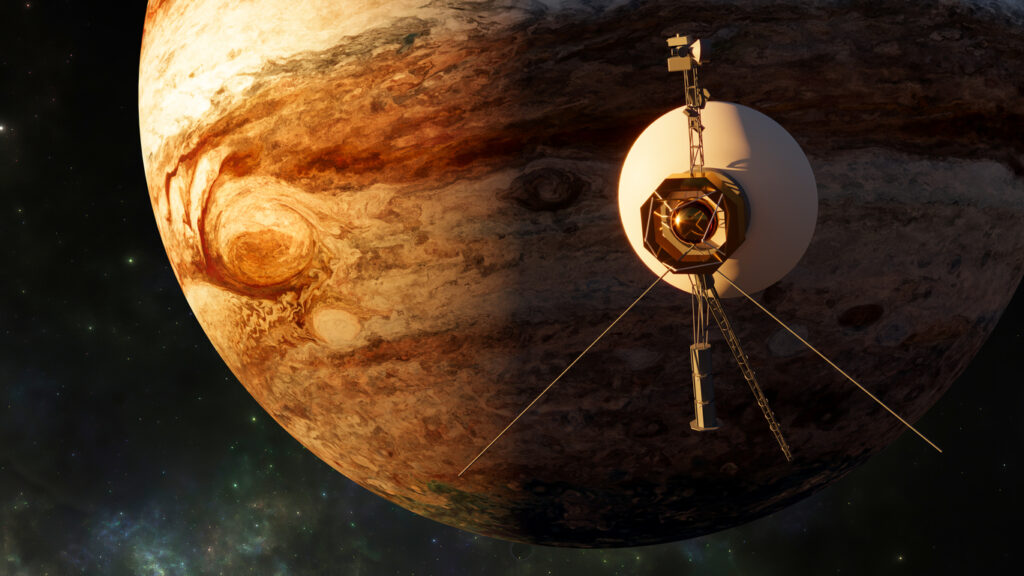
Voyager 1 launched in 1977 and is now the most distant human-made object, about 24 billion kilometres from Earth. Sounds impressive until you realise it hasn’t even left our local area yet. It’s in interstellar space but still within the sun’s influence. The nearest star is 40 trillion kilometres away.
At Voyager’s current speed, it would take over 70,000 years to reach that star, and it’s not even heading in that direction. We’ve been exploring space for decades, sent our fastest spacecraft out there, and we’ve barely scratched the surface of our own cosmic backyard. The idea of visiting other star systems with current technology is laughable.
The Milky Way would take 100,000 years to cross at light speed.

Our galaxy is about 100,000 light-years across. That means if you could travel at the speed of light, which nothing with mass can do, it would still take 100,000 years to get from one side to the other. Nothing goes faster than light, so that’s the absolute minimum time it would take.
We’re about 26,000 light-years from the centre of the galaxy. The stars you see at night are mostly within a few hundred light-years of us. You’re seeing a tiny fraction of the galaxy because everything else is too far away to make out individual stars. Scale this up, and you start to understand why intergalactic travel is pure fantasy.
There are more stars than grains of sand on every beach on Earth.
People love this comparison because it’s one of the few ways to grasp how many stars exist. Estimates suggest there are around 100 billion stars in the Milky Way alone. There are roughly 2 trillion galaxies in the observable universe. Do the maths, and you’re looking at more stars than grains of sand on all of Earth’s beaches combined.
Each of those stars is a sun, many with their own planets. Most of them are so far away we’ll never know anything about them beyond the fact that they exist. When people talk about finding alien life, they’re usually thinking about planets we could feasibly study. But the vast majority of the universe is completely out of reach, and always will be.
The observable universe is just the bit we can see, not all of it.
The observable universe is about 93 billion light-years across. That’s the limit of what we can see because light from further away hasn’t had time to reach us yet. But the actual universe is bigger than that, possibly infinite. We’re trapped inside this bubble of observability, and we’ve got no way of knowing what’s beyond it.
The universe is also expanding faster than light in some places, which means there are galaxies moving away from us so quickly that their light will never reach Earth. They exist, but they’re permanently invisible to us. We’re not seeing the whole universe. We’re seeing a tiny snapshot limited by the speed of light and the age of the universe.
If you shrunk the sun to the size of a white blood cell, the Milky Way would still be the size of the United States.
Scaling things down helps, but even the scaled versions are hard to grasp. If you shrunk the sun down to the size of a white blood cell, the Milky Way would still stretch across the entire United States. That’s how big the scale difference is between a single star and a galaxy.
Now consider that there are trillions of galaxies. You can’t meaningfully visualise that. Your brain isn’t equipped for it. Every time you think you’ve understood the scale, you’re still underestimating it by orders of magnitude. Space is bigger than big. It’s incomprehensibly, absurdly, pointlessly vast.
The nearest galaxy is 2.5 million light-years away.
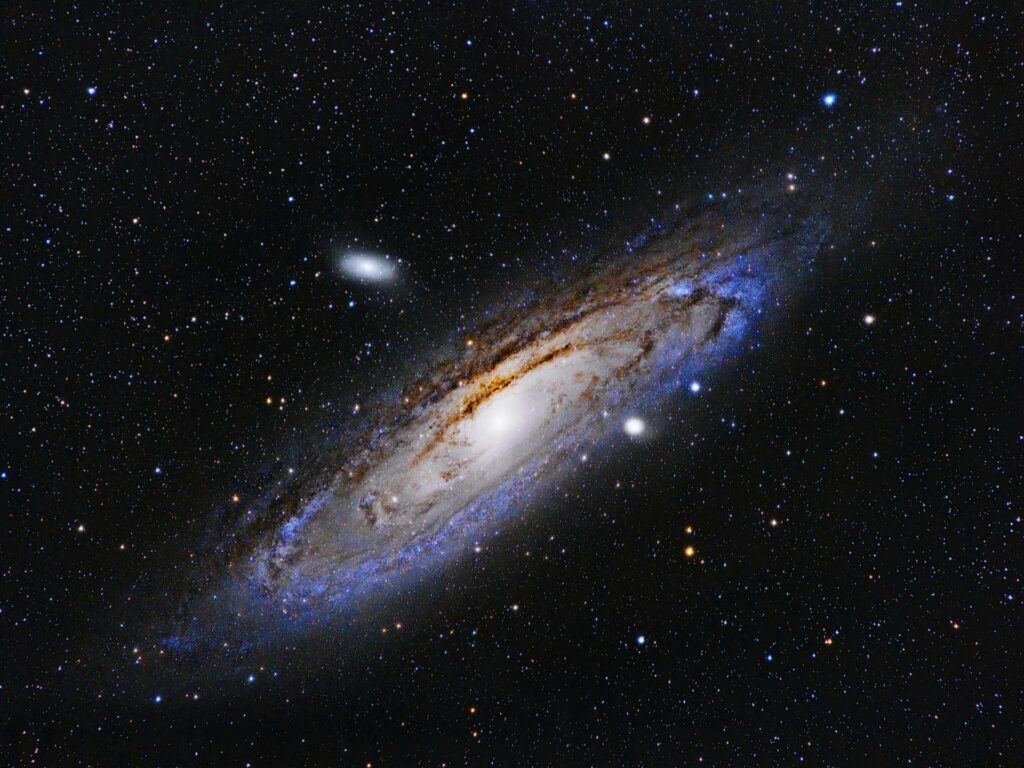
Andromeda is the closest major galaxy to us, and it’s 2.5 million light-years away. The light you see from Andromeda left that galaxy 2.5 million years ago, back when early humans were just starting to use stone tools. You’re looking at ancient light from a galaxy that’s already changed in ways you’ll never see.
Andromeda’s also heading towards us. In about 4.5 billion years, it’ll collide with the Milky Way. Sounds dramatic, but because galaxies are mostly empty space, the stars probably won’t hit each other. They’ll just pass through. Even in a galactic collision, space is so empty that actual collisions are rare. That’s how much nothing there is out there.
We’re moving through space at over 2 million kilometres per hour.
Earth’s spinning at about 1,670 kilometres per hour at the equator. We’re orbiting the sun at 107,000 kilometres per hour. The solar system is orbiting the centre of the Milky Way at 828,000 kilometres per hour. The Milky Way itself is moving through space at over 2 million kilometres per hour.
You don’t feel any of this because everything around you is moving at the same speed, but you’re hurtling through space faster than you can comprehend, and you’ve got no sense of it at all. Motion is relative, so it doesn’t feel like anything, but the speeds involved are absolutely bonkers when you stop and think about them.
Most of the universe is stuff we can’t see or detect.
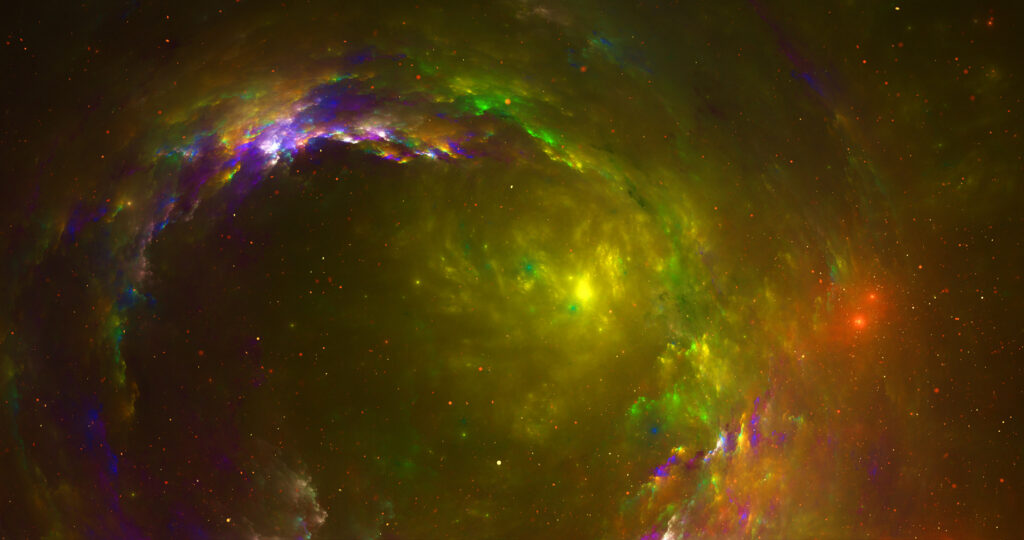
Normal matter, the stuff that makes up stars, planets, and us, accounts for less than 5% of the universe. About 27% is dark matter, which we know exists because of its gravitational effects, but we can’t see or detect directly. The remaining 68% is dark energy, which we know even less about.
We’ve explored less than 5% of the ocean. We’ve barely touched the solar system. We don’t even know what most of the universe is made of. When people talk confidently about space, they’re talking about the tiny fraction we understand. The rest is a complete mystery, and it might stay that way forever.
A black hole the size of a coin would outweigh the Earth.
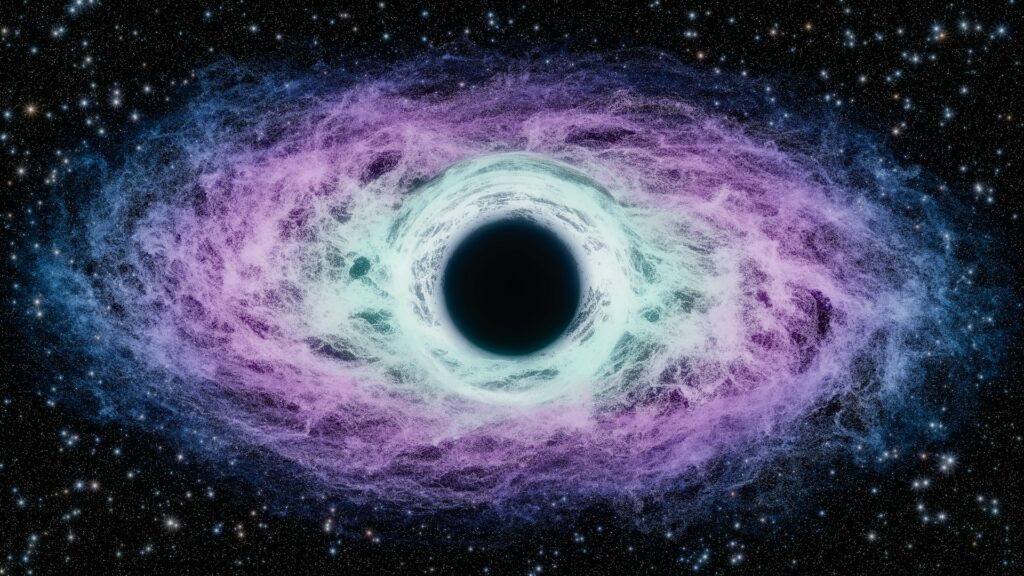
Black holes are so dense that the rules stop making sense. If you compressed Earth down into a black hole, it would be about 9 millimetres across. A black hole the size of a coin would have more mass than the entire planet. Density on that scale doesn’t exist anywhere else.
Anything that crosses the event horizon of a black hole is gone forever. Not destroyed, not broken apart, just removed from the universe in a way we can’t retrieve or observe. Space isn’t just big. It’s also capable of creating pockets of reality where the normal rules don’t apply and everything we know breaks down completely.
We’re seeing the universe as it was, not as it is.
Because light takes time to travel, everything you see in the night sky is old. Stars you’re looking at might have already died. Galaxies you’re observing might have changed beyond recognition. The further away something is, the older the light, and the less accurate your view of it.
Looking at distant galaxies is like looking back in time. The James Webb Space Telescope is seeing galaxies as they were over 13 billion years ago, not long after the Big Bang. We’ve got no idea what those galaxies look like now. They could be completely different, or they might not exist anymore. We’re not observing the current universe. We’re observing its history, and we’ll never catch up.