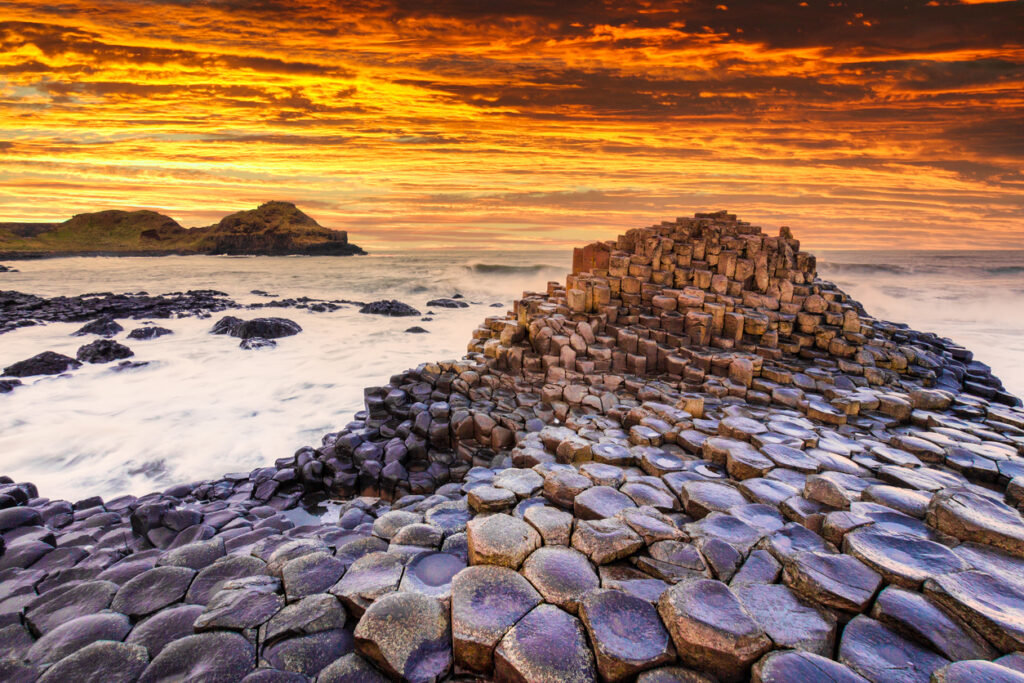
If you’ve ever stood on the Antrim coast and looked down at the 40,000 hexagonal pillars that make up the Giant’s Causeway, it is hard to believe that nature could be this tidy.
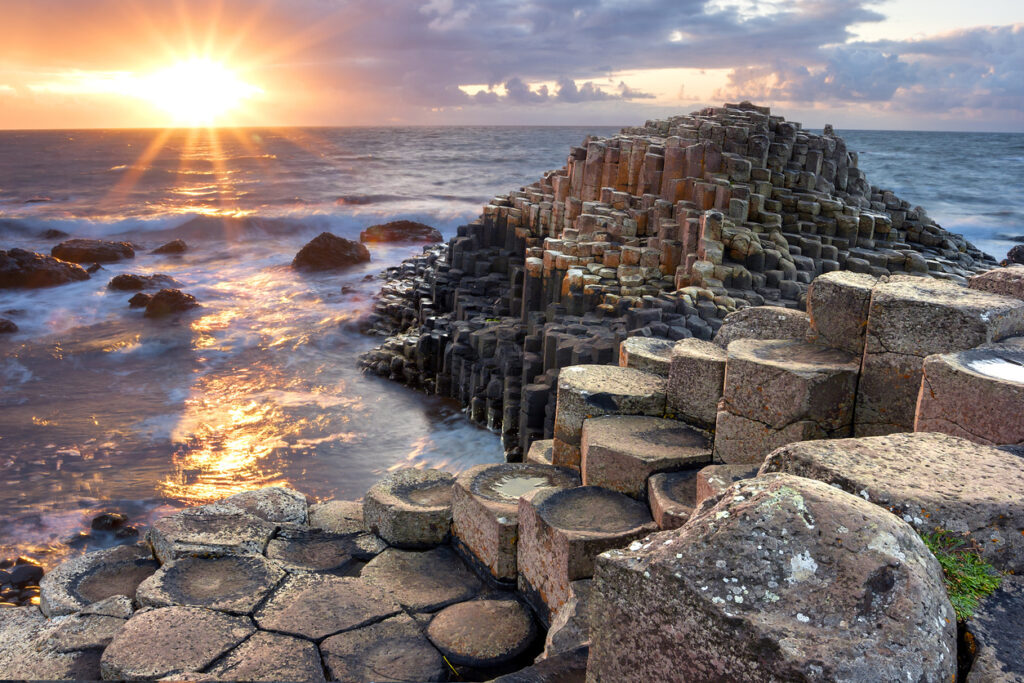
It looks less like a geological accident and more like a massive, prehistoric DIY project, with stone columns fitted together so perfectly they look like they were carved by hand. While the local stories about a giant named Finn McCool building a bridge to Scotland are a lot more fun, the actual science is just as impressive.
It’s essentially the result of a massive volcanic tantrum 60 million years ago, where a lake of molten lava cooled at such a specific, steady rate that it cracked into these impossibly geometric shapes. It is a rare moment where the chaos of the earth managed to produce something that looks completely intentional, leaving the rest of us to wonder how on earth a pile of rocks ended up looking like a work of art.
The hexagons are almost mathematically perfect.
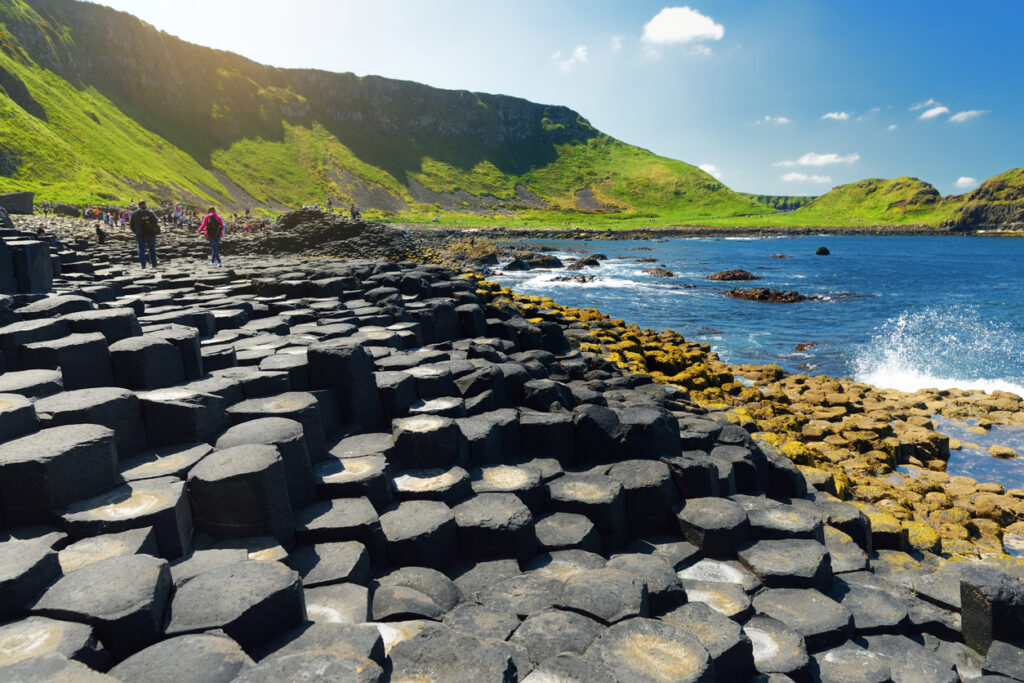
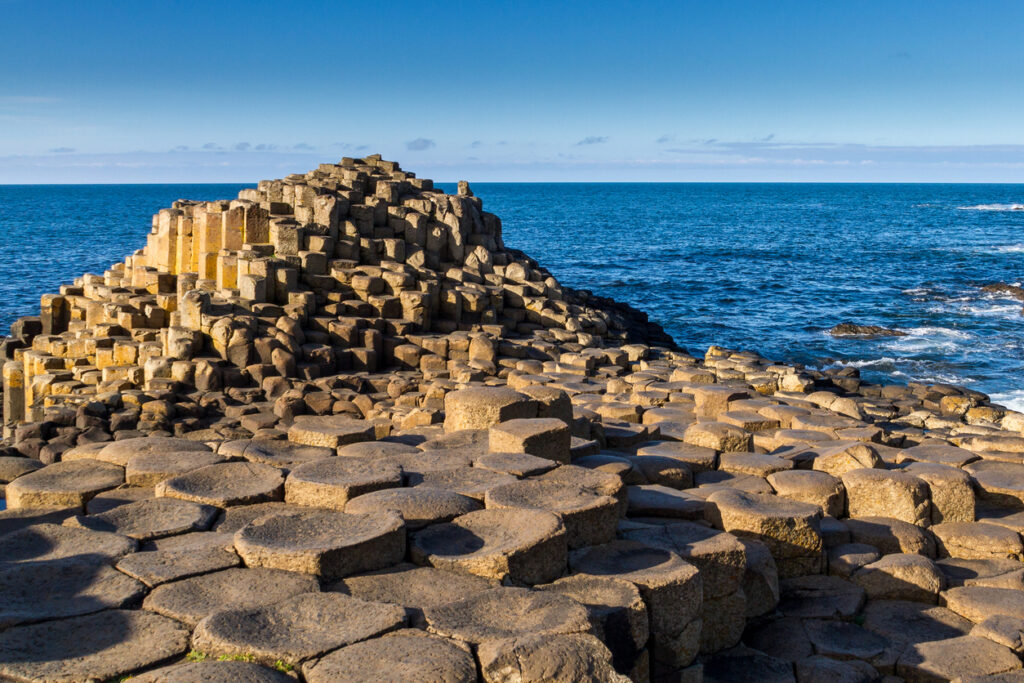
Around 60 percent of the columns are perfectly hexagonal, with sides meeting at exactly 120-degree angles. The rest have four, five, seven, or eight sides, but even those look deliberately crafted. When lava cools and contracts, it naturally cracks at 120-degree angles because that’s the most efficient way to release stress in the cooling rock. The hexagon isn’t random, it’s physics choosing the shape that minimises energy, which is why you see the same pattern in honeycomb and cracked mud.
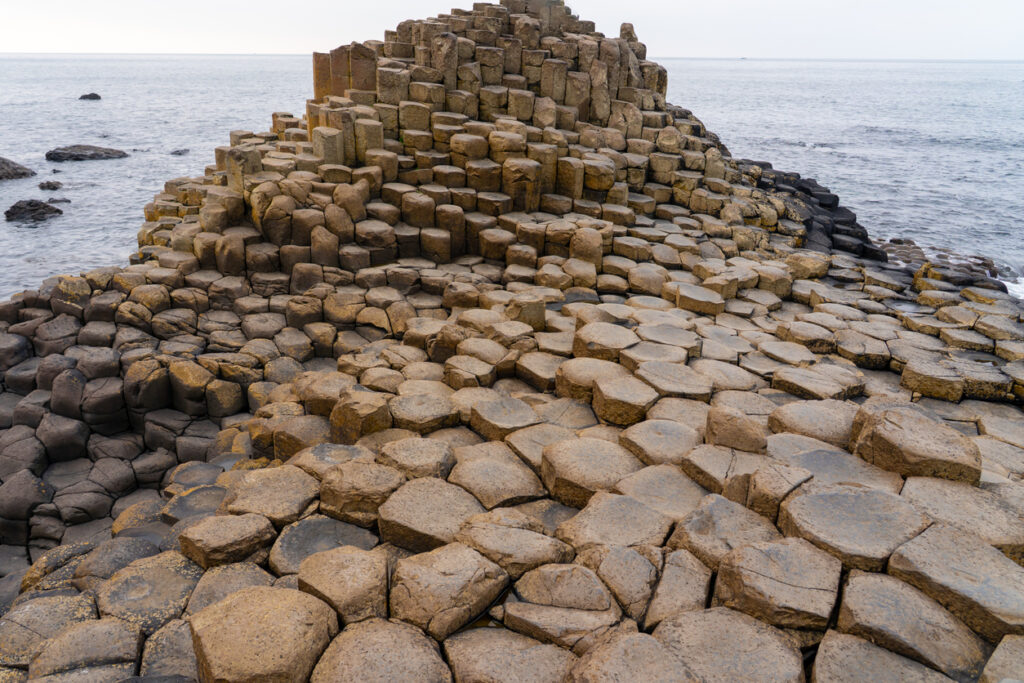
They look like giant stepping stones because that’s essentially what they are.
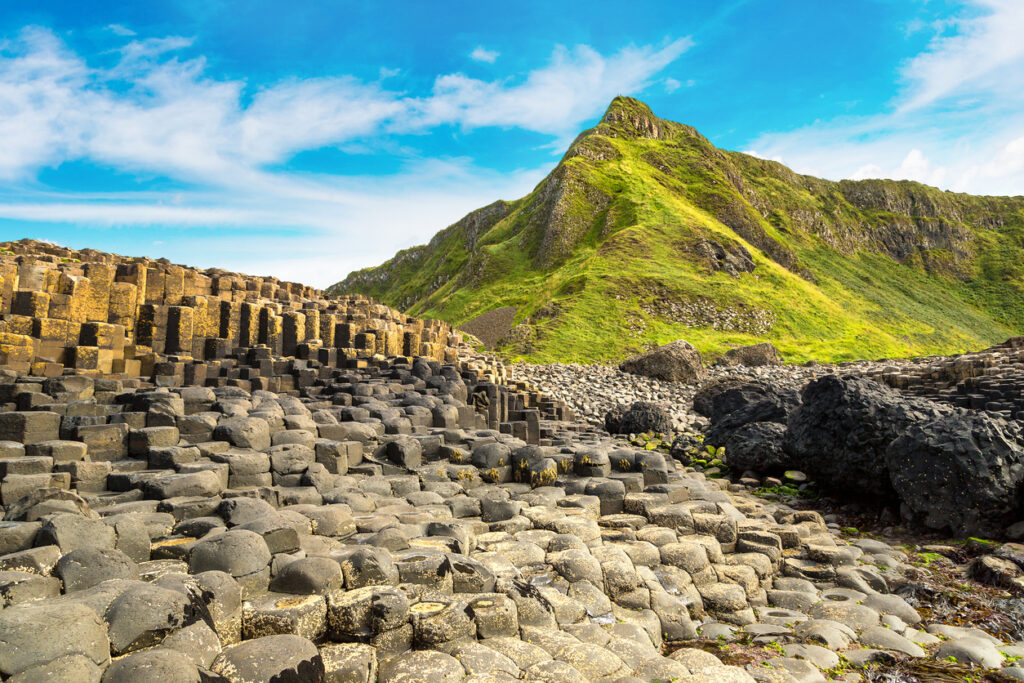
The tops of the columns form flat surfaces at different heights, creating a natural staircase that leads from the cliff down to the sea and then disappears underwater. Some columns are barely above ground level, others reach 12 metres high, and the varying heights make it look like someone deliberately arranged them as steps. The tallest column is called the Chimney Stack, and standing next to it feels like being next to a building rather than a rock formation.
Scientists recreated the formation process using cornstarch and water.
Researchers at the University of Toronto solved the mystery of how these columns form by mixing cornstarch and water, then watching it dry under a heat lamp. As the mixture dried and contracted, it cracked into hexagonal columns identical to the Giant’s Causeway. This proved the formations aren’t unique or mysterious, they’re just what happens when any thick layer of material cools and shrinks uniformly. The size of the columns depends on how fast the cooling happens.
The cracks started at the surface and worked their way down.
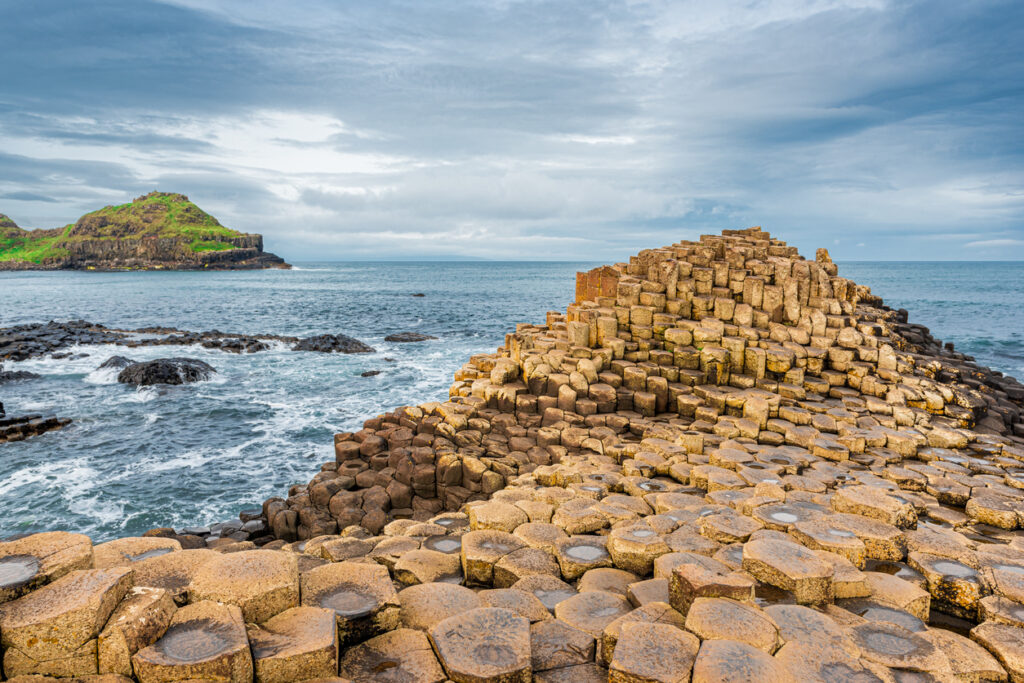
When the lava first cooled 60 million years ago, cracks appeared on the surface where it met cold air. Those initial cracks formed at right angles, but as cooling continued, they shifted to 120-degree angles and propagated downward through the entire thickness of the lava flow. It created columns that can be several metres tall, all formed from a single continuous crack working its way through the rock like a geological zip.
The columns extend underwater in both directions.
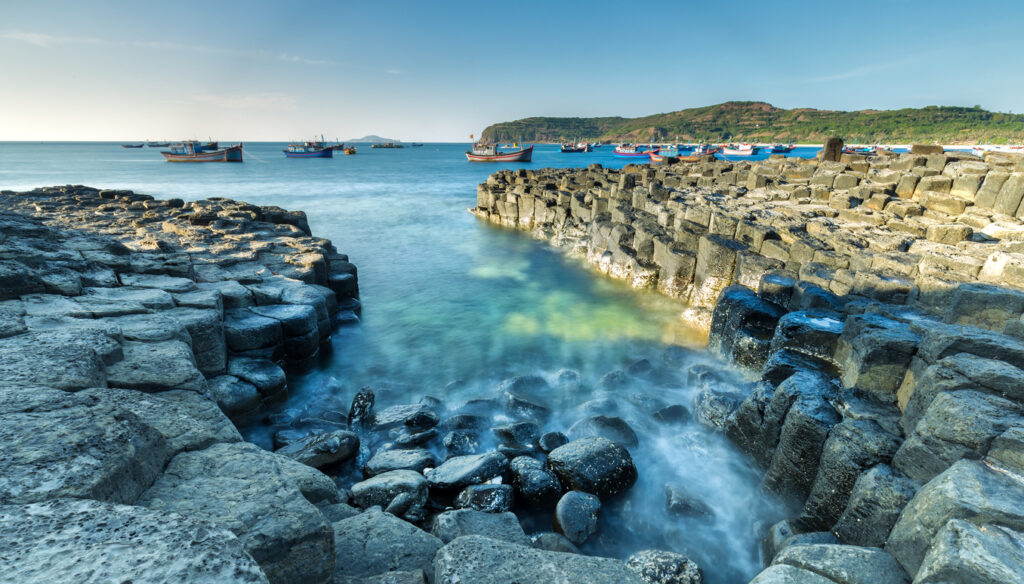
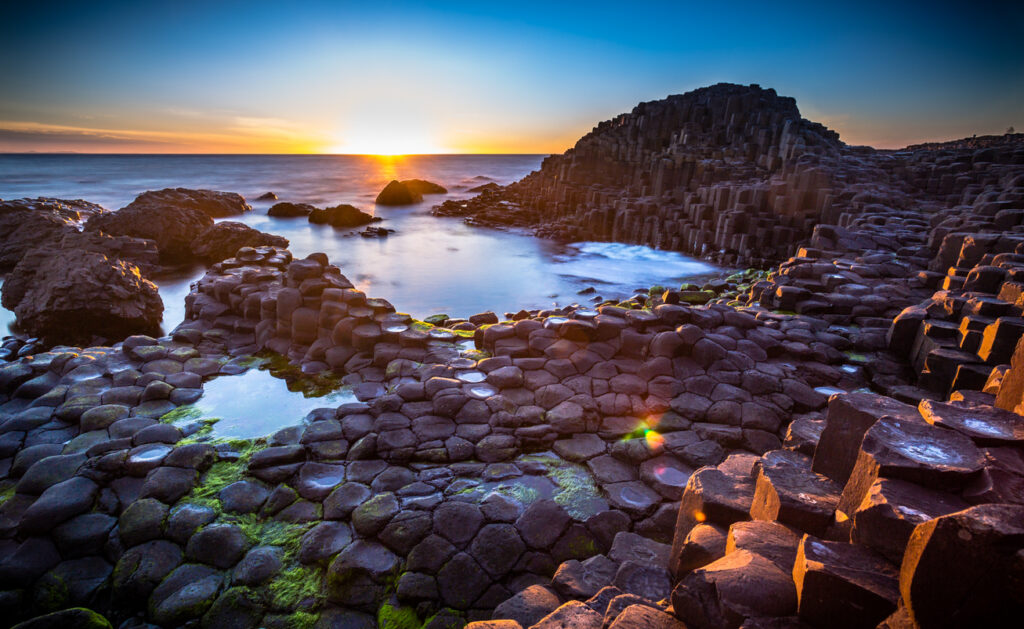
What you see on land is just the middle section. The causeway continues under the sea, with submerged columns visible at low tide, and also extends inland where erosion hasn’t exposed them yet. The entire lava flow that created these formations was much larger, covering a significant chunk of what’s now Northern Ireland’s coast. You’re basically standing on the tip of a massive geological formation that stretches in all directions.
There’s an identical formation in Scotland that shares the same legend.
Fingal’s Cave on the Scottish island of Staffa has the same hexagonal basalt columns, formed from the same volcanic event 60 million years ago. The legend says the Irish giant Finn McCool built the causeway to walk to Scotland without getting his feet wet, which explains why similar formations exist on both sides of the North Channel. In reality, they’re part of the same ancient lava flow that covered the region when Europe and North America were splitting apart.
The cooling temperature has been precisely calculated.
Scientists figured out the exact temperature at which the lava cracked into columns: between 840 and 890 degrees Celsius. They worked this out by recreating the process in labs and studying basalt from other volcanic sites like Iceland’s Eyjafjallajökull volcano. This specific temperature range is when the cooling basalt reaches the perfect consistency to form those geometric cracks rather than just breaking randomly.
Not all the columns are vertical.
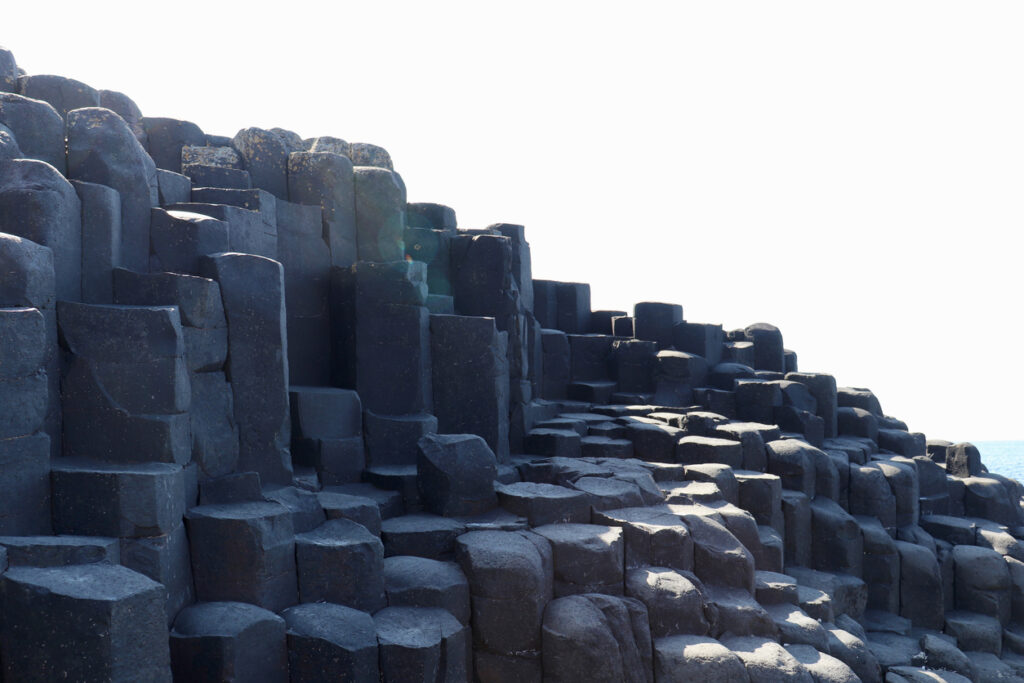
Some columns tilt at angles because the surface they formed on was sloped when the lava cooled. Others curve or fan out in different directions depending on how the lava flowed and where the cooling front moved through the rock. This variation makes the site even more visually interesting because you’re not just looking at uniform vertical pillars, you’re seeing the frozen record of how molten rock moved and solidified across an uneven landscape.
The formation happened during a period of extreme volcanic activity.
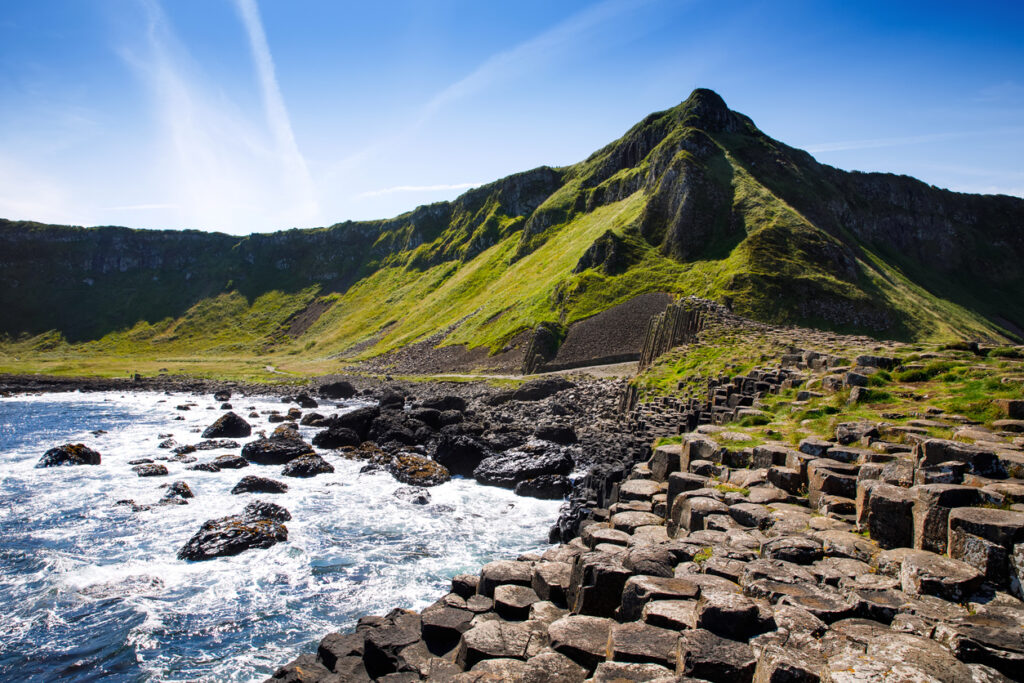
Around 60 million years ago, when Laurasia was breaking apart to form the North Atlantic Ocean, the region experienced intense volcanic eruptions. Highly fluid basalt lava poured out from fissures in the earth, intruding through existing chalk beds and flooding the landscape. This wasn’t a single eruption but multiple volcanic events in rapid succession, building up layers of basalt that eventually solidified into the columns we see today.
The site sparked a scientific revolution about volcanic rocks.
When the Giant’s Causeway became internationally known in the 1700s through artwork and descriptions, geologists were still debating whether basalt formed from water or fire. French geologist Nicolas Desmarest was the first to suggest in print that these structures were volcanic in origin, which was controversial at the time. The causeway became crucial evidence in understanding how volcanic rocks form, making it historically significant for the development of volcanology as a scientific discipline. In 2022, it was included in the International Union of Geological Sciences’ list of 100 “geological heritage sites” around the world specifically because of its role in advancing our understanding of basalt formation.