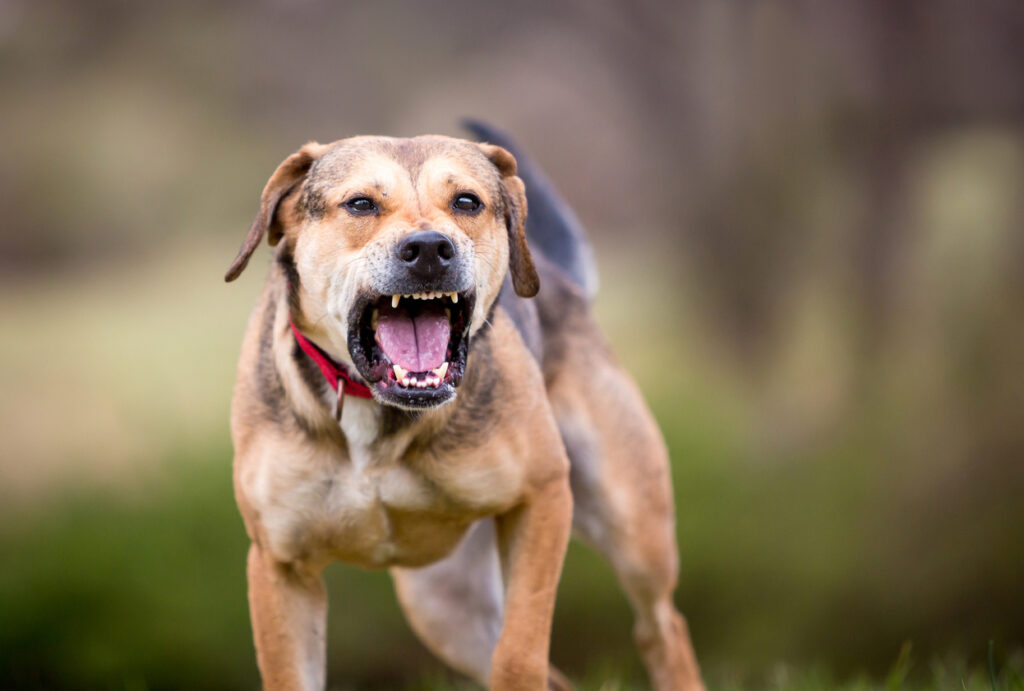
It’s one of the most distressing things that can happen between a person and their dog. The assumption is that a bite comes from a stranger or an aggressive animal, but the reality is that most dog bites happen within the home, from the dog that sleeps on your bed and follows you from room to room. Understanding why changes everything about how you respond to it.
The dog was giving signals you didn’t know how to read.
Dogs rarely bite without warning. What looks like a sudden snap almost always comes after a sequence of communication that went unnoticed or was misread. A stiffened body, a whale eye where the whites show, a low growl, a tucked tail, lips pulled slightly back. These are all attempts to say that something is wrong before resorting to teeth. The problem isn’t that dogs bite without reason, it’s that humans miss the build-up and the dog runs out of other options.
Pain changes everything about how a dog responds to touch.
A dog that has never shown any aggression can bite when it’s hurting, and the person most likely to touch a painful spot is the one closest to them. An undetected injury, arthritis that’s been developing quietly, an ear infection, a dental problem, any of these can turn a normally gentle dog reactive to being handled in ways it previously welcomed. The bite is reflexive rather than intentional and the dog is often visibly confused by its own reaction immediately afterward.
@drsermedmezher “My Dog Bit My Nose Off But I Won’t Put Him Down” #how Dogs can be incredibly aggressive, even toward owners they have lived with for a decade, due to a variety of factors, including medical issues, fear, territorial instincts, or changes in their environment. While most dogs form strong, lasting bonds with their owners, aggression can emerge unexpectedly, sometimes after years of seemingly stable behavior. One major cause is pain or illness—conditions like arthritis, neurological disorders, or hidden injuries can make a dog more irritable and reactive. If a dog suddenly becomes aggressive, especially if it was previously gentle, an underlying health issue should be considered. Other triggers include age-related cognitive decline, where older dogs may develop confusion or anxiety, leading to unpredictable aggression. Changes in the home environment, such as new people, other pets, or disruptions in routine, can also create stress that manifests as defensive or territorial behavior. #pets #dogs #safety ♬ Pieces (Solo Piano Version) – Danilo Stankovic
Being woken suddenly triggers a startle response that bypasses normal behaviour.
A sleeping dog that is touched or woken abruptly can bite before it’s fully conscious of what’s happening. The startle response is a deeply embedded protective mechanism and it fires faster than the dog’s recognition of who you are. This is particularly relevant for dogs that are older, deaf, or exhausted after significant exercise, all situations where the normal processing slows down, and the startle response gets there first.
Resource guarding is instinctive and often misunderstood.
A dog guarding food, a toy, a sleeping spot, or even a particular person isn’t being dominant or difficult. It’s expressing a deeply wired survival behaviour that evolved long before domestication. The trusted owner reaching toward something the dog is guarding is still a perceived threat to that resource regardless of the relationship. Dogs that have never been taught that giving things up leads to good outcomes are more likely to guard and more likely to escalate when the guarding is ignored.
Fear overrides trust in the moment it matters most.
Even a dog with a secure attachment to its owner can bite when it’s frightened enough. A dog backed into a corner, held down during grooming or a vet visit, or overwhelmed by a situation it can’t escape from will use the tools it has. Being loved and trusted doesn’t remove the fear response and in a moment of genuine panic the dog isn’t thinking about the relationship. It’s responding to feeling trapped with the only option it has left.
Redirected aggression lands on the wrong target.
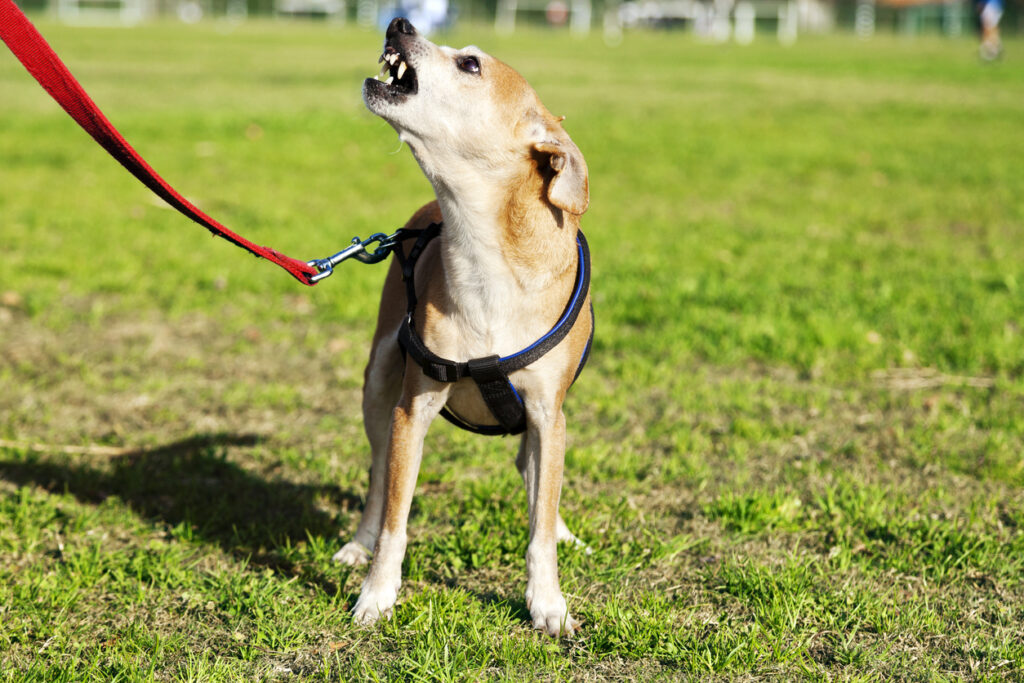
A dog that’s highly aroused by something it can’t reach, a dog outside the window, a loud noise, a frustrating situation, can redirect that arousal onto whoever is physically closest. The person on the receiving end is often the owner trying to intervene or calm the dog down, which puts them directly in the path of something that wasn’t meant for them at all. The bite in these situations is particularly confusing because there’s no obvious trigger in the immediate interaction.
Illness affects behaviour in ways that aren’t always obvious.
Neurological conditions, hormonal imbalances, cognitive dysfunction in older dogs, and certain infections can all alter behaviour significantly, including producing aggression that has no apparent cause. A dog that bites without the usual warning signals, or whose temperament changes noticeably over a short period, is worth a vet check before any behavioural explanation is reached for. The body and the behaviour are connected, and sometimes the bite is a symptom of something medical rather than a behavioural problem at all.
Children get bitten most often because they don’t read the warnings.
The family dog and the family child are a combination that requires supervision regardless of how gentle the dog is known to be. Children move unpredictably, make sudden loud sounds, approach a dog’s face directly, disturb them while eating or sleeping, and hug in ways that feel threatening rather than affectionate to the dog. The dog that tolerates all of this has a threshold and children, through no fault of their own, are consistently the ones most likely to find it.
@petwellnessadvocate Why dogs attack people and how to avoid being attacked. #dogaggression #dogattacks #petwellnessadvocate #petwellness #veterinarian ♬ SEM VOCÊ – Chico Coelho
Rough play can blur the line the dog is expected to respect.
Dogs that are regularly played with roughly, encouraged to mouth hands, or allowed to get highly aroused during play develop a murkier understanding of where the boundaries are. A game that escalates can cross into a bite that neither party anticipated and the dog that’s been tacitly taught that this kind of interaction is normal doesn’t understand why this particular moment crossed a line. Consistency about what’s acceptable matters more than most people realise until it doesn’t.
Protective instincts can turn a gentle dog into a reactive one.
A dog that feels responsible for protecting its home, its owner, or another family member can bite the trusted owner while reacting to a perceived threat nearby. This is most common in dogs that have been inadvertently encouraged to take on a protective role without any training around how that role should work. The dog is acting from loyalty rather than aggression, but the outcome is the same and the confusion it causes in the relationship is significant.
Accumulated stress makes a dog more likely to react badly to ordinary things.
Dogs have a stress threshold and when enough things push against it over a short period, the capacity to cope with something that would normally be fine runs out. A dog that’s been to the vet, heard fireworks, had its routine disrupted, and been around unfamiliar people all in one week is operating with very little tolerance left. The thing that finally tips it into a bite might be completely ordinary, a hand reaching toward its collar, someone sitting too close, and it looks inexplicable only because the accumulation isn’t visible.
Punishment-based training creates a dog that bites without warning.
Dogs trained with fear, physical correction, or punishment don’t stop having the feelings that lead to aggression. They stop showing the warning signals because those signals have been punished out of them. The result is a dog that appears fine right up until it isn’t, with none of the readable communication that would have allowed someone to intervene earlier. It’s one of the more serious and well-documented consequences of aversive training methods and the dog that bites silently is almost always one that was taught silence rather than one that was never troubled.