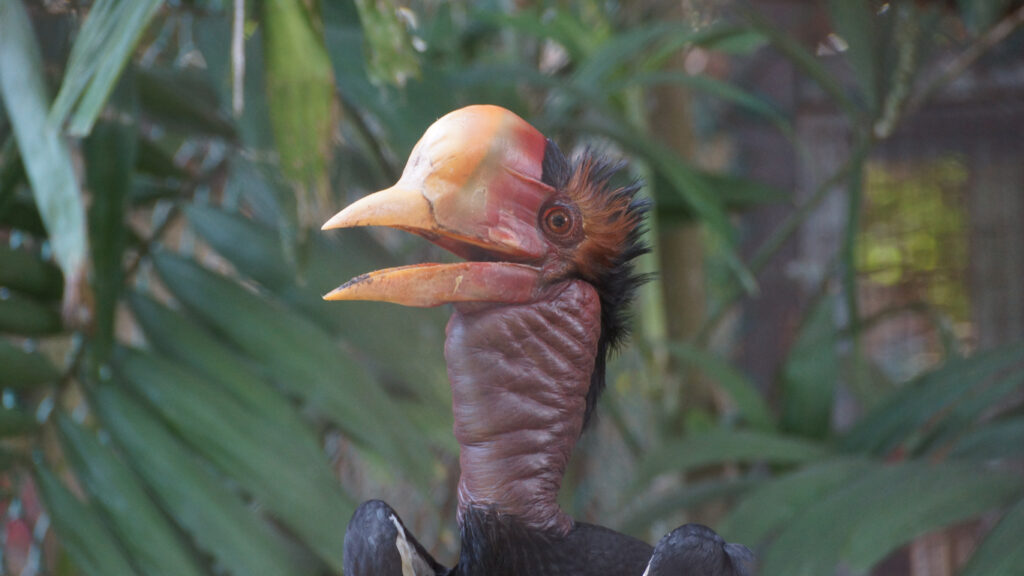
It’s natural to think of poaching as something that only affects the big names like rhinos or elephants, but there is a strange-looking bird in the rainforests of Southeast Asia that is currently in the middle of a massive crisis. The helmeted hornbill is being hunted at an alarming rate, and it is all because of a solid block of keratin on its beak called a casque.
Unlike other hornbills whose beaks are hollow, this bird has a solid, ivory-like material that is becoming a huge target for the illegal wildlife trade. It’s a bit of a grim situation because these birds are slow to breed and play a massive role in keeping the forest healthy by spreading seeds. If we don’t get a handle on the demand for this red ivory, we are looking at losing one of the most unique creatures on the planet before most people even knew it existed.
Its casque is worth more than ivory.
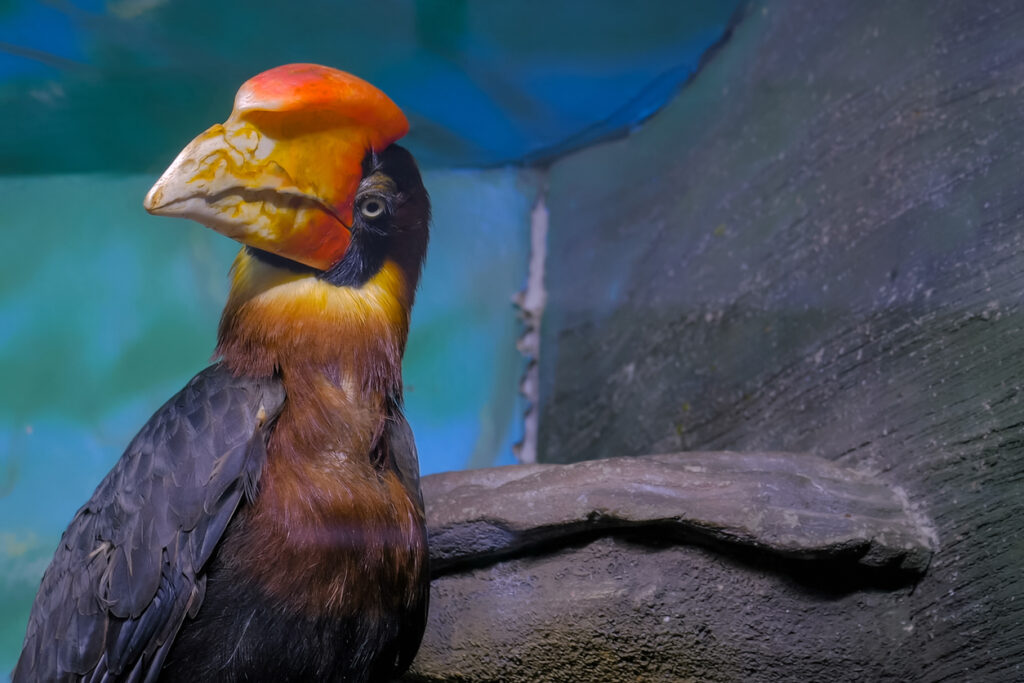
Unlike most hornbills, the helmeted hornbill has a solid casque made of dense keratin rather than hollow bone. That solid structure makes it easy to carve into ornaments and jewellery, and in parts of Asia it’s known as red ivory. Because it’s rarer and easier to sculpt than elephant ivory, it can fetch extremely high prices on the black market. That price tag has made the bird a direct target rather than accidental collateral damage.
Demand surged rapidly in recent decades.
While the bird has been hunted historically, demand spiked sharply in the 2010s, especially in certain luxury carving markets. A growing appetite for status items created sudden pressure on wild populations. The shift happened quickly enough that conservation measures struggled to keep pace. When demand rises faster than protection efforts, wildlife loses.
@minaret.mindsTrue LOVE ❤️ helmeted hornbill♬ original sound – Minaret Minds
The species reproduces very slowly.
Helmeted hornbills don’t lay large clutches of eggs each season. Typically, a pair raises just one chick at a time, and breeding cycles are long. That means even a small increase in adult deaths has a massive impact. When poachers remove breeding adults from the forest, recovery becomes painfully slow.
Poachers specifically target adult males.
The casque of the male is often larger and more valuable, which makes males prime targets. Removing males destabilises breeding pairs and reduces successful nesting. Even if females survive, they cannot raise chicks alone without a mate bringing food during nesting. That imbalance quietly accelerates population decline.
The bird’s call makes it easier to locate.
Helmeted hornbills have a loud, distinctive call that echoes through Southeast Asian forests. That dramatic sound, which once symbolised healthy rainforest ecosystems, now makes them easier for hunters to track. A trait that evolved for communication and territory defence has become a liability in the presence of firearms.
Forest loss compounds the problem.
Large tracts of rainforest in Indonesia, Malaysia, and Thailand have been cleared for agriculture and logging. Habitat loss shrinks the bird’s range and forces populations into smaller, more accessible areas. When habitat shrinks and poaching continues, the pressure doubles. Fewer safe spaces mean fewer chances to recover.
Black market trade networks are organised.
This isn’t random local hunting. In many cases, organised trafficking networks move carved casques across borders. Once the material enters illegal markets, tracing it becomes difficult. Strong profits at the top of the chain keep the system running, even if enforcement improves at the ground level.
Law enforcement struggles in remote forests.
Helmeted hornbills live in dense, hard-to-monitor rainforests. Limited funding and vast landscapes make consistent patrols difficult. Poachers often operate in remote areas where detection risk is low. Even when arrests happen, convictions don’t always deter larger networks.
@emilyamy271Helmeted Hornbills Are Being Hunted Into Extinction
The bird plays an important ecological role.
Helmeted hornbills are vital seed dispersers. They eat fruit and carry seeds across long distances, helping maintain forest diversity. Losing them doesn’t just remove one species. It disrupts a chain of regeneration that keeps tropical forests functioning properly.
Population declines have been shockingly fast.
In some regions, numbers dropped dramatically within just a few years once demand intensified. Conservation groups have listed the helmeted hornbill as critically endangered, meaning it faces an extremely high risk of extinction in the wild. When decline happens faster than breeding can compensate, extinction becomes a real possibility rather than a distant fear.
The helmeted hornbill’s story is a stark reminder that value placed on rare wildlife products can destroy the very species that make them rare. Without strong protection, reduced demand, and effective enforcement, this striking bird could disappear from forests within a generation.